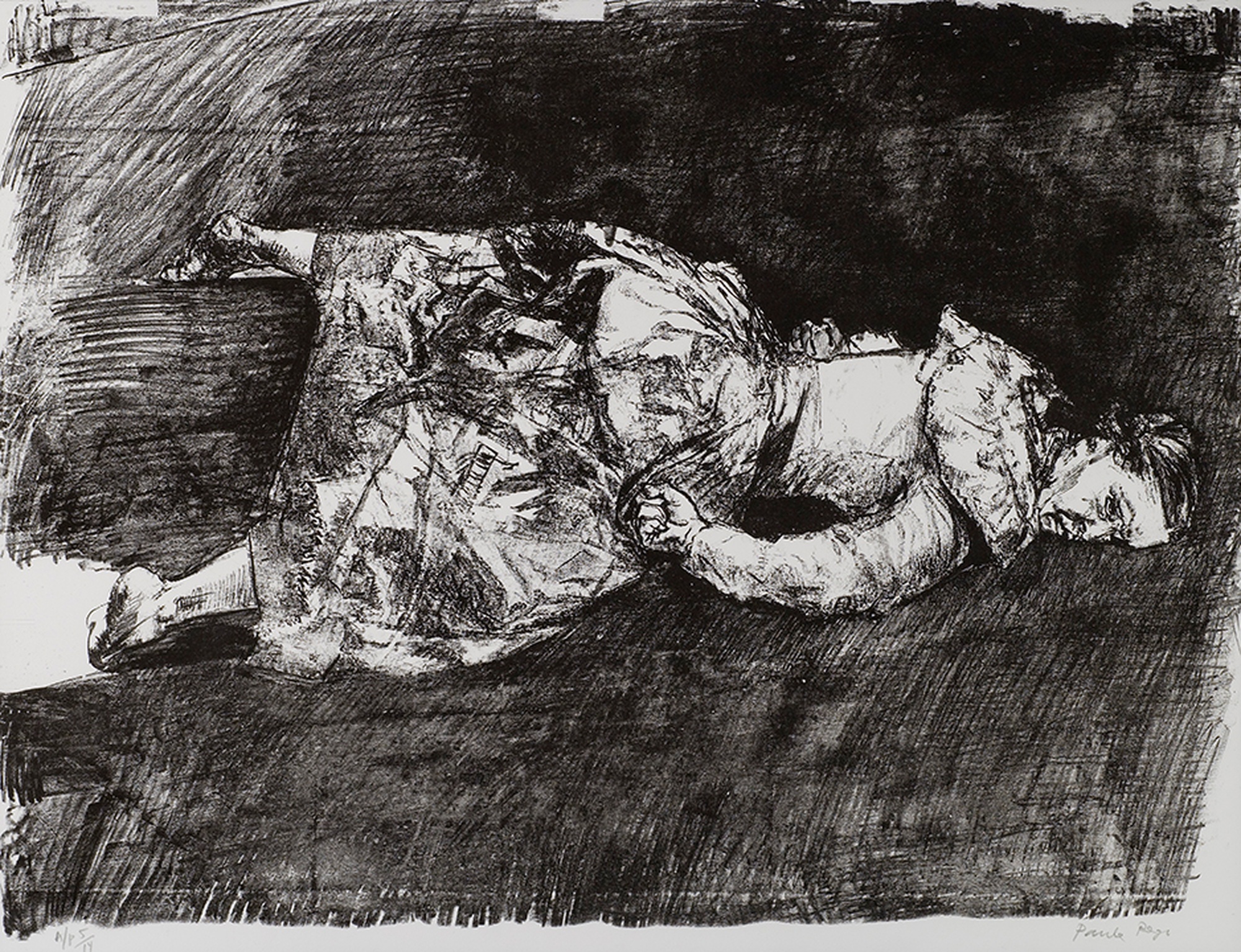
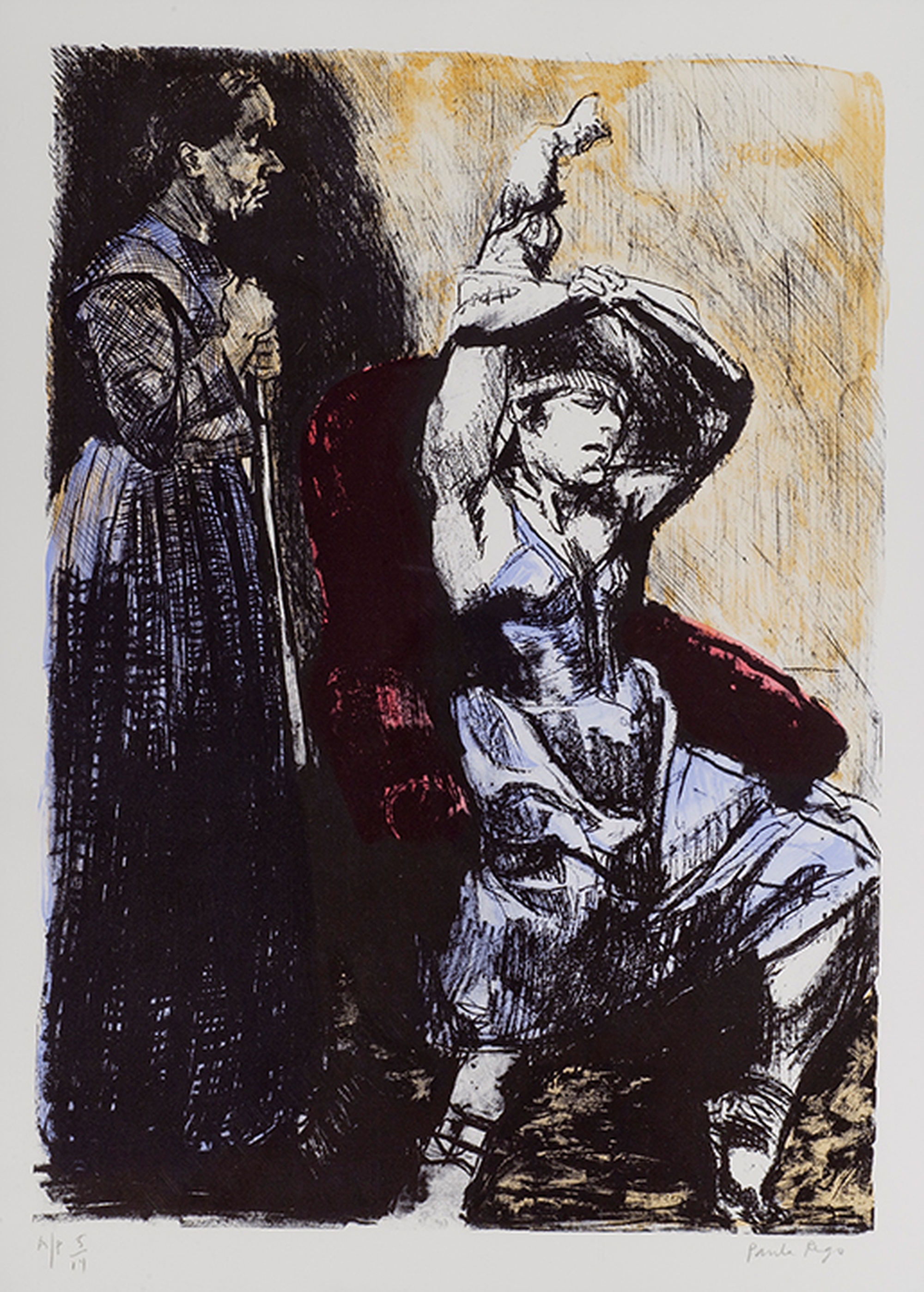
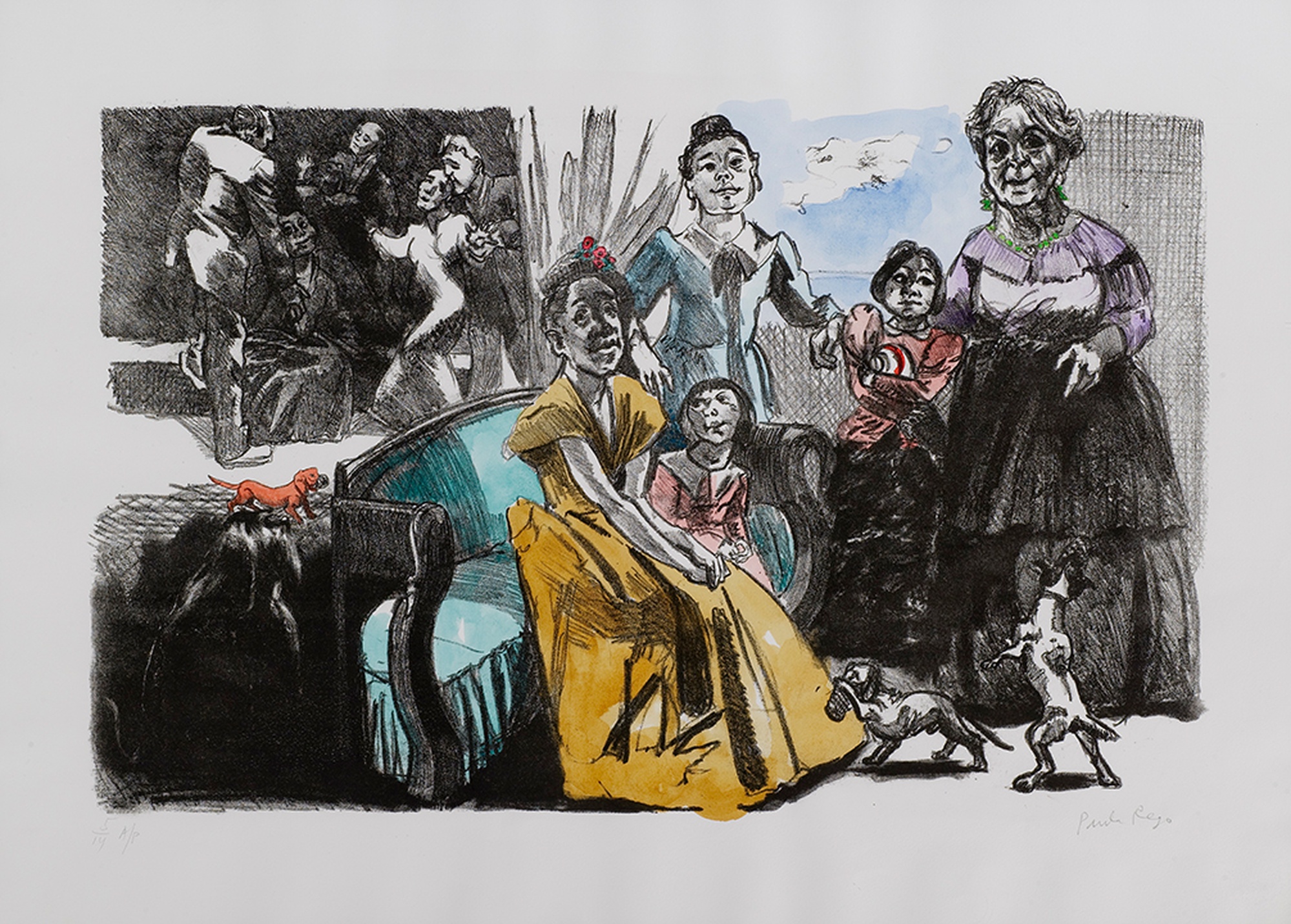
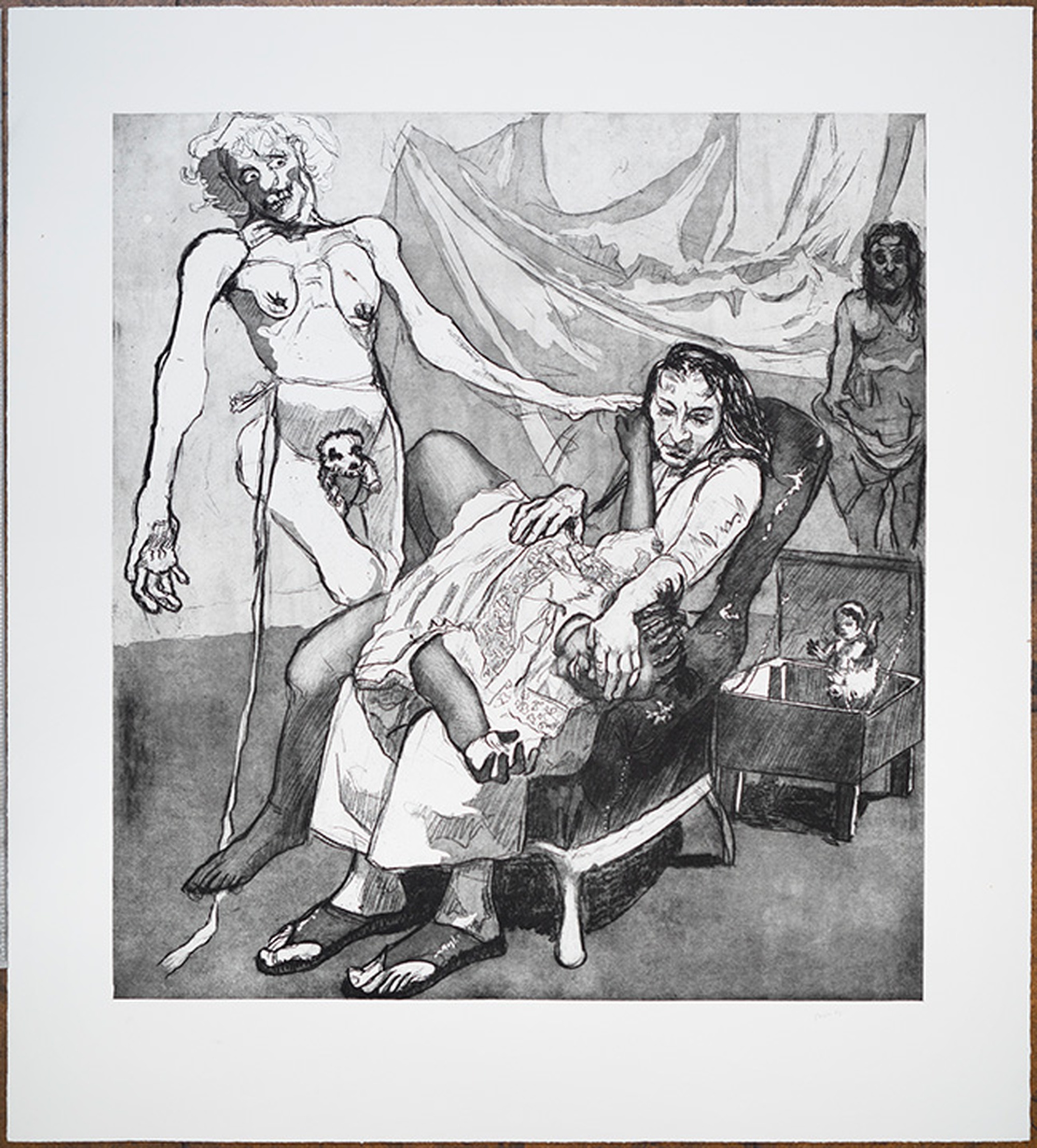
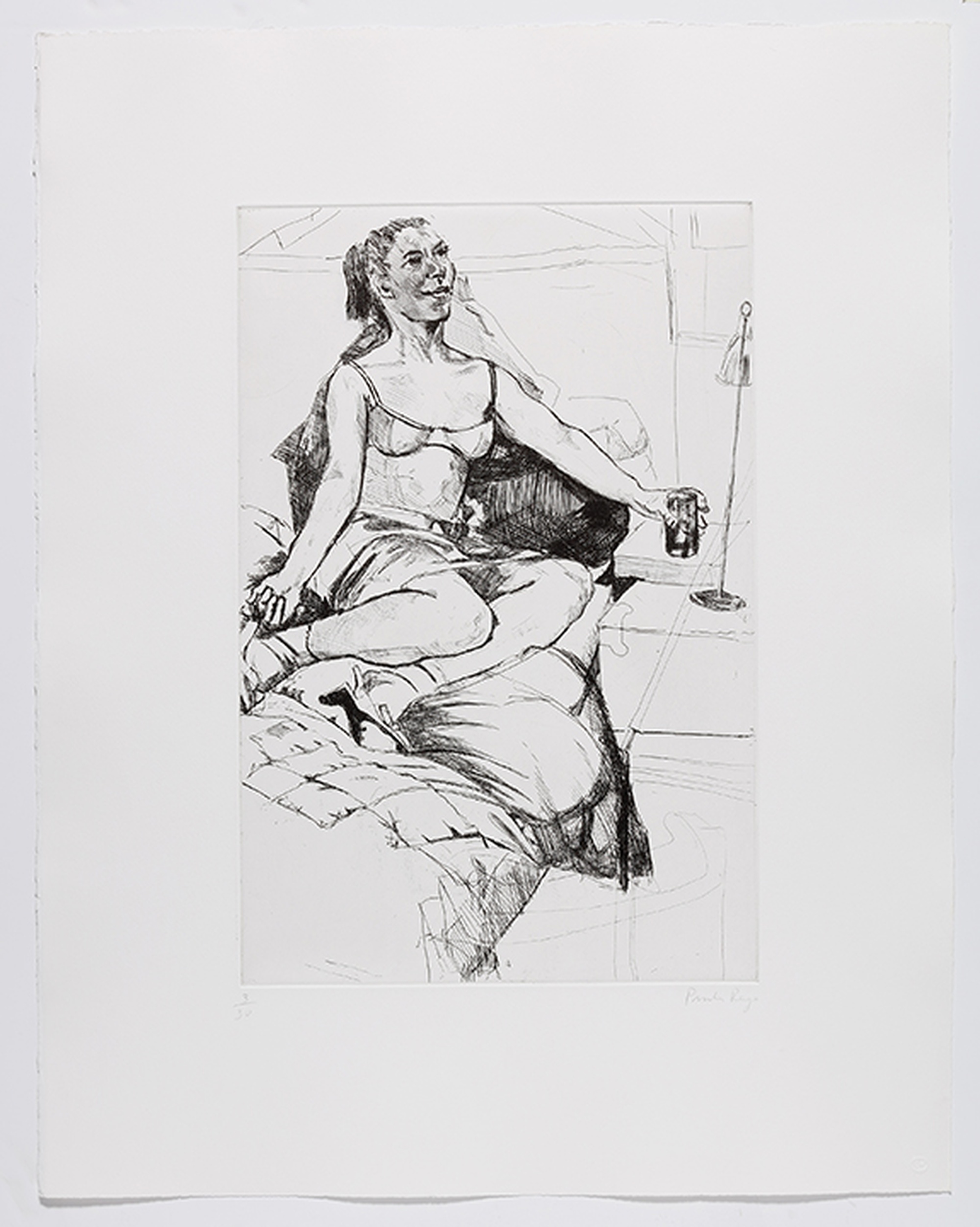
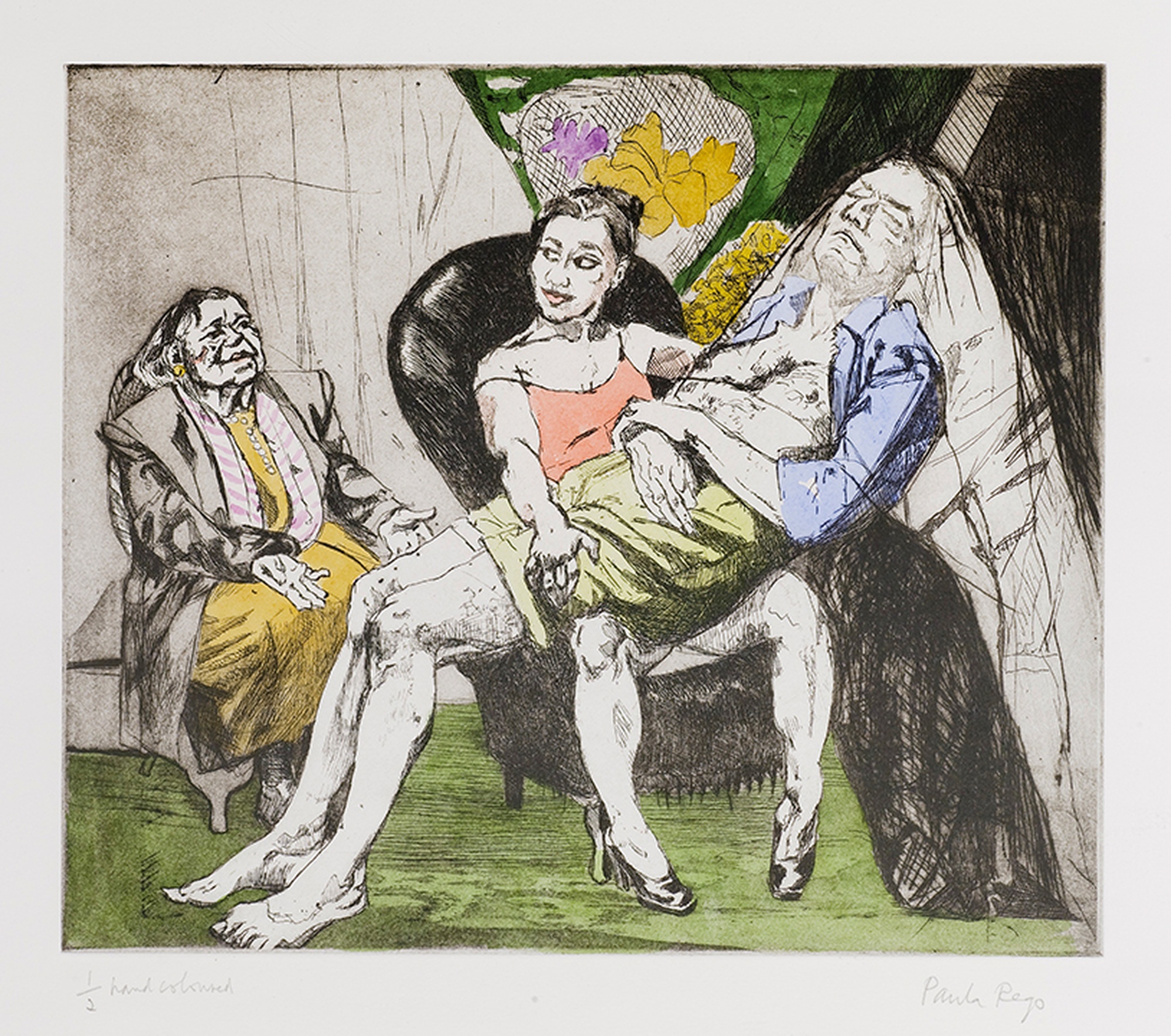
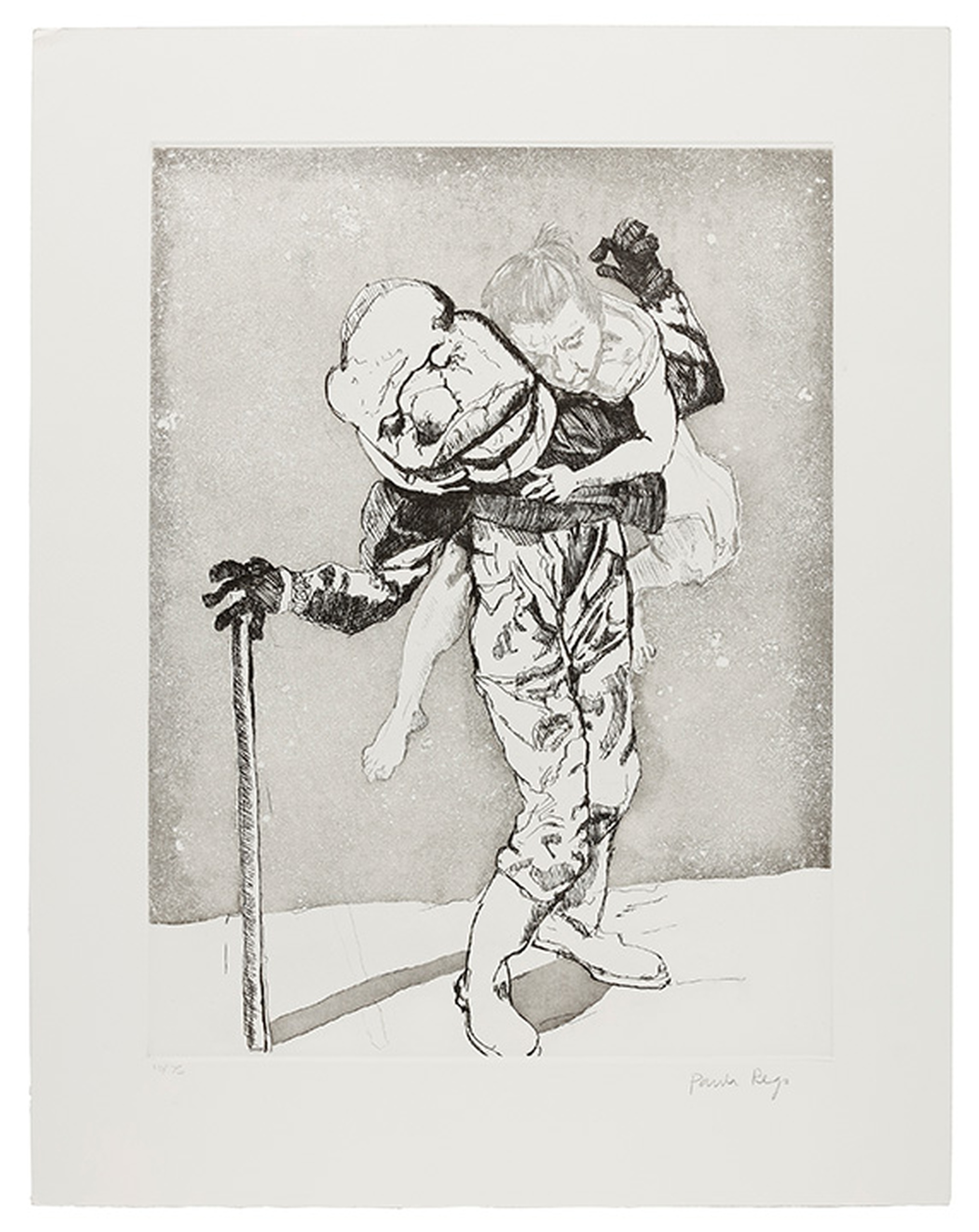
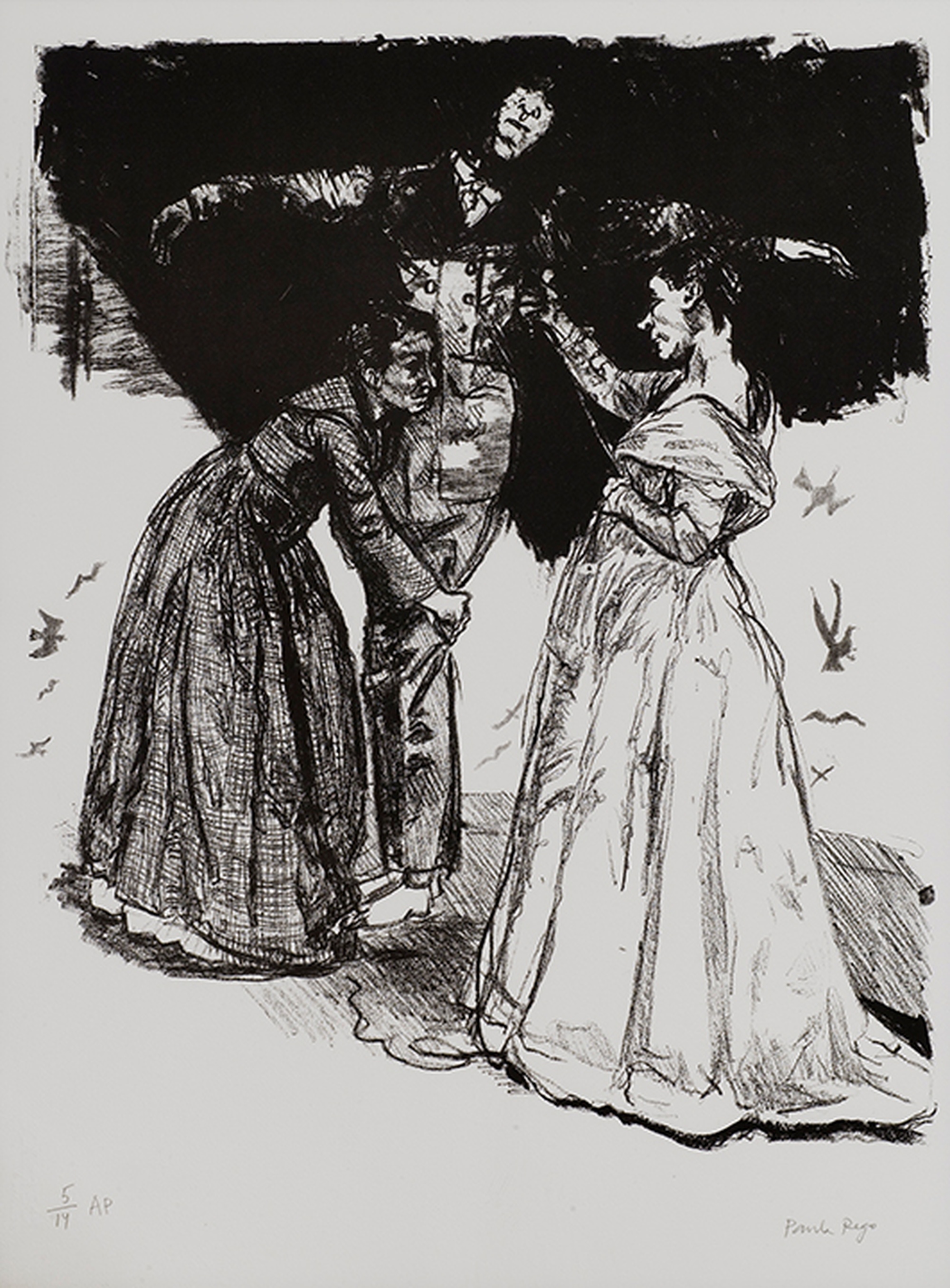
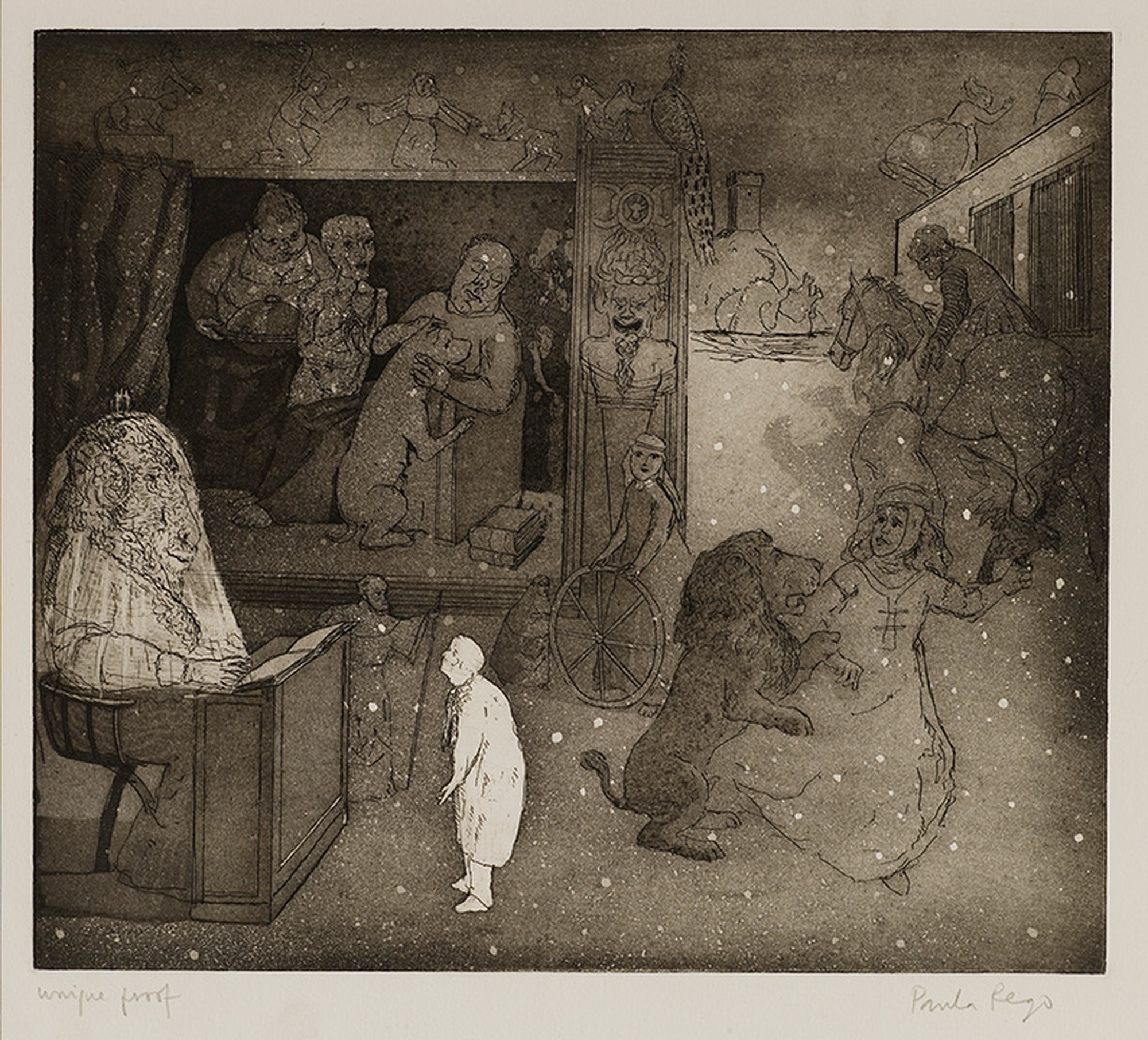
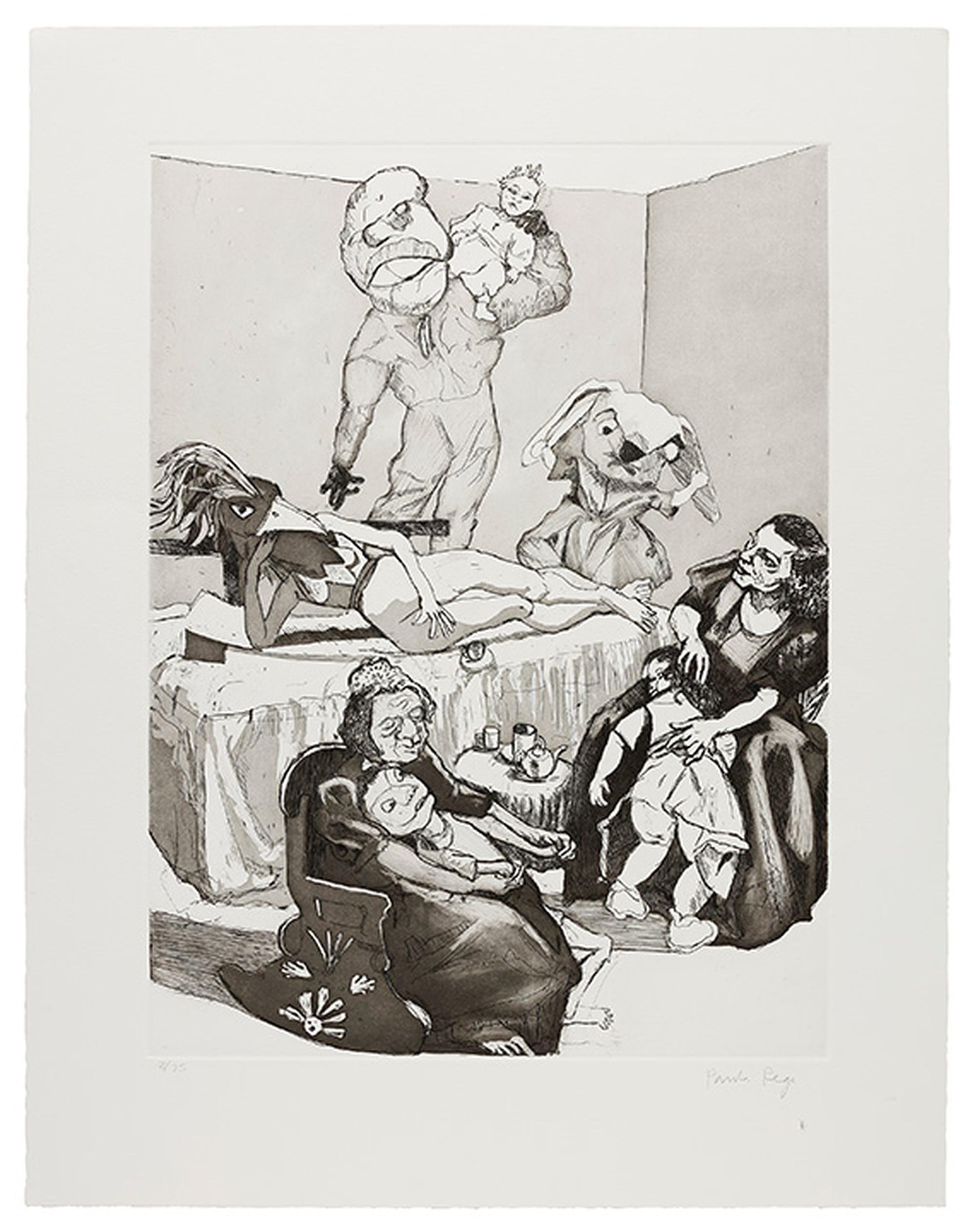
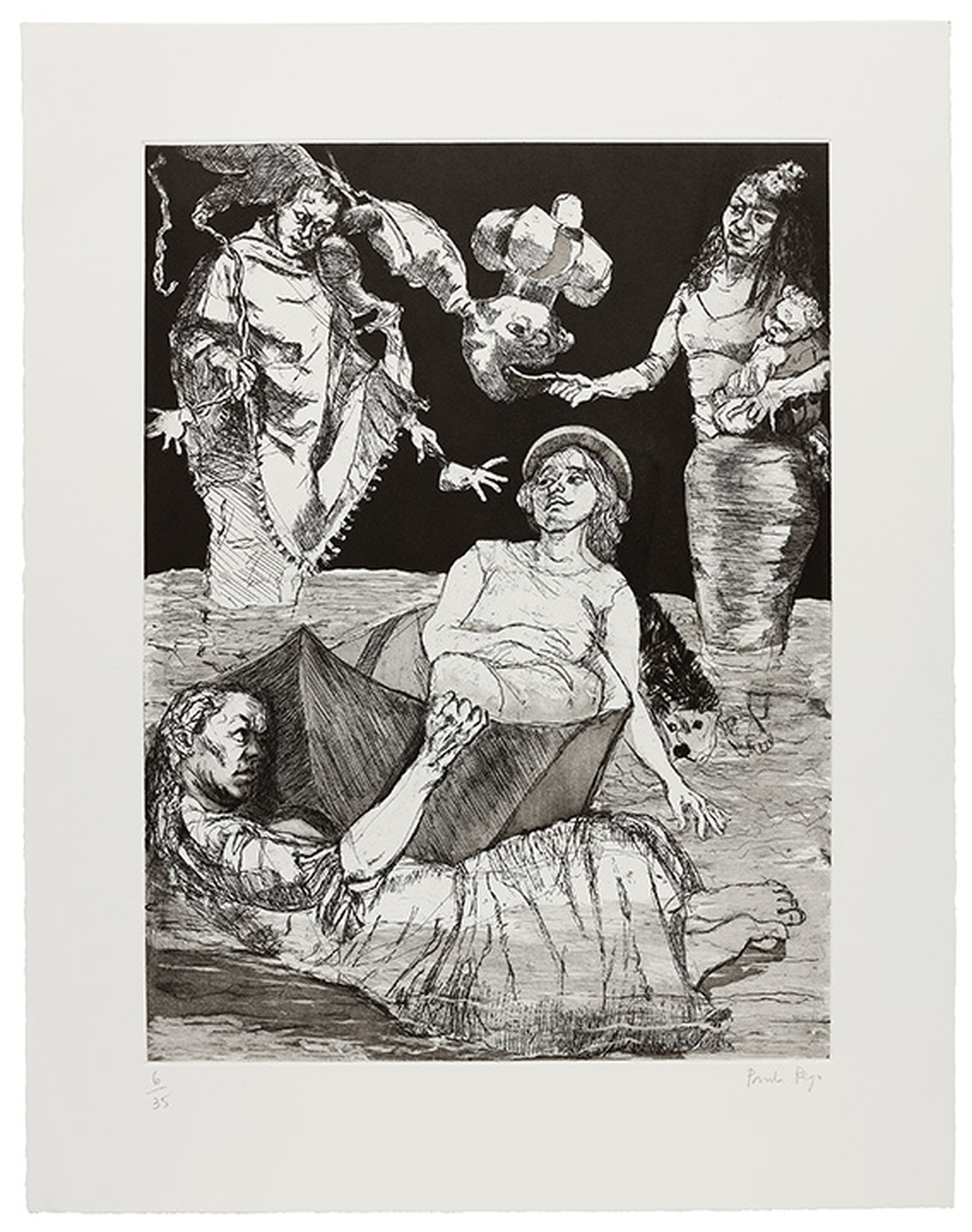
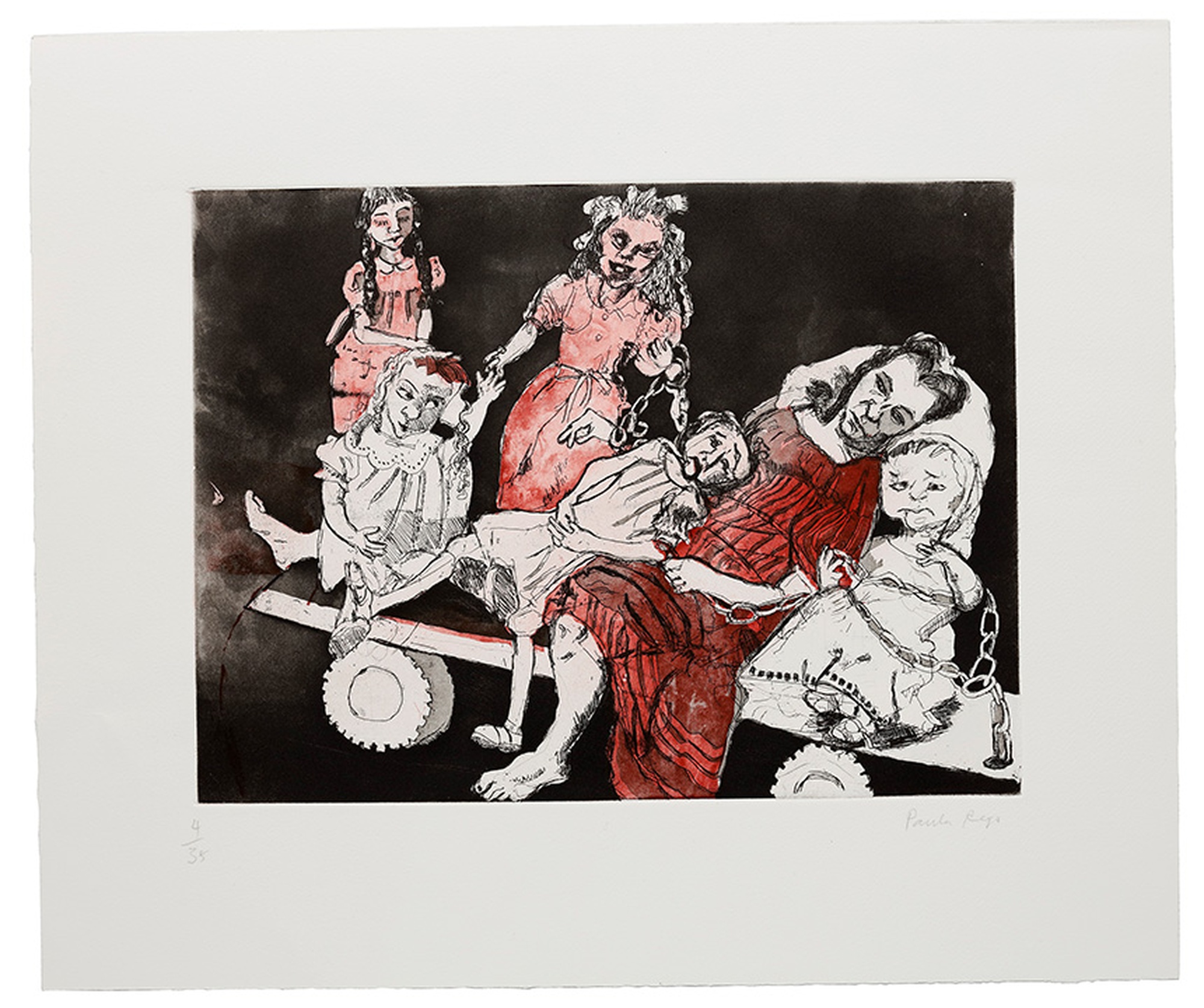
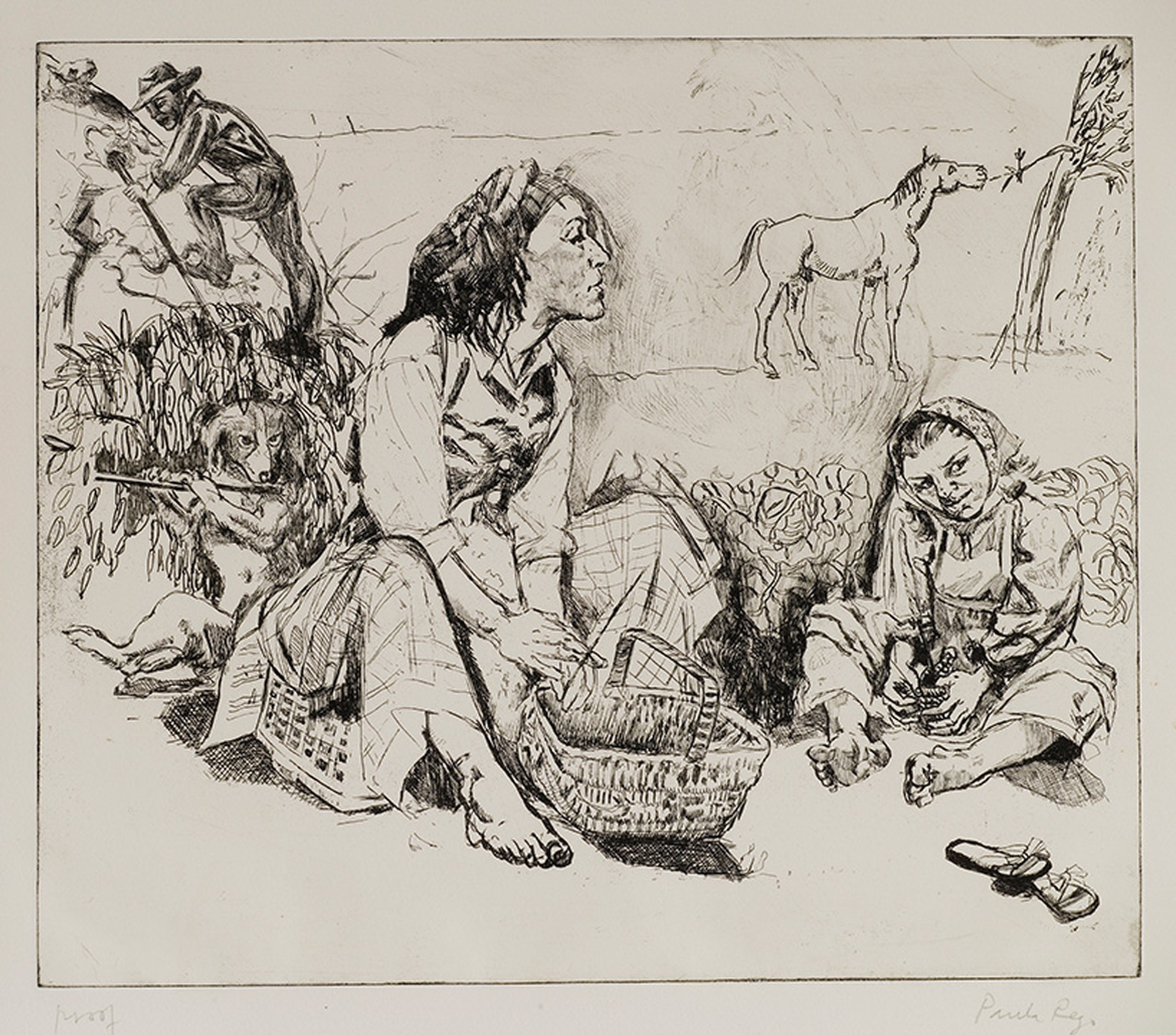
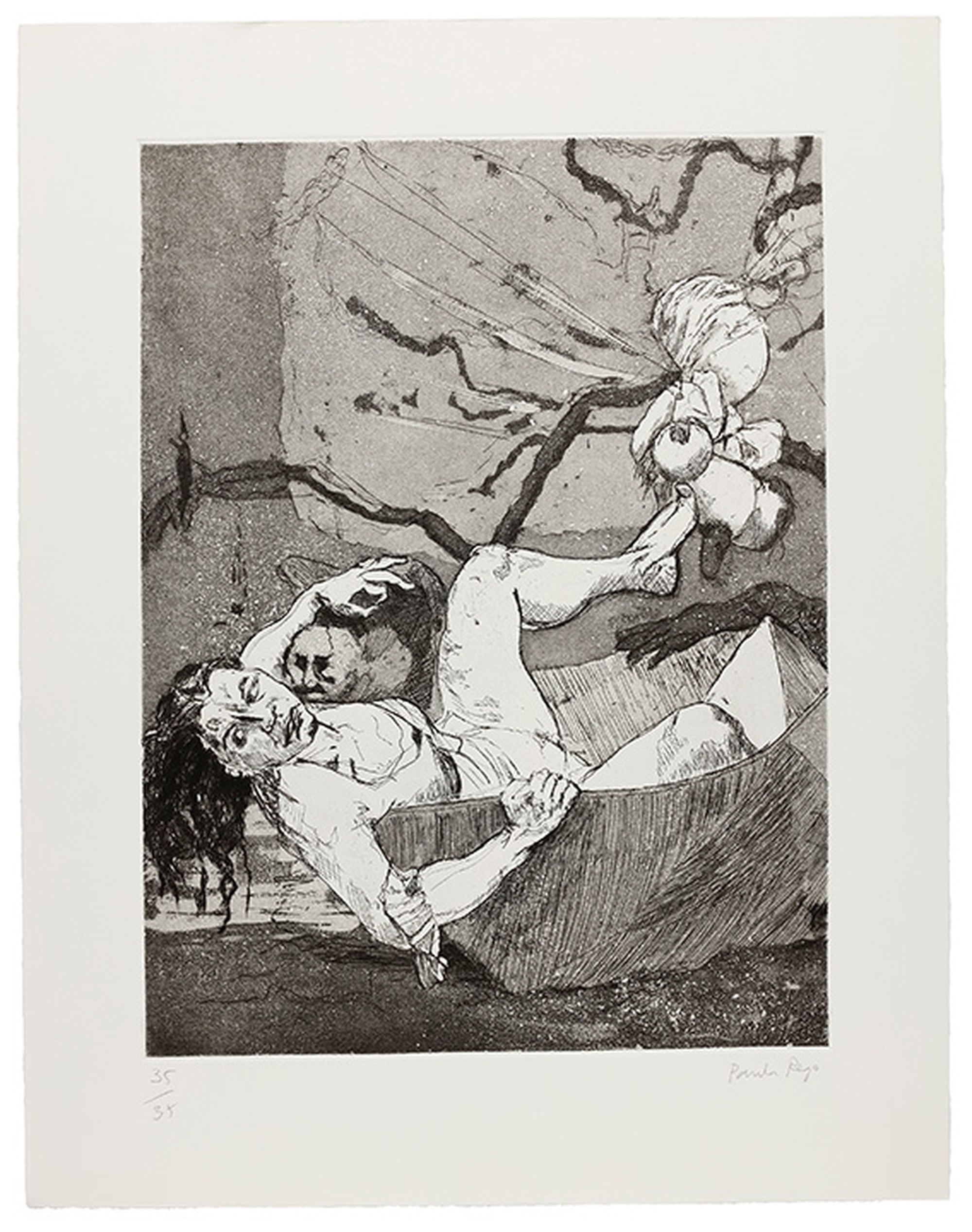
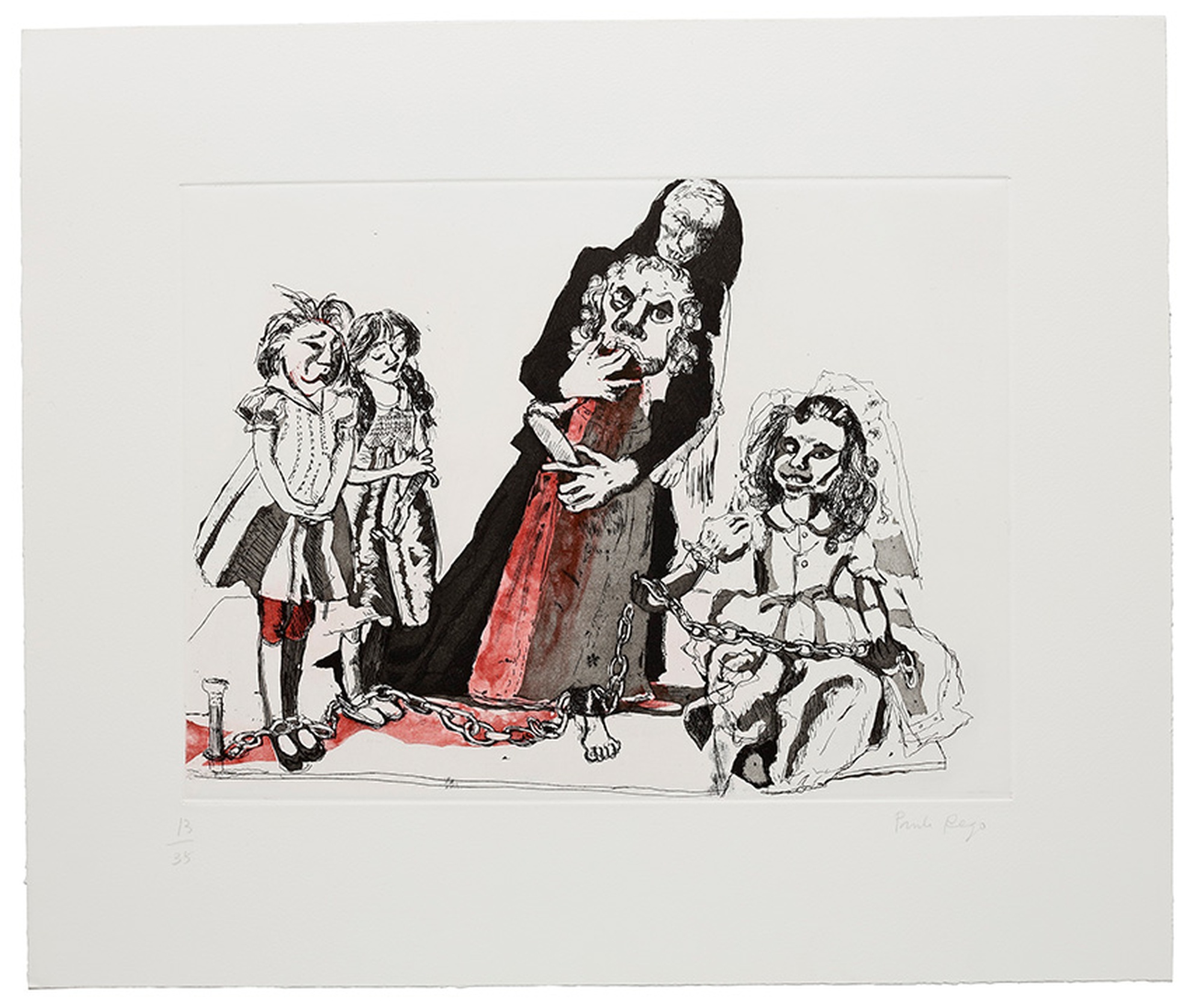
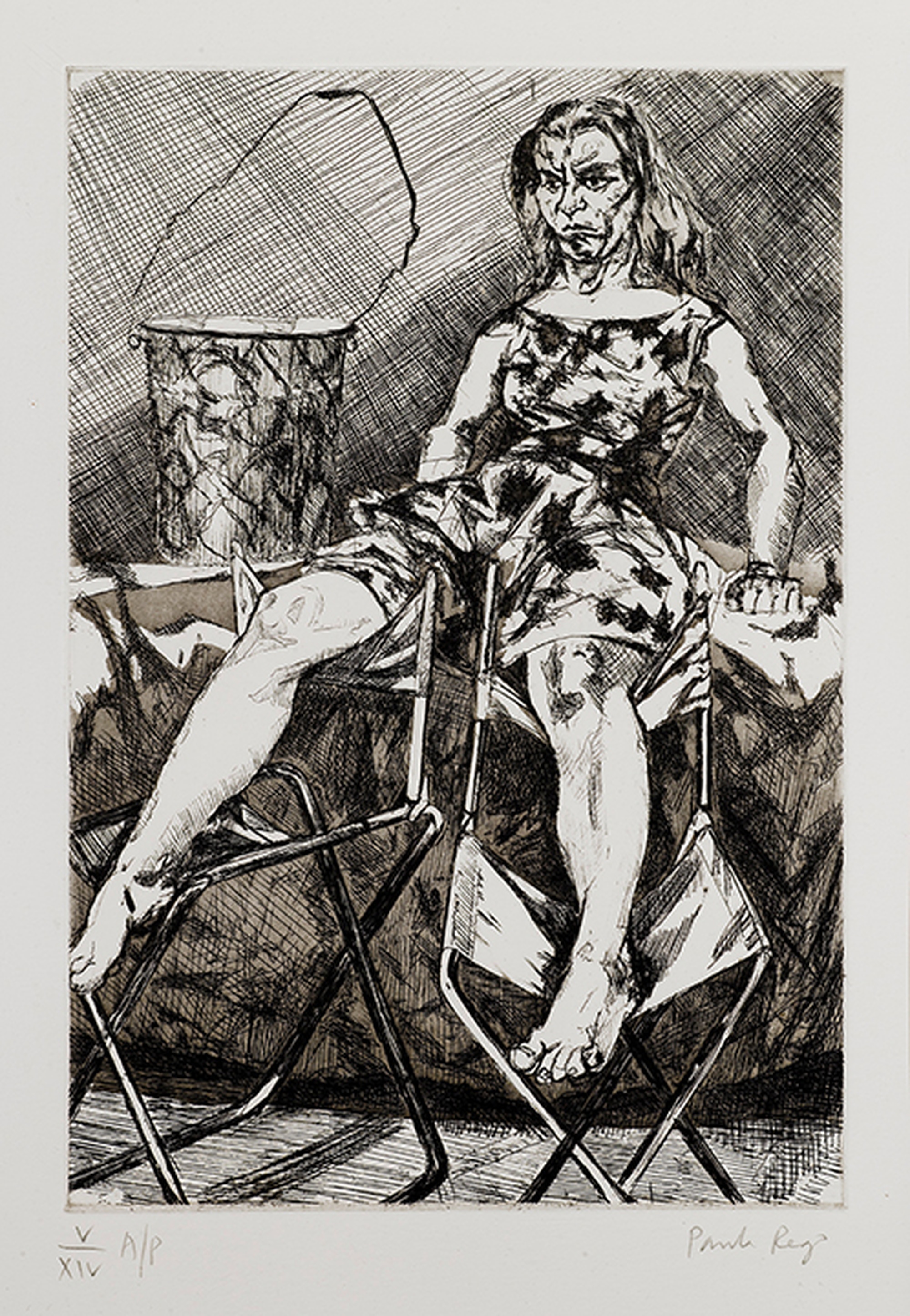
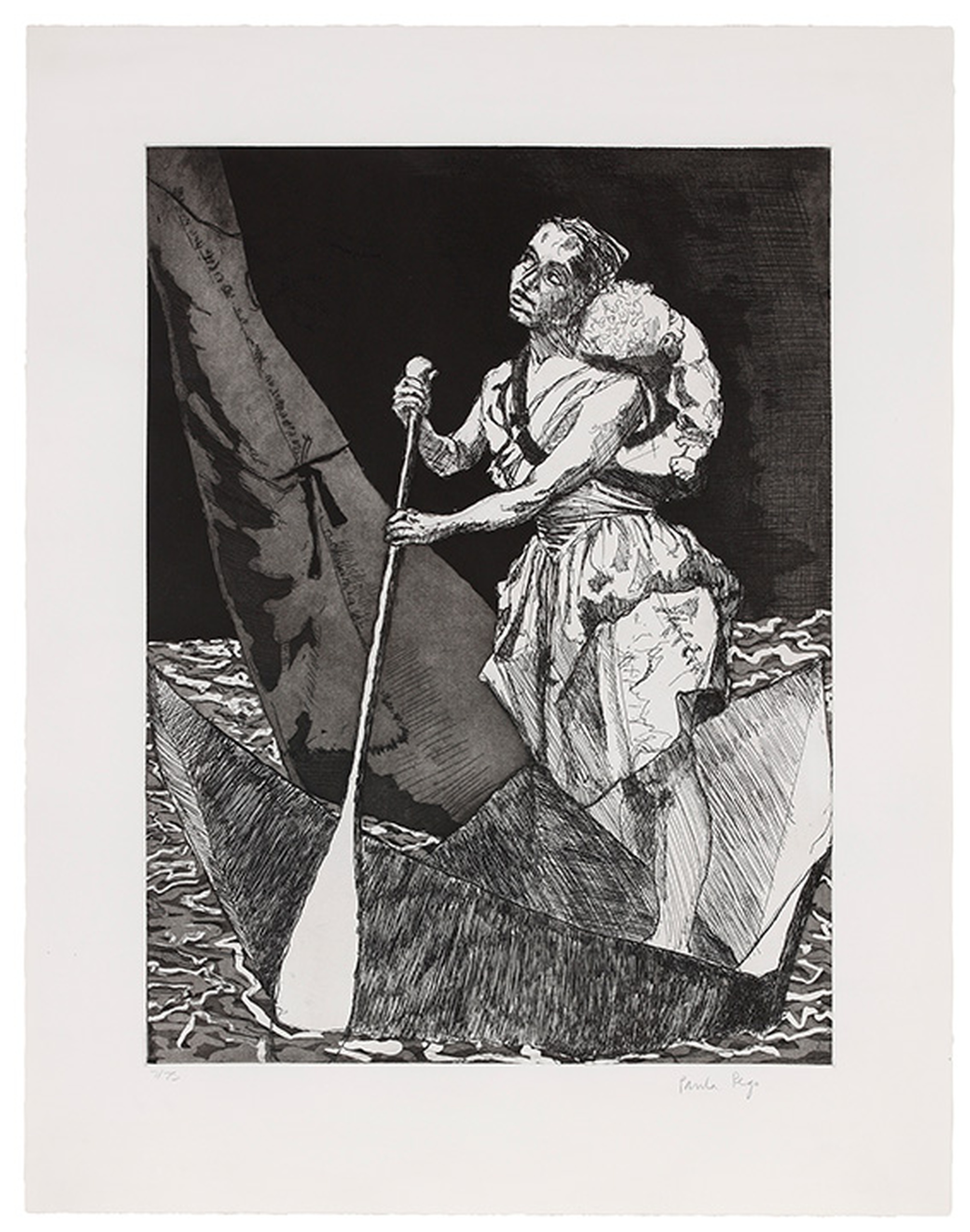
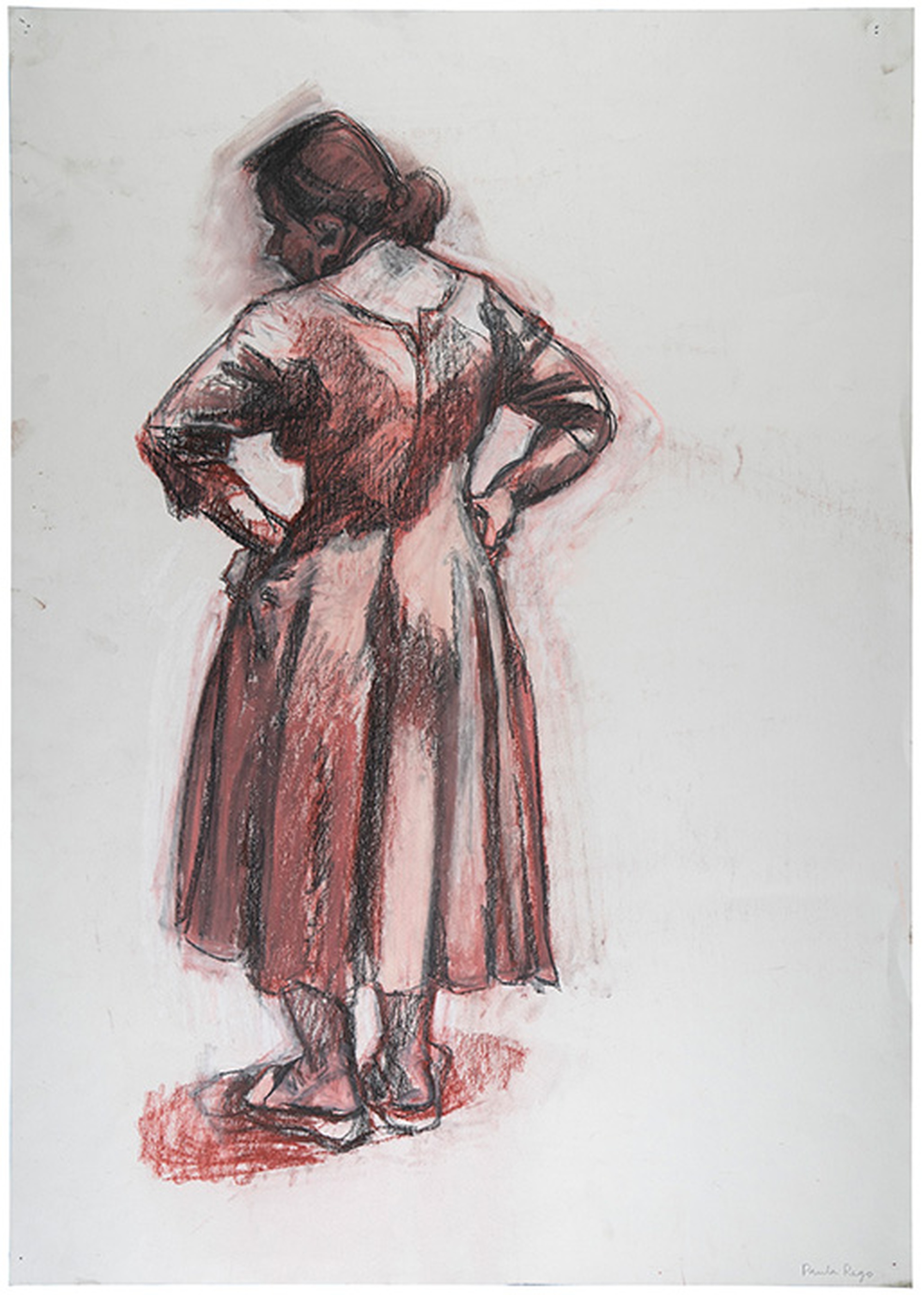
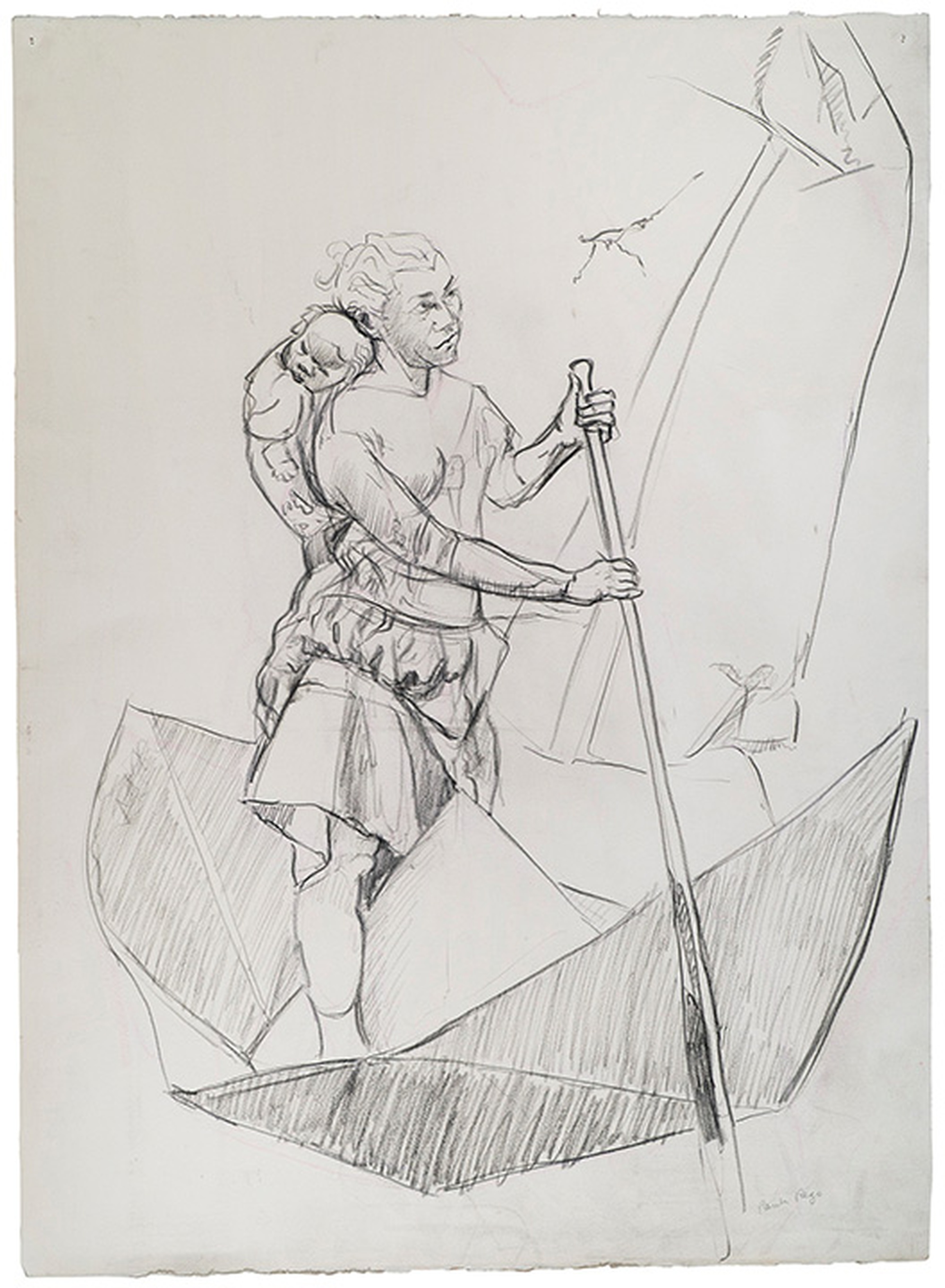
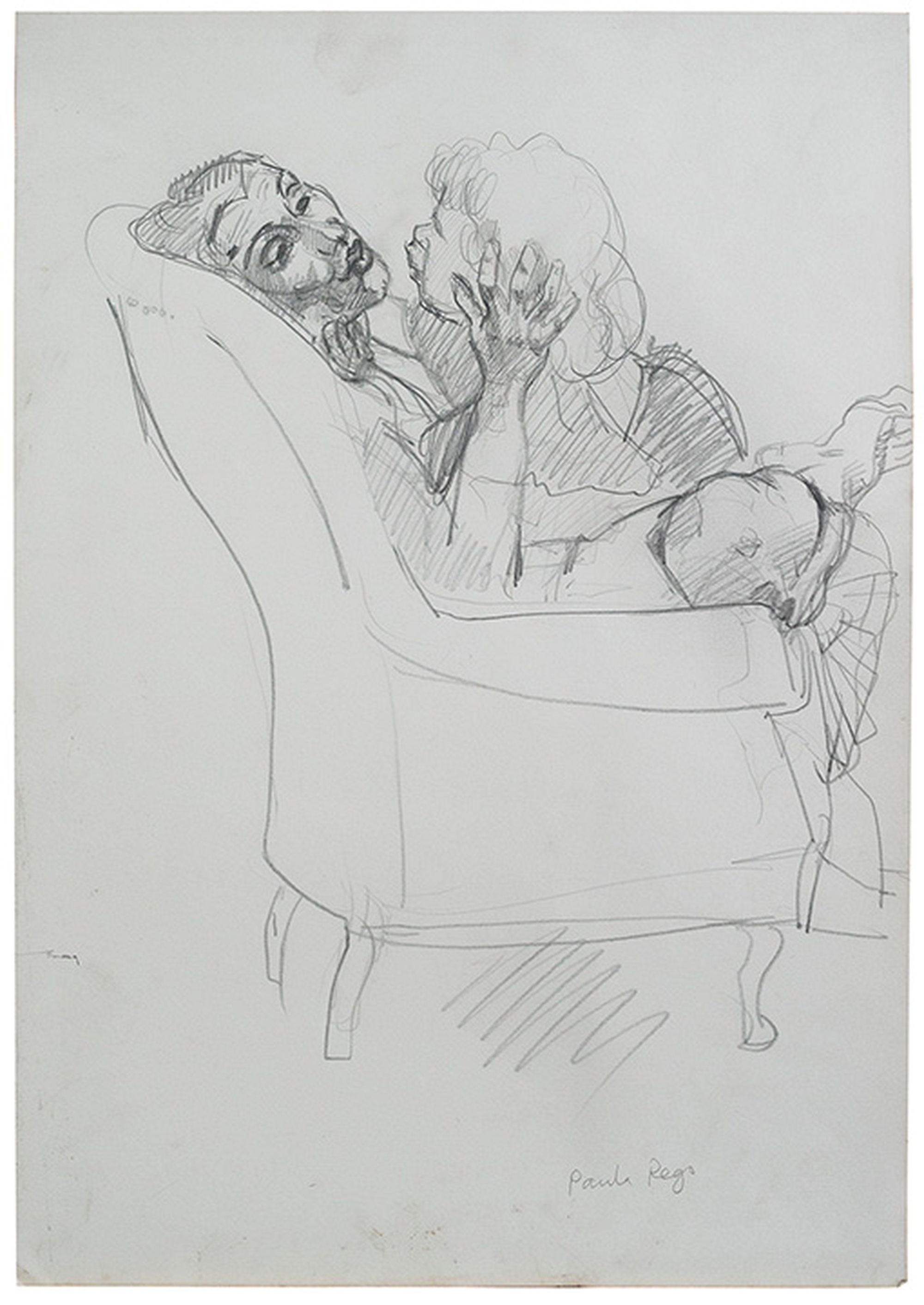
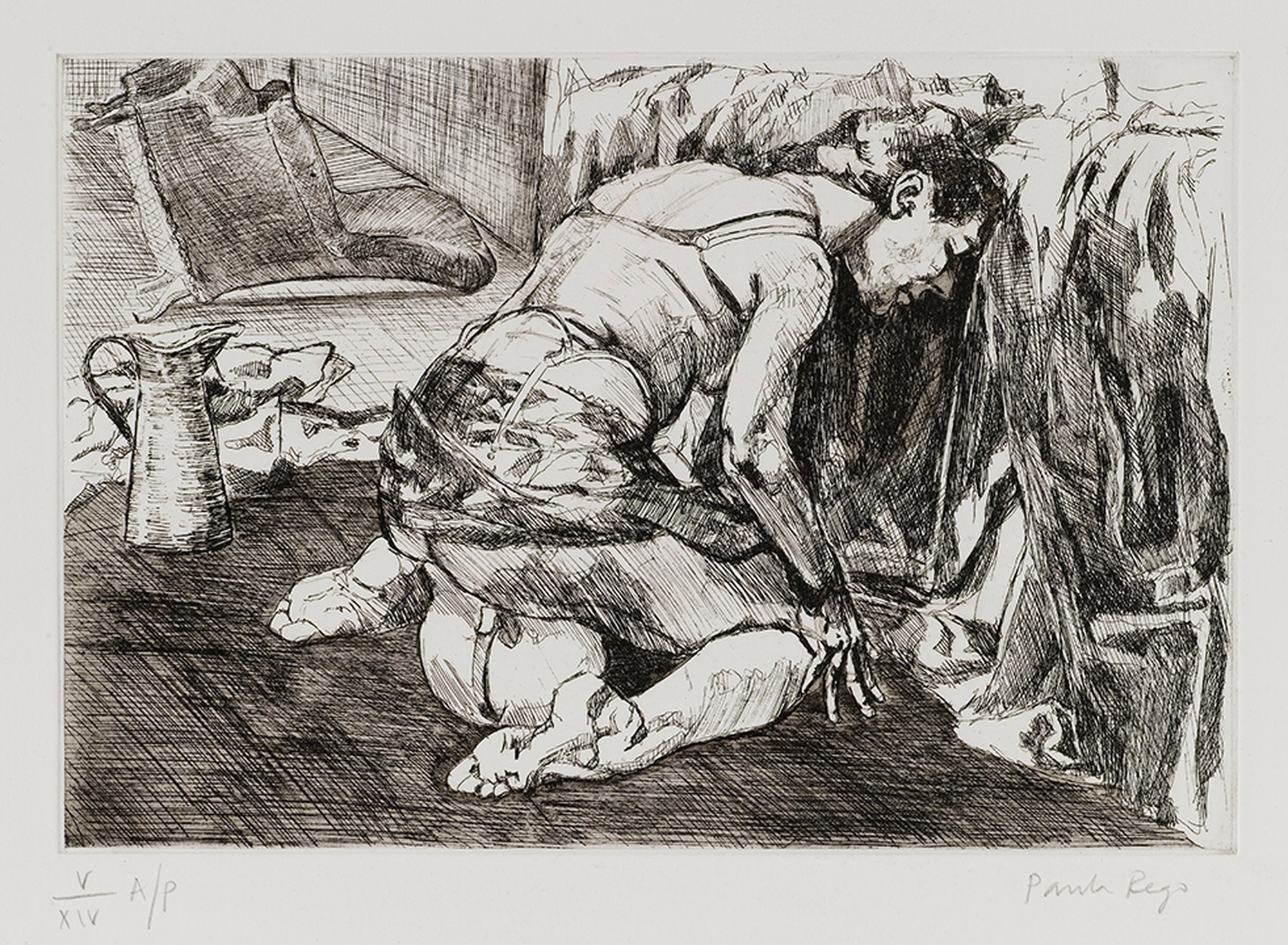
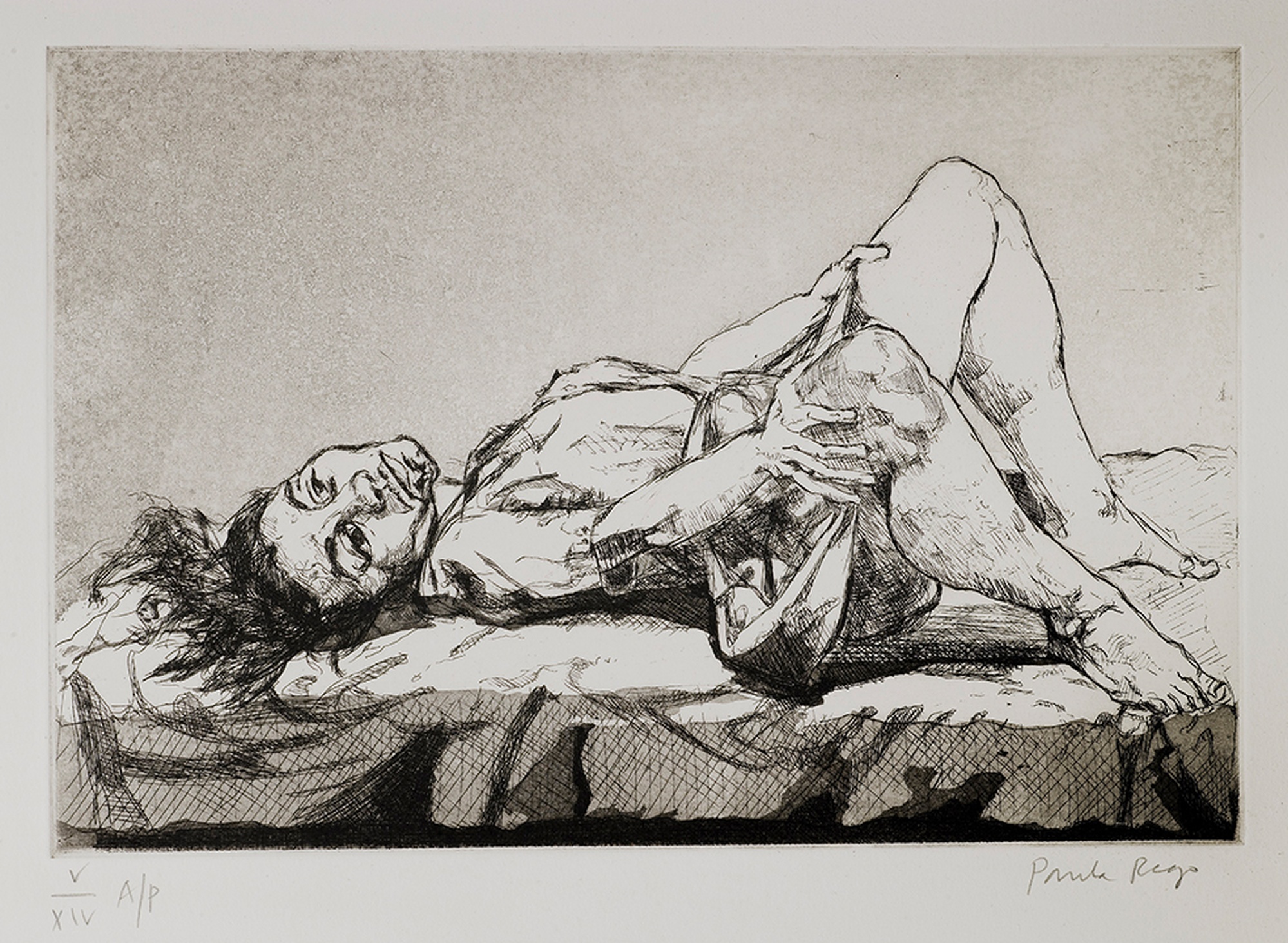
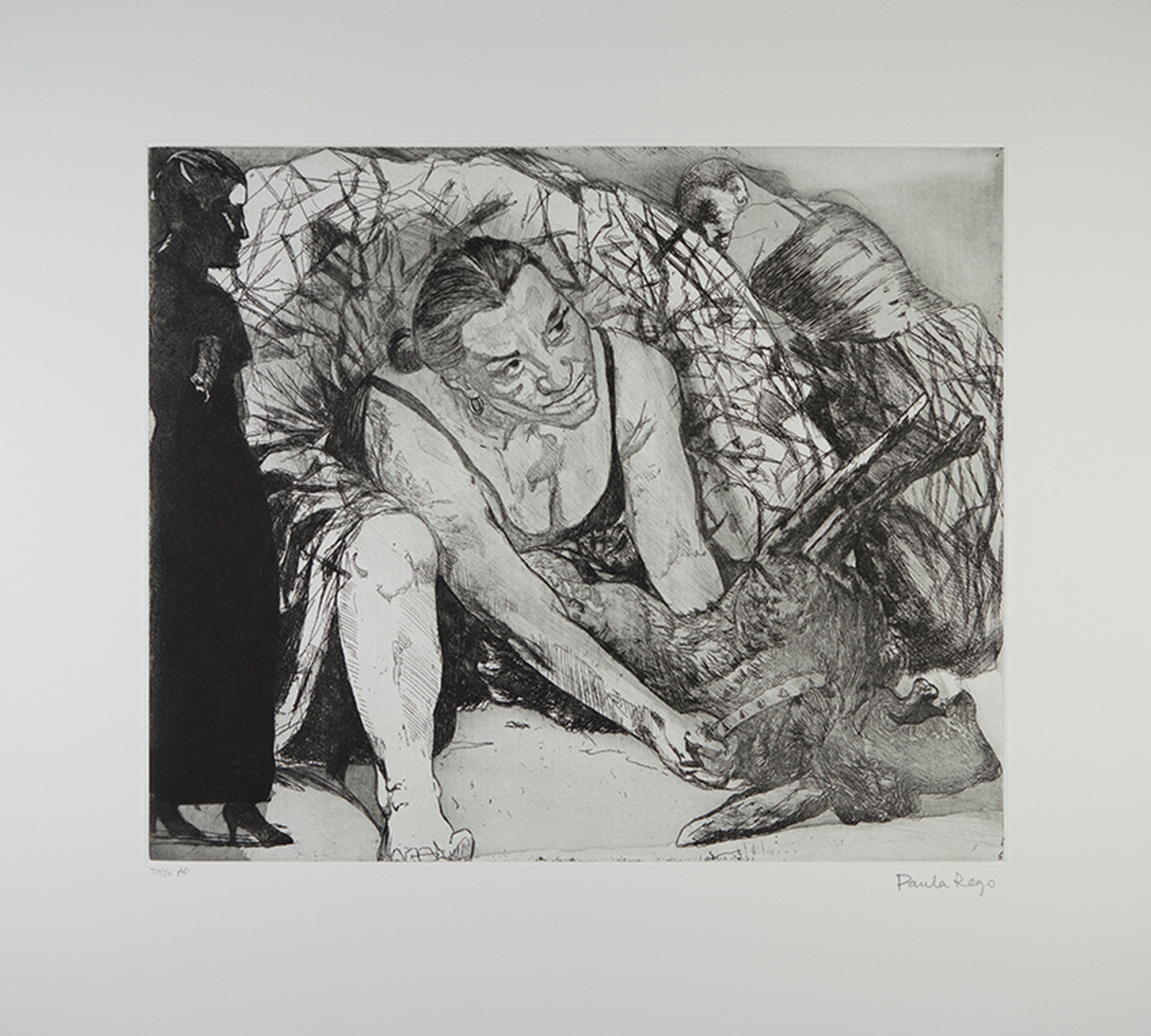
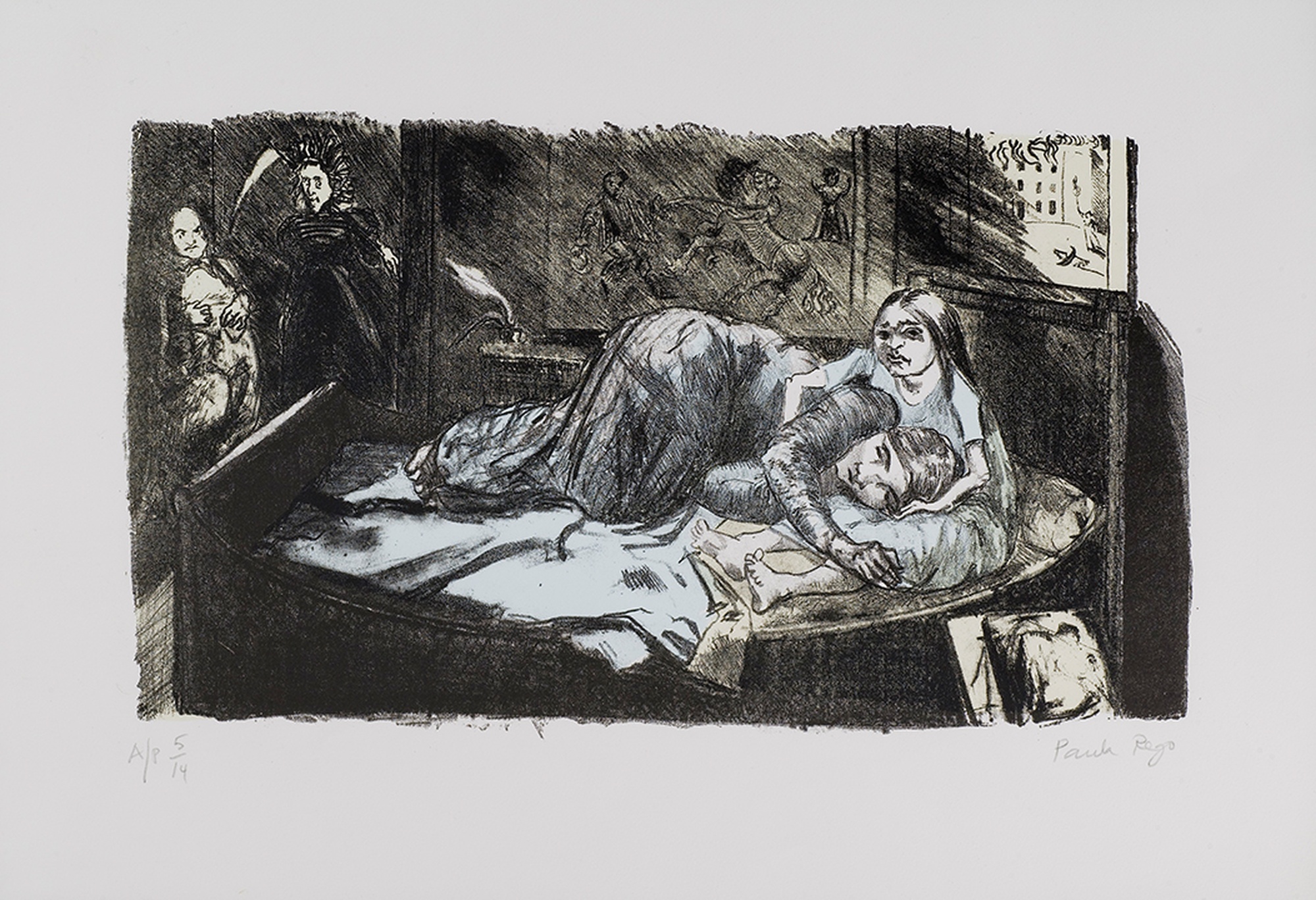
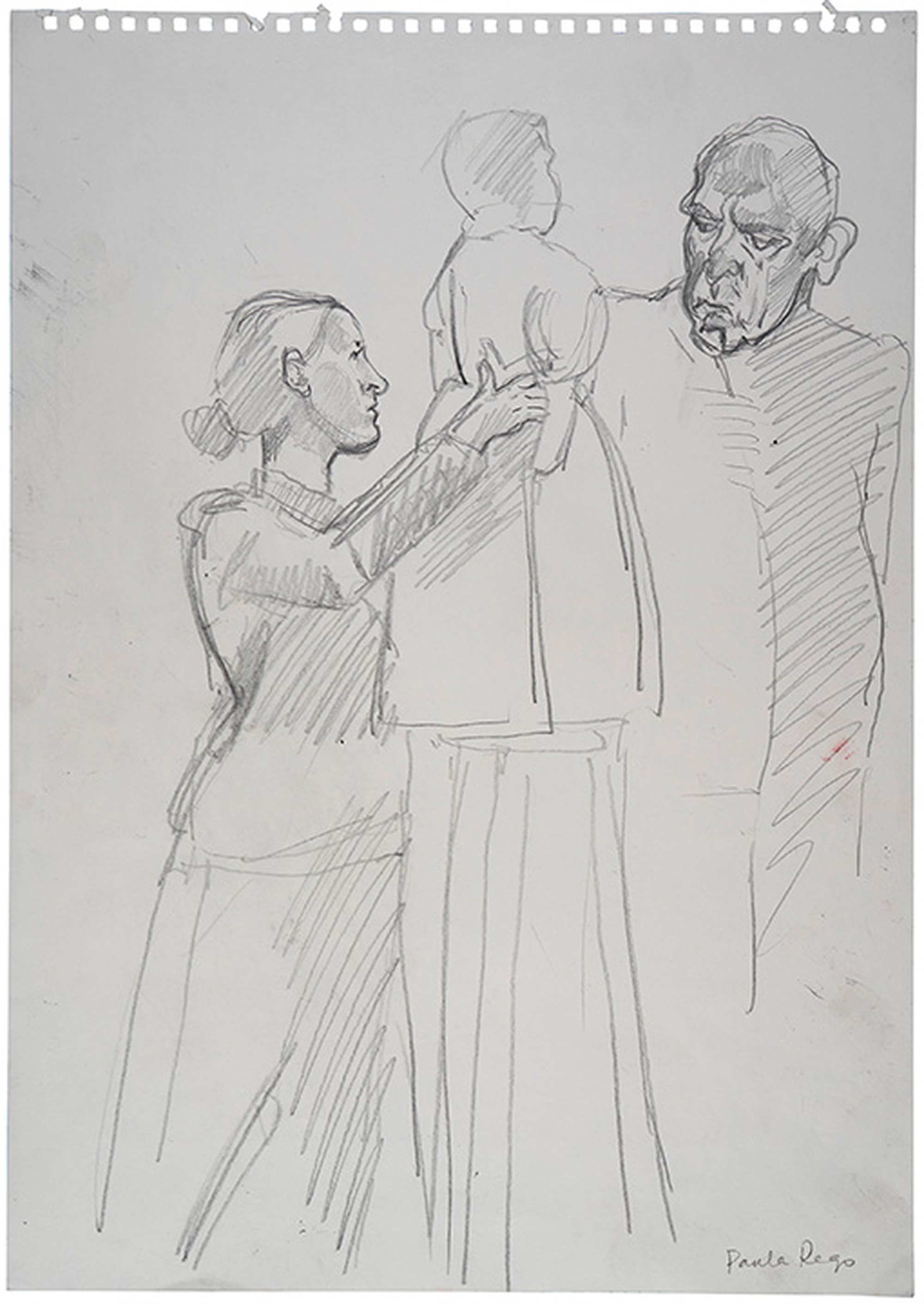
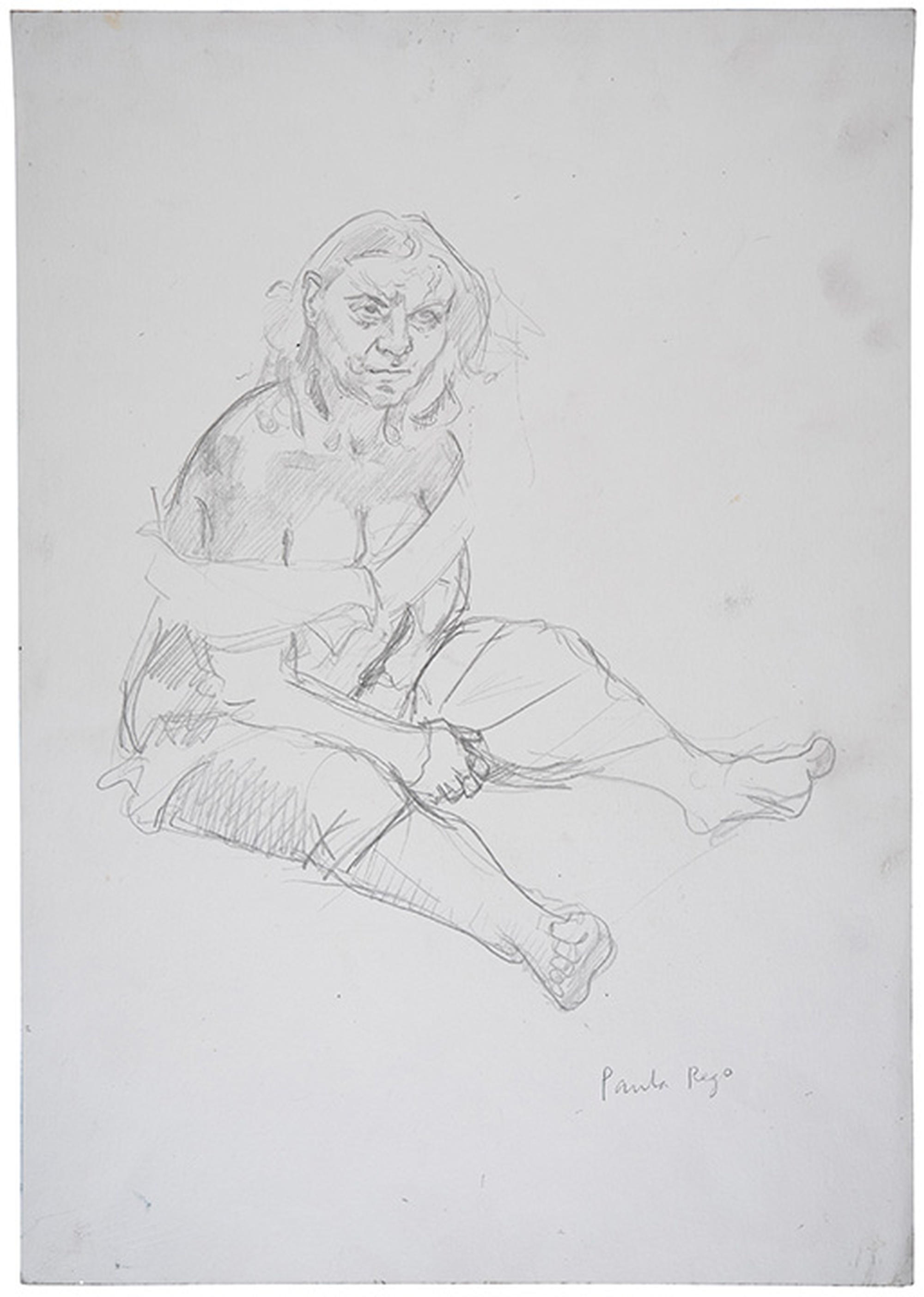
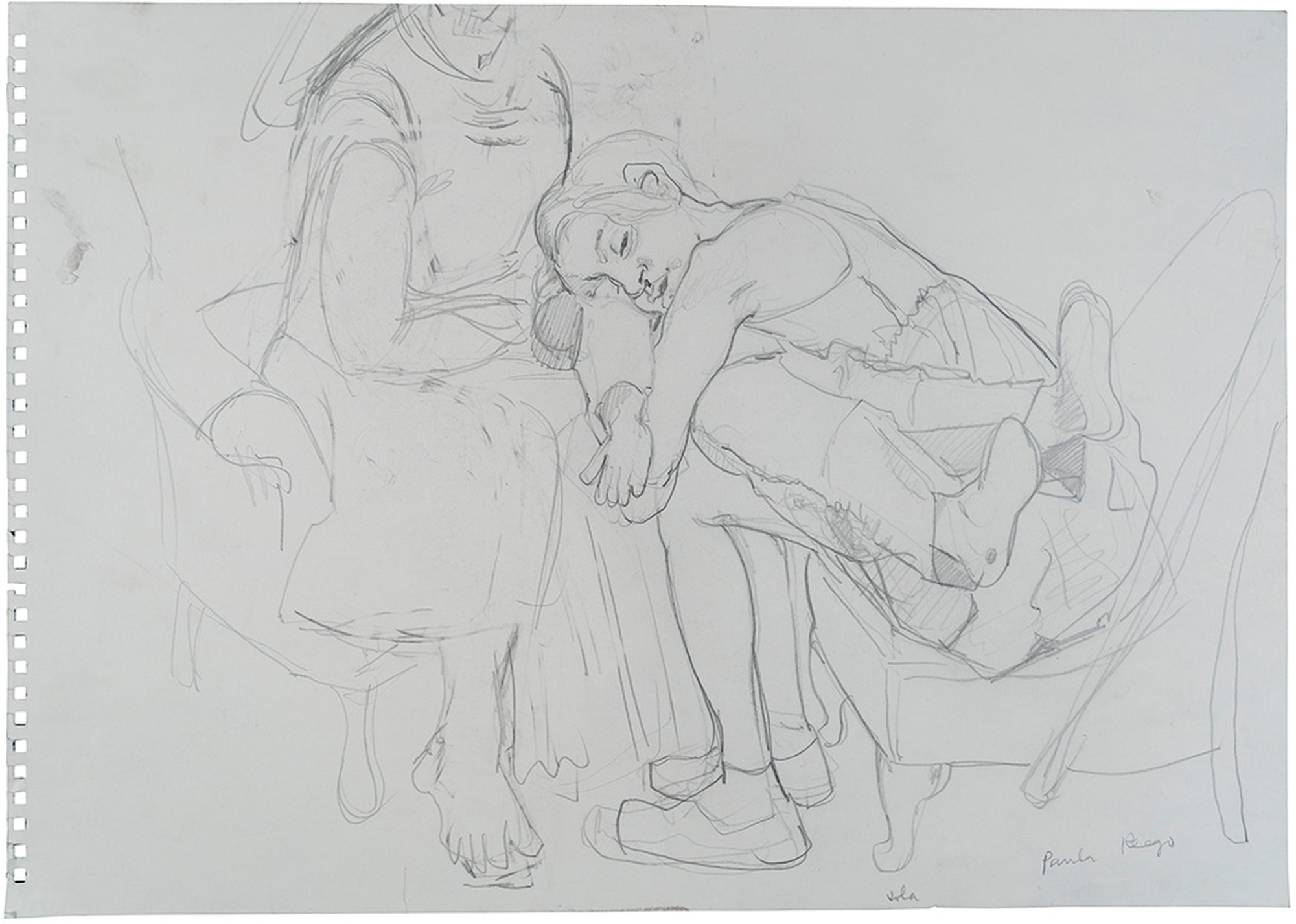
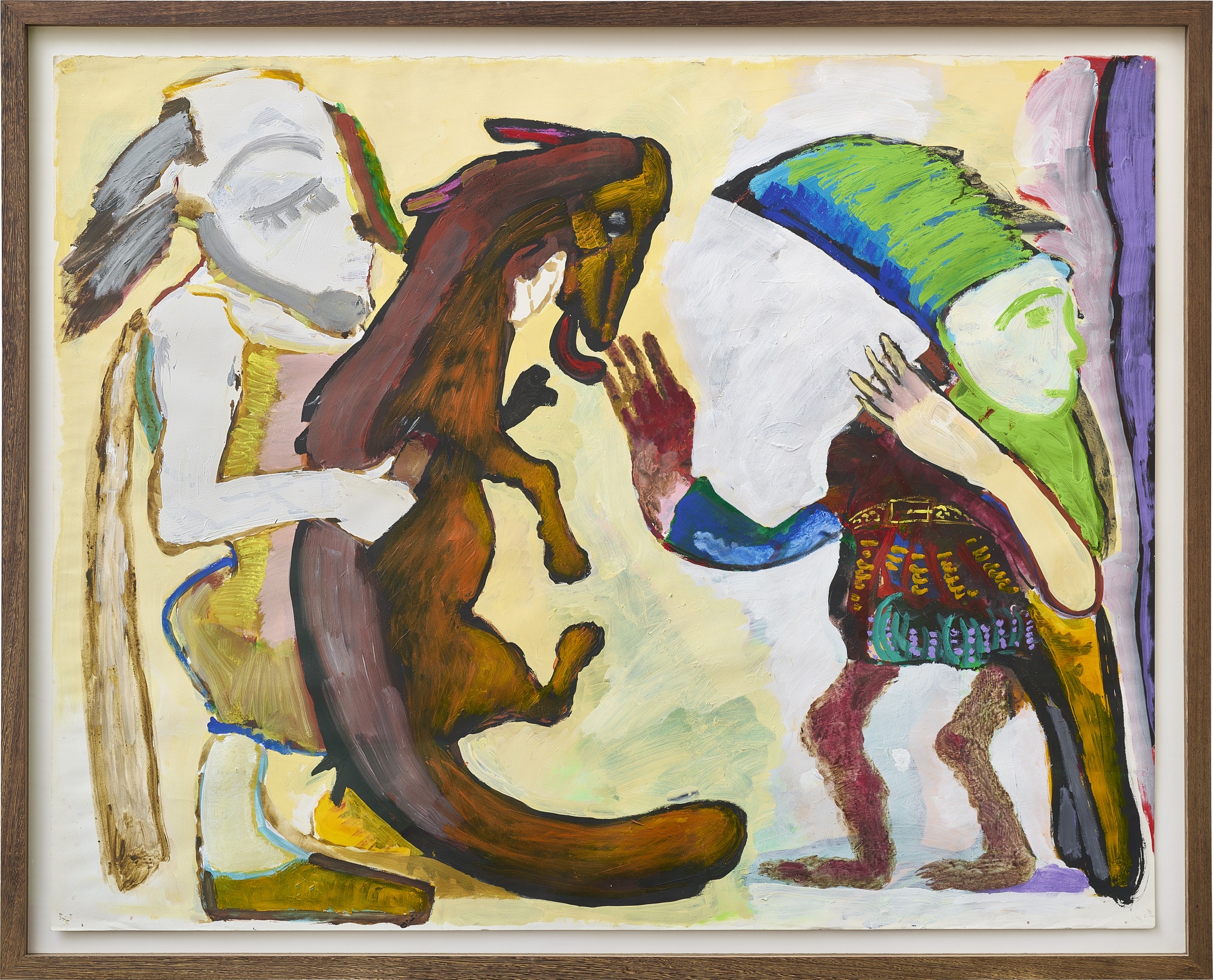
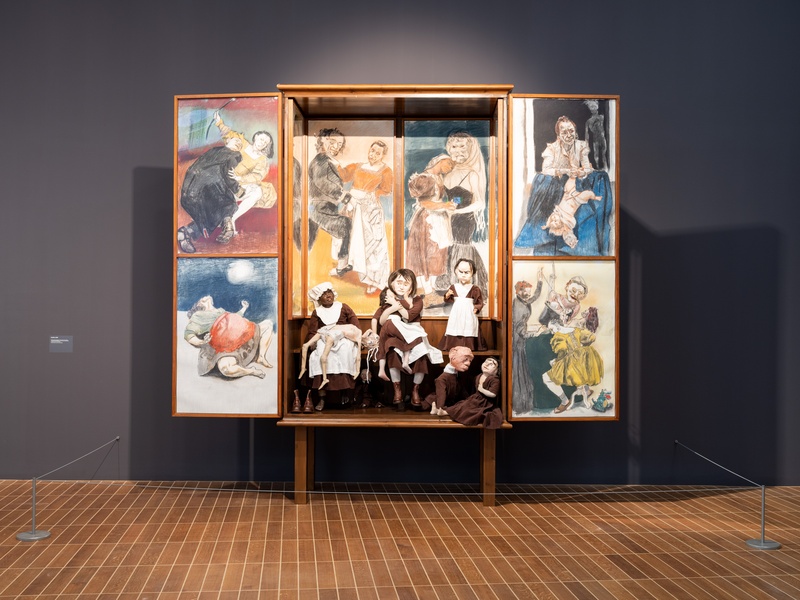
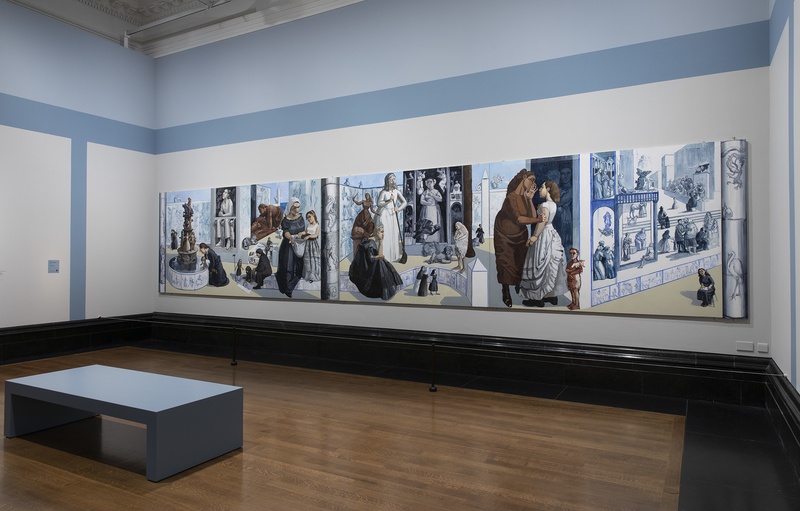
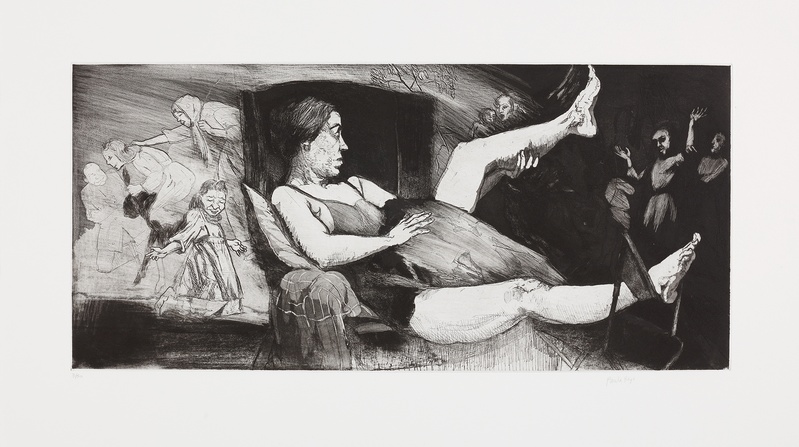
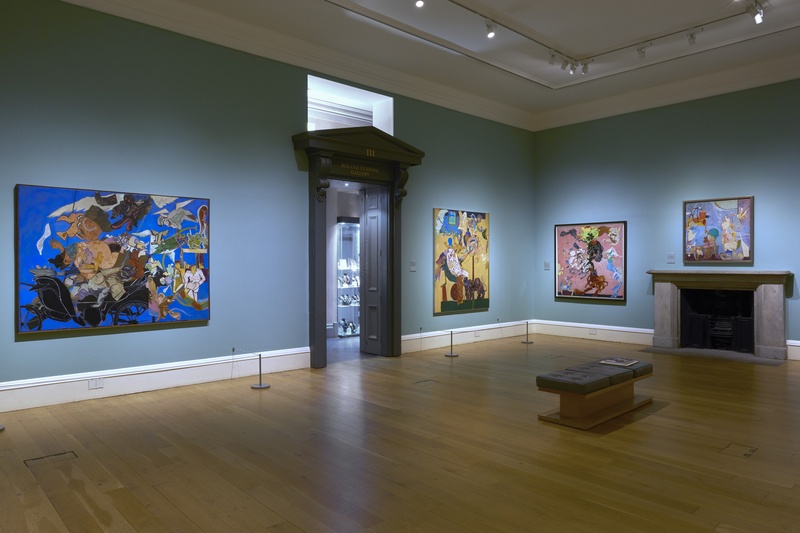
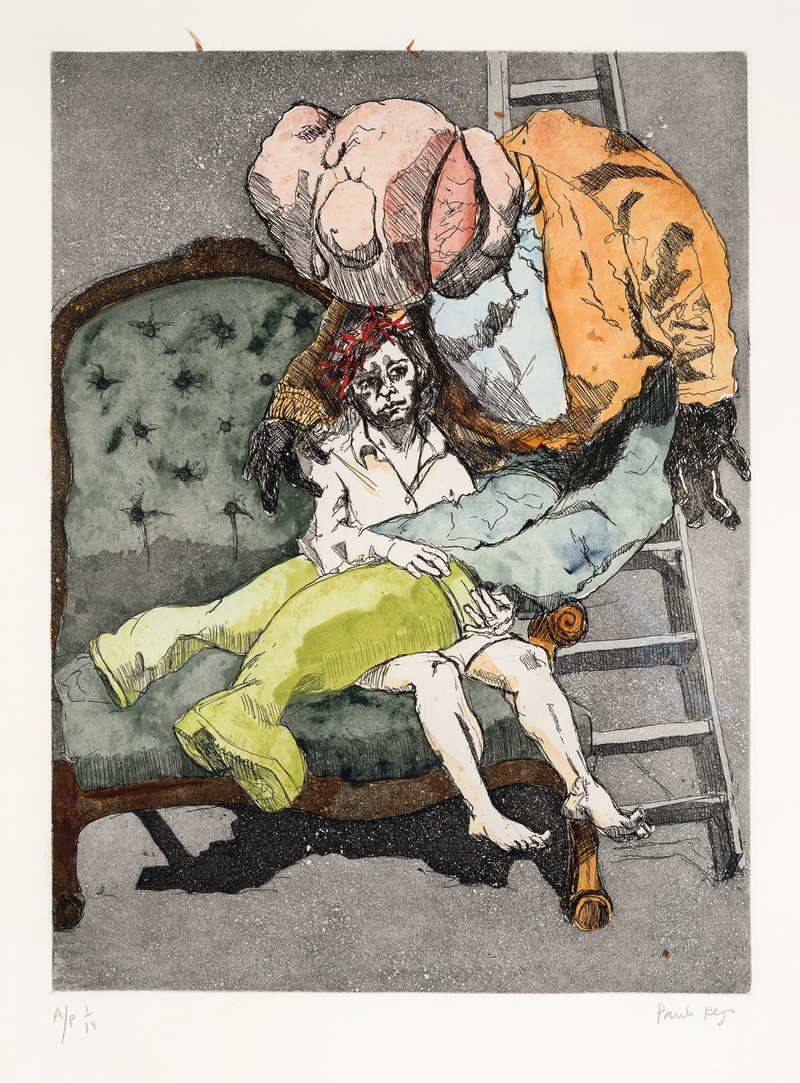
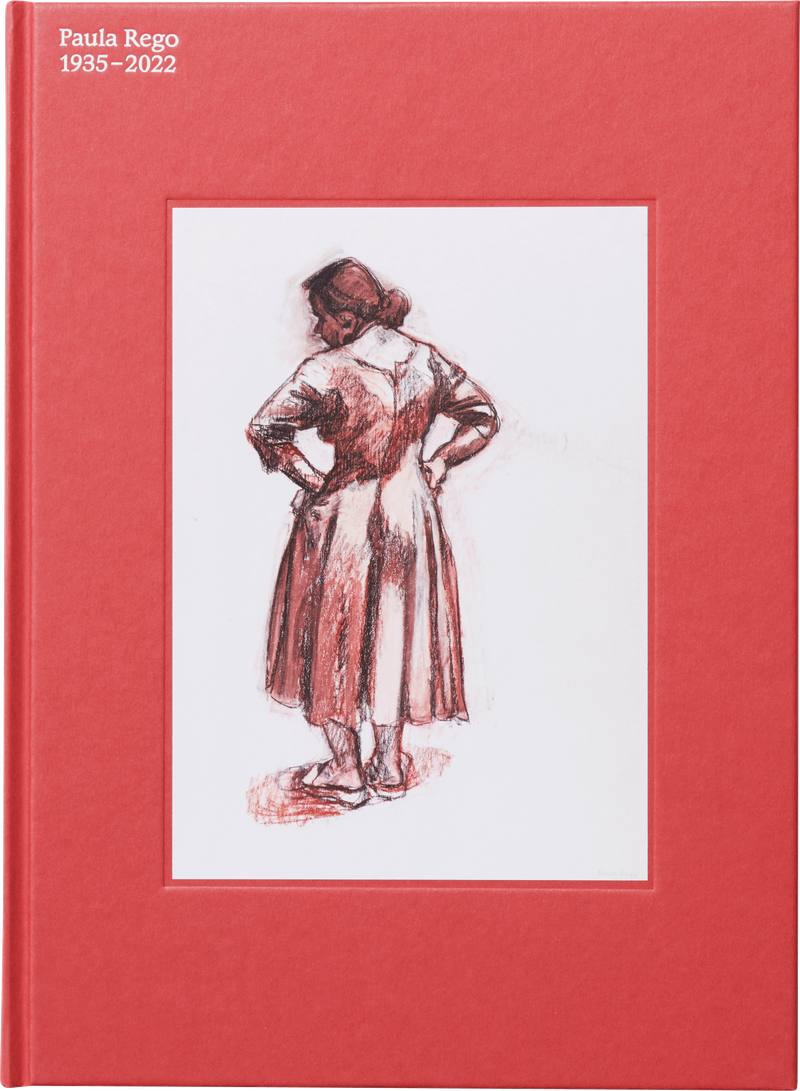
Paula Rego became known for her political collages in the early 1960s. From the mid-1960s, she devoted herself primarily to painting, drawing, and printmaking, developing her typical magical realist style with grotesque scenes dominated by female figures. Her motifs and subjects are dedicated to themes such as pregnancy, aging, abuse, betrayal, mental suffering, aggression, and oppression. Characteristic of Rego's depictions of women is their physical presence. The carnality of the firm, muscular, compactly voluminous bodily forms is far from a sensually sexualized, masculine view of the female body. The hands of her protagonists are large and strong, they grip, they carry, they hold, they support. The faces are edgy and expressive. The spectrum of emotions ranges from inner tension and expectation to concern, fear, exhaustion, fright, despair, and solicitude. It is often the gaze of Rego's struggling figures that addresses directly and immediately the viewer, expressing the complexity of the characters' emotions. Read More
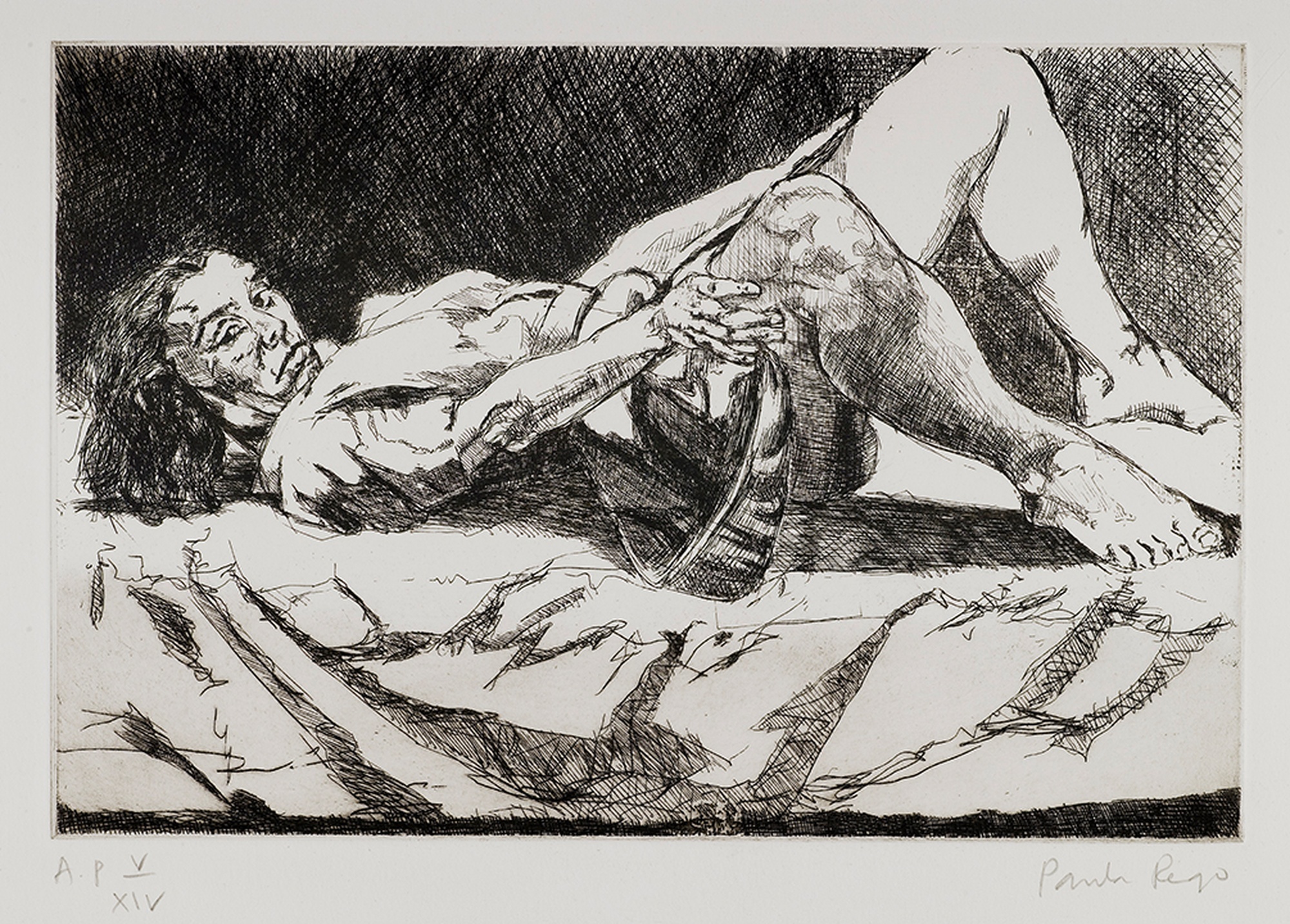
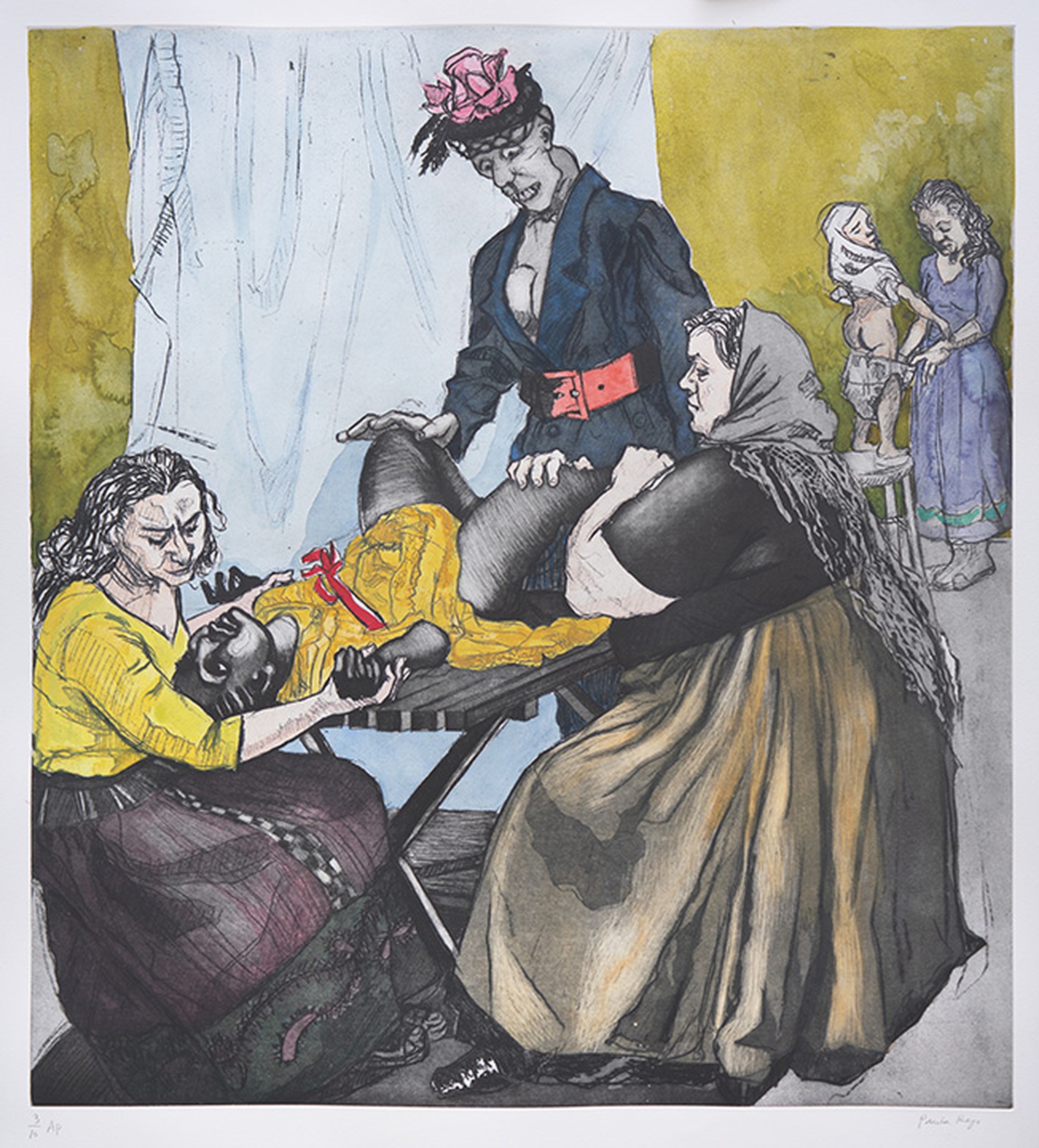
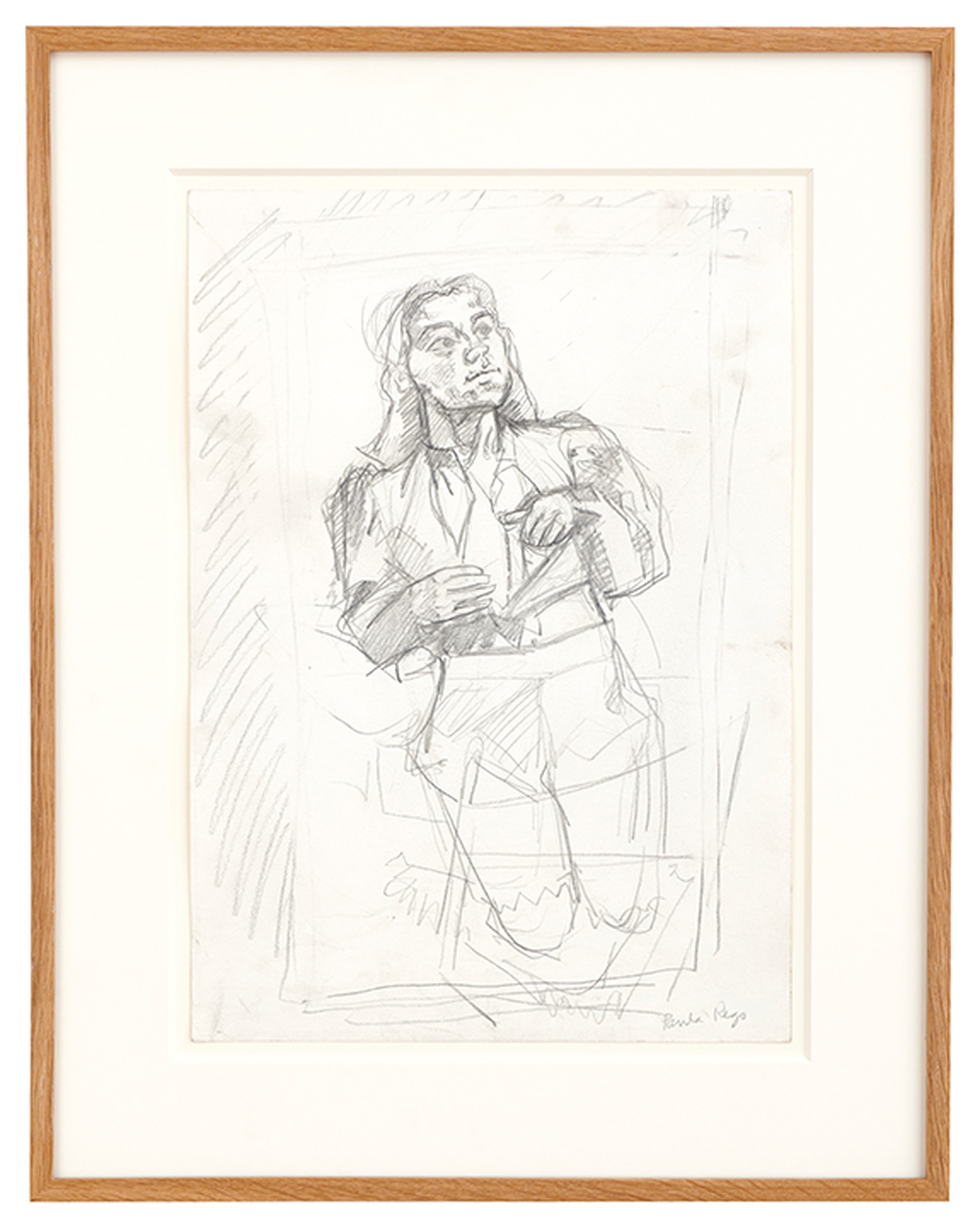
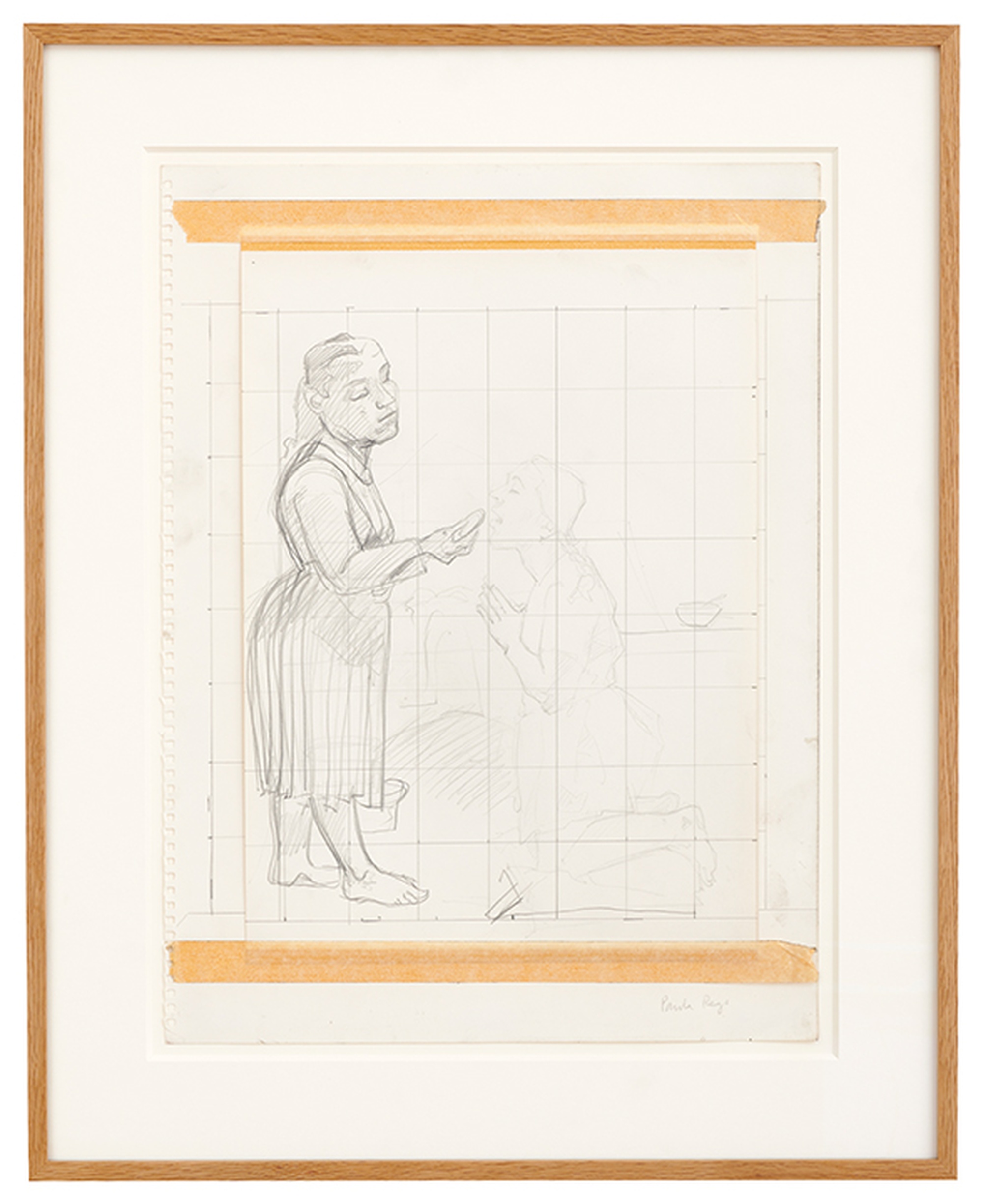
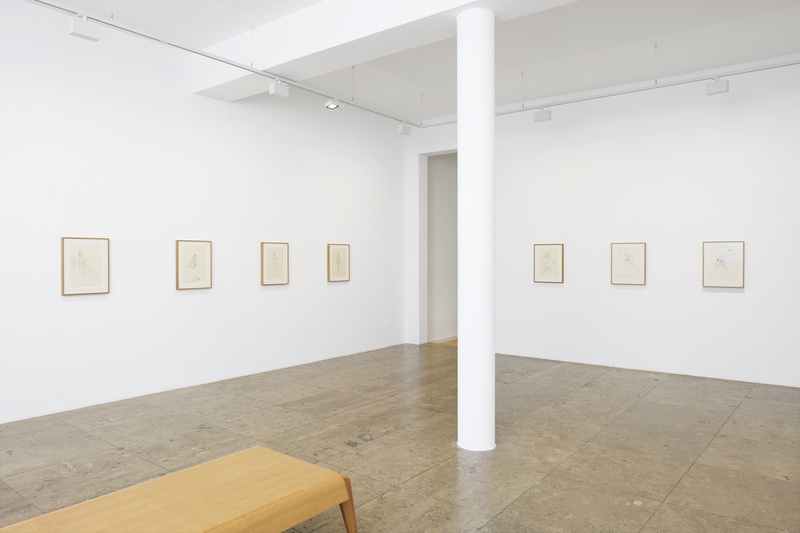
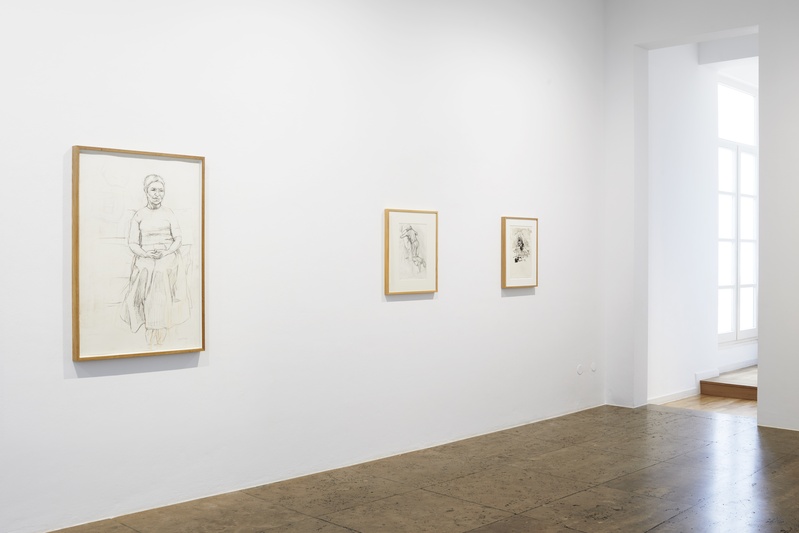
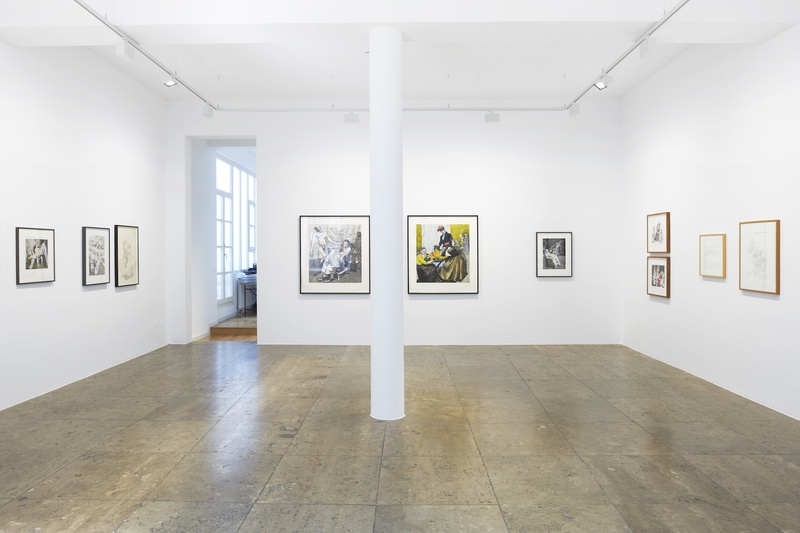
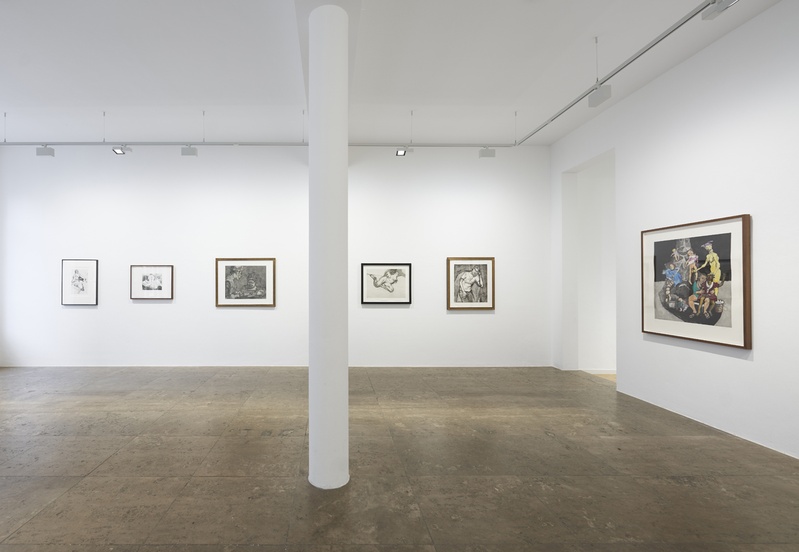
Drawing is the basis of Paula Rego's artistic work. Her sketches, executed with pencil or colored pencil and powerful strokes, document the vitality and spontaneity of the moment of idea generation. The graphic oeuvre comprises more than 280 works in various etching and lithography techniques. In addition, there are proofs, subsequently produced color versions of originally monochrome sheets, new editions revised at a later date, and unique, hand-colored copies. In 1998, she created an important series of paintings on the subject of abortion, followed by a ten-sheet etching cycle on the same subject the following year. In their rhythmic seriality, the etchings are brutal, authentic, and empathetic at the same time. The intimate format requires a close approach. The artist creates a confidential dialogue between the depicted subject and the spectator. In a touching way, Rego bears witness to the mental state of her protagonists. Other works dealing with the subject of female genital mutilation can be placed in this context: Etchings like "Circumcision" and "Stitched and Bound", both from 2009 and with impressive sheet dimensions of 120 x 110 cm each, document the artist's constant preoccupation with social practices through which women are oppressed. In these shockingly disconcerting scenes, Rego's pronounced sense of the macabre and her ability to combine horror with comedy are expressed.
Paula Rego tirelessly translated the abysses of human existence into narrative pictorial structures in which the private, the political, and the social are interwoven into a distinctive microcosm. The emphasis and determination with which her work is gaining public visibility beyond Great Britain and Portugal, can be attributed above all to the universal power of her expressive figurative imagery, the vehemence of her pictorial narrative ability, and the significance of the content she treats. In her multifaceted artistic production, Rego repeatedly focused on themes that revolve around power relations in family constellations or conflict-ridden relationship structures, violence, pain, death, sexuality, and the social role of women. With reference to narrative contexts derived from folk myths, fables, or fairy tales, her images – wonderful and disturbing at the same time – activate the collective memory and evoke childhood memories deeply rooted in the individual subconsciousness. Paula Rego has succeeded in condensing complex questions into simple visual formulas that have the quality of being universally readable, yet reflect subjective experiences and the most intimate situations.1
Rego's works are in the collections of numerous museums including The Art Institute, Chicago; The State Art Collection, Dresden; Städel Museum, Frankfurt am Main; Hamburger Kunsthalle, Hamburg; British Museum, London; Tate Britain, London; National Gallery, London, The National Portrait Gallery, London; Staatliche Graphische Sammlung, Munich; The Yale Center for British Art, New Haven, USA; The Metropolitan Museum of Art MoMA, New York; The Morgan Library & Museum, New York.