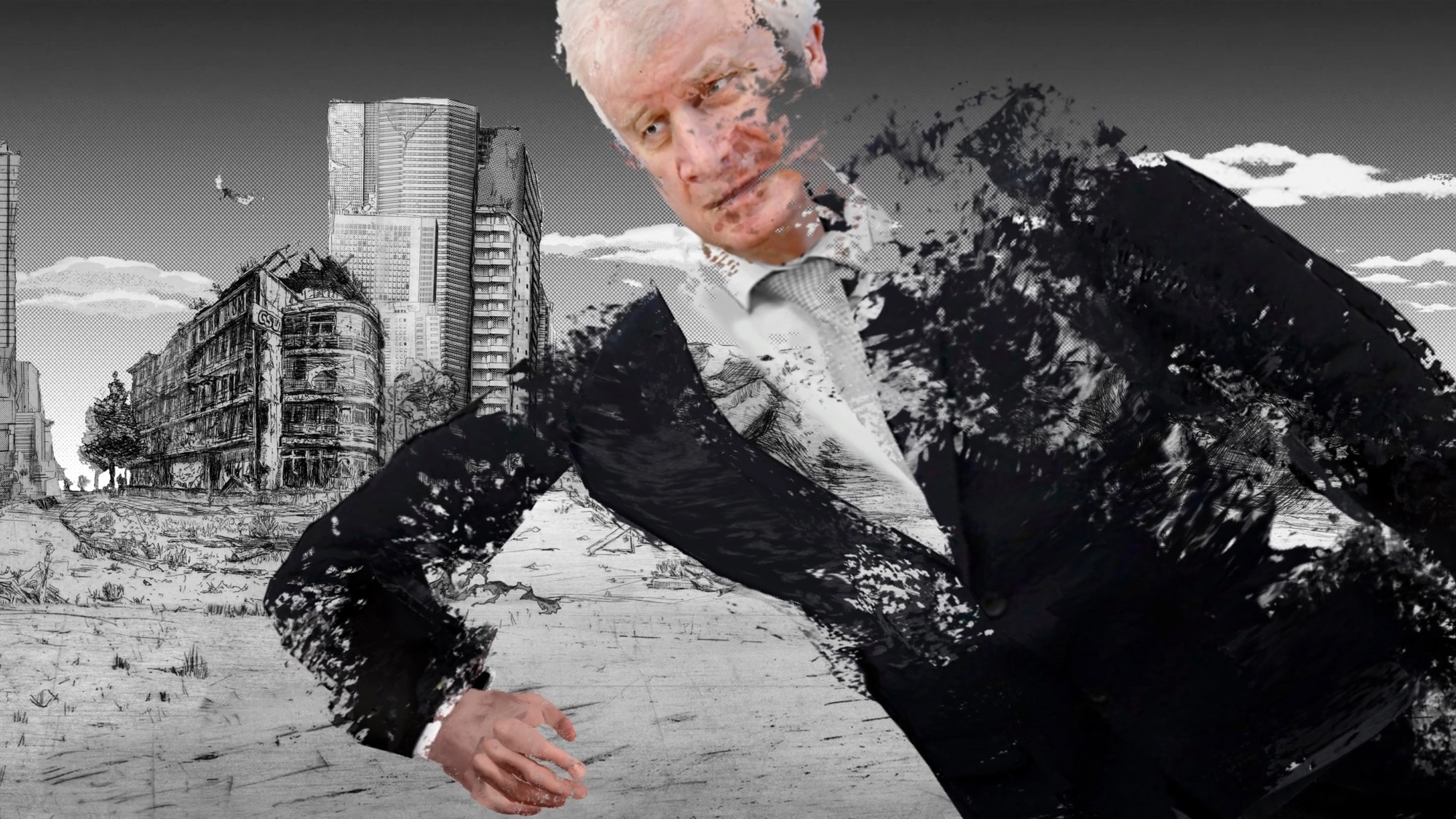
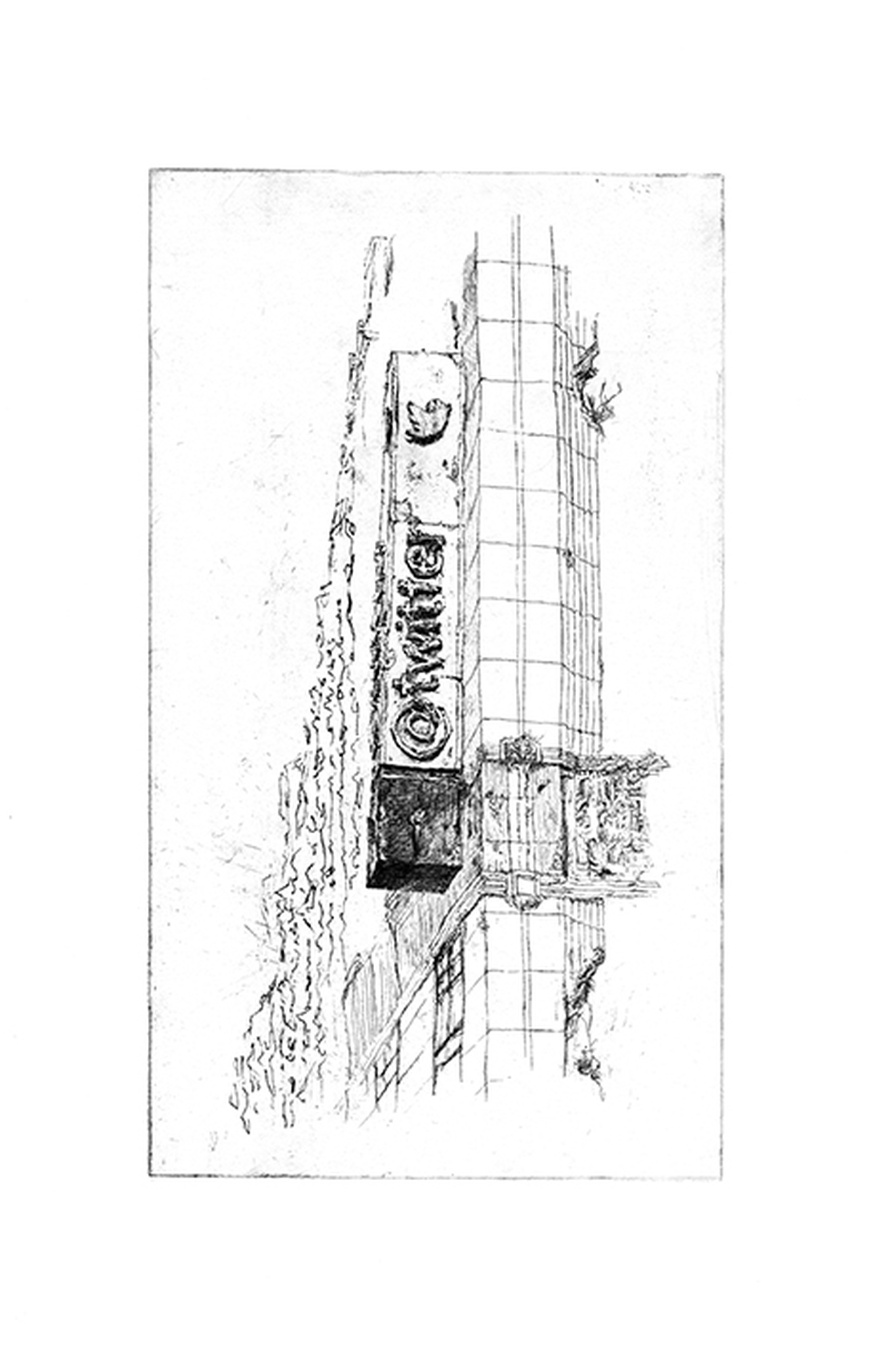
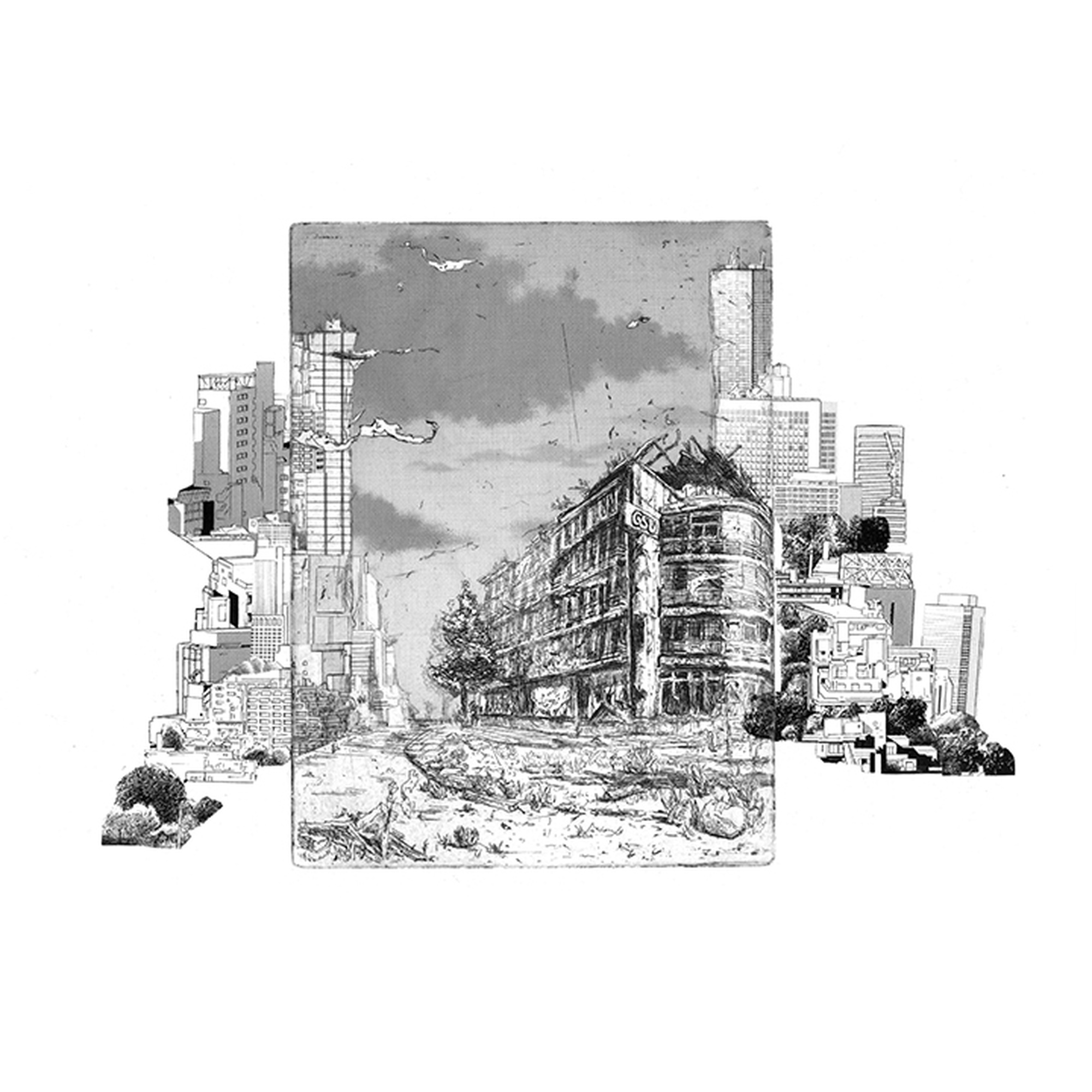
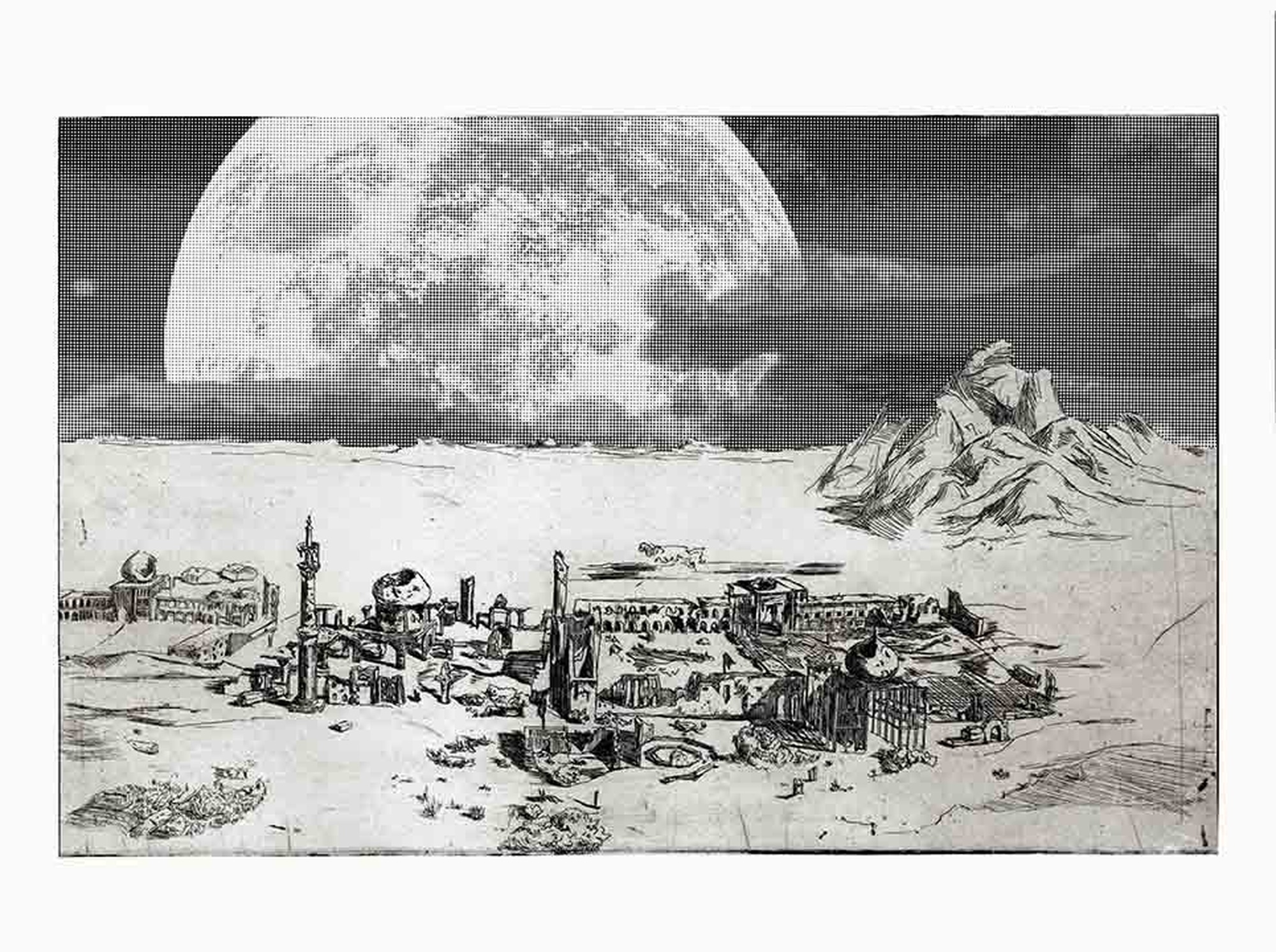
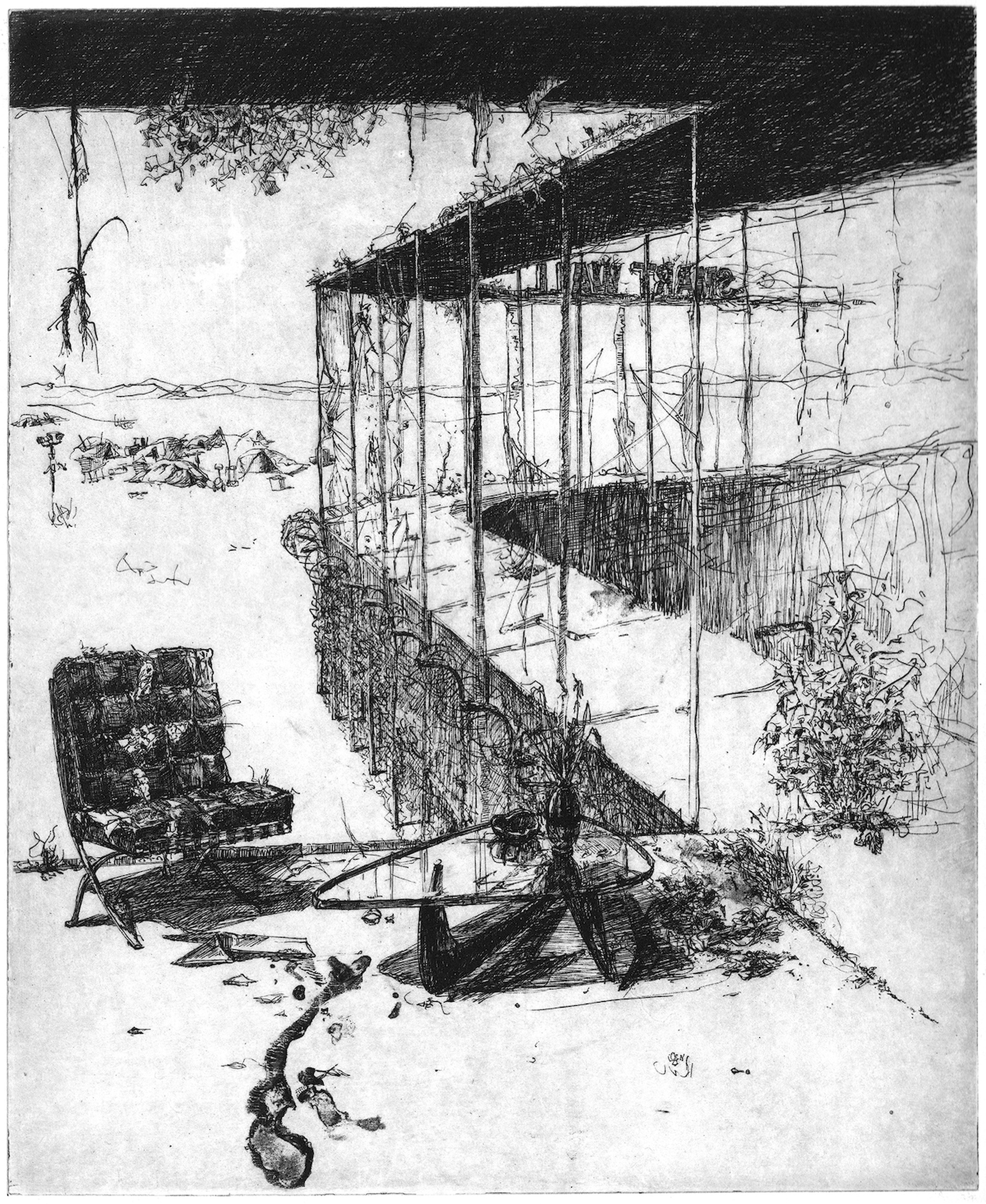
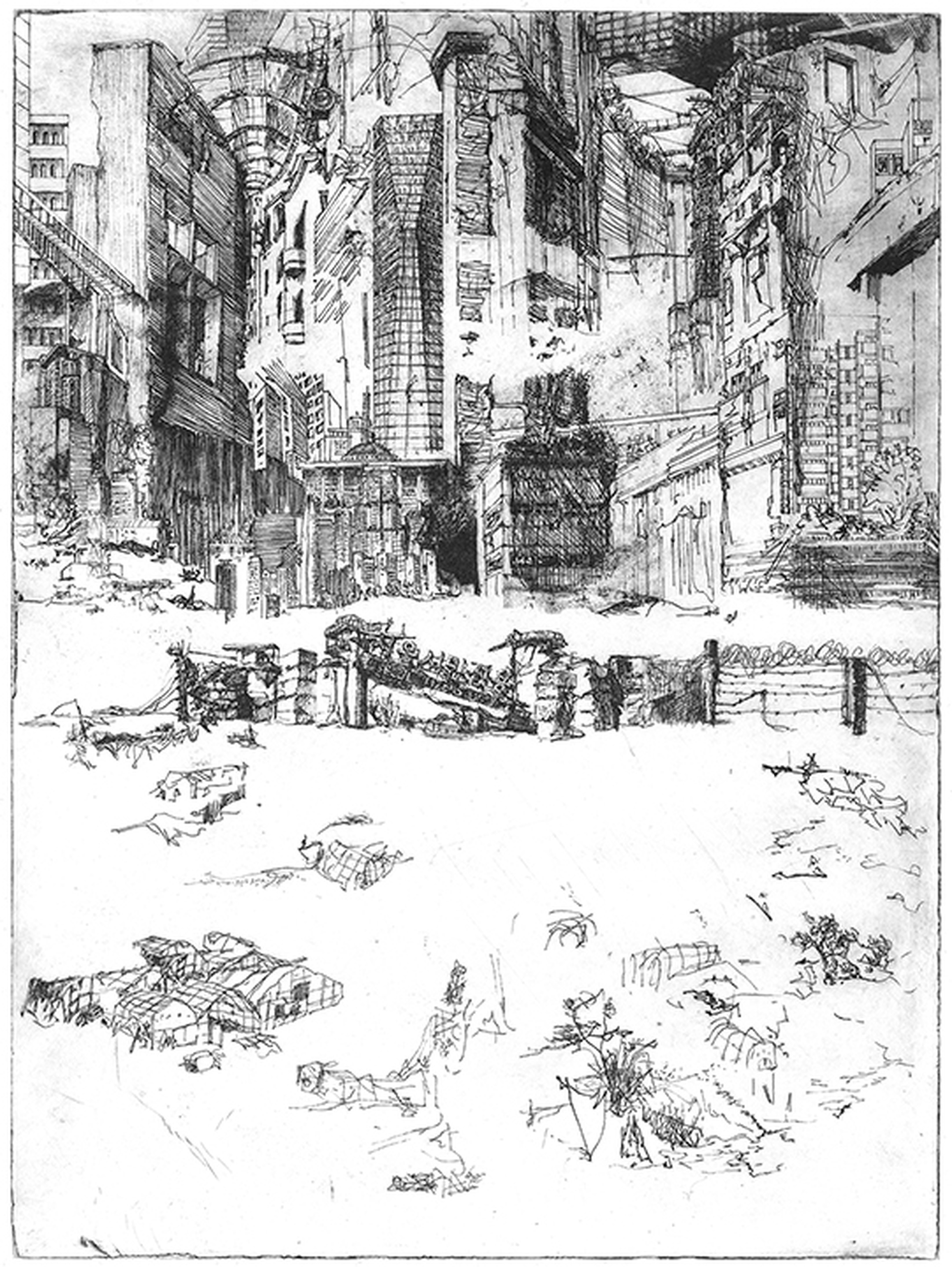
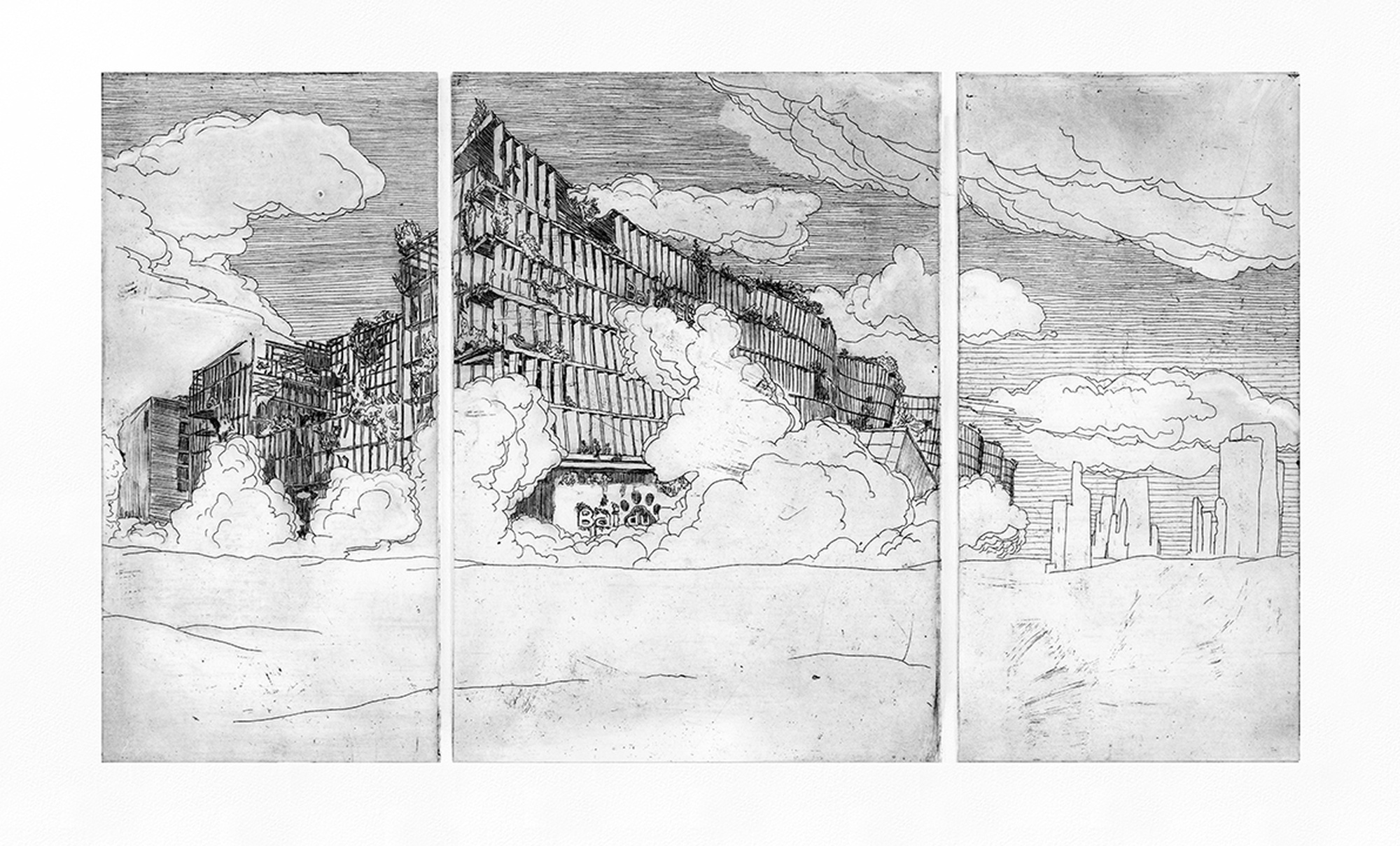
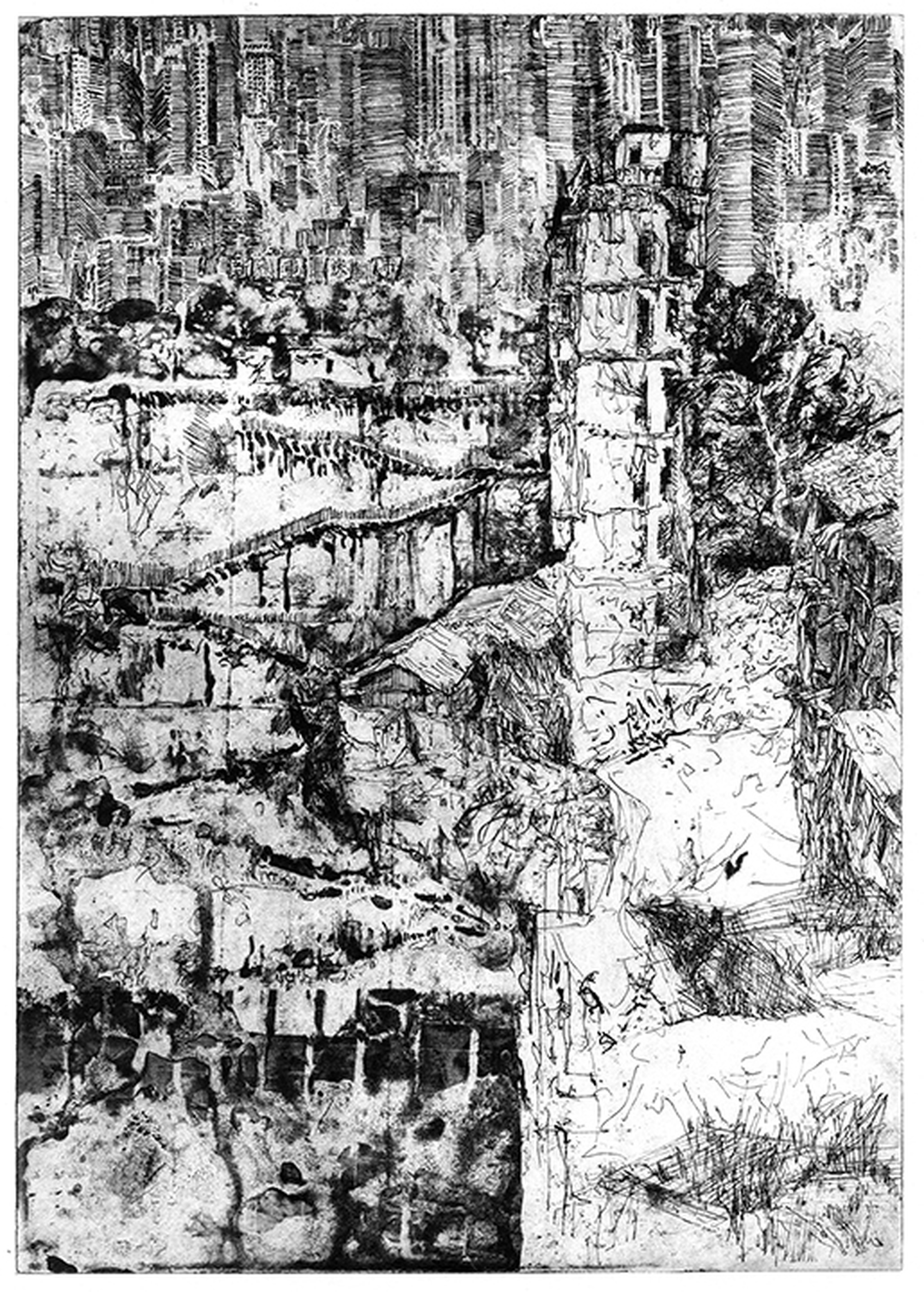
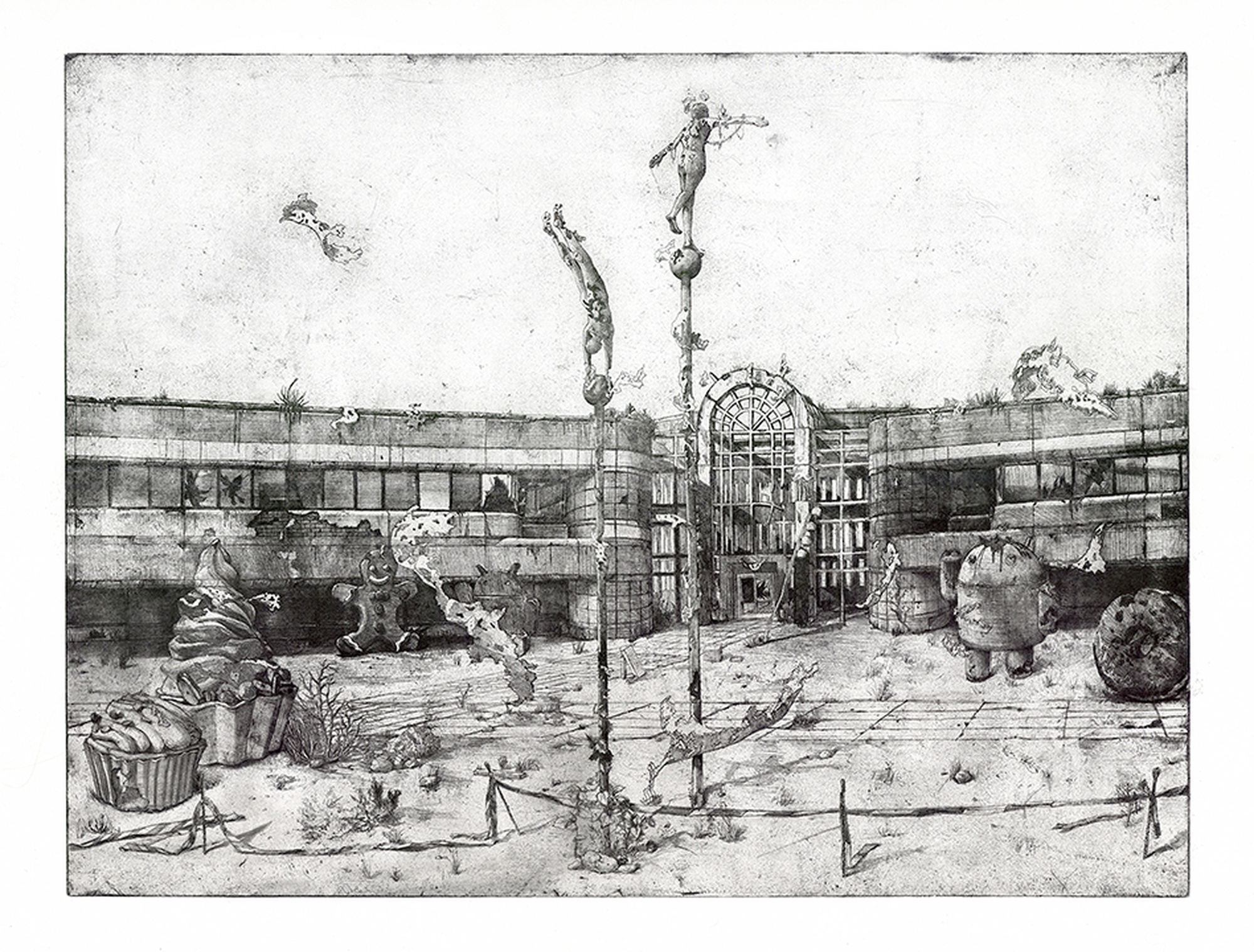
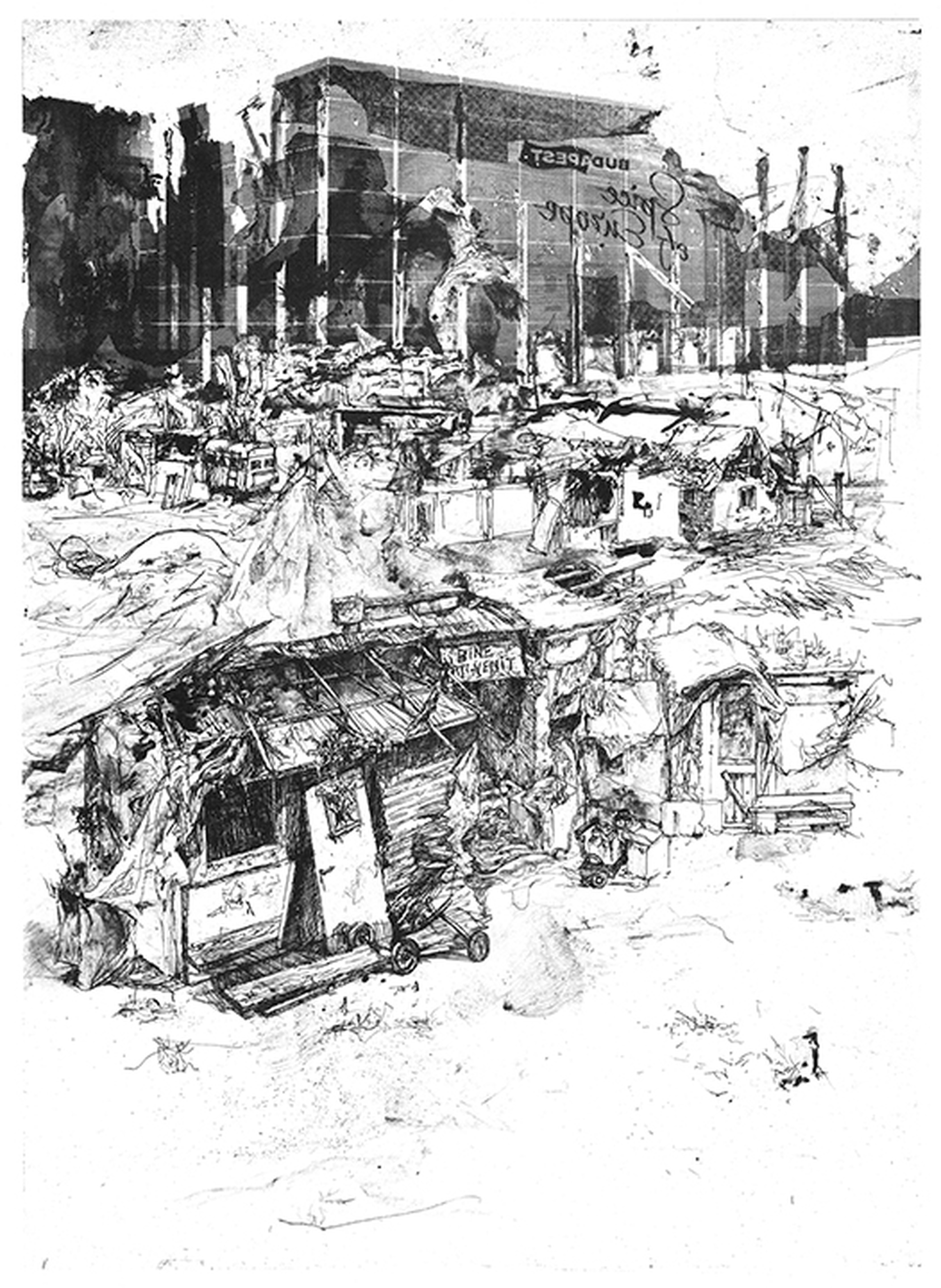
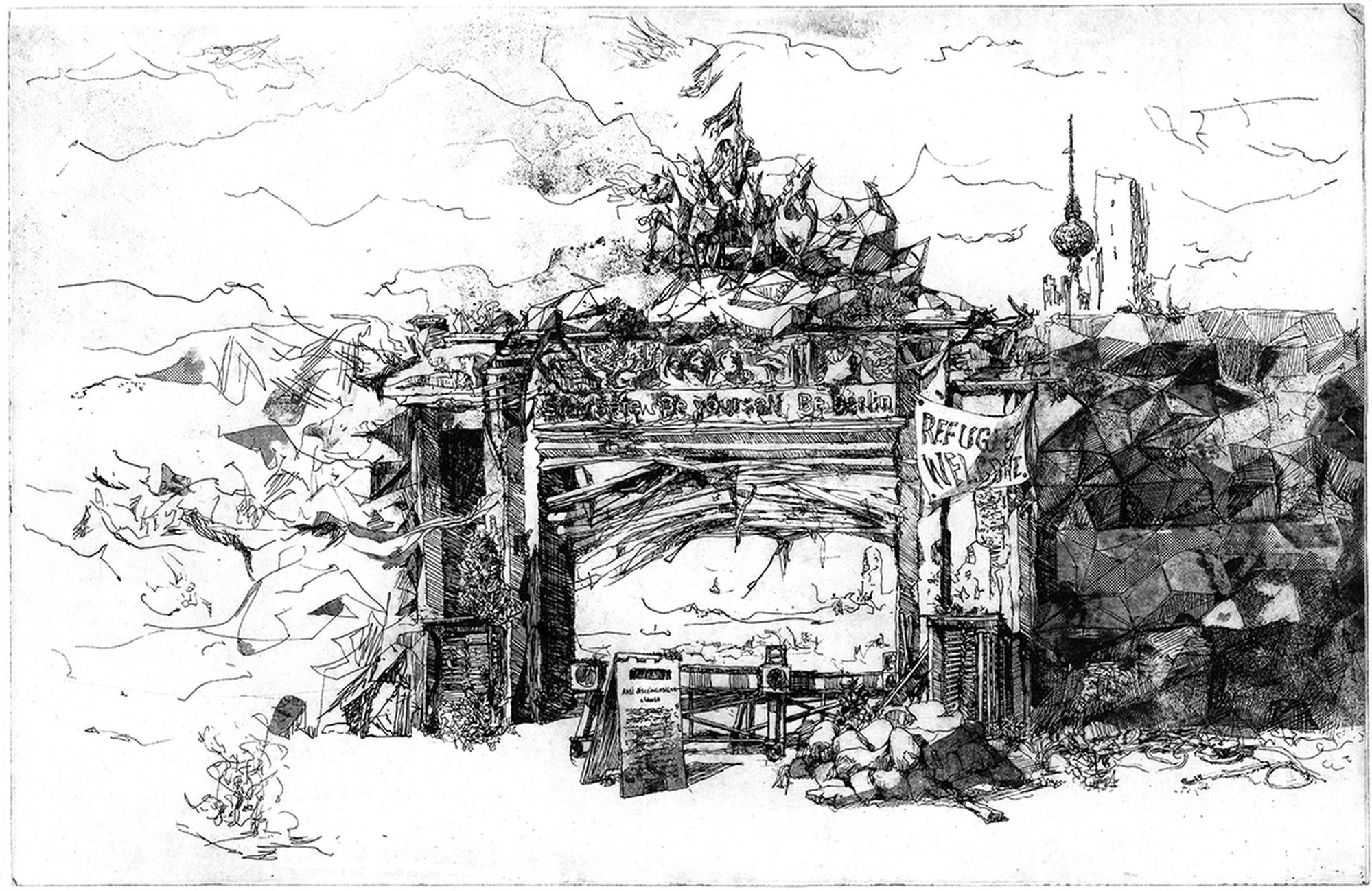
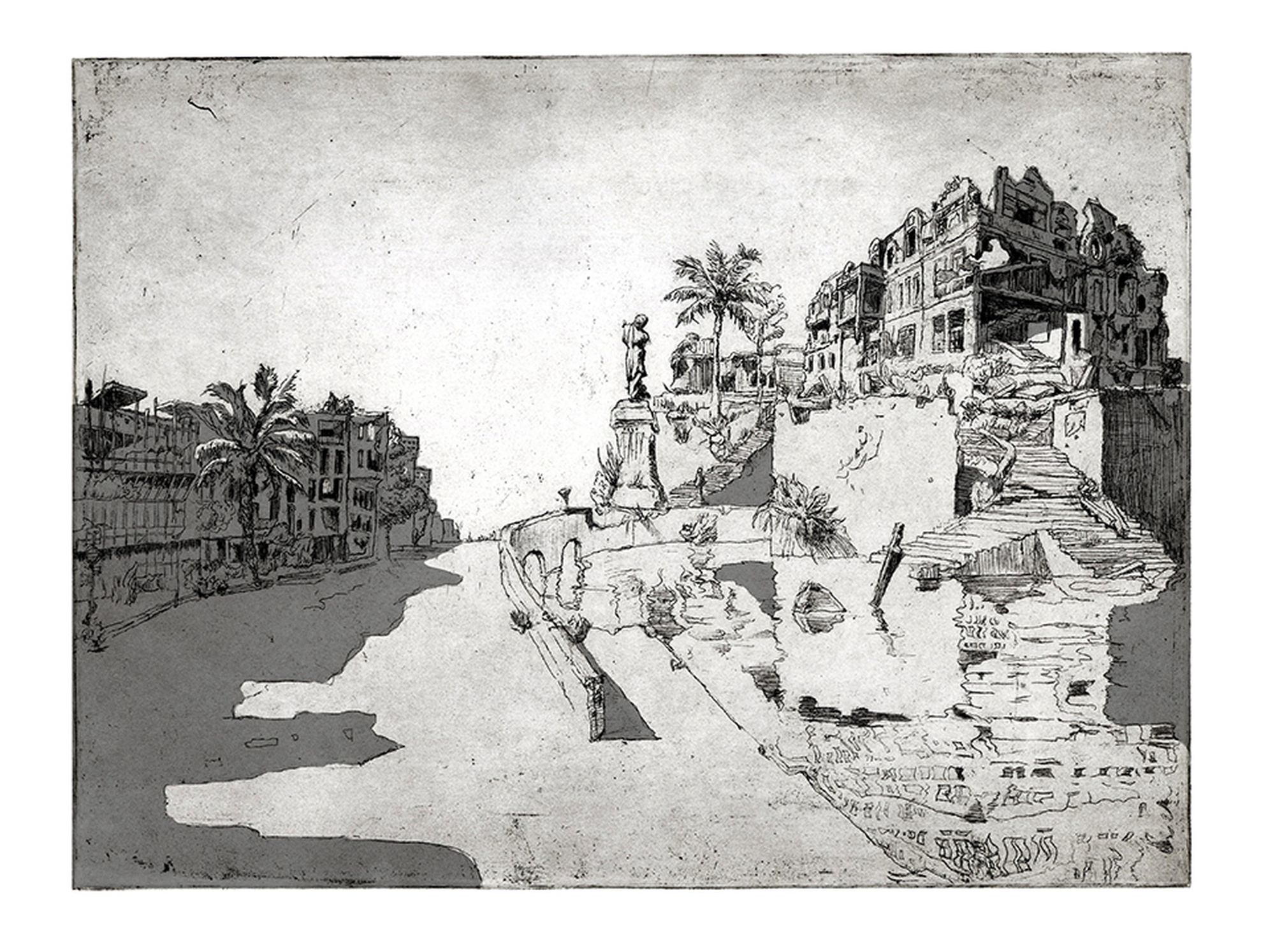
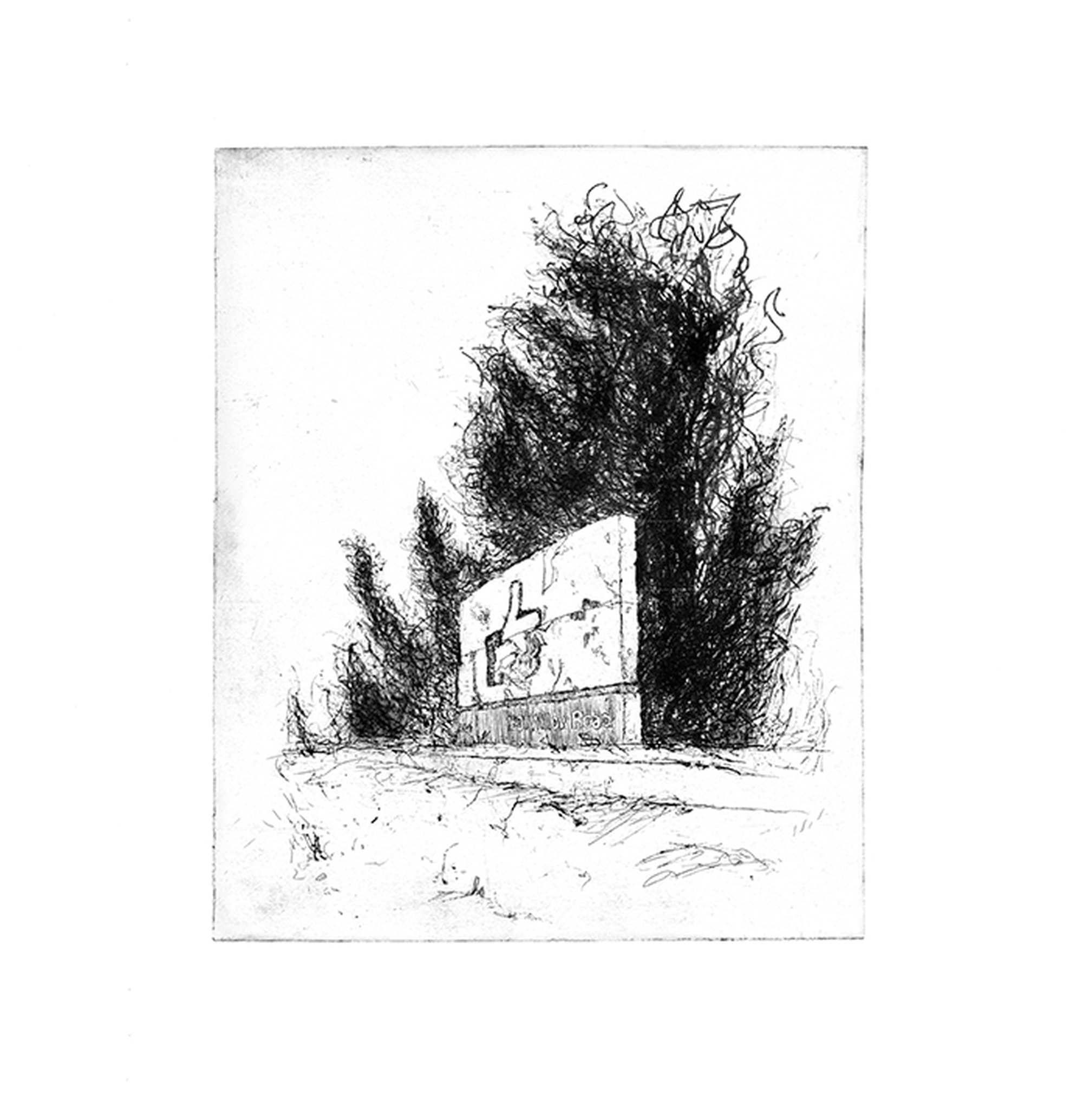
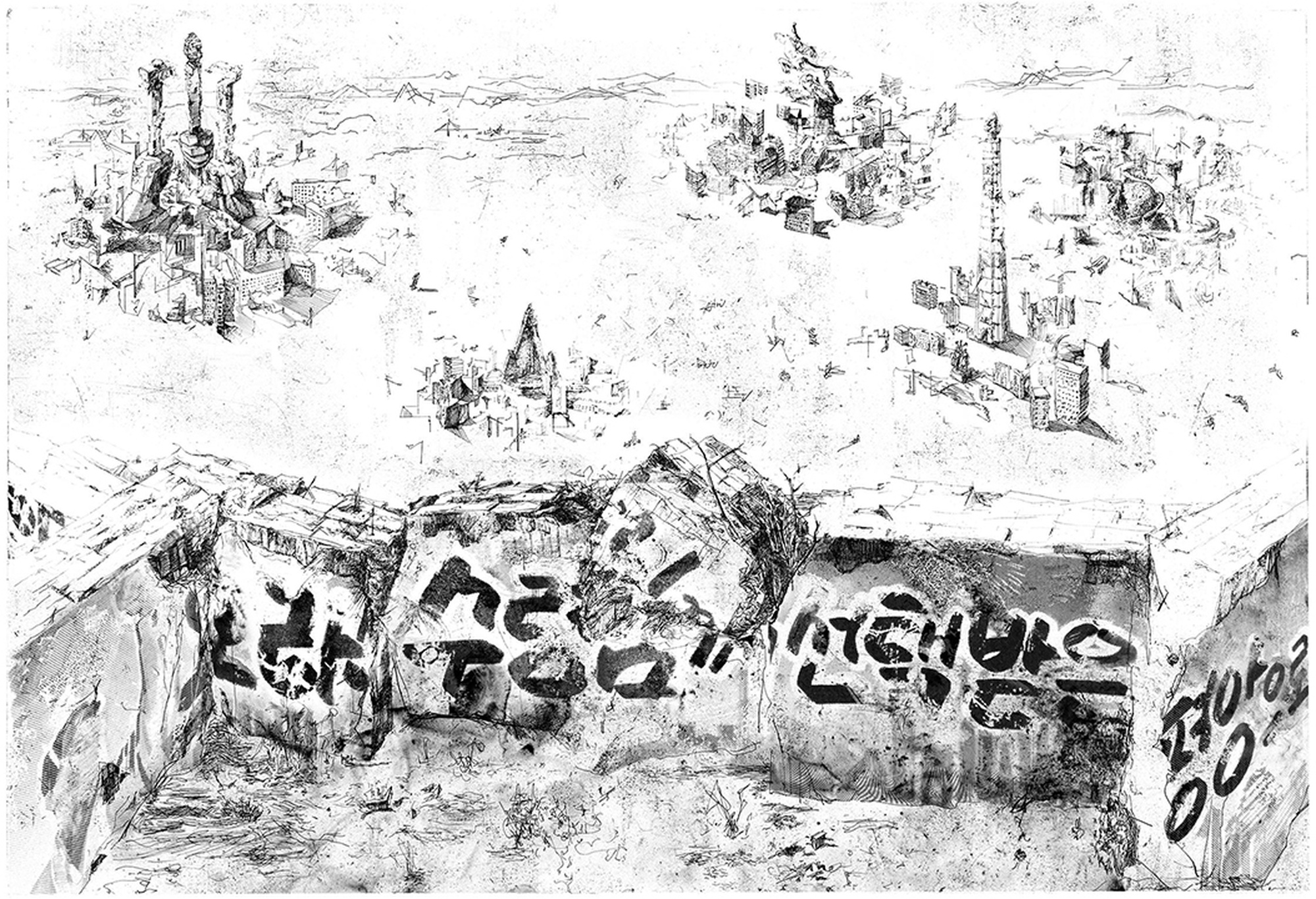
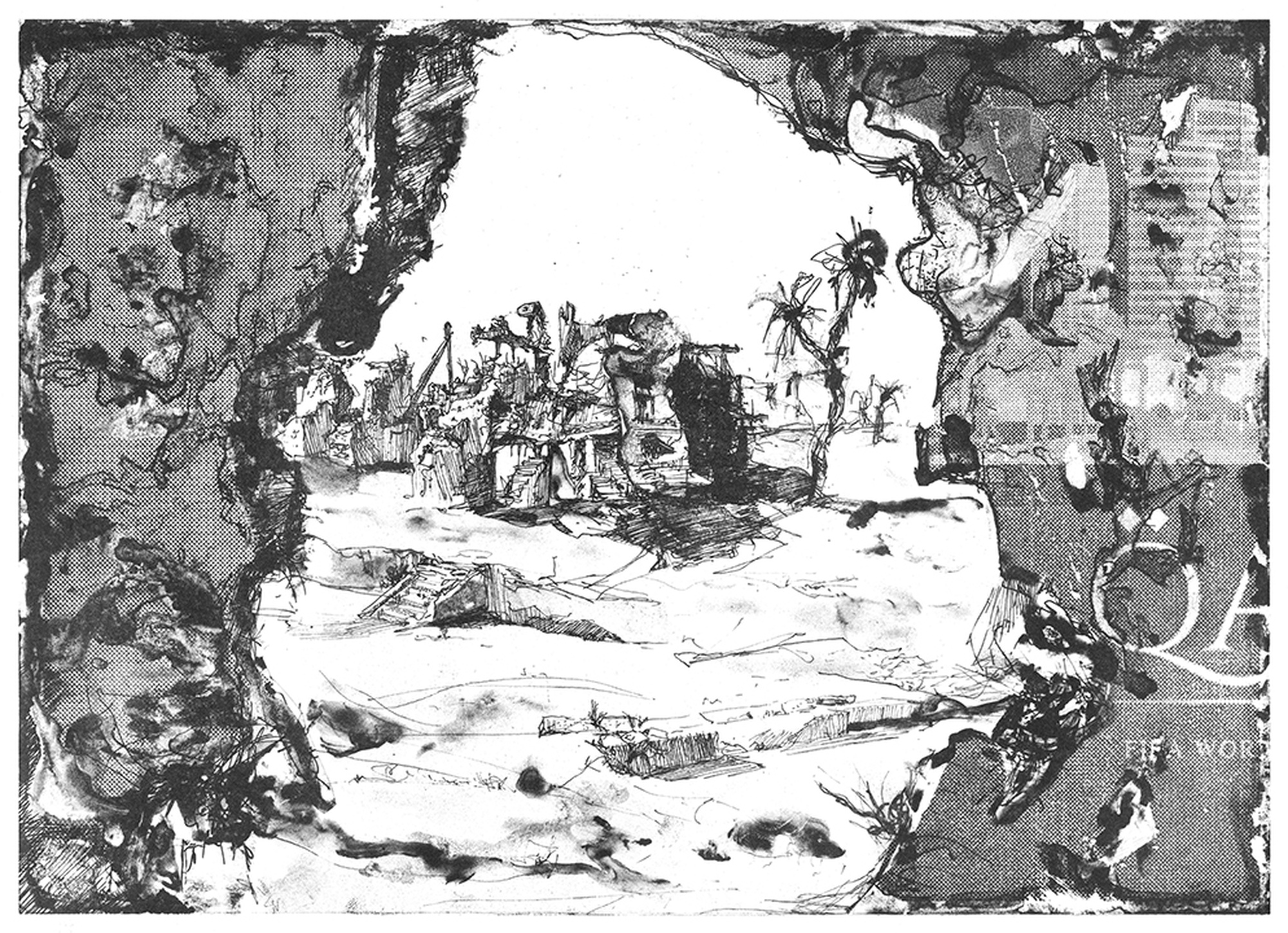
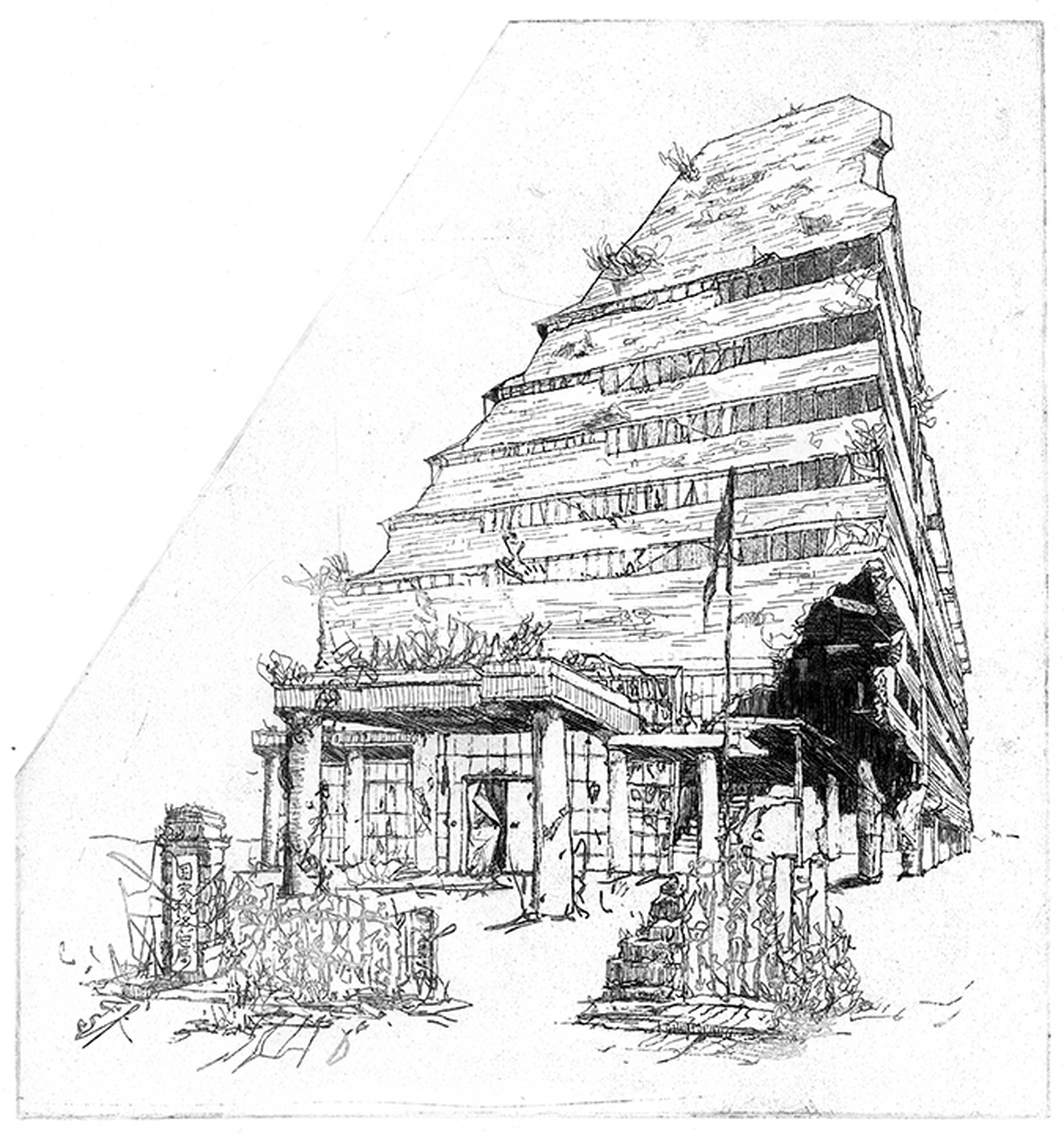
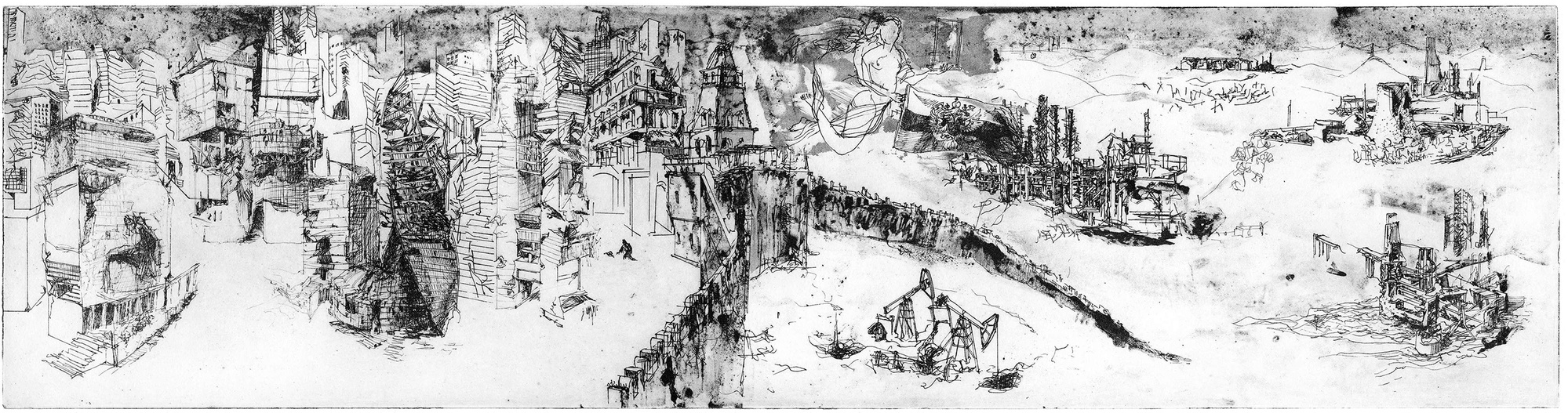
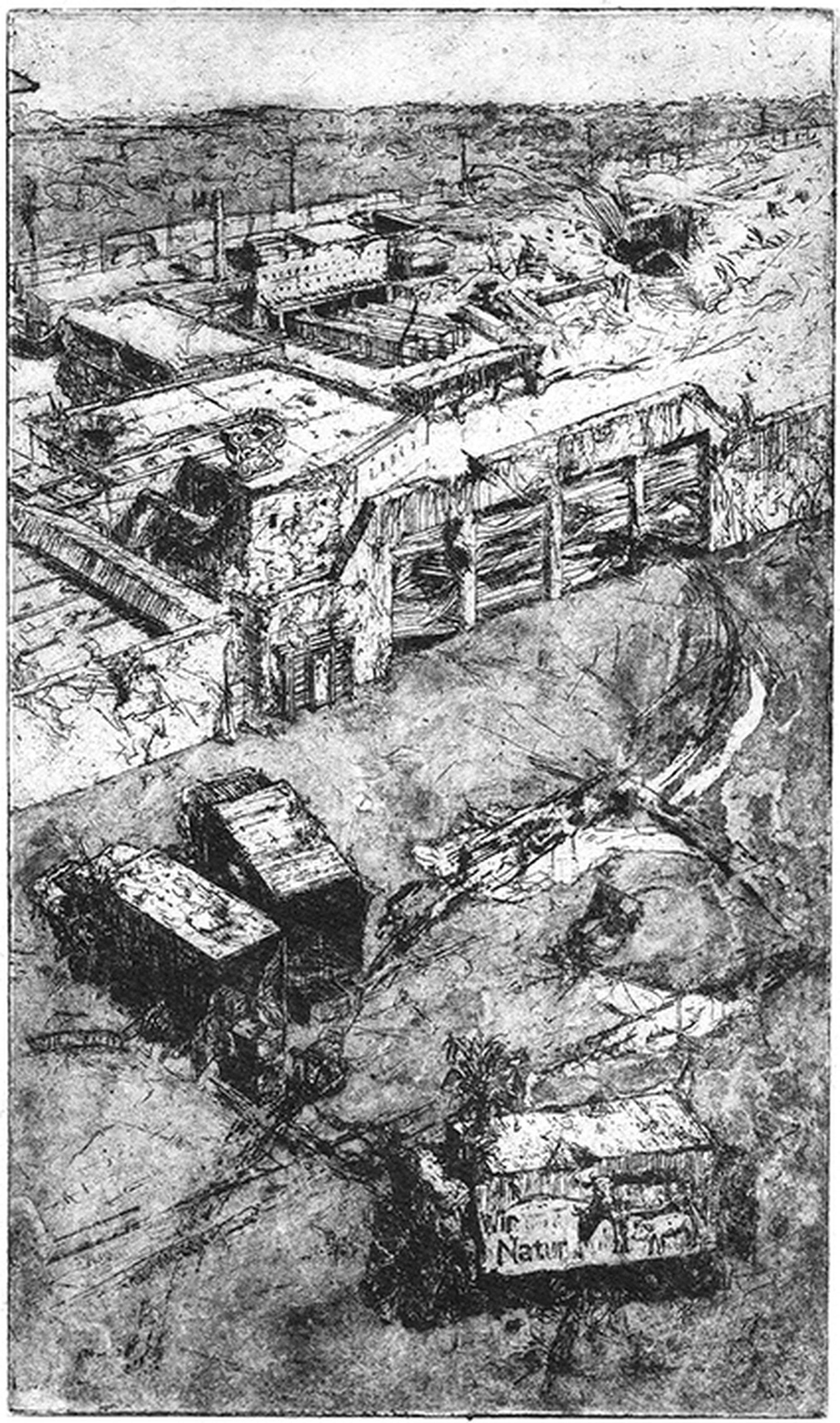
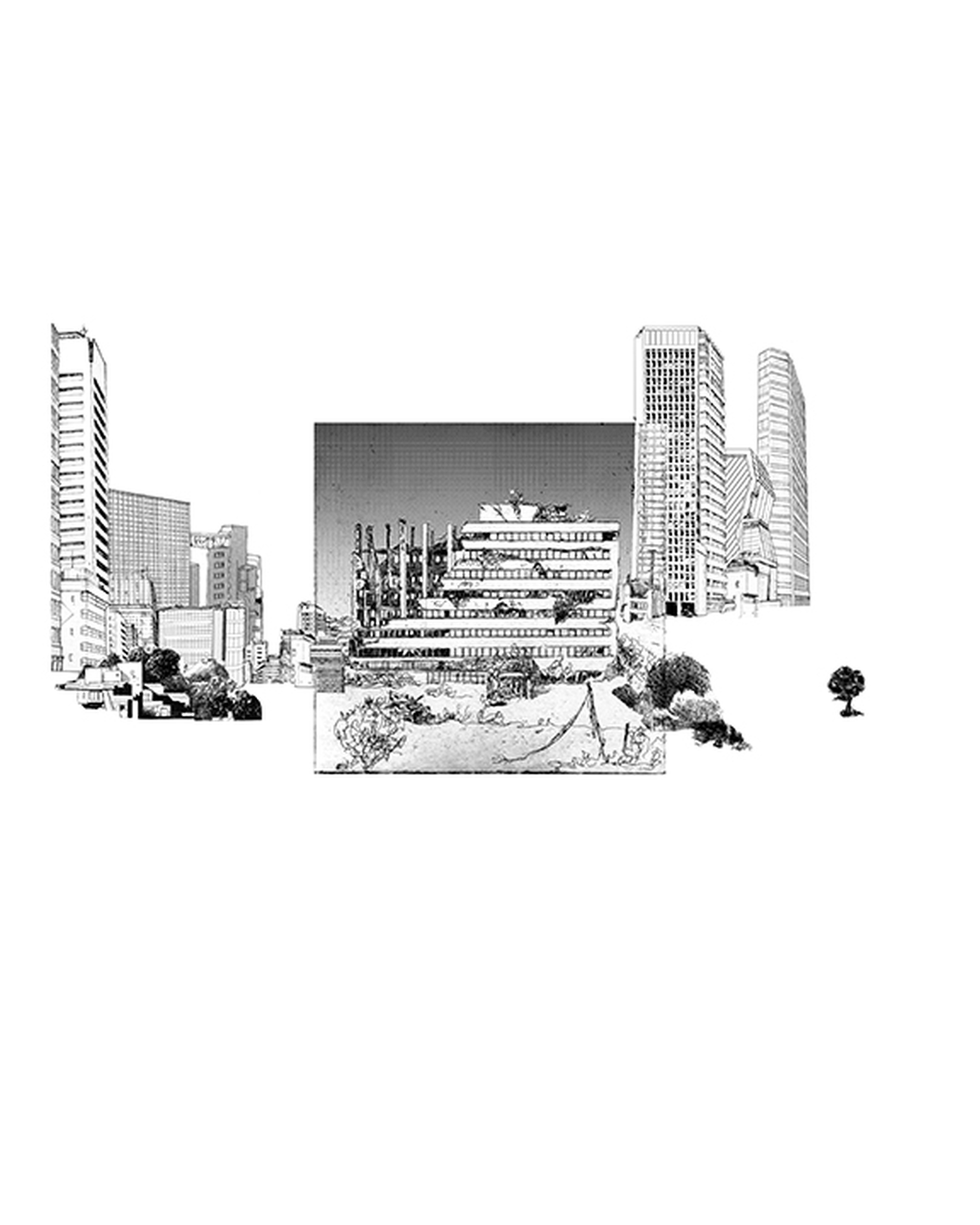
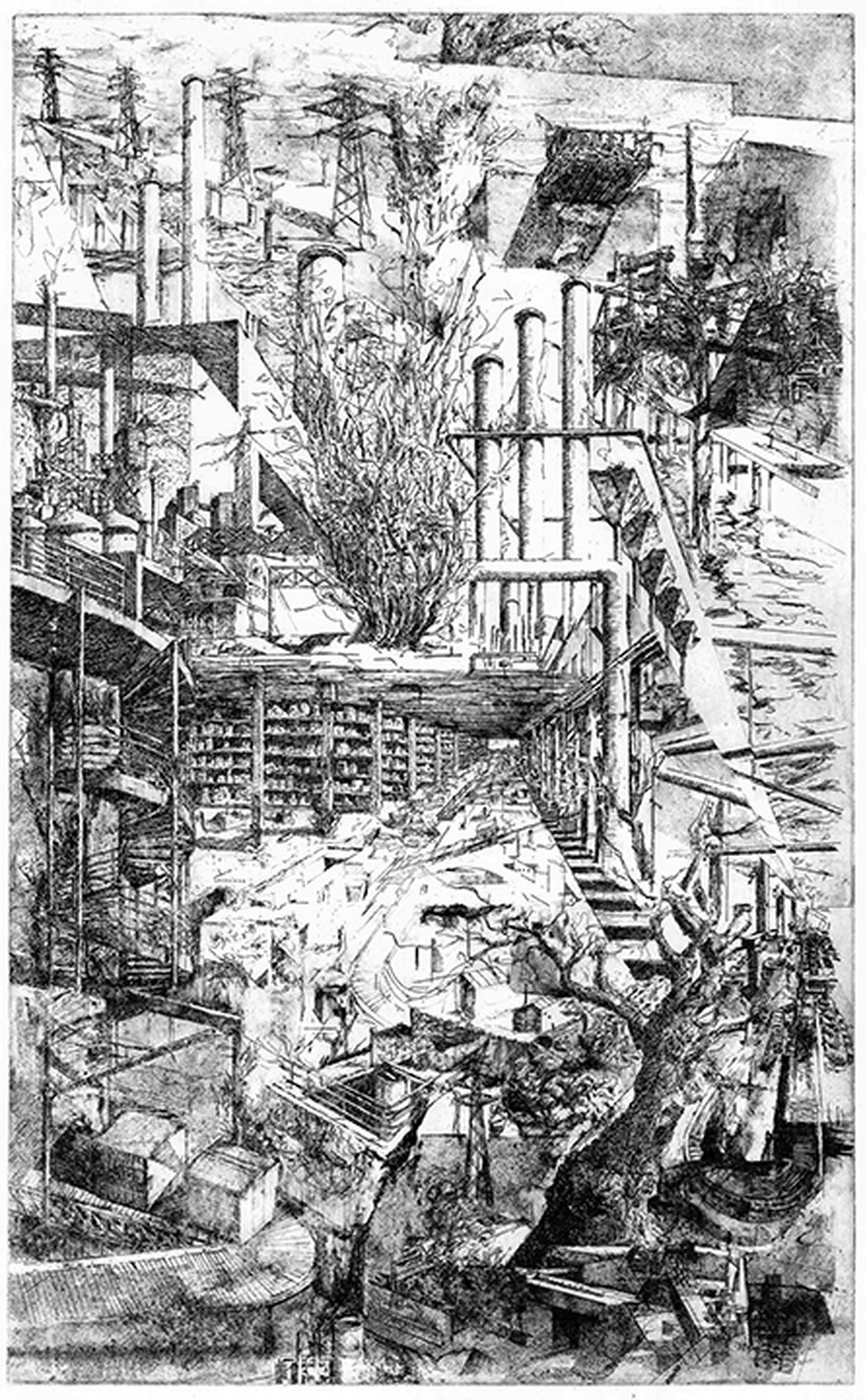
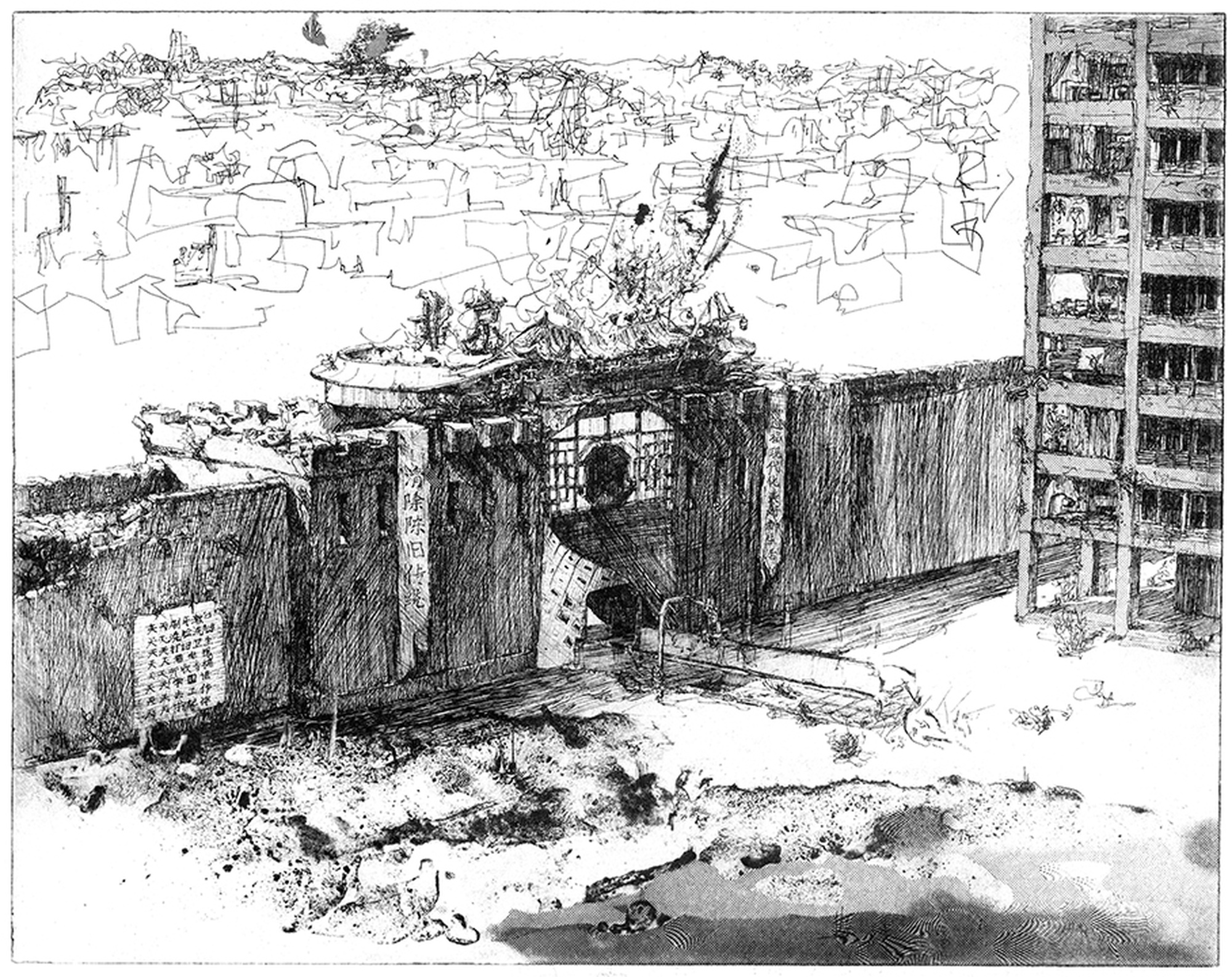
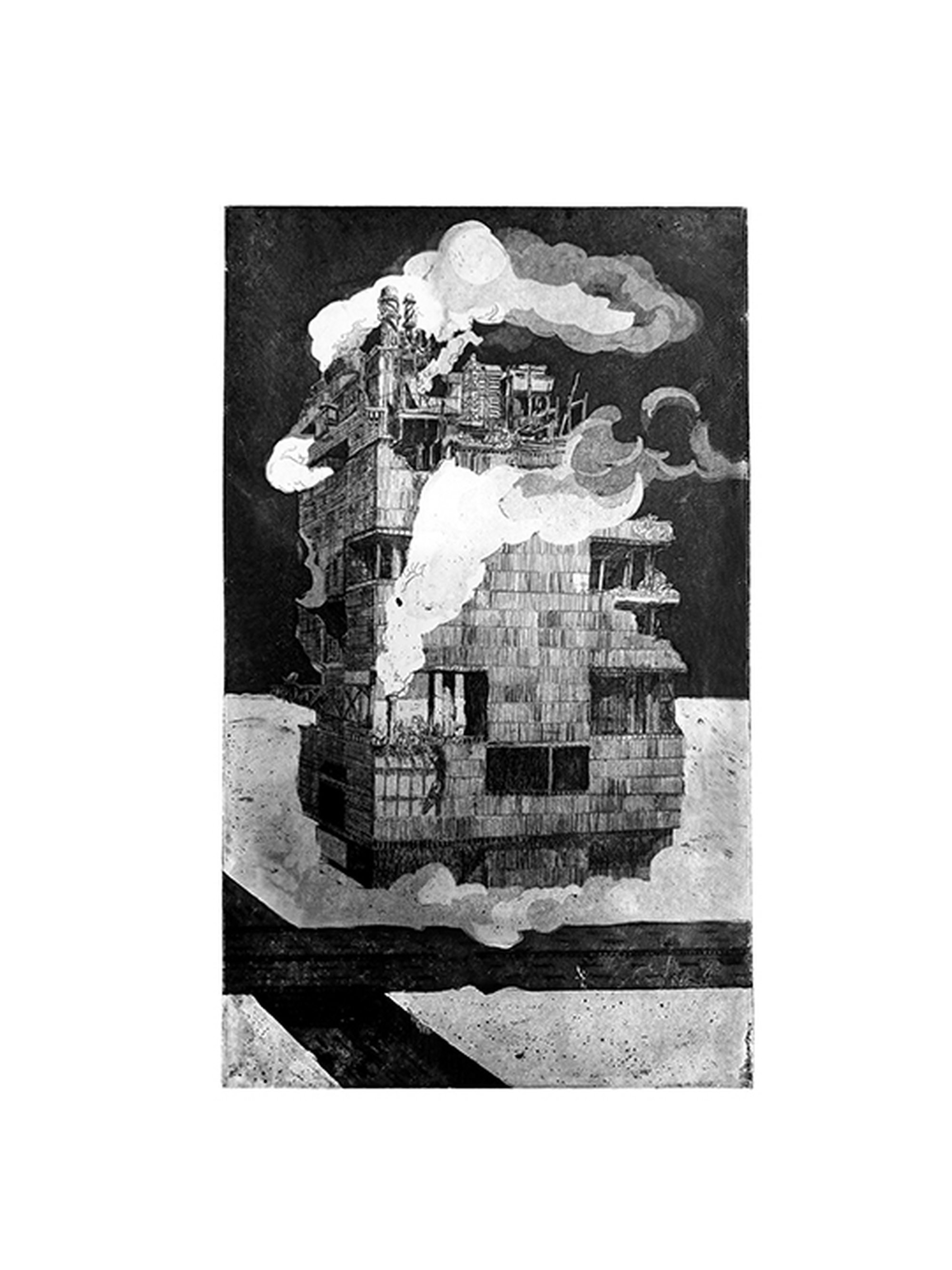
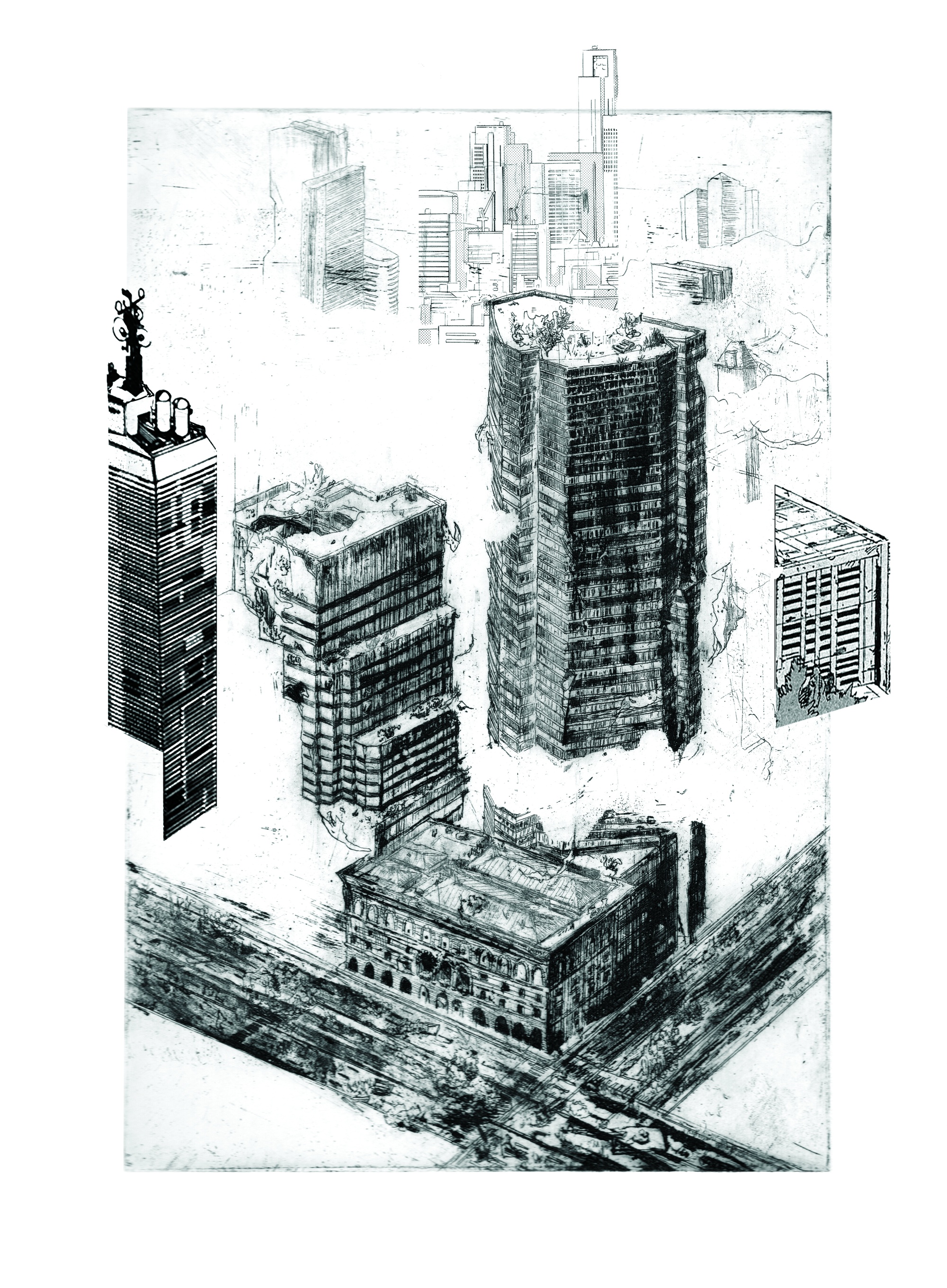
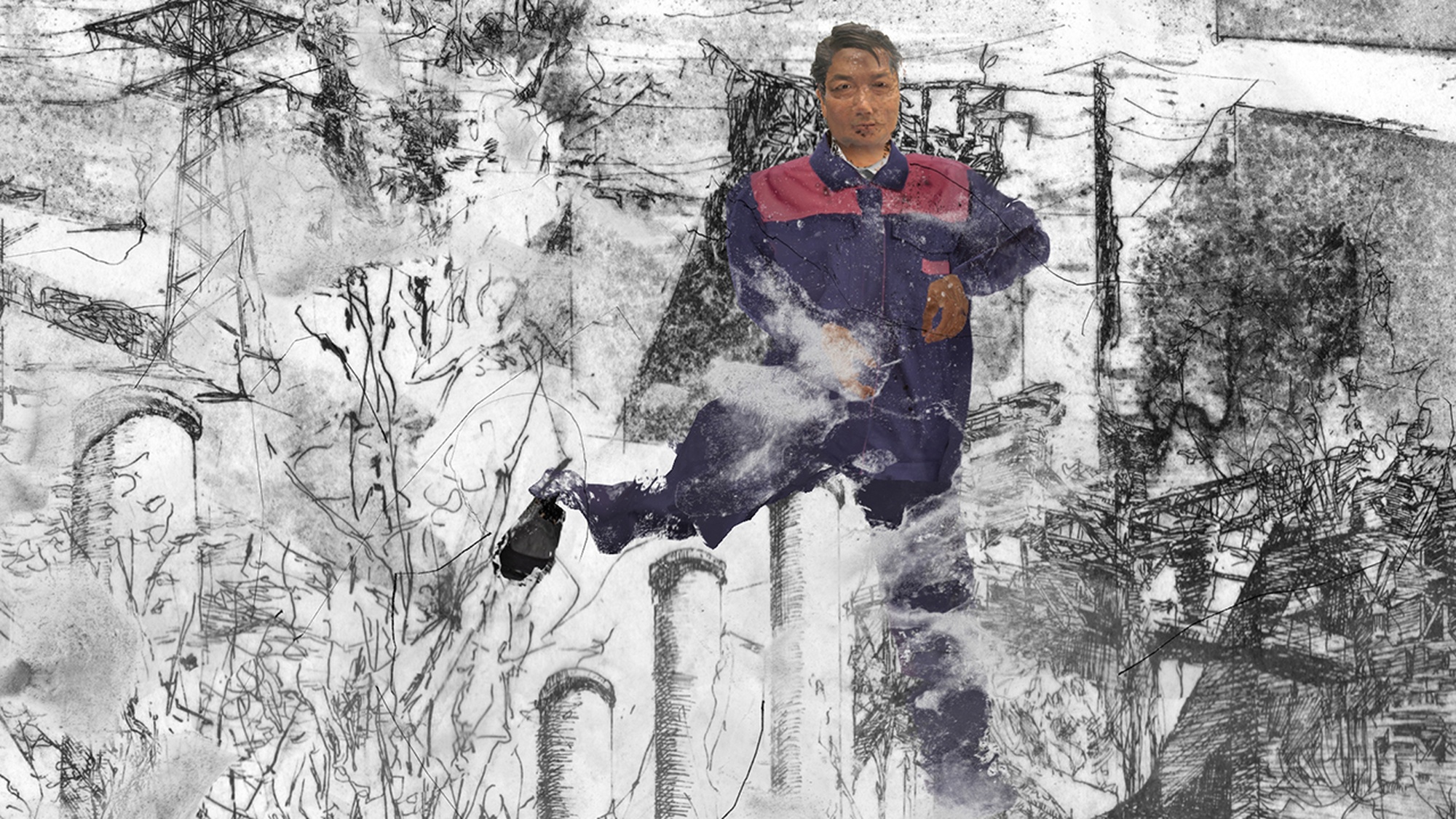
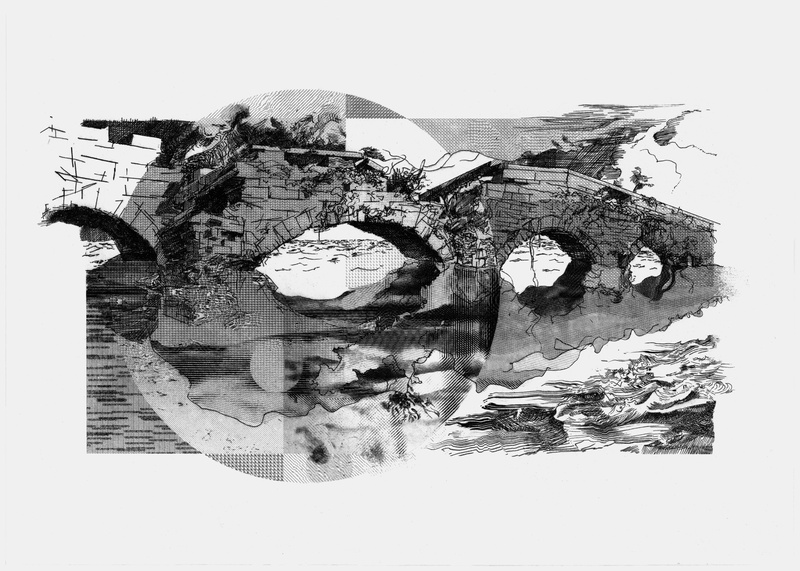
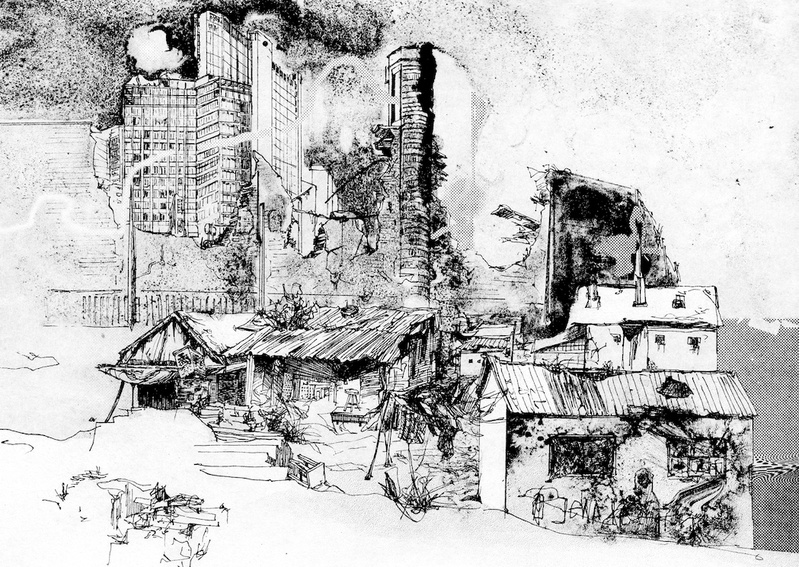
Ideal worlds can be thought forwards and backwards. There are forward-facing utopias, and there is such a thing as retrotopias, idealizations of the past as strongholds of “the good old days.” Soyon Jung’s images lead us in both directions. They are premonitions of the future – told in the past tense of ruined landscapes. Since the romantic era, we have associated images of ruins with a retrospective longing. From the second half of the 18th century, fantastical ruins made constructors dream of the pre-industrial middle ages. In contrast to pristine replicas, their decidedly ruinous nature was intended to make the past tangible and thus root them in a history that had never existed in this painterly form. Jung’s etchings resist such a romanticized interpretation. In her case, it is not just buildings that are overgrown and seem to gradually dissolve; any realism in her images, produced by lines, disintegrates eventually. The apparent romantic idealism is counteracted by the occasionally aggressive internal dynamic of her line work, which calls to mind the abstraction movement of the 20th century and the attempt to free itself of any historical references or content. As such, the images defend themselves against interpretations that would too quickly reduce them to either motif or concept. In the end what triumphs in her images is the autonomy of the line – the rest is just a series of possible things that have been. Read More
Soyon Jung, born 1982 in Gwangju, South Korea, combines classical etching with digital printing techniques, video and 3D photography. She studied in Seoul and Hamburg, where she now lives and works.