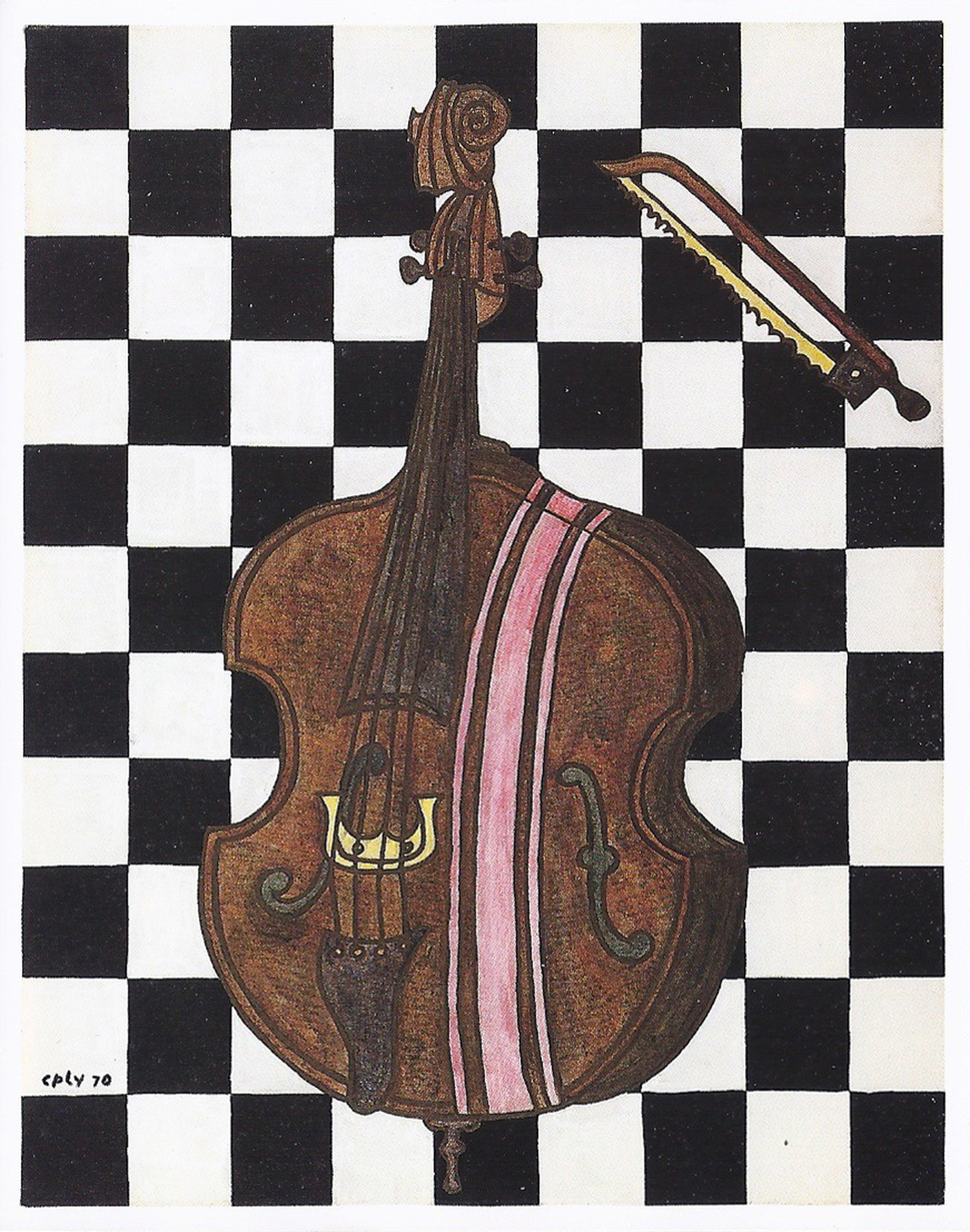
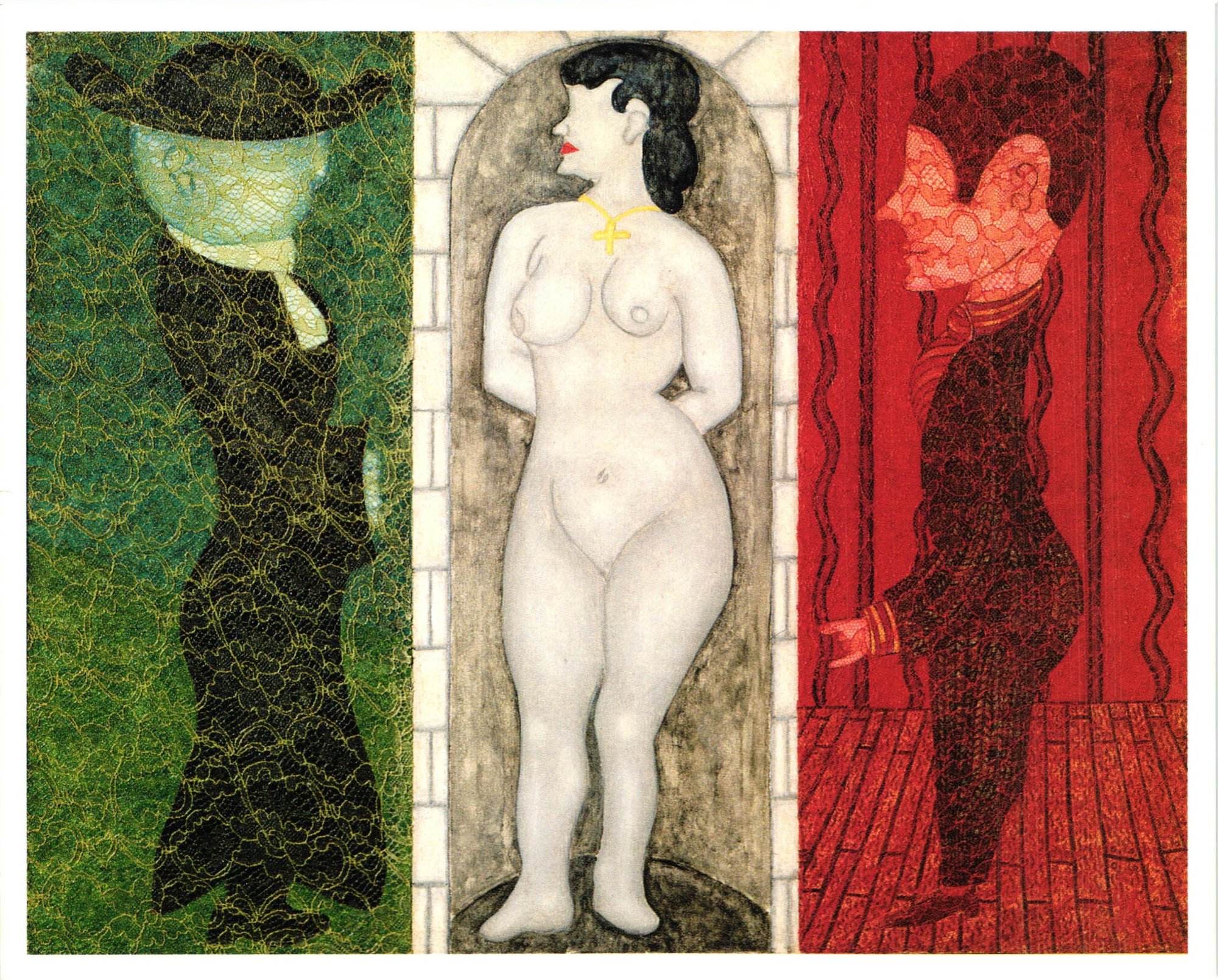
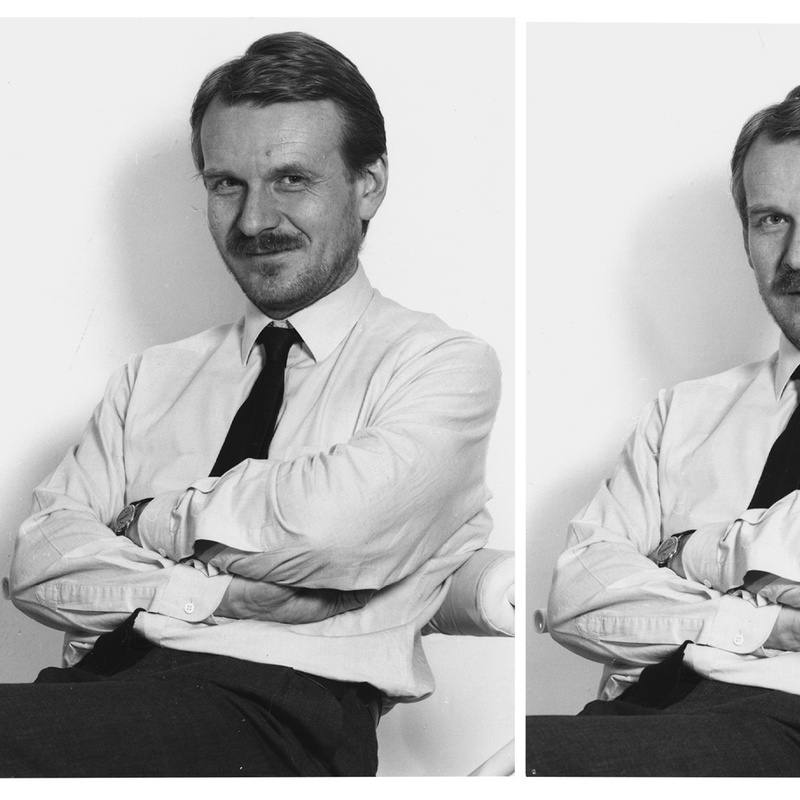
William N. Copley, the adopted son of a great American publisher, discovered his affinity for art early and, contrary to all social expectations, opened a gallery with his brother-in-law in Los Angeles. From the very beginning his interests lay in the art of the Surrealists, some of whom had relocated from Paris to the West Coast, where they lived in exile. Deep friendships developed with Marcel Duchamp, Max Ernst, René Magritte, and Man Ray. However, the gallery remained unsuccessful, and so William C. Copley moved to Paris in the 1950s, where all his artist friends had already returned. He became a part of the art scene there and began to work as a self-taught painter. Images of an erotic, lascivious nature are typical of his oeuvre, free from convention and decorated in an ornamental fashion. In many of his paintings he portrays himself in a humorous and ironic manner, mainly in relation to brothel scenes or political events. Copley was always an “artist’s artist”, not only because he was wealthy and supported other artists, but because he was closely connected to them and lived solely in this world. His work plays an important role in post-war art as a result of its very individual visual language.