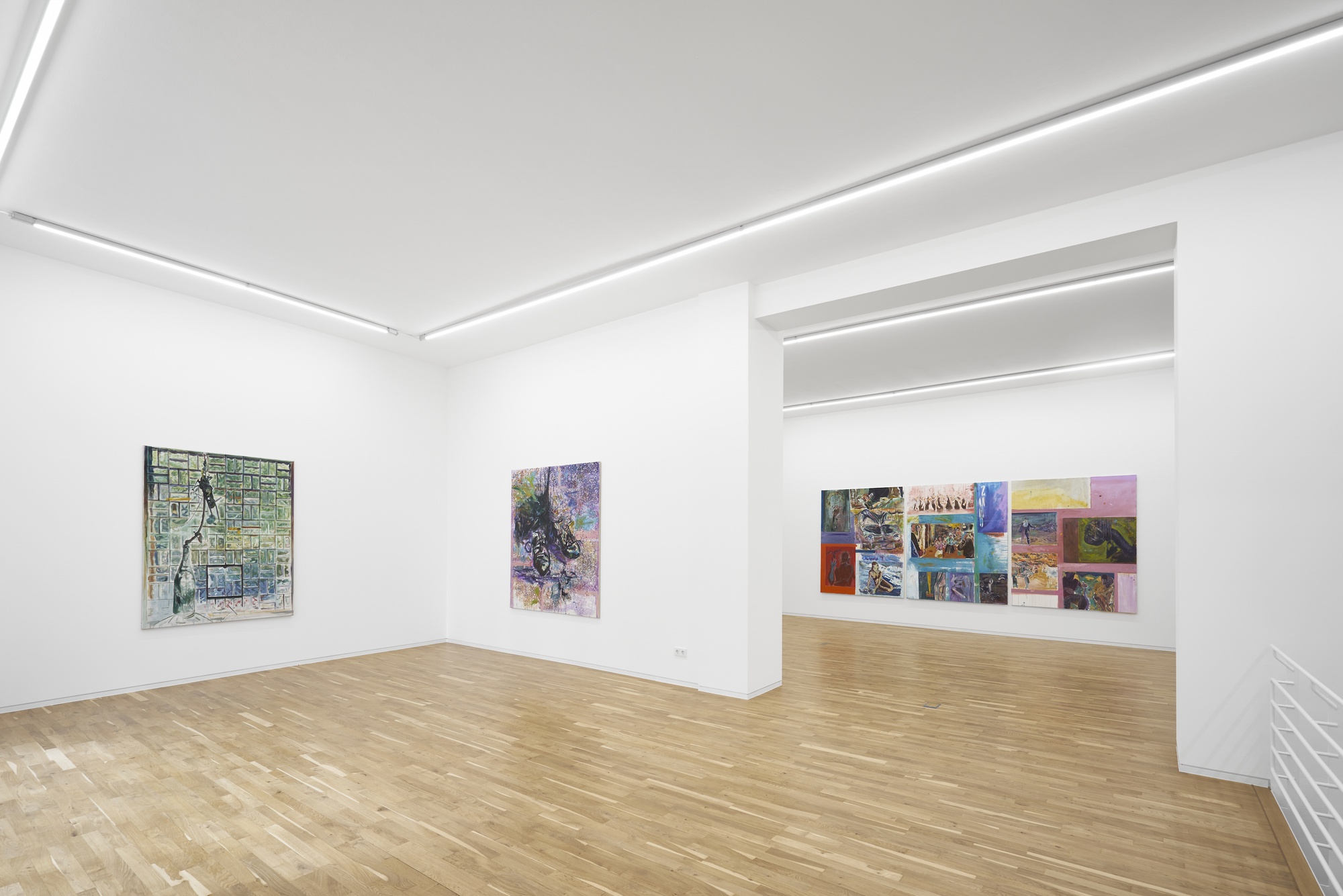
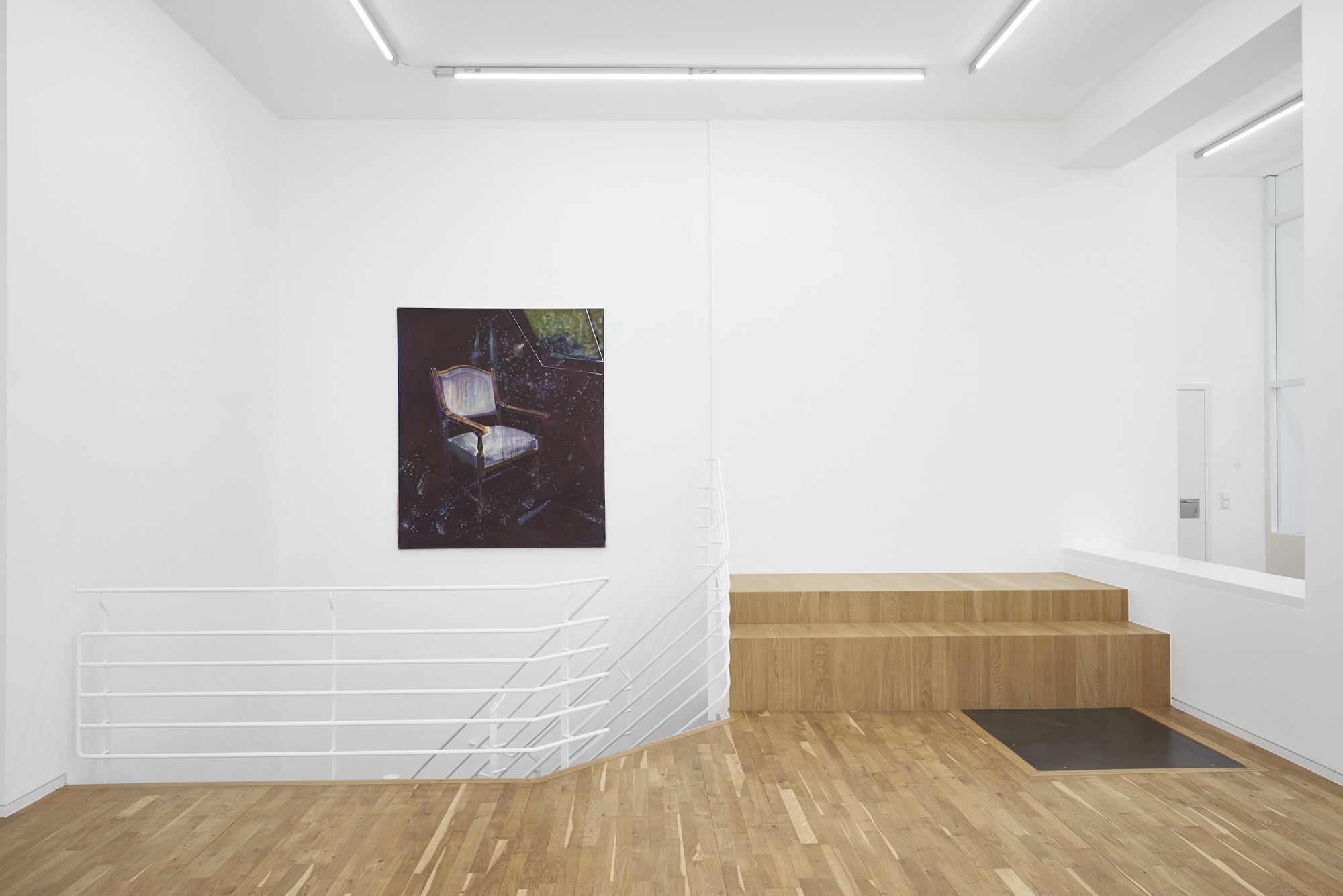
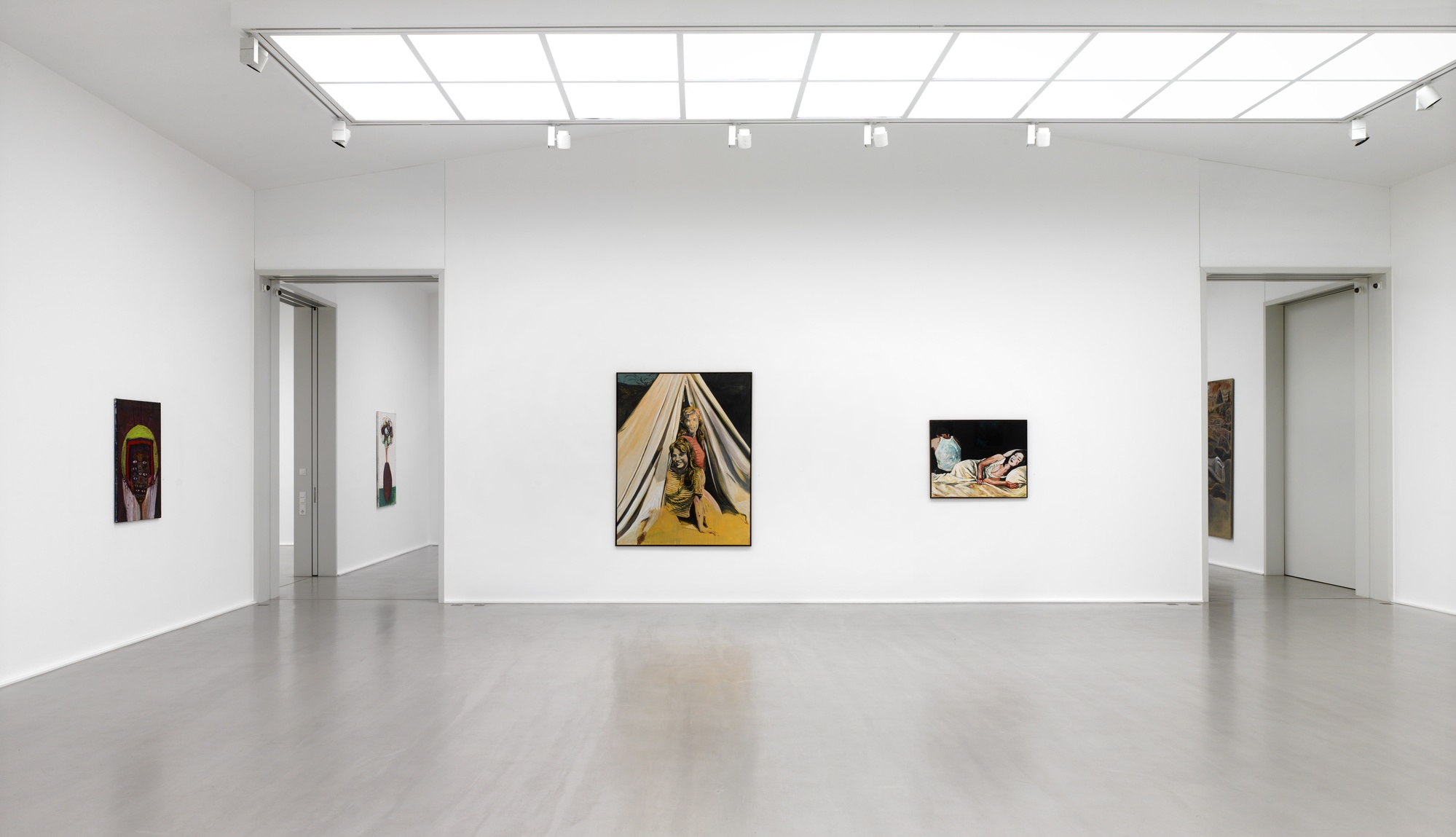
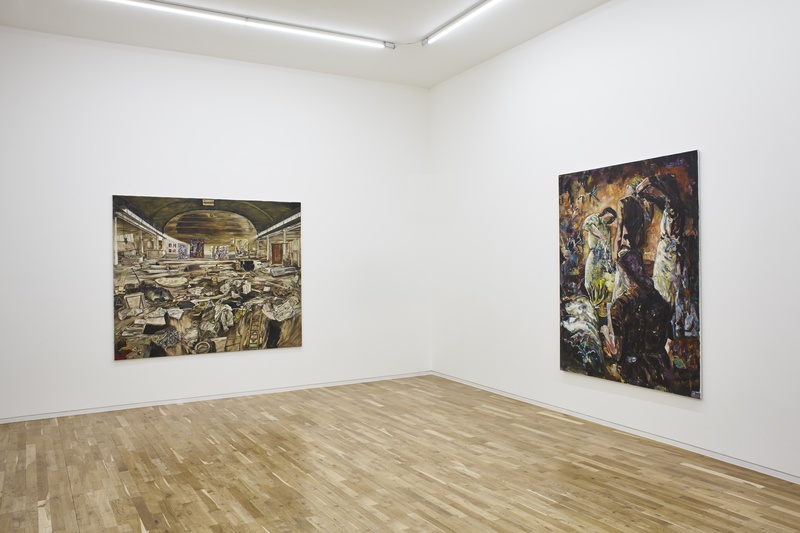
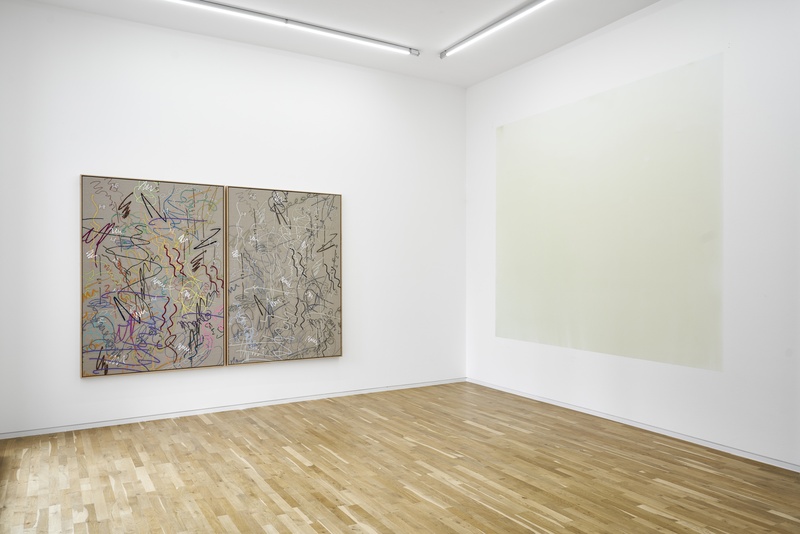
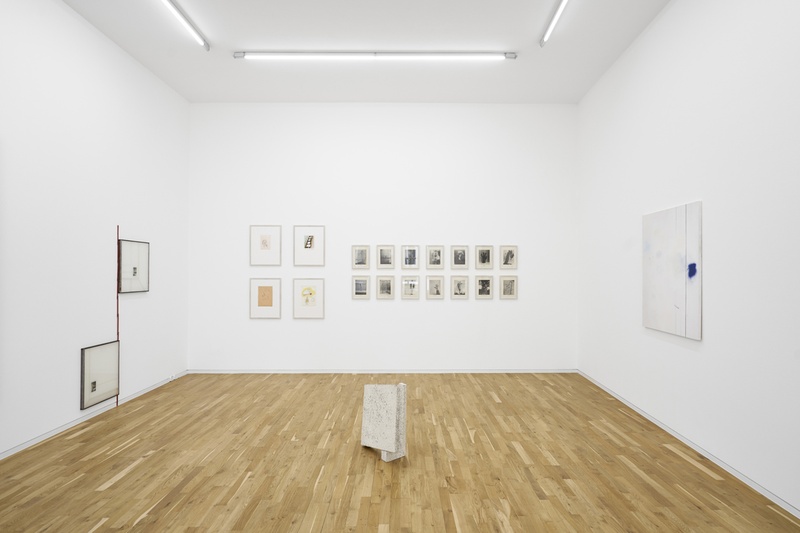
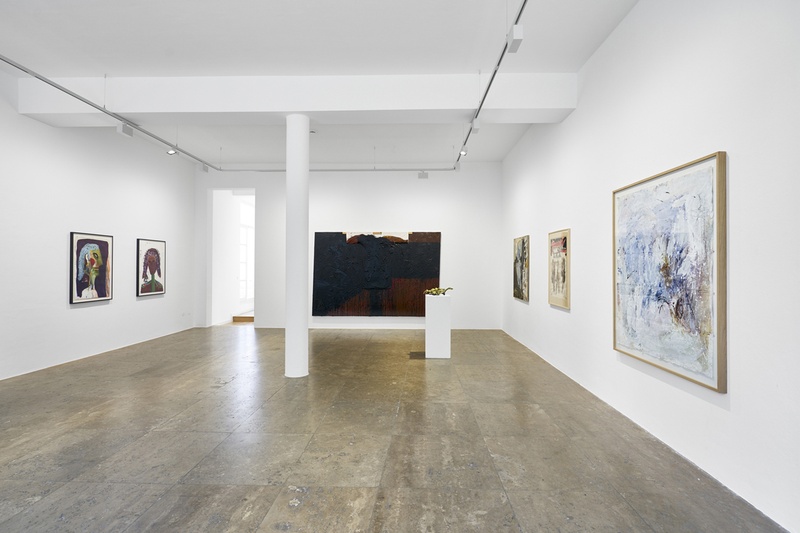
Ioan Grosu, born in 1985 in the Romanian city of Mediaș, in the district of Sibiu, has been residing in Munich with interruptions since 2005, where he visited the Academy of Fine Arts, completing his studies in 2011 in the masterclass of Günther Förg. He belongs to the first generation of artists of the digital era, and yet his paintings, which are generally executed in oil over extensive time spans, largely spring forth from analogous sources and techniques. Translation processes pervade the works of the artist, who himself is suspended between the cultures of Eastern and Western Europe that are still seeking to converge after the collapse of the Iron Curtain. Spanning various temporal and spatial dimensions, Grosu is engaged in an interplay between different media, pictorial motifs, and formal styles, between the states of waking and dreaming, the profane and the sublime, abstraction and representation, reality and fiction. This dialectic is condensed in the artist’s current figurations which have taken the place of his earlier, abstract compositions dominated by interwoven conglomerates of color, which only contain rudimentary figurative elements. The thematic shift in his work was triggered by a stay in Romania four years ago. In a basement in Cluj, where he temporarily took up quarters when his Munich studio was flooded, Grosu came across a stack of historical Hungarian magazines from the 1960s and 70s whose texts and illustrations were mostly illegible to him, posing an enigma that eluded conclusive decodification. Read More
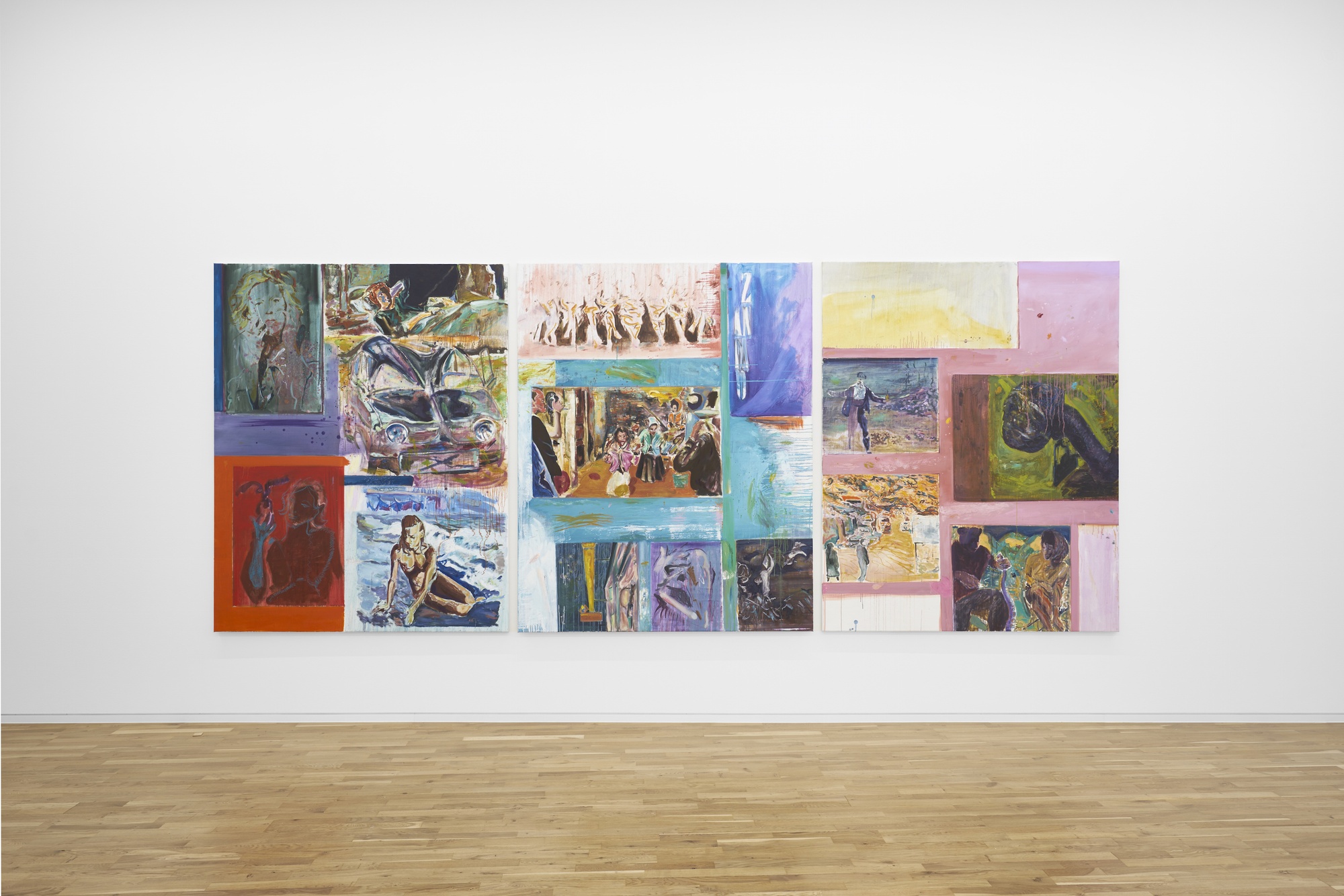
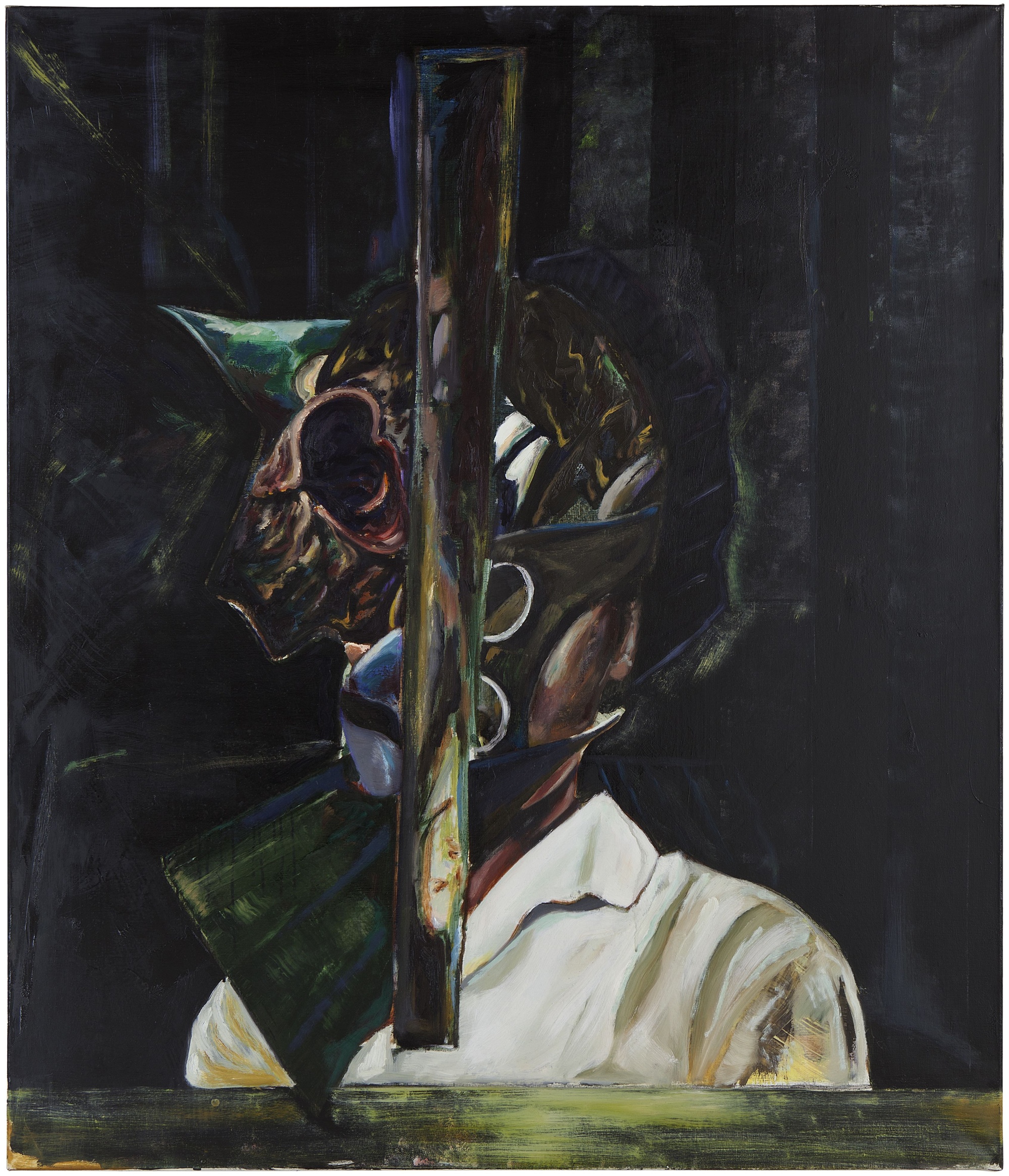
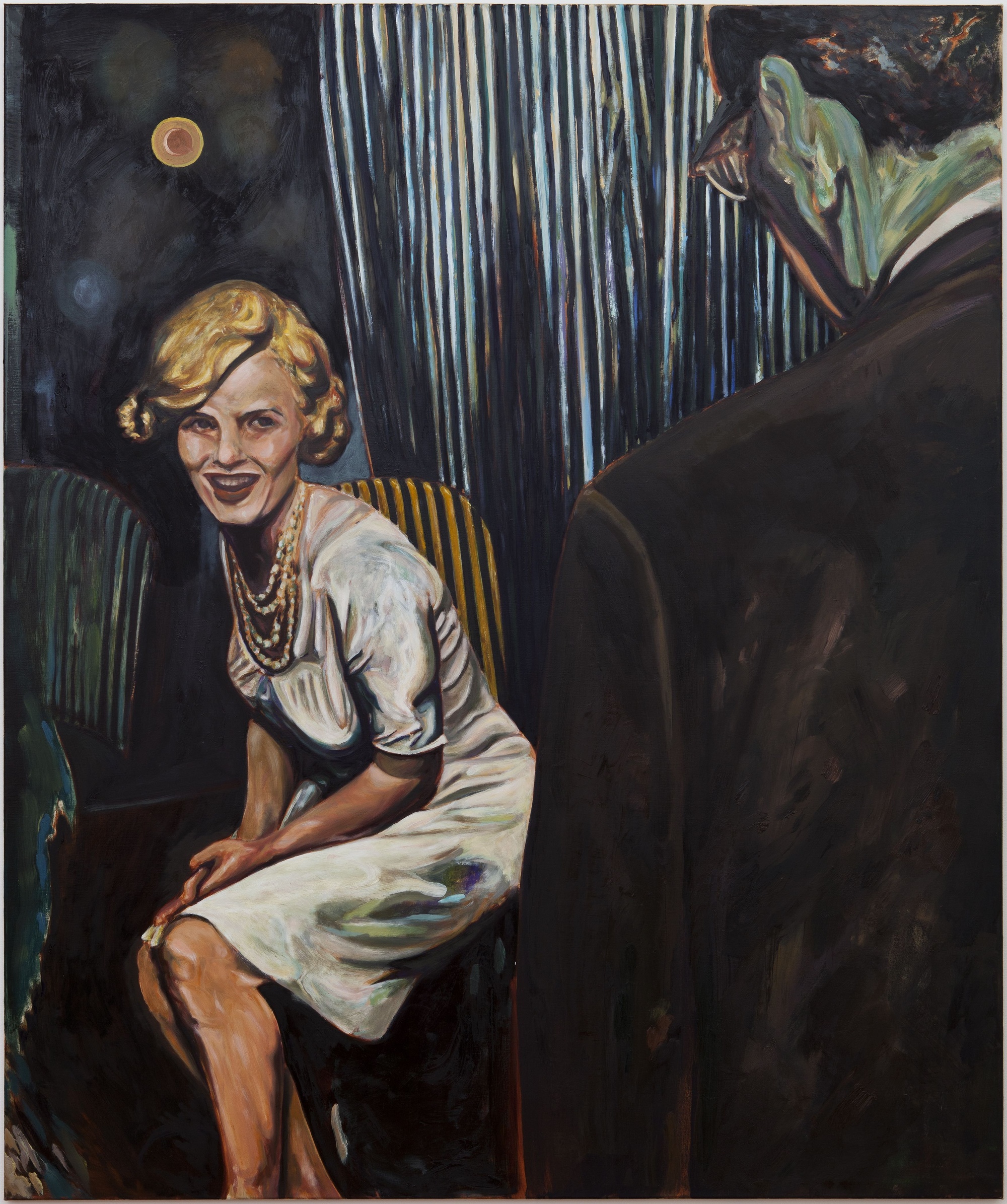
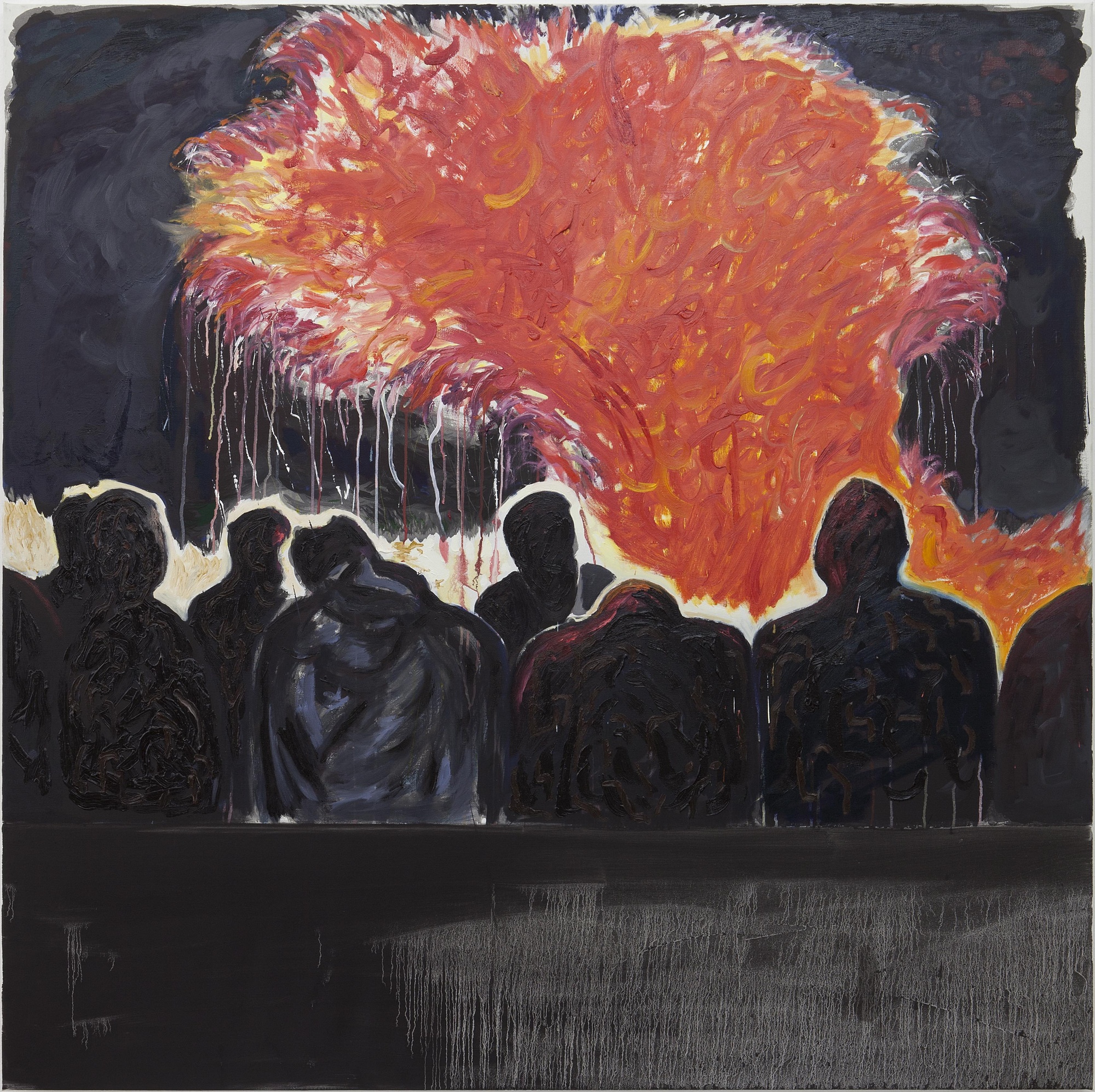
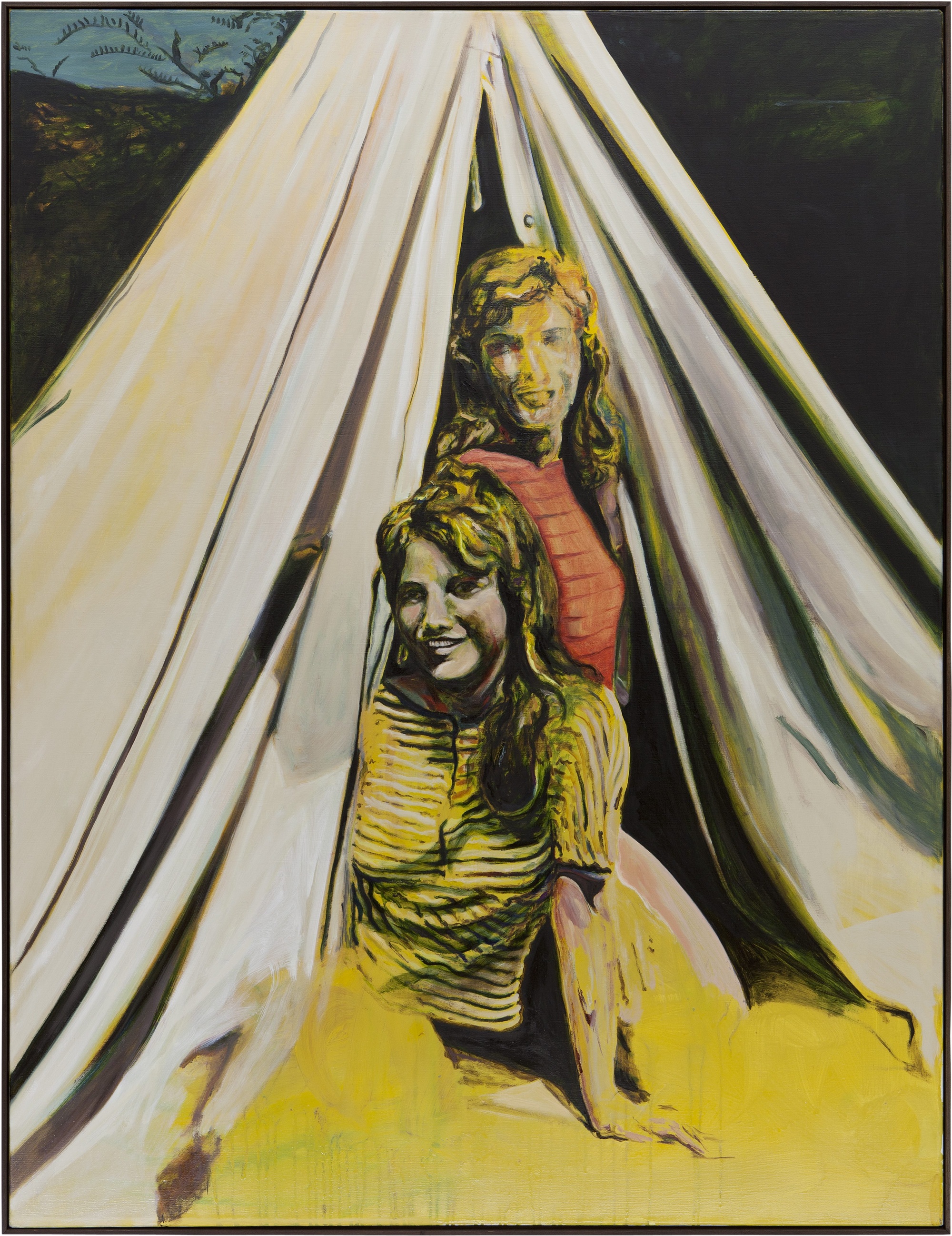
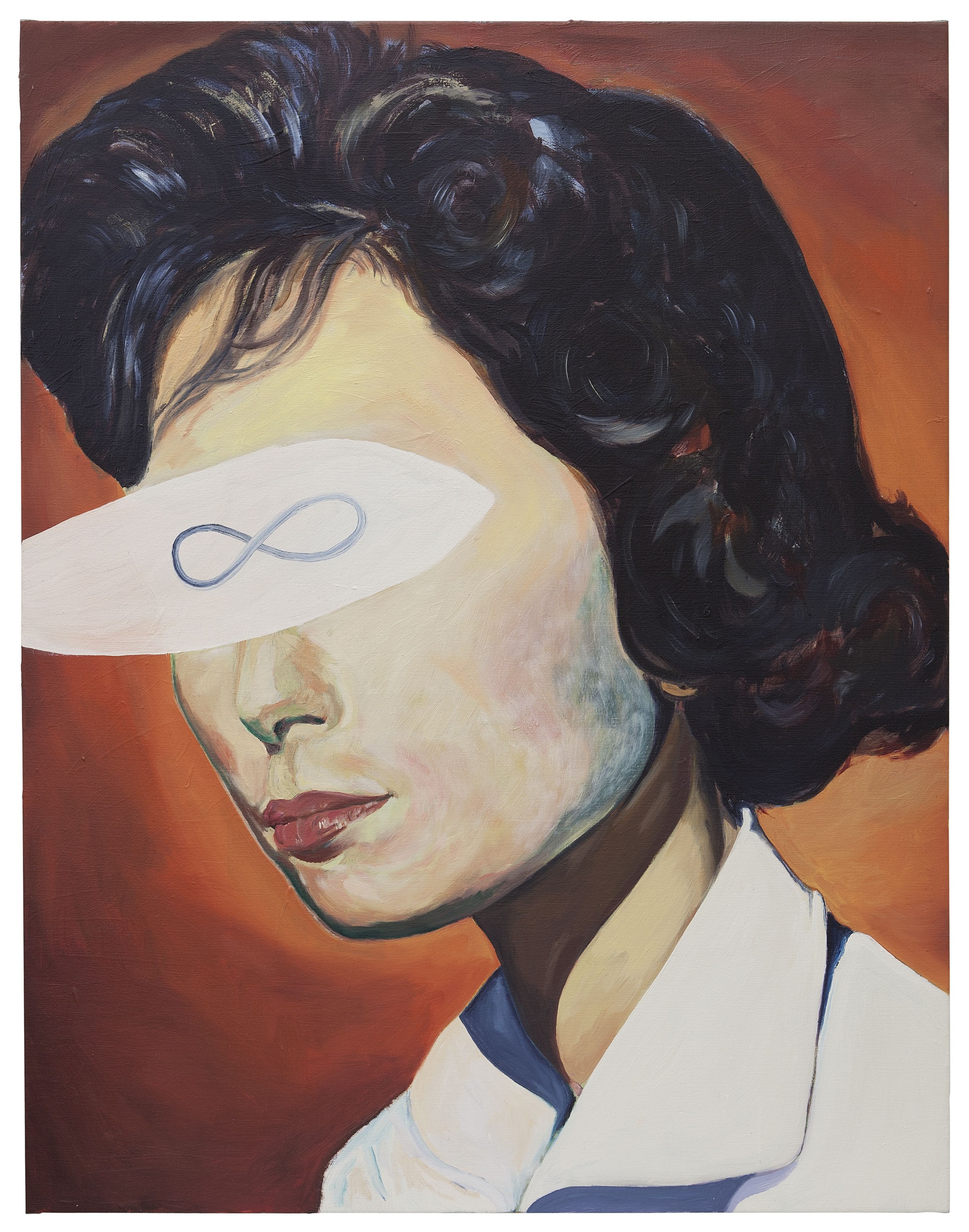
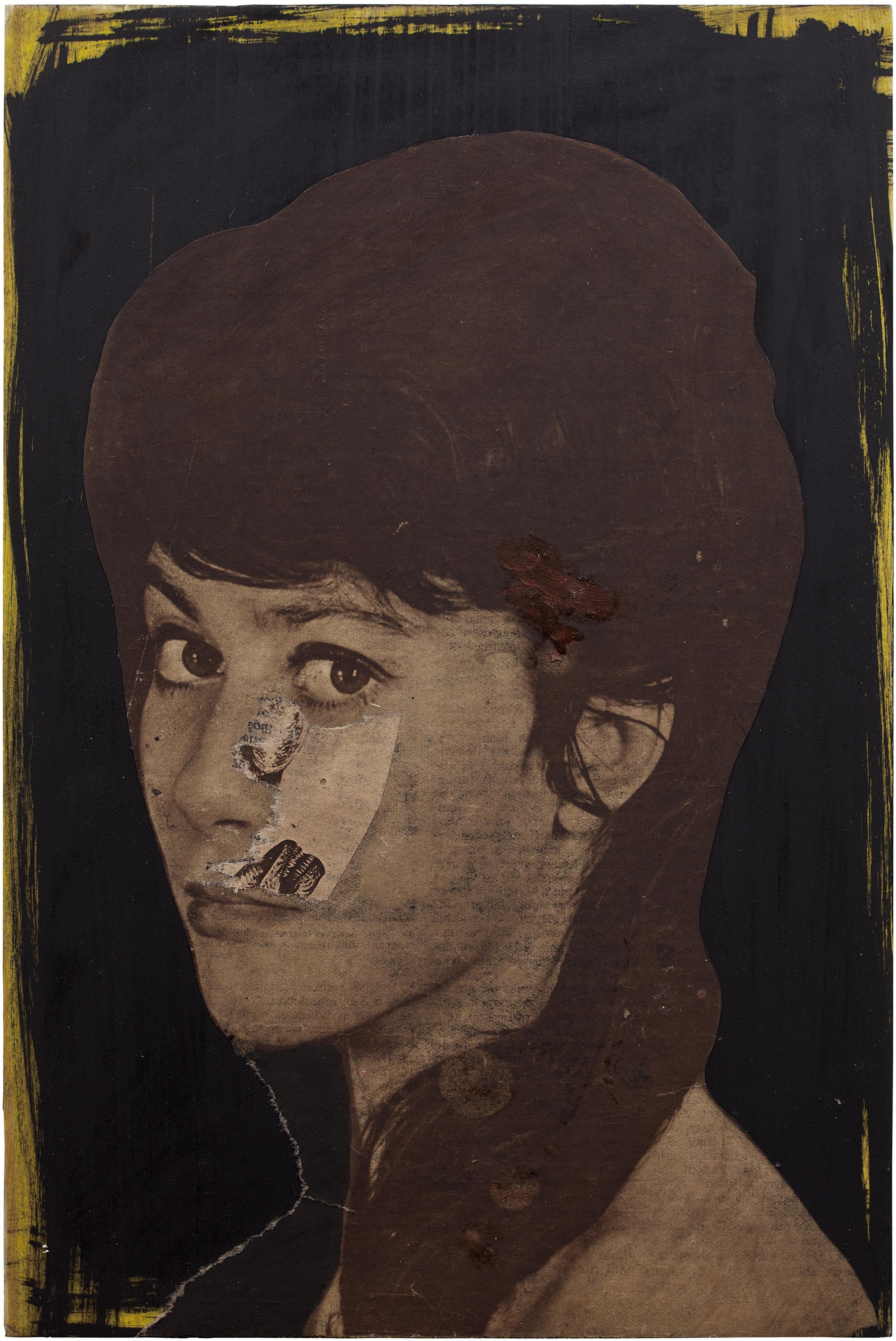
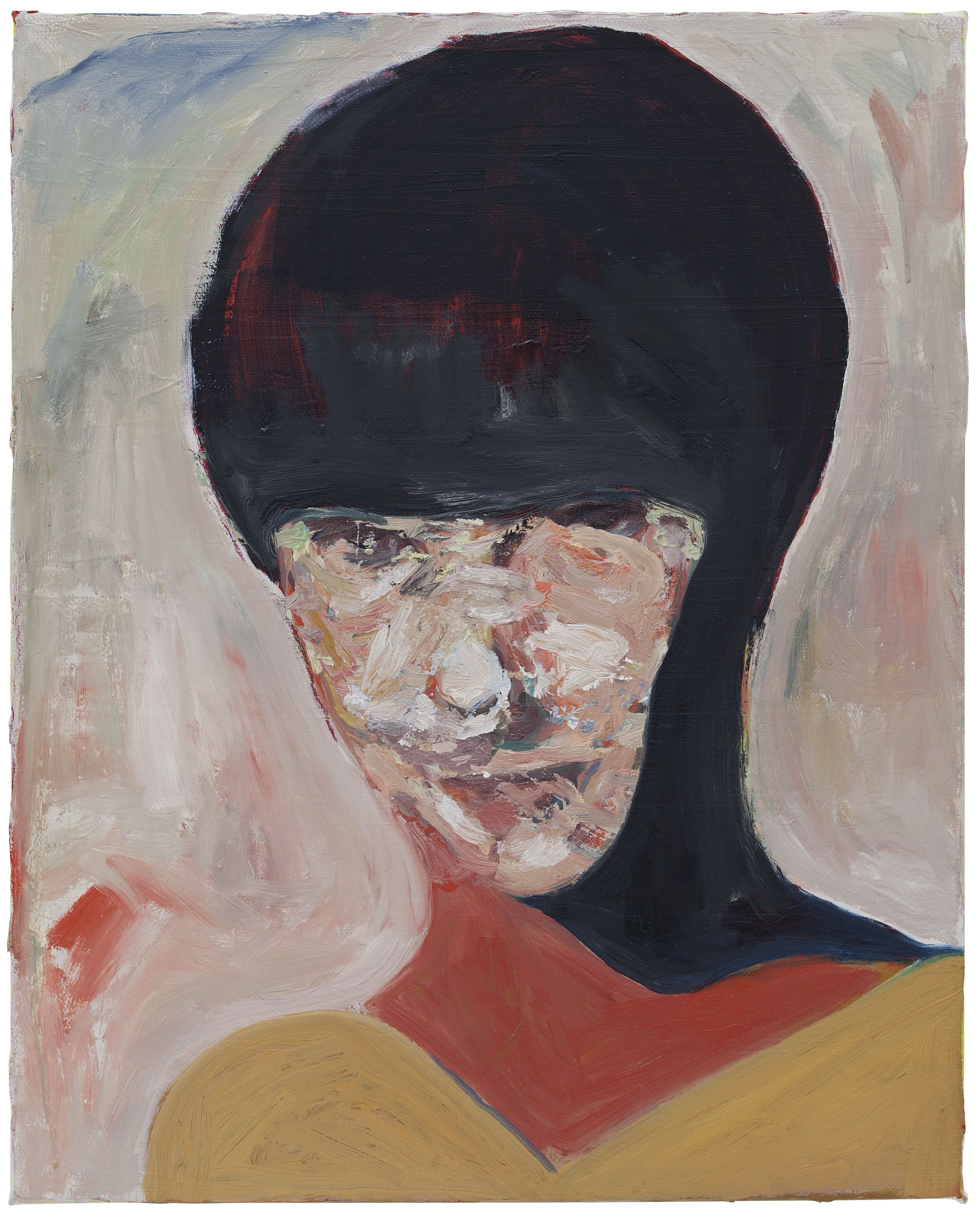
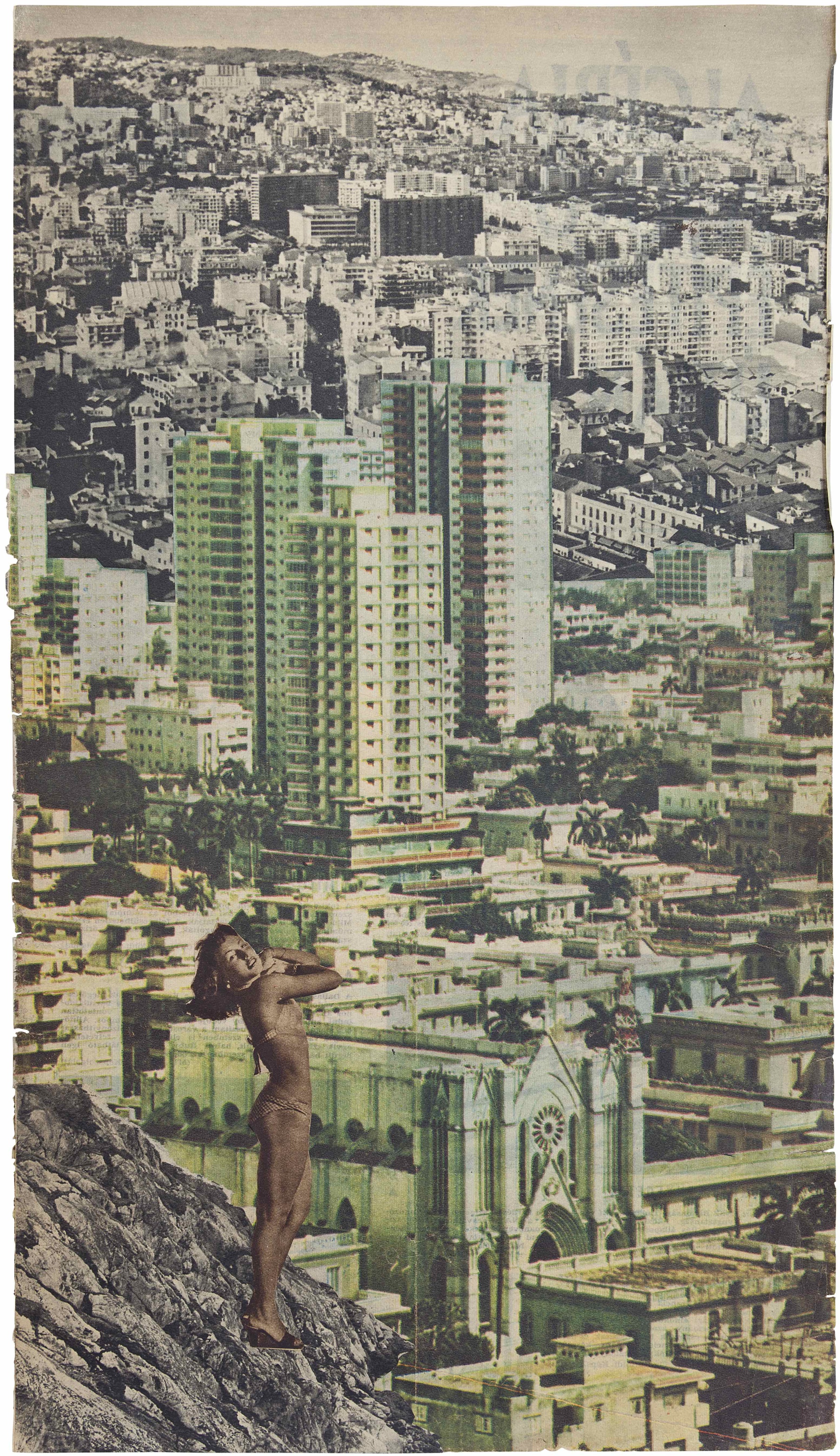
In his deconstructive exploration of the found material, Grosu cut up the magazines and reassembled the pictorial fragments into collages in new constellations: templates for paintings and drawings, in which the mysterious quality of the source images is still enhanced through the transfer from one media to the other. The appropriated motifs, a deliberate incorporation of selected visual elements that are adopted “without semantically coopting them”(1) take on a life of their own on the artists canvas: female figures, smoking, resting, laughing, sleeping, lost in reverie, and removed from time, take action in spaces “outside of all places”(2) before dark, nocturnal or glowing red backdrops, in interiors or (urban) landscapes, their faces obstructed, obliterated, or overlaid by entire image clusters that superimpose their countenances like multiple exposures shattering into pieces in a post-Cubist distorting mirror. The motifs reappear in variations and metamorphoses. Drawing upon selected subjects, Grosu plays through possible aesthetic approaches and approximations. In this sense, the concrete pictorial elements derived from the magazines catapult his compositions into the realm of abstraction again. This becomes particularly apparent in the artist’s portraits, which are partially overpainted, rendering them beyond recognition, or seem to be disintegrating. Detached from their original frames of reference, the depictions become open ciphers, even if occasionally the much-reproduced faces of world stars such as Marilyn Monroe or Brigitte Bardot are distinguishable in these.
In view of Grosus’s work complex based upon found magazine illustrations, after-images of more recent art history flash through the viewer's mind: in the artist's Marilyn reprises, Andy Warhol’s serial reduplications of the Hollywood icon inevitably resonate. A reposing female figure flanked by an averted man sitting on the edge of the bed and turning his back to his companion, evokes the mood of broken love in Edward Hoppers “Excursion into Philosophy” (1959). A group of nurses – depending upon the chosen detail occasionally facelessly – descending a flight of stairs, recall Marcel Duchamp’s “Nude Descending a Staircase, No. 2” (1912). The eyes of a woman’s face, which Grosu has simultaneously obliterated and accentuated with a layer of paint, conjure up the stylized almond eyes of Modigliani’s elongated female figures. Grosus’s compositions, at times atmospherically, at times though specific poses or details, repeatedly invoke Picabia’s proto-postmodern imports of female (nude) representations from magazines into paintings in the early 1940’s. Thus, as a discrete art-historical allusion, the structure of a window frame through which the figure in Picabias “Femme à la fenêtre” (1942) is gazing into the night sky appears in a work created by Grosu behind a female figure who is speaking on the phone, referring both to Picabia’s aesthetic procedure of transferring a visual element from one medium to the other and to a specific work of the artist. In his sublimating deconstructive iconoclasm Grosu not only brings to the fore the potential iconic character of his pop-cultural sources: the sacred images in the churches of his childhood that harbored multiple religious denominations find an implicit echo in the appropriated pictorial media fragments as well.
In his disruptive recodings, the (hi)stories of the past encounter the current kaleidoscopic state of our fragmented pictorial world in which “present and future are compressed into an omnipresent moment just as the expansiveness of the world is compressed by the excess of speed and the constant acceleration of our locomotion and telecommunication.”(3) Paul Virilio’s diagnosis of an all-encompassing “instantaneousness,” which in his view has seized the 21st century in the sense of an „interactive, cybernetic, telecommunication,”(4) has its equivalent in the collage that unites different times and places, the profane spheres of popular culture and the sublime realms of high art. As Vanessa Joan Miller claims, “The collage brings into focus the contradictory, the productive conflation of contrasts, the creative dialectic. It camouflages fragments of reality in the appearance of the real and transforms images into pictorial fragments leading to shifts of meaning.”(5) This is also exactly what renders the collage the quintessential expression and medium of our era, in which the world is reeling between the lightness of dissolution and the weight of severe crisis. Meanwhile, in an interpenetration of his aesthetic devices, Grosu, who is “a wanderer in the interspace between the realities,”(6) no longer employs collages merely as immediate starting points for paintings and works on paper, but also translates them into photography, and from there into drawings, or from the painted canvas back to paper.
Text by Belinda Grace Gardner
Notes:
(1)Cf. Fritz Emslander, Die Welt auf dem Schneidetisch. Oder: Es ist nicht der Leim, der eine Collage macht, in: Emslander; Markus Heinzelmann (eds.), Schnitte im Raum. Skulpturale Collagen, exhib. cat. (Museum Morsbroich, Leverkusen: 2011), Bielefeld, 2011, p. 43.
(2)Michel Foucault, Of Other Spaces: Utopias and Heterotopias, from:
Architecture /Mouvement/ Continuité, October, 1984 [Des Espace Autres, March 1967, Engl. transl: Jay Miskowiec], under: http://web.mit.edu/allanmc/www/foucault1.pdf (March 31, 2017).
(3)Paul Virilio, Der Futurismus des Augenblicks [Orig.: Le Futurisme de l’instant. Stop-Eject, Paris 2009, Germ. transl.: Paul Maercker], Wien 2010, p. 56.
(4)Cf. ibid., S. 55.
(5)Vanessa Joan Müller, Verfremdungseffekte, in: Emslander; Heinzelmann 2011, p. 49.
(6)Ioan Grosu in a telephone conversation with the author, March 23, 2017.
[Unless otherwise indicated, English translations were rendered by the author.]