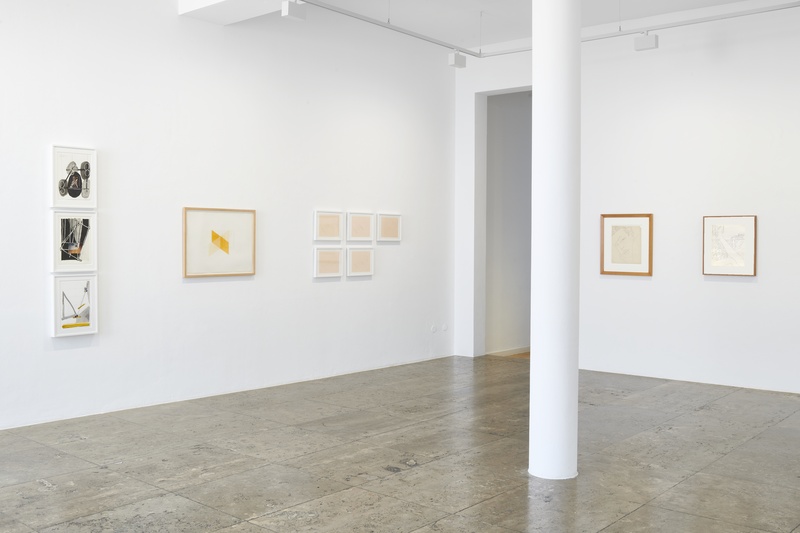
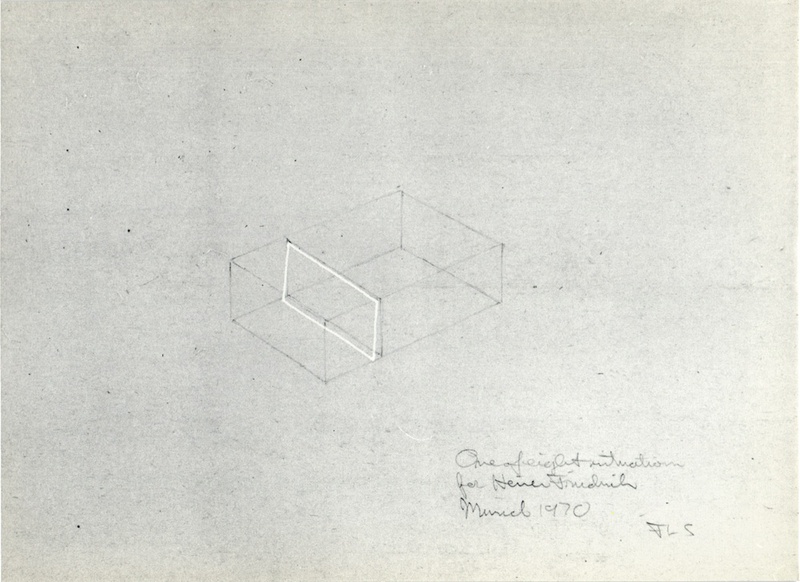
Fred Sandback started printmaking, like many other artists around 1970, with occasional works on paper. At the forefront of this process was the reproduction of a drawing: the production of a printed image. And so his first two images (each of which were screenprints in two colours from 1970 and 1971/72) were produced as the result of commissions, most likely without any particular attention being paid to the conditions of printing. As a simple way of transferring a drawing to a screen using photomechanical techniques, screen-printing was the appropriate technique here. However, for the portfolio "Eight Variations for Galerie Heiner Friedrich" (1971–73), also realised using screenprint, more extensive considerations were made. The hard, sharply demarcated lines produced by screen-printing corresponded to the lines of Sandback's sculptures from that time, which comprised tightly stretched elastic cords dyed with white or black acrylic paint. In this case, the technique was consciously selected as the ideal form of presenting the motif. Read More
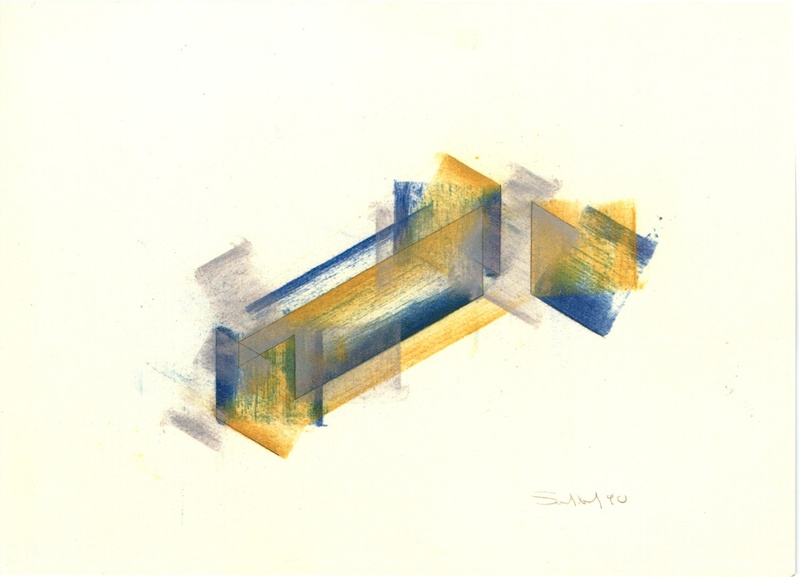
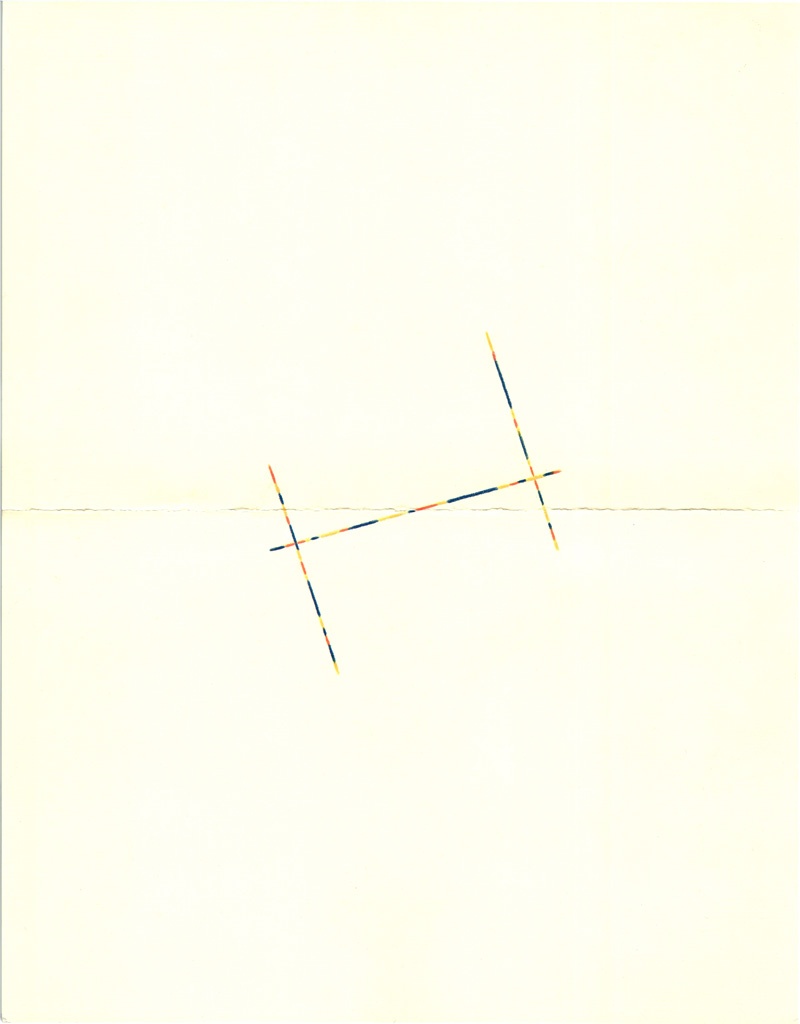
In the years from 1972 to 1975 Fred Sandback’s sculptural work changed considerably. The line, hitherto sharply drawn with steel wire and taut elastic cord, almost always surrounding an object, became softer, and the outline of the sculpture was abandoned. In addition, this new approach was primarily executed in acrylic yarn. The lines now mainly consist of various threads, which, due to slight rotation, appear voluminous but 'permeable, and frayed at the edges. A similar process also takes place in Sandback’s hand-drawn works. While earlier pieces were mainly drawn with felt-tip pen, and drawing as such had played a relatively small role for him, a comprehensive group of pencil and pastel drawings were created around this particular time. The most significant characteristic of this work: broad, “blurred” lines and warm, muted, pastel tones. Sandback’s interest in classical printmaking techniques, especially in lithography, which appeared as an opportunity to adequately translate these changes into sculpture and drawings, emerged from this development. In 1975 Fred Sandback had his first chance to work on some etching plates and four blocks of lithographic limestone under the guidance of Karl Imhof in Munich. Although the etchings were drawn onto the covered plates without preparatory sketches, the rudimentary nature of the drawings and his choice of small formats for the first four pieces shows the reserved manner in which he approached this technique steeped in tradition. The first attempts produced such enthusiasm, however, that three large-scale prints with confident and decisive central motifs were made directly after. Sandback drew on the four blocks of lithographic limestone without hesitation and with a tremendous sensitivity for this complicated technique. Lithography remained ‘his technique’, a technique that he developed and substantially expanded over time.
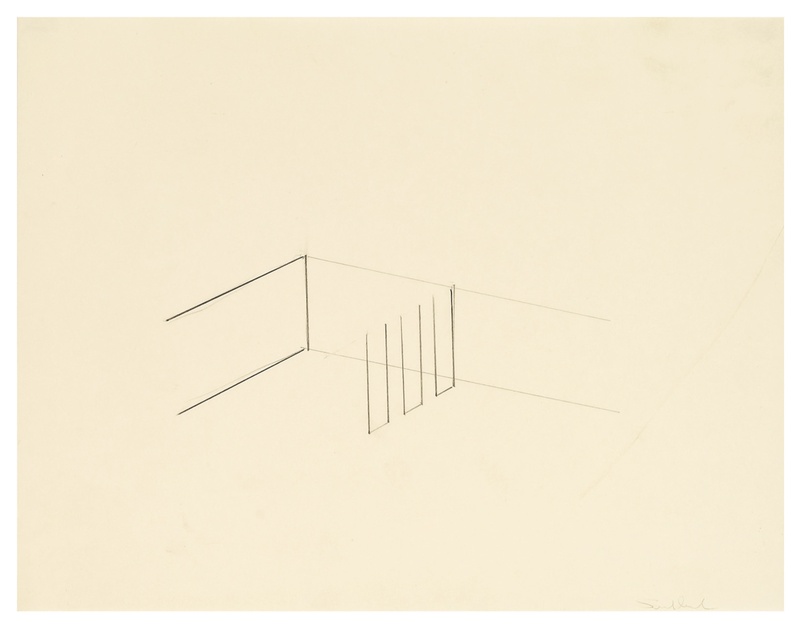
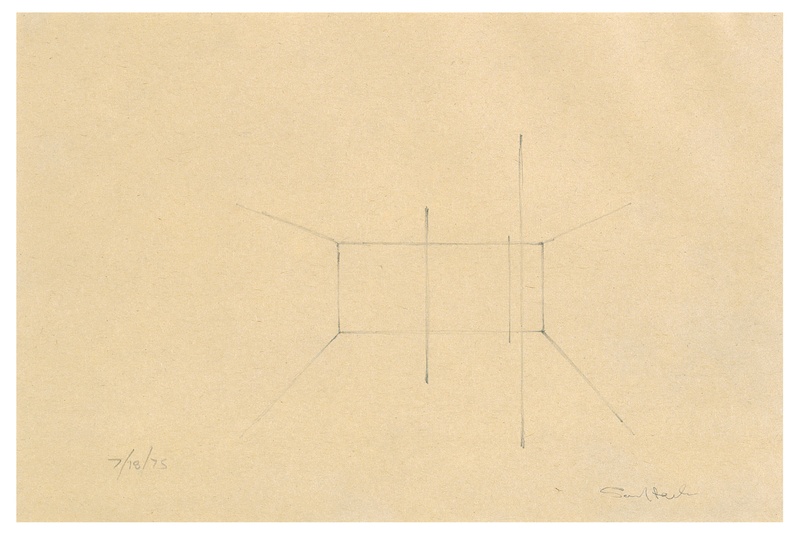
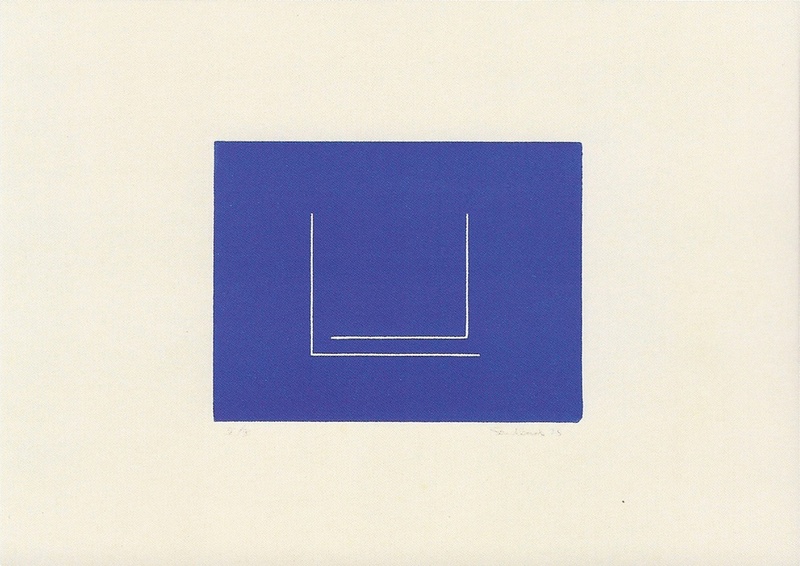
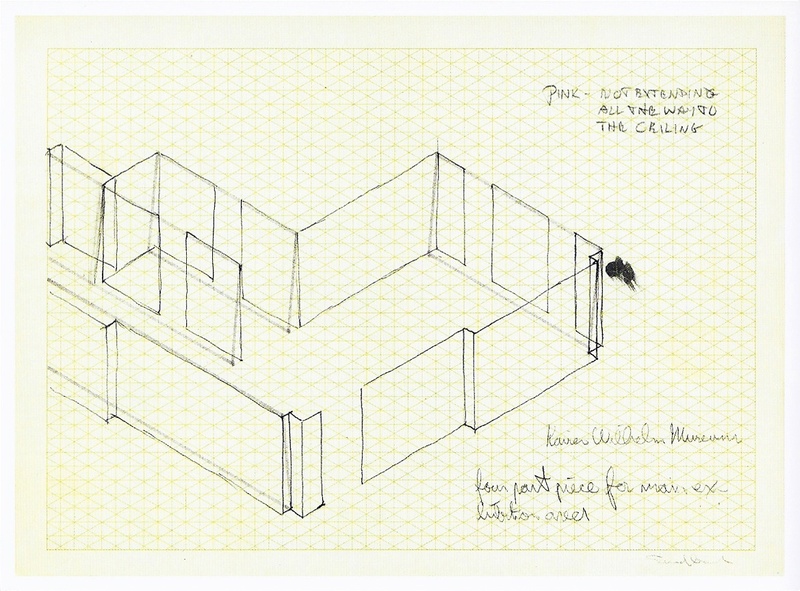
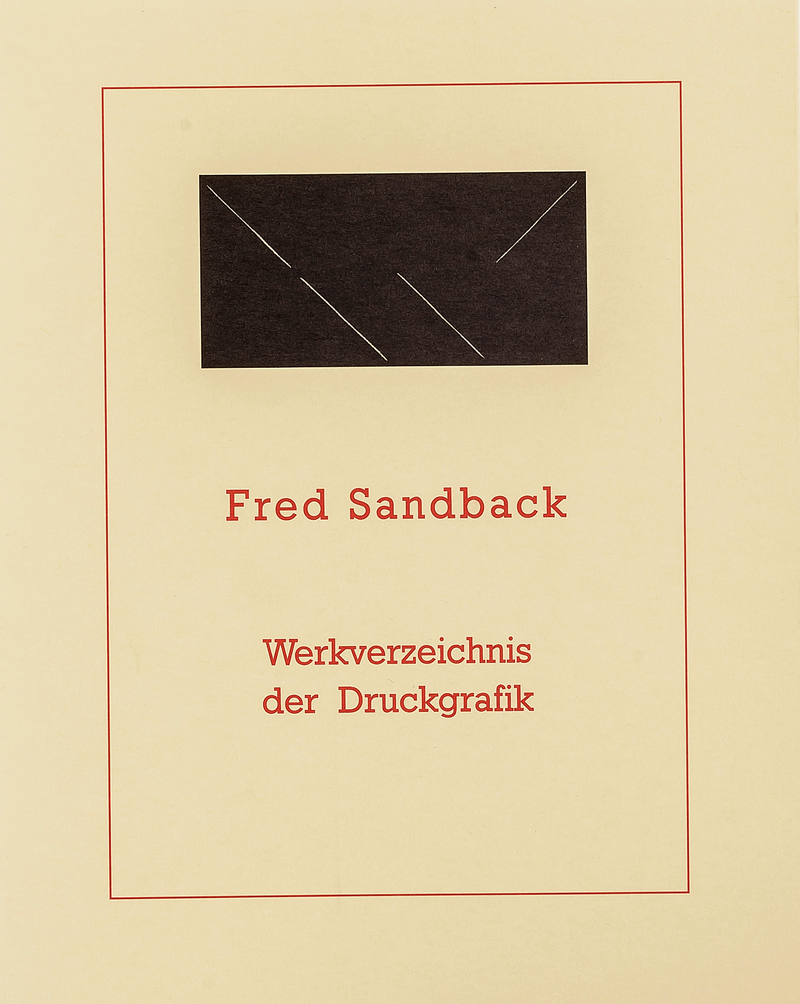
Lithography - the way Sandback handled it from the start - naturally raises the question of colour, a question that, in turn, became the focus of Sandback's artistic thinking. It was necessary to consider if colour that exists in relation to an object in space is also suitable for the same object represented two-dimensionally. It was further necessary to examine the meaning of the drawing, that is to say the ‘independent drawing’ detached from the preparatory sketches, and the conditions it should have. The isometric drawings were also always investigations into possible sculptures or documentation of work already realised. Then a new type of line suddenly appeared – lines without spatial skeletons, only existing within a chosen format. For these, too, there are counterparts in Sandback’s sculptural works. Increasingly, the sculptures became the motifs of the drawings, despite the motifs often not actually existing, not actually being ‘built’. As such it was clear that an object has its colour, and occasionally all its various possible colours. This fundamental decision on colour represents the framework for the freestanding lines. Moreover, there is of course a type of print that has no formal equivalent in drawing and which only has the motif in common: linocut, woodcut and reverse lithography, i.e. all forms with negative lines, are thus the basic results of their technical conditions, they are versions of the motifs that can only be realised using this particular technique.
Following the development of Fred Sandback’s prints it becomes clear how his love of printing techniques, the adventure of expanding them, the interaction with materials (as in the small-format dry-point pieces and the linocuts) necessitated his work and distinguished it. What began as a stroll developed into an adventurous journey that transformed familiar territory. The range of Fred Sandback’s prints can be considered unique within the context of American art after the Pop Art era.
Text by Fred Jahn1