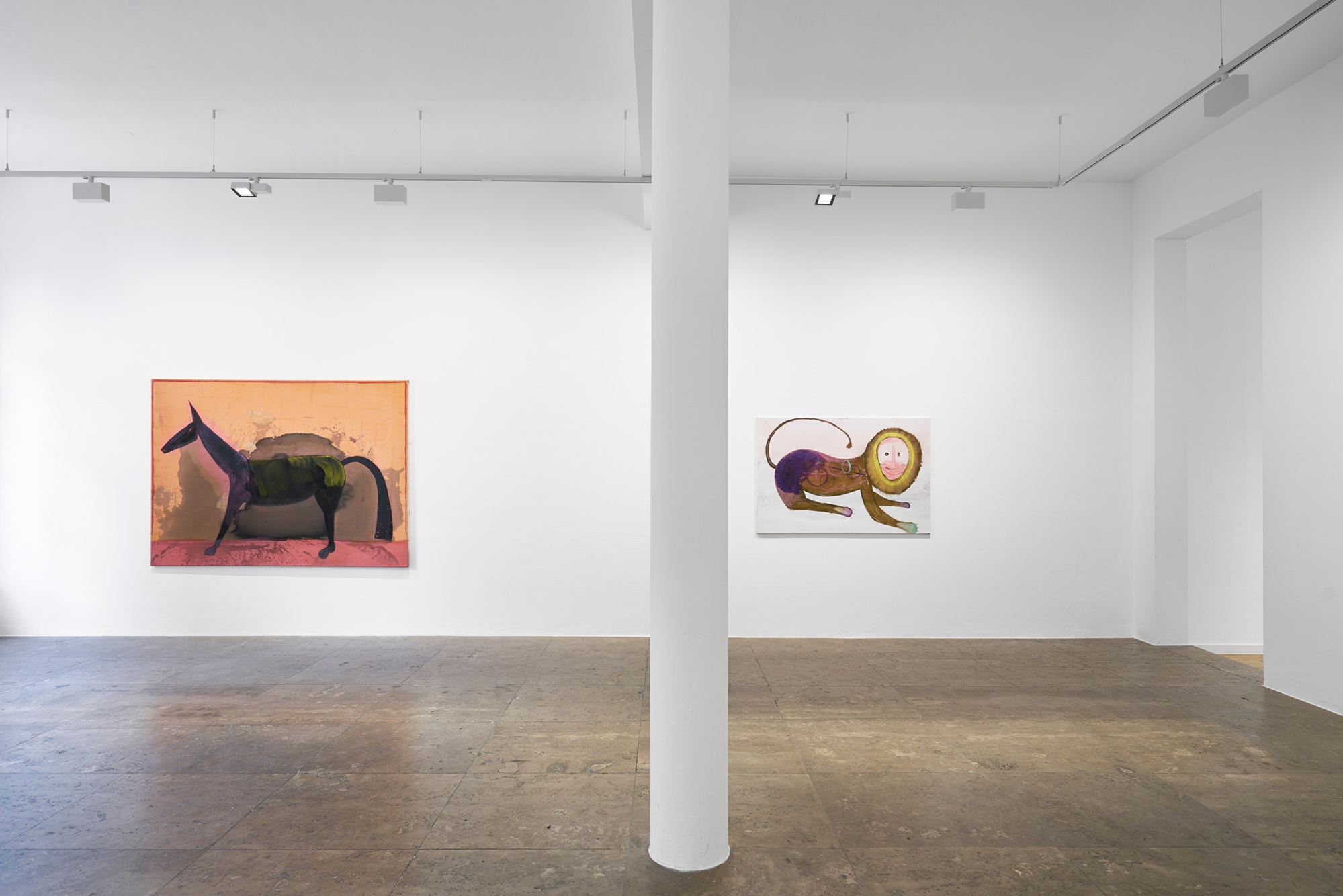
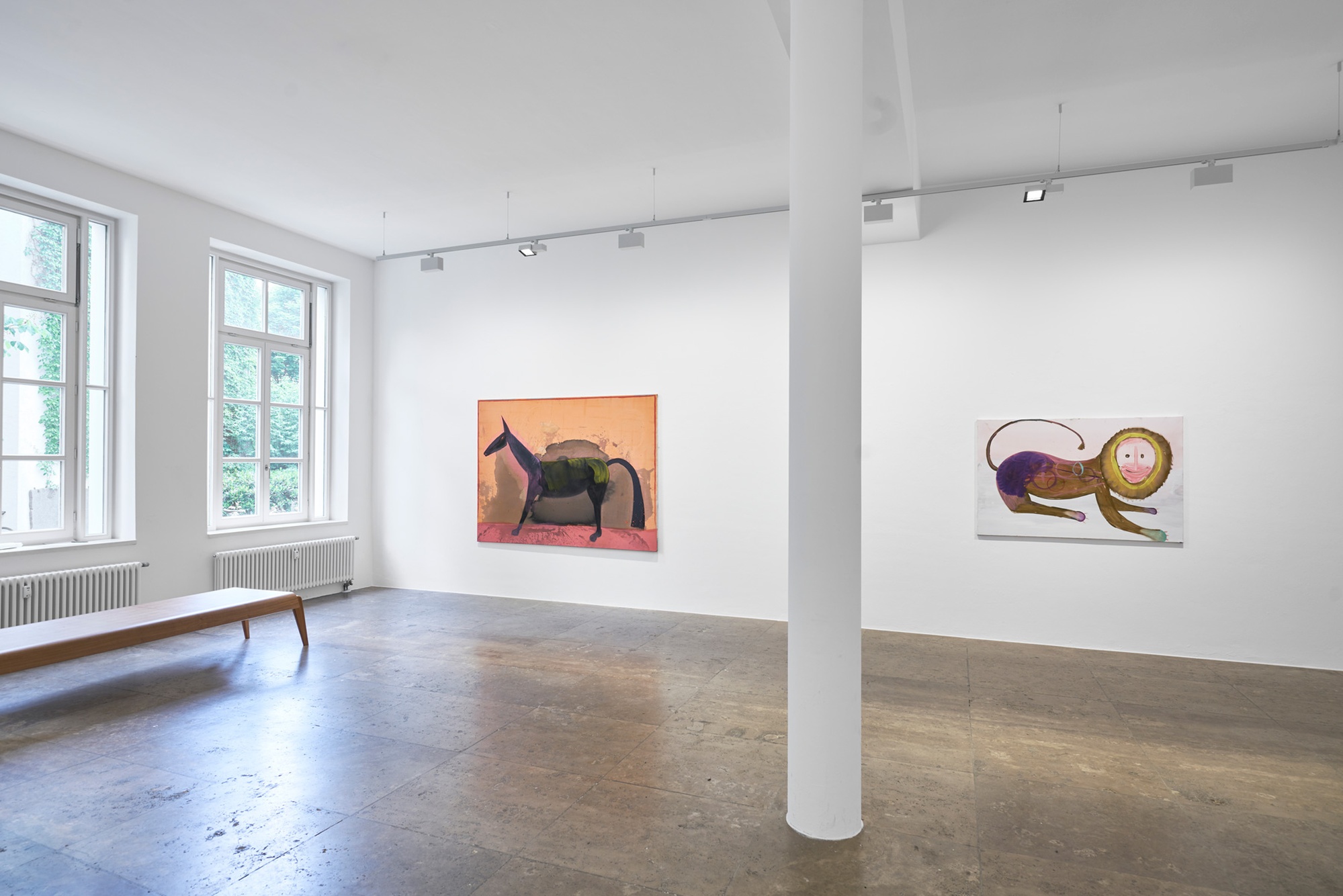
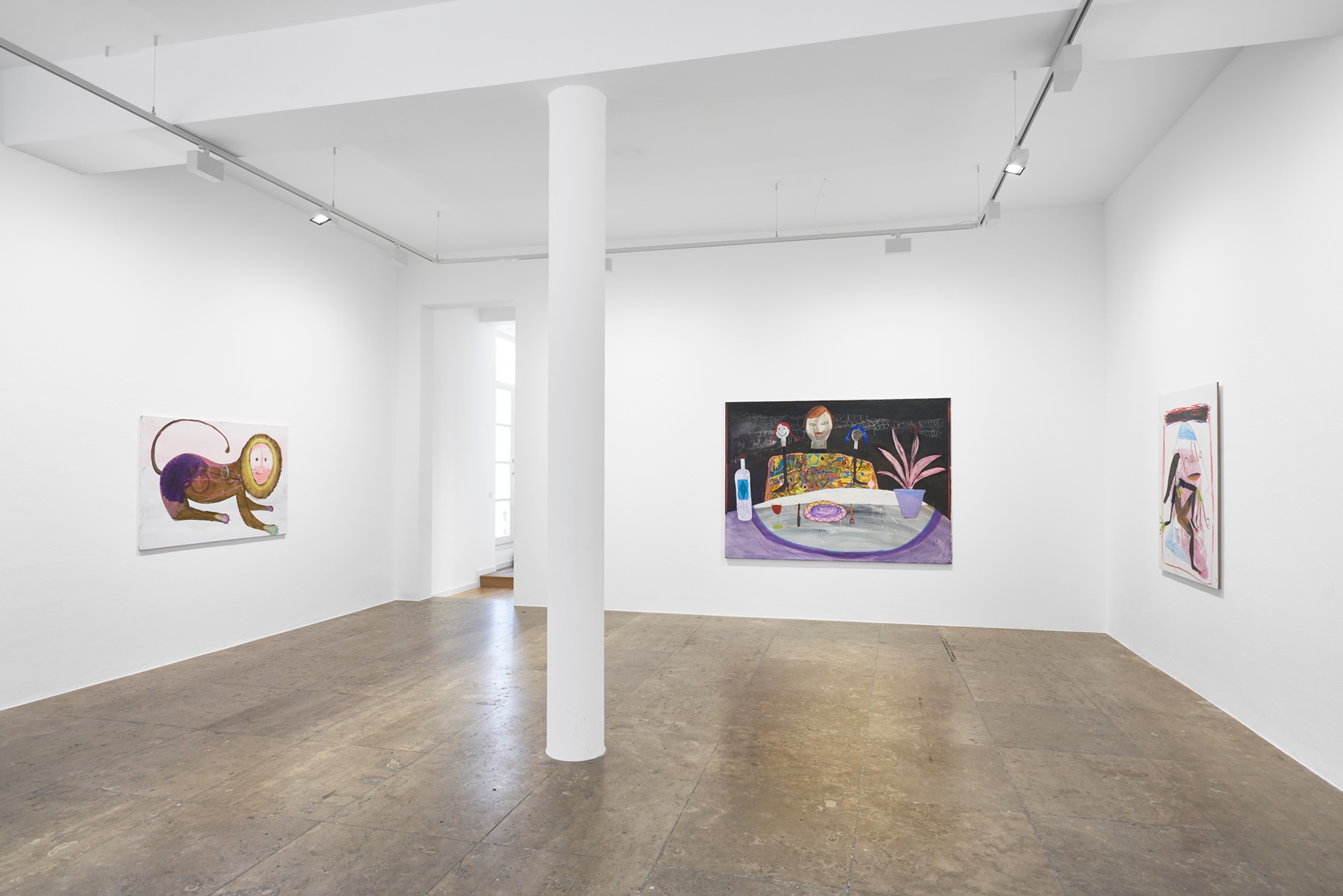
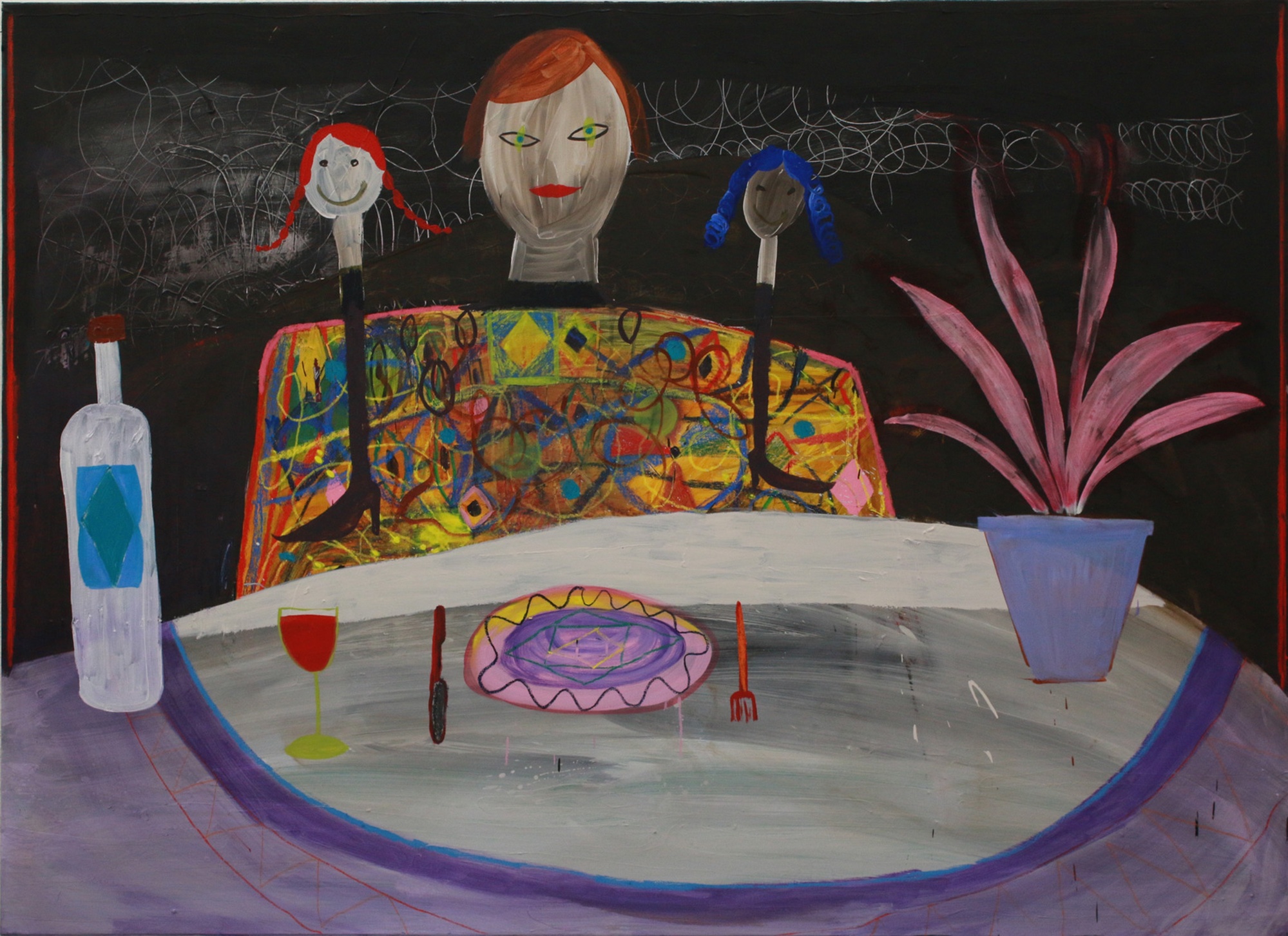
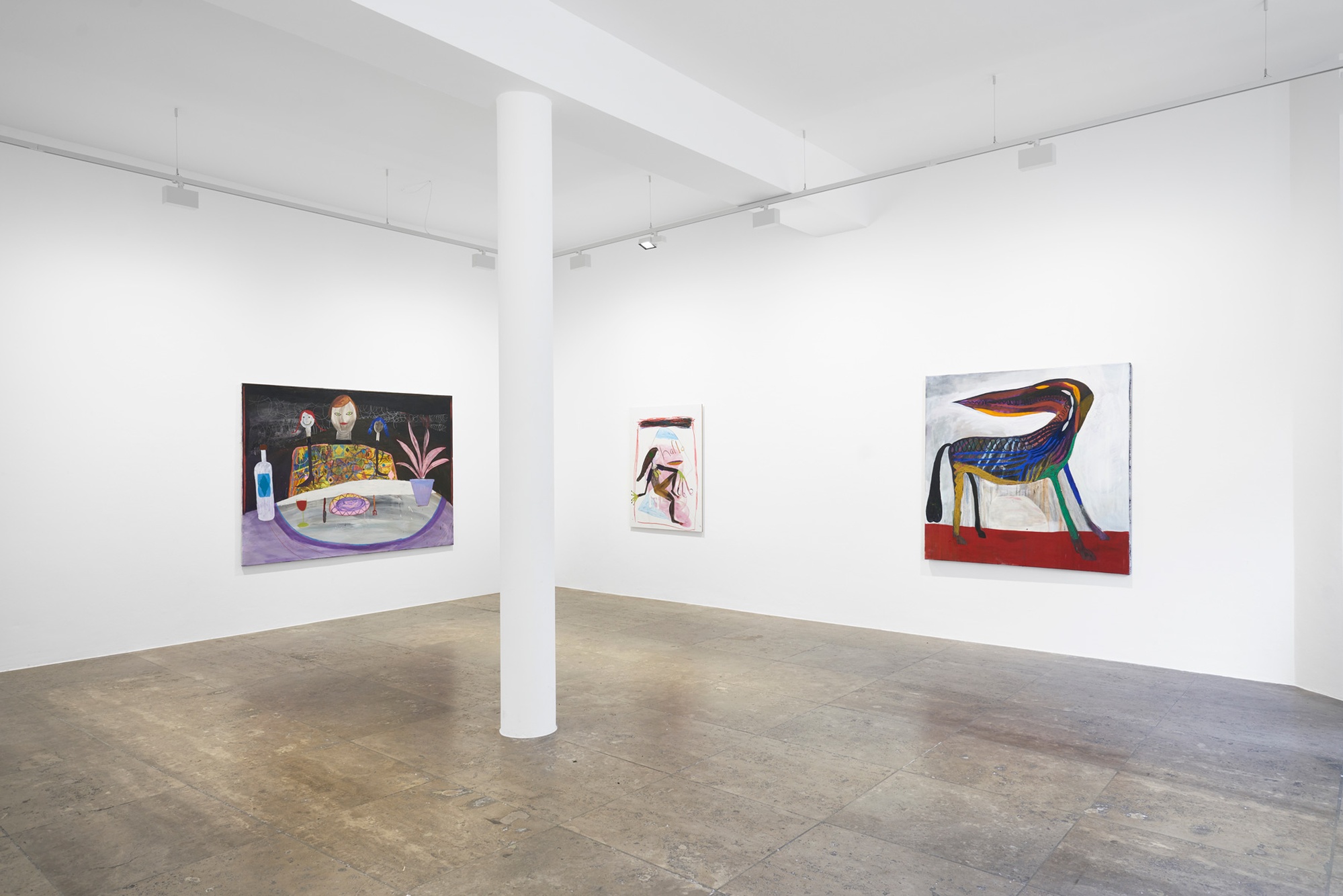
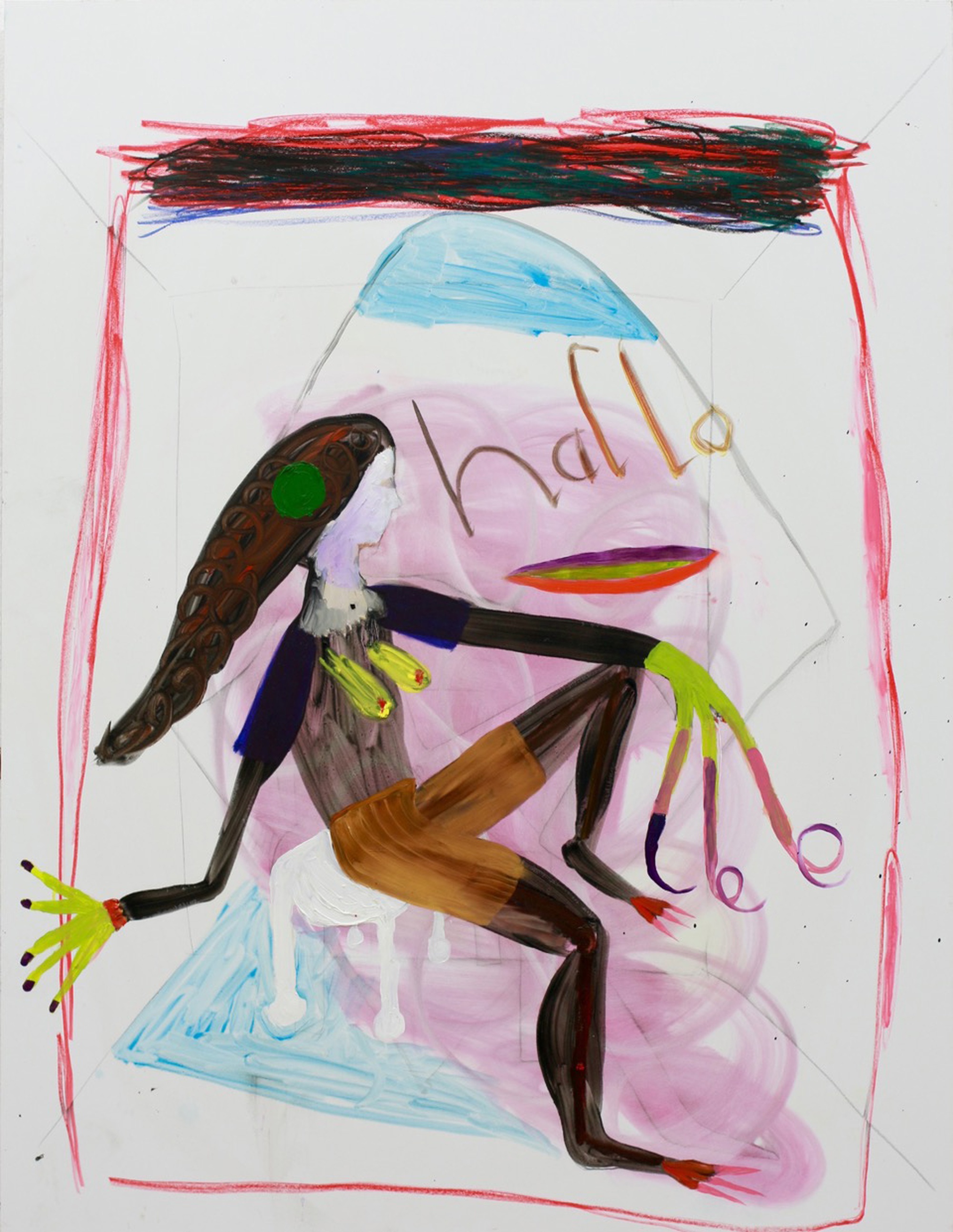
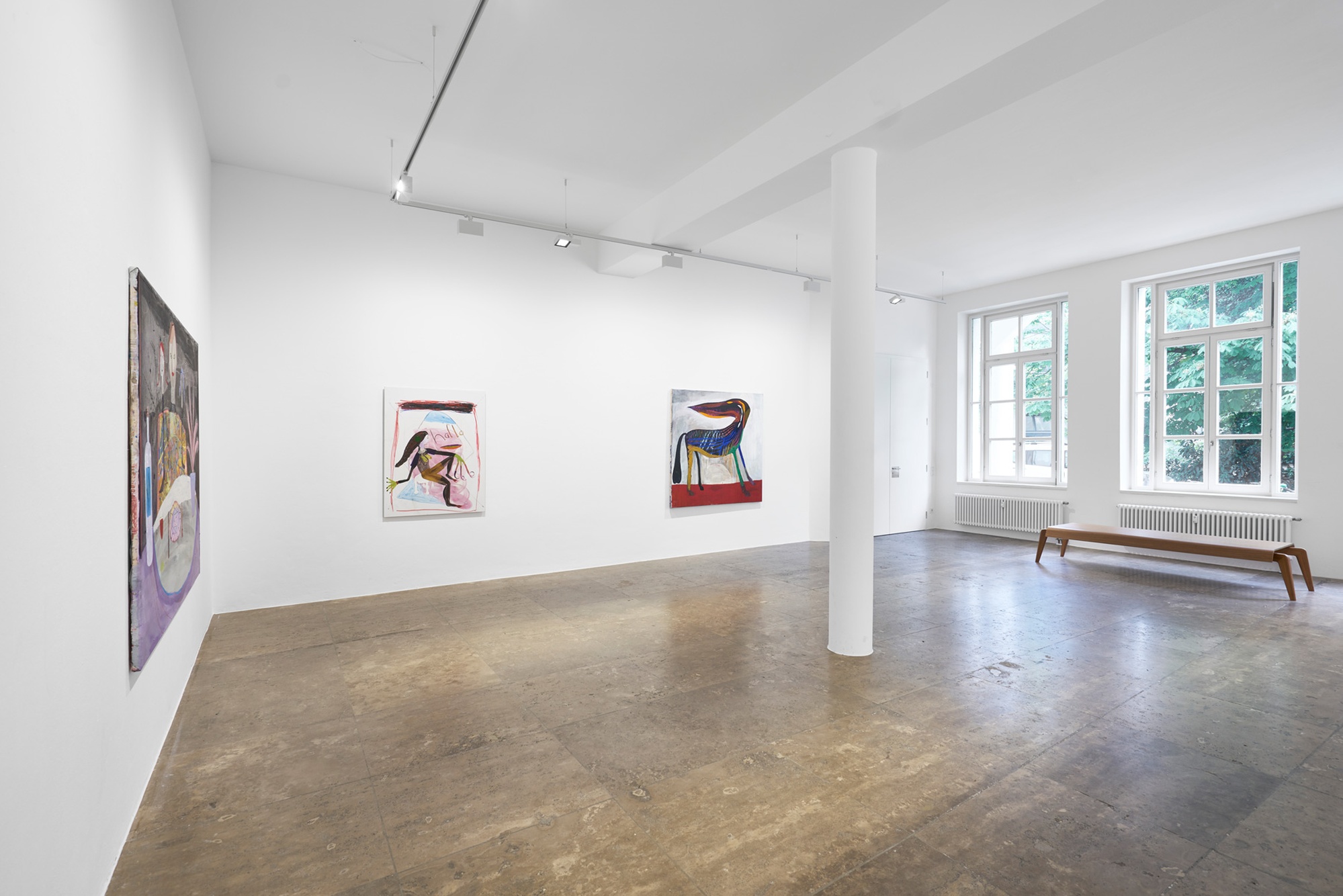
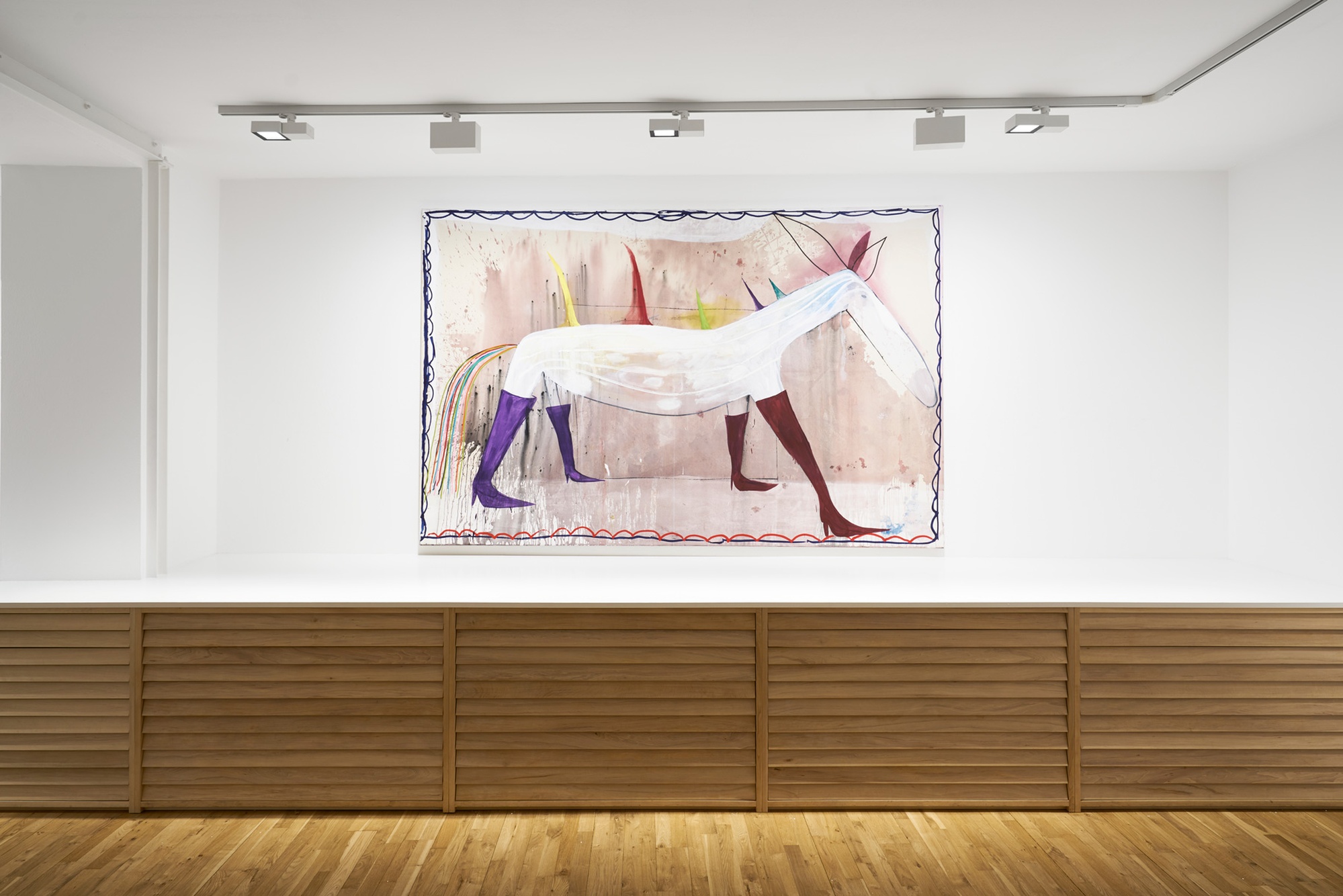
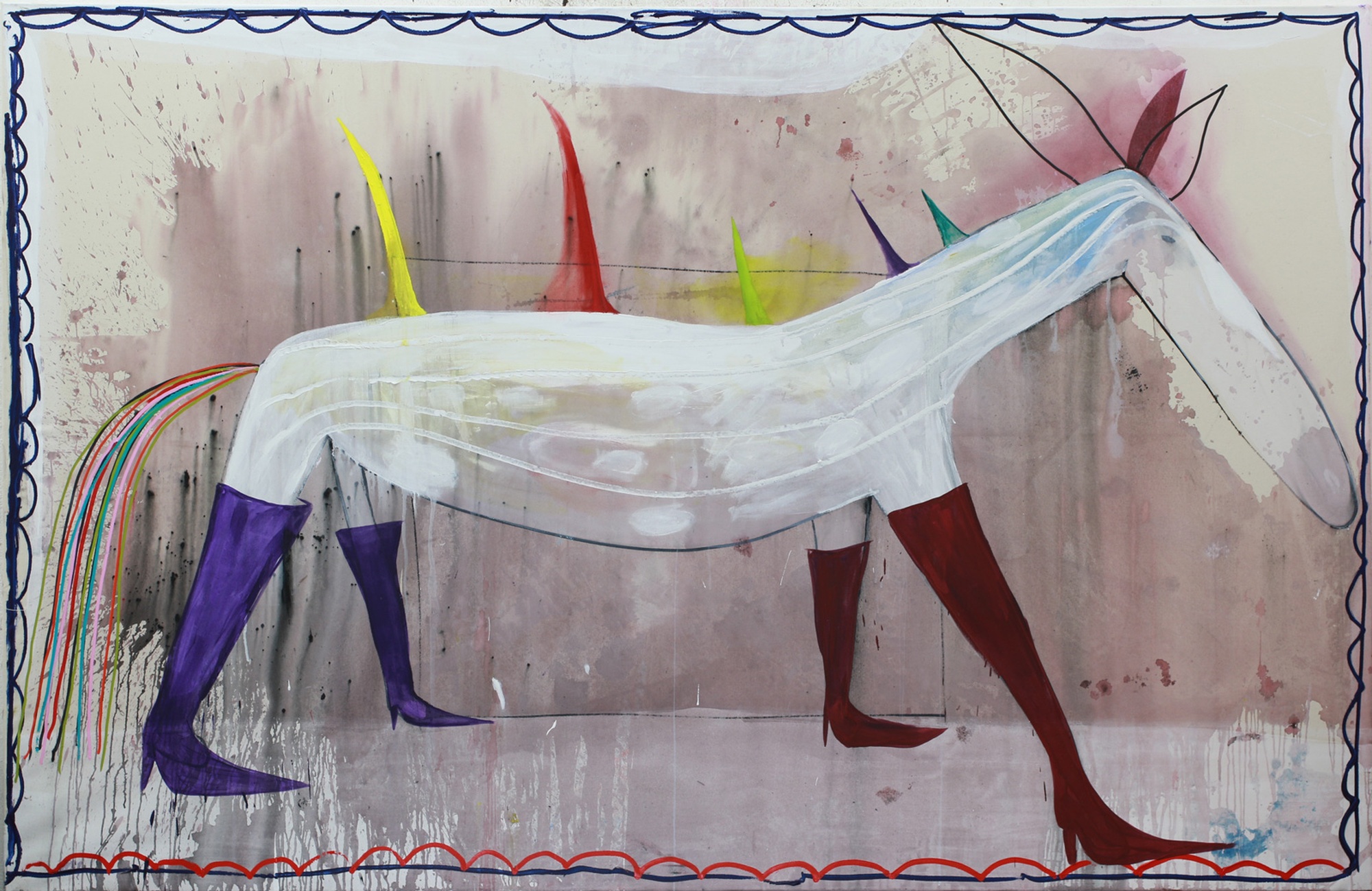
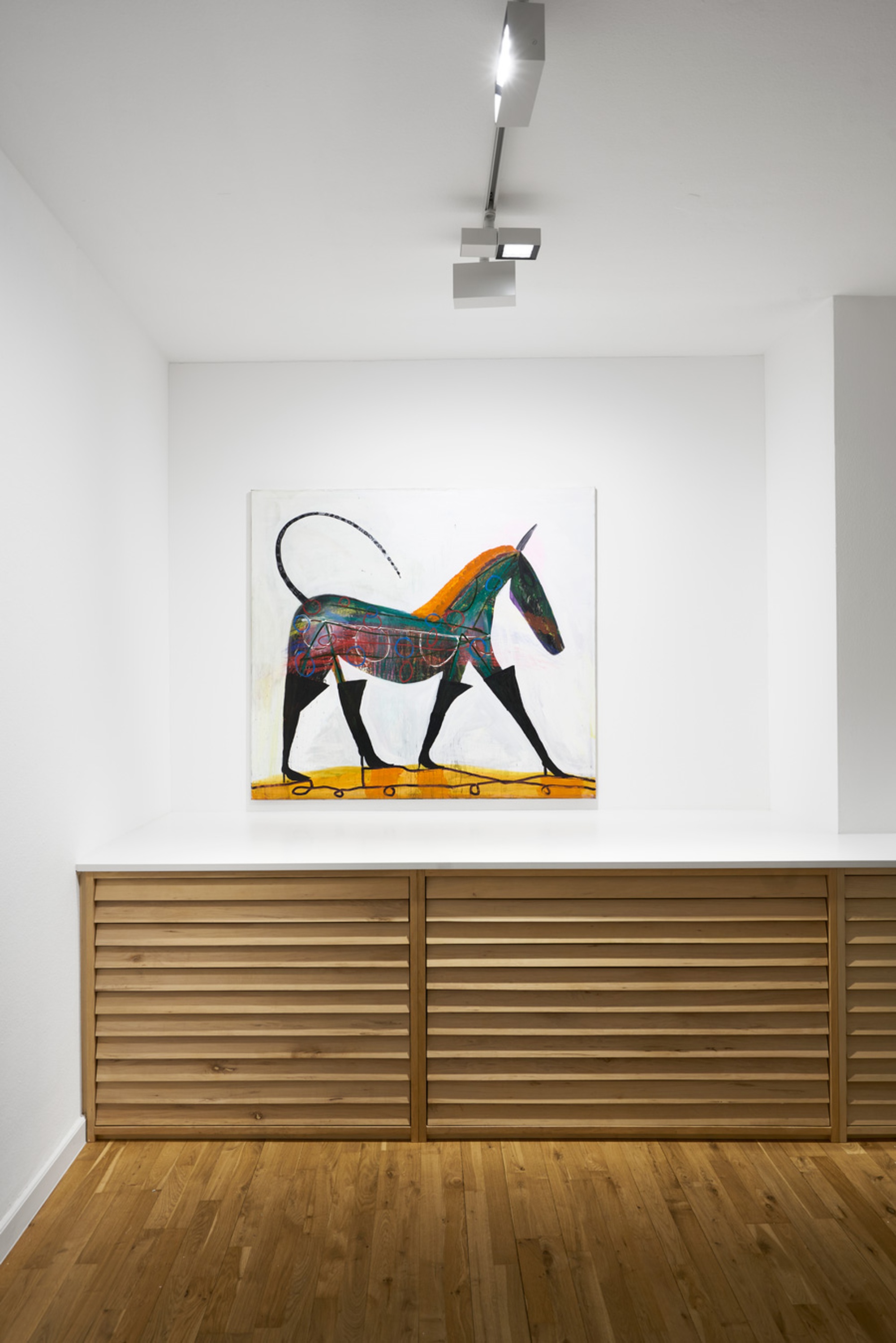
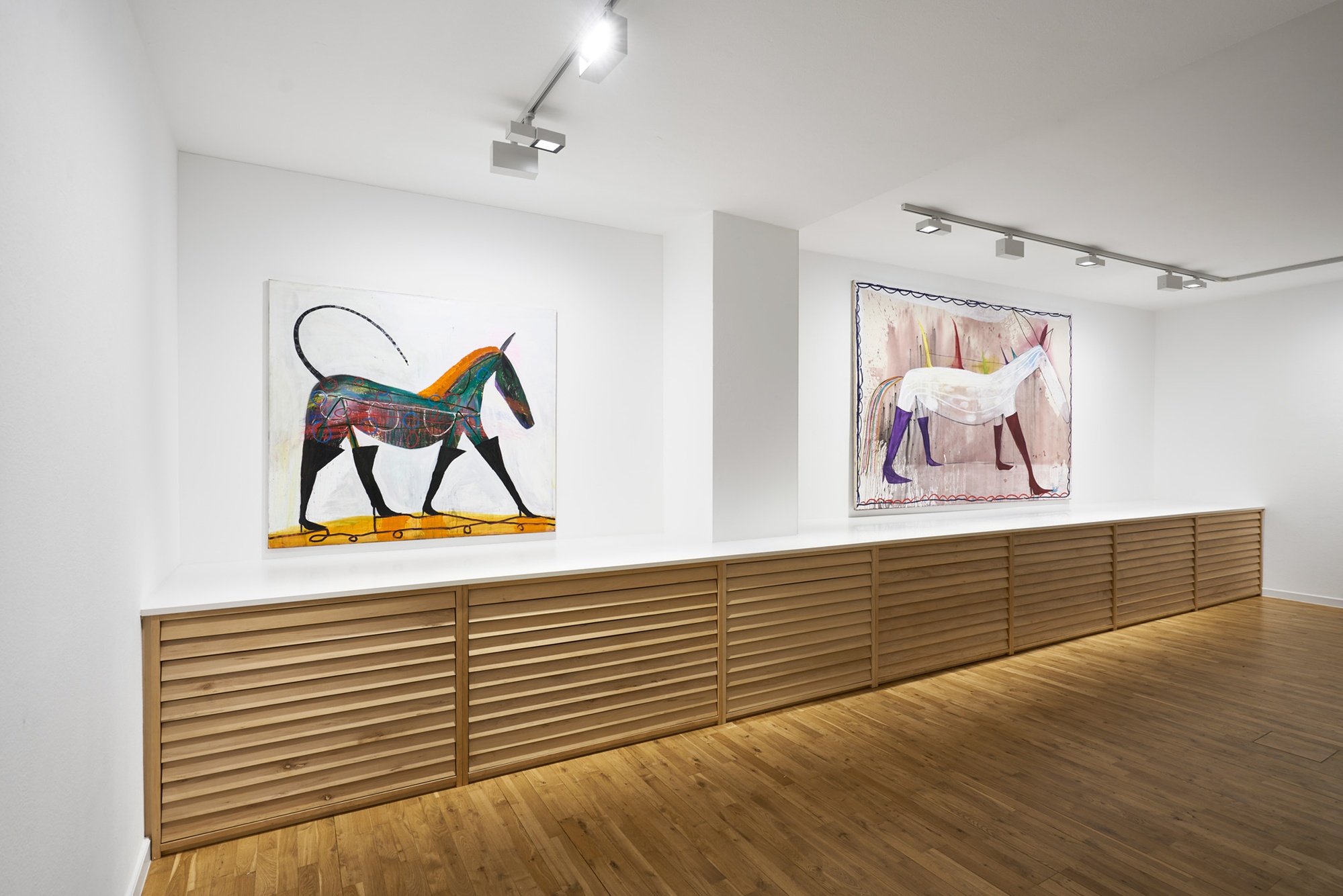
The works of Berlin-based artist Matthias Dornfeld are utterly direct; there is no gradual approach with them. As a viewer, you are immediately thrown into the middle of things, surrounded by large-format paintings in bright colours which have no desire to deny gravity and that invite a haptic experience. Four-legged creatures wearing high-heels can be seen, their silhouettes elegantly accentuated and their objective appearance distorted into something dynamic and strange.
Portraits, still lifes, interiors, these ‘clichés’, as the artist himself describes them, are typical genres within art history based on hundreds of years of tradition. But what is innovative, what is relevant? Thematically it seems unimportant whether you see a flower or a head, a table or a quadruped. Every object is a phenomenon, a type of placeholder where a quickly applied, carefully dripped, painterly element of colour unites with a drawn line to become a sign in a place. As an observer you are challenged to consciously and self-referentially reflect on your perception in order to discover that neither your own subjectivity, nor that of the artist, can be evaded. Even if the image lacks a concrete background, unfixed in terms of context, a film still unfolds in your head. Through the immediacy of the subject matter, through the striking visibility of the brushstroke and the technique, the artist does not make ‘something’ (person or horse) appear, but rather “helps the very aura of the painting come into its own.”1 Read More
Painting as a process and the work as a result are mutually dependent. It is not the depiction of affective experience that is decisive here, but rather the deviation from common codes, from (academically) shaped viewing habits. “The work occurs in the interstice of distance.”2 By keeping a foundation of pre-existing tropes while at the same time giving them a new meaning, differences to the originals become a central concern. It is evident that the artist constantly examines this polarisation produced by painting. Driven by questions such as ‘Is this still acceptable or is it total rubbish?’ his lively creative process lets the “psychopathically charged”3 speak for itself as a broadening of the possible.
Text by Felicitas Kirgis