
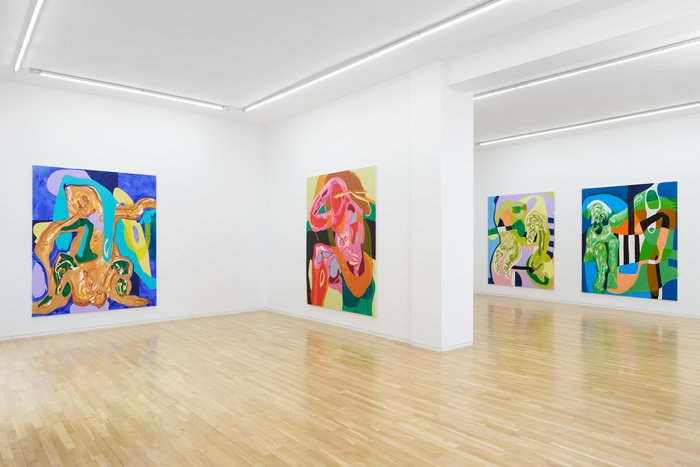
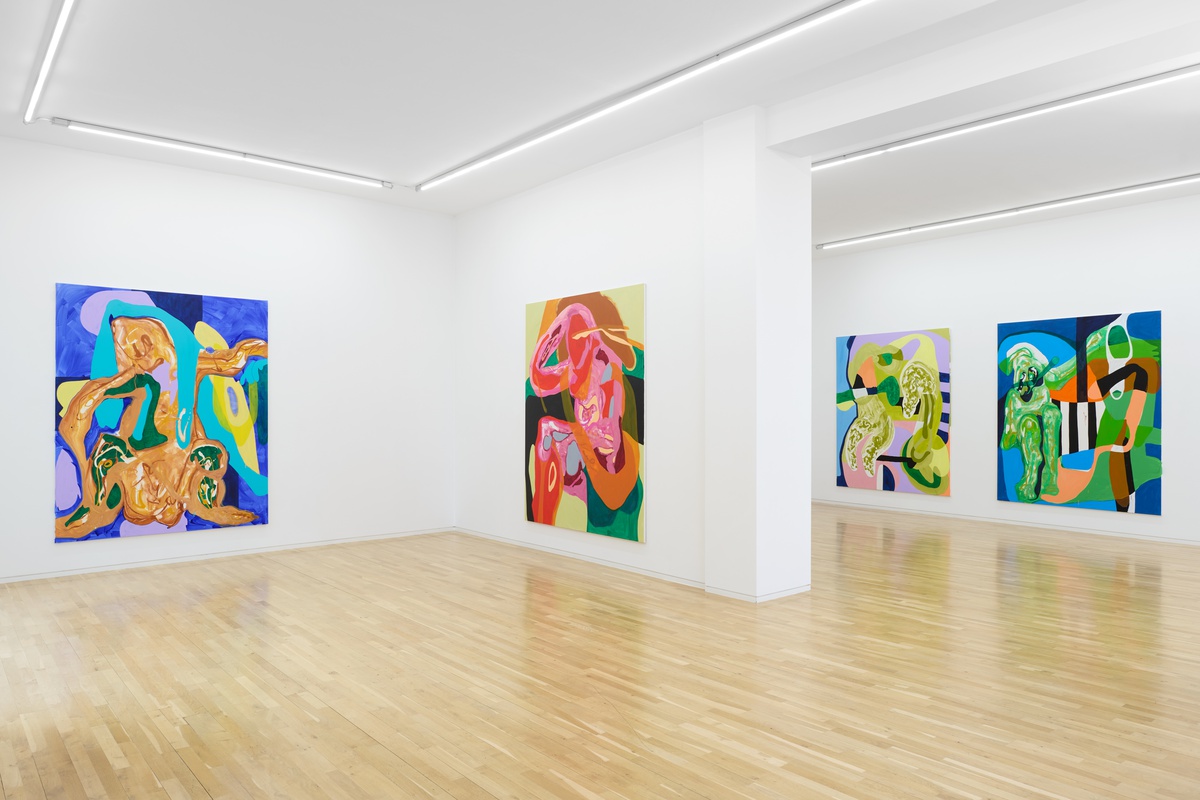
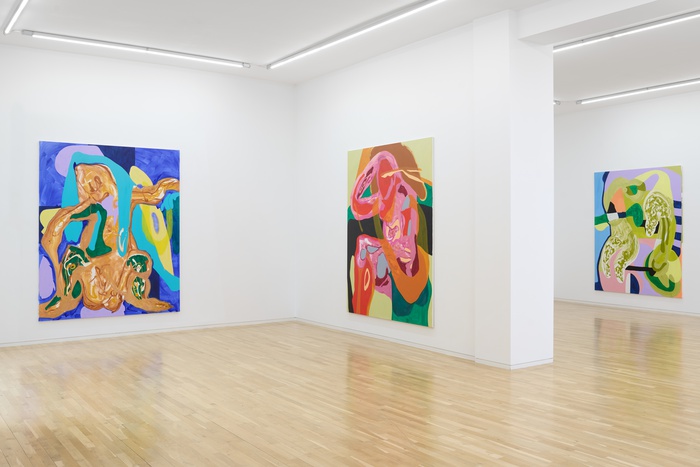
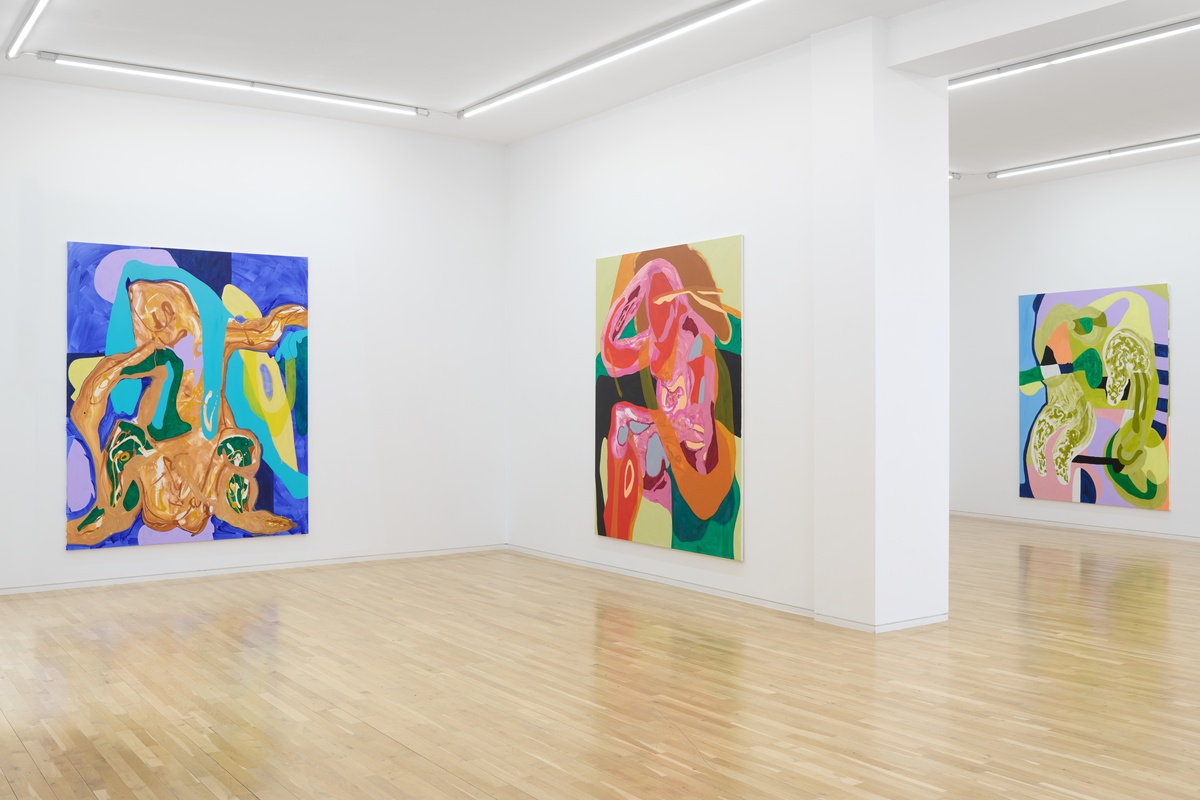
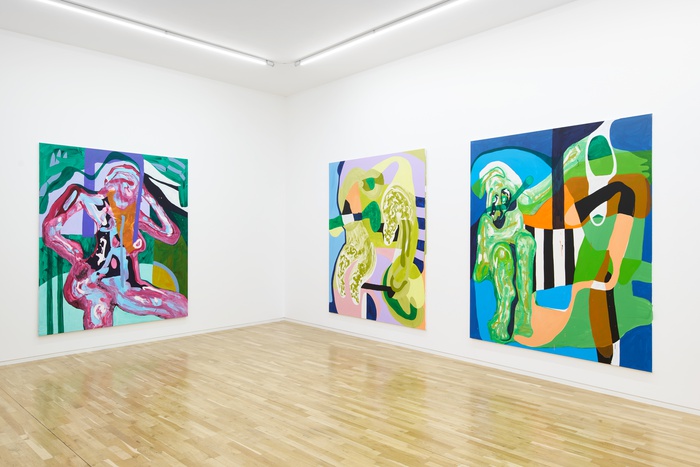
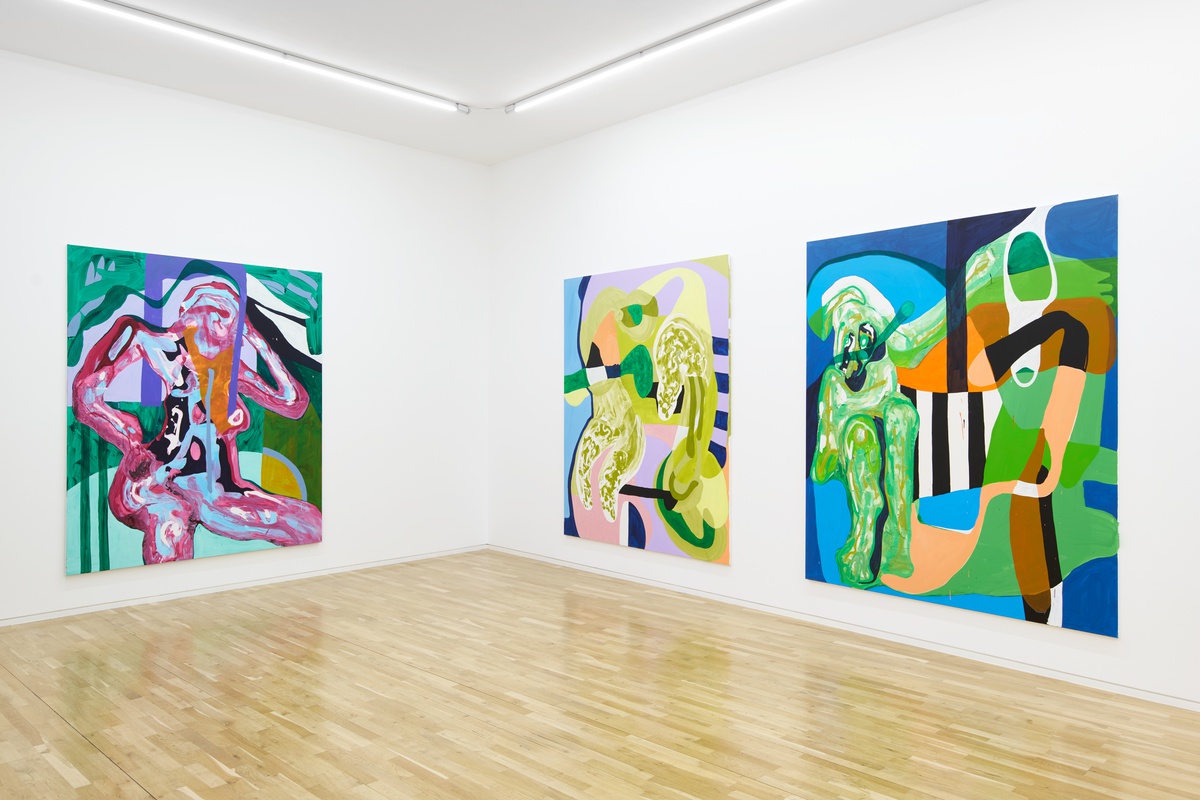
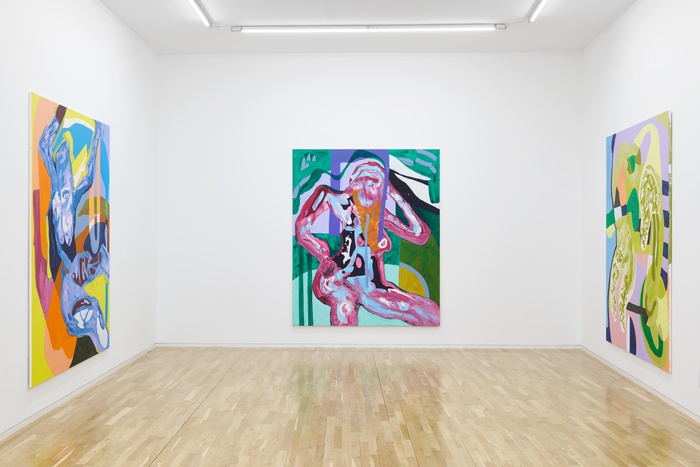
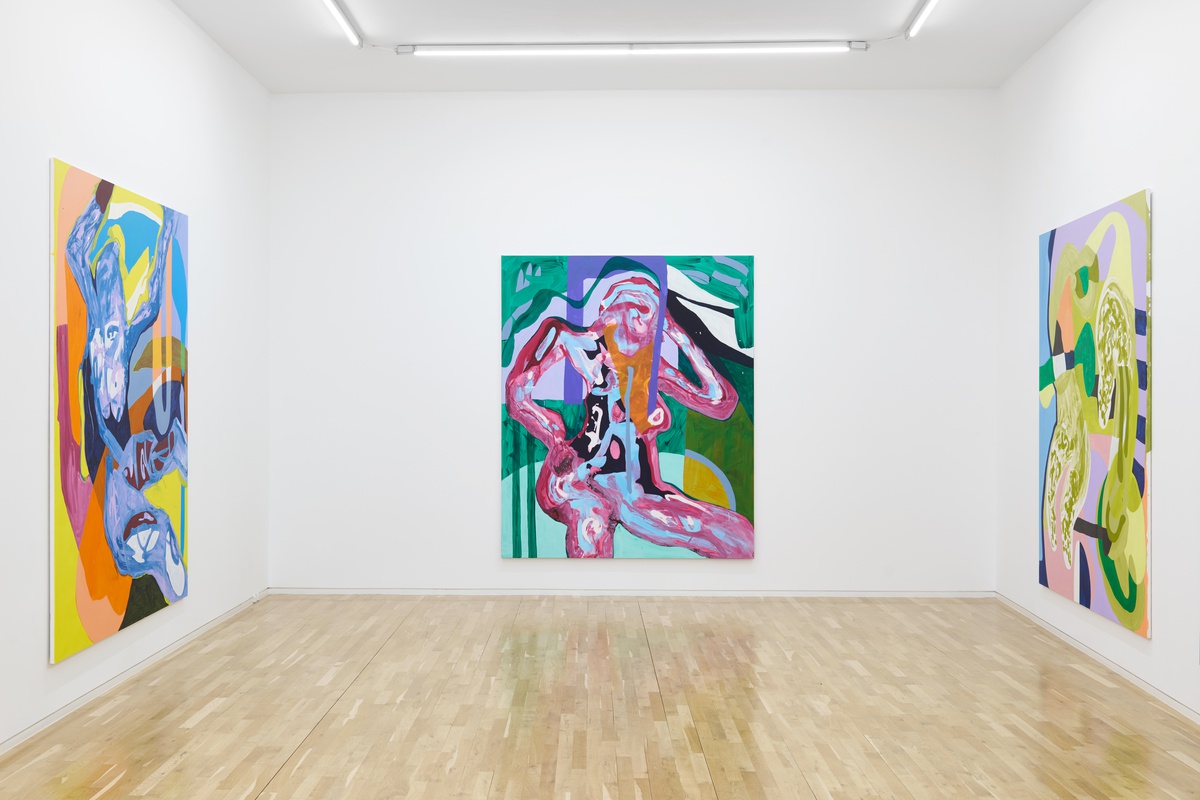
Installation view, Jahn und Jahn, Munich, 2026
Installation view, Jahn und Jahn, Munich, 2026
Installation view, Jahn und Jahn, Munich, 2026
Installation view, Jahn und Jahn, Munich, 2026
Installation view, Jahn und Jahn, Munich, 2026
Installation view, Jahn und Jahn, Munich, 2026
Installation view, Jahn und Jahn, Munich, 2026
Installation view, Jahn und Jahn, Munich, 2026
Installation view, Jahn und Jahn, Munich, 2026
Installation view, Jahn und Jahn, Munich, 2026
Text by Matthew Holman.
What does it mean to paint the body today, already a quarter of the way into the twenty-first century, beyond the human form as it presents itself to the eye, but as it has been remade by the contemporary technics of capital: scanned, datafied, collapsed into signal, rendered as frequency and light? Jana Schröder’s VISCERAFFIC series refuses this to be posed as a mere theoretical question, rather as a predicament of painting in such conditions—of how thick pigment on a large surface can recover what the technician’s image suppresses, and can restore the wet and the involuntary and the excessive to a body that medical and biometric imaging has selectively made coruscating or eerily clean. The title of the present exhibition, ‘minimum-intensity projection’, refers to a radiological technique in which a CT scan’s three-dimensional volume is collapsed into a single two-dimensional image by retaining only the darkest, least luminous values—matter at its most tenuous, tissue at its most translucent—and discarding everything else. It is a process of extreme selection, of reduction to signal: the body transformed into a picture by the suppression of all that blazes at full intensity. What the technician seeks to eliminate, be that the bright, the opaque, or the irreducible density of the body, is precisely what these paintings restore.
Schröder is an inventor. She contrives new words as well as new pictures. She is attracted to—even, in her own words, ‘trapped in’—neologisms as an affective mode of categorising, and often interpreting, her own work. It is striking that the portmanteau ‘VISCERAFFIC’ appears throughout the works’ titles in this series. Derived from visceral—pertaining to the inner organs, the slick pressurised world of membranes and ducts, the bits of our tissue’s internal bits that involuntarily pulse without our permission—and traffic, with its gridlock and flow of bodies, logistics vehicles, and goods along arterial routes, the word collapses two systems of circulation into one. But it reaches further still, folding in the graphic quality of the form itself. Once the two root words are held together, they become difficult to separate: the motorway reads as intestine, the rush-hour crush as peristalsis, the city’s infrastructure revealed as something wet and muscular, itself a dispersed kind of life. Traffic, ordinarily understood as an external, social phenomenon—the managed movement of people and commodities through public space—is pulled inward, perhaps made biological, suggesting that the totalising logic of capitalist logistics might be, or might be seen to be, as involuntary as the ever-humming gears of anatomical function. Traffic has always implied a system with consequences. Shakespeare opens Romeo and Juliet with it: ‘the two hours’ traffic of our stage.’ There, the city’s traffic is already tragic, and already the mechanism by which two families, locked into the fatal logistics of their feud, deliver their children to destruction. To speak of traffic is always, at some level, to speak of what a system moves toward its end. Take further note: the designations ‘BO’ and ‘BEBO’ are studio abbreviations that signify ‘Body’ and ‘Before Body’, a categorical code for the two works that were, as Schröder explains, ‘created before I allowed the body to be present.’
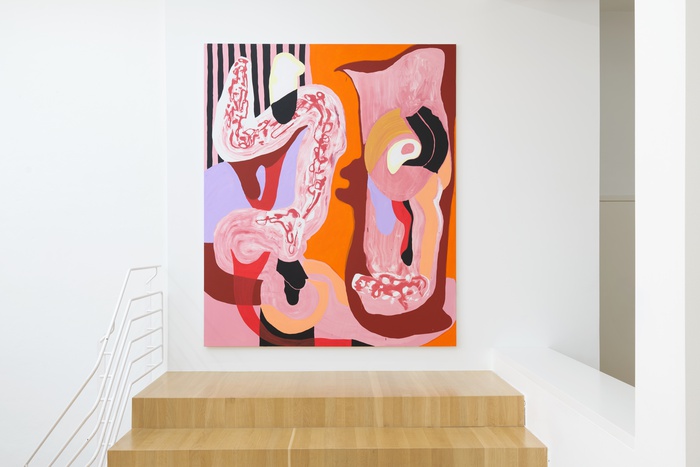
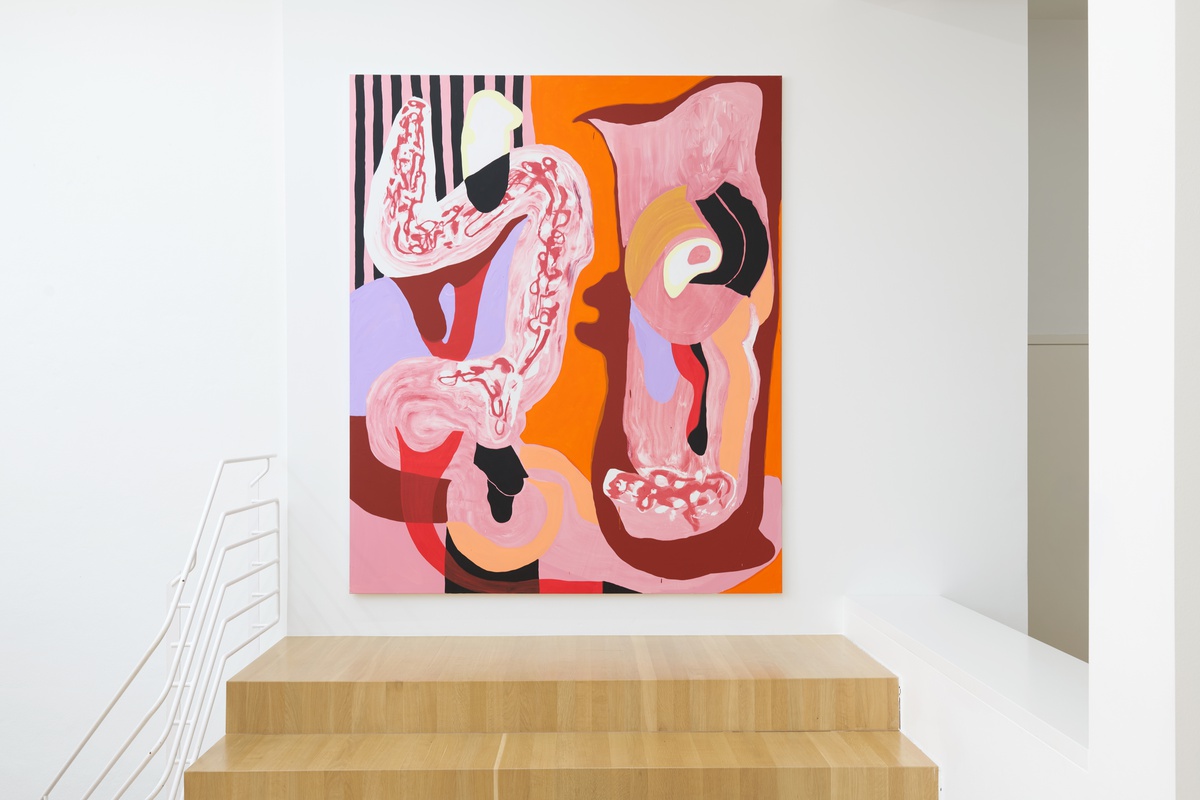
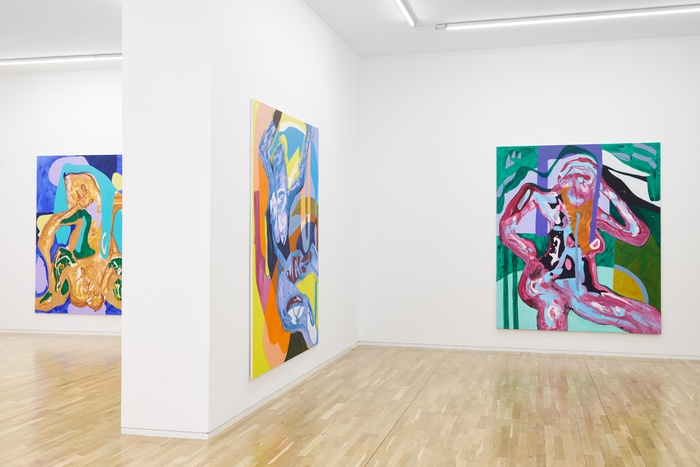
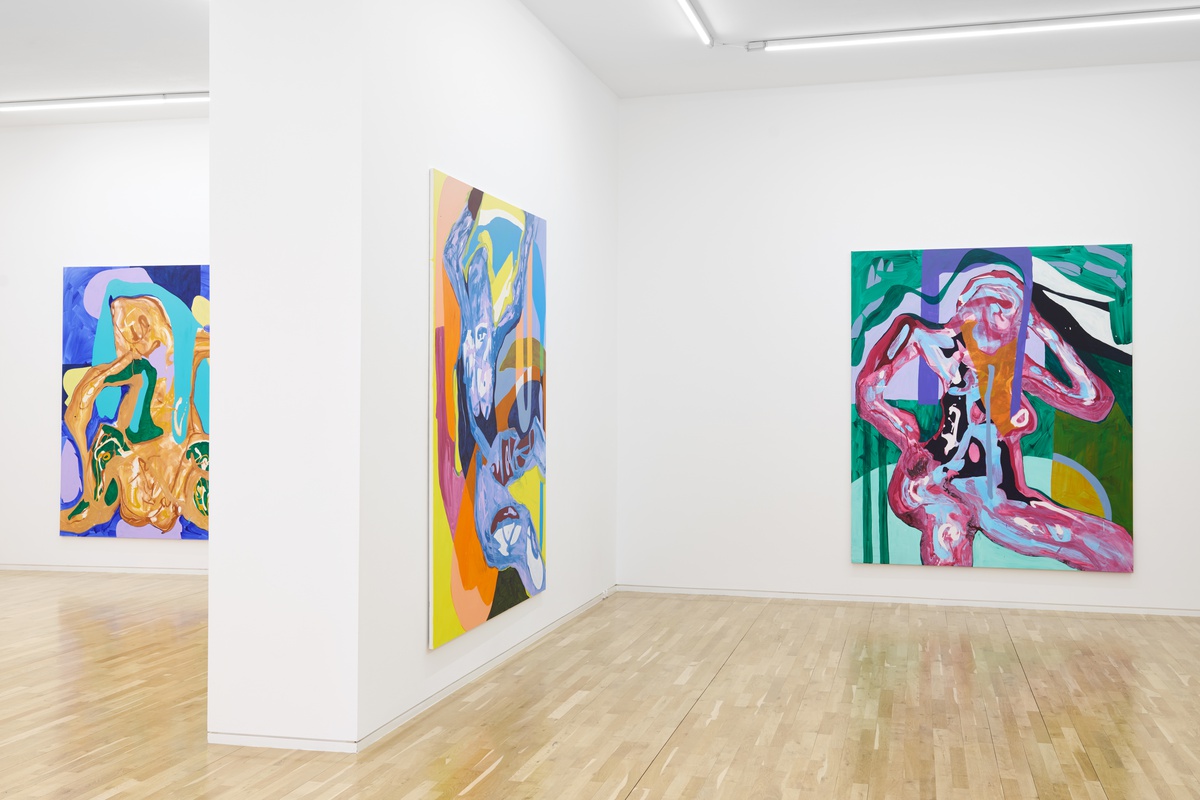
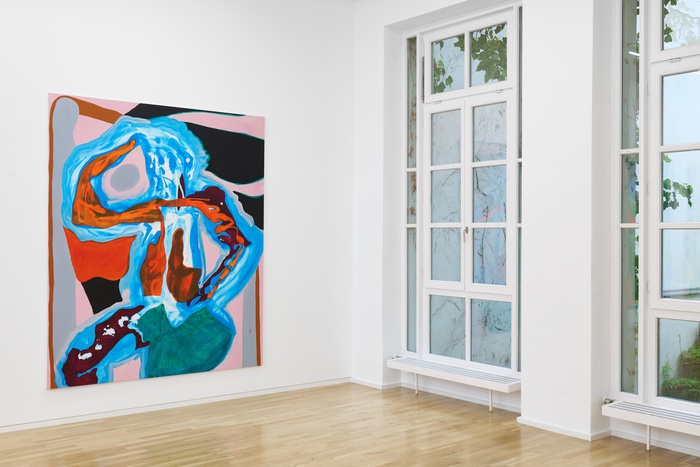
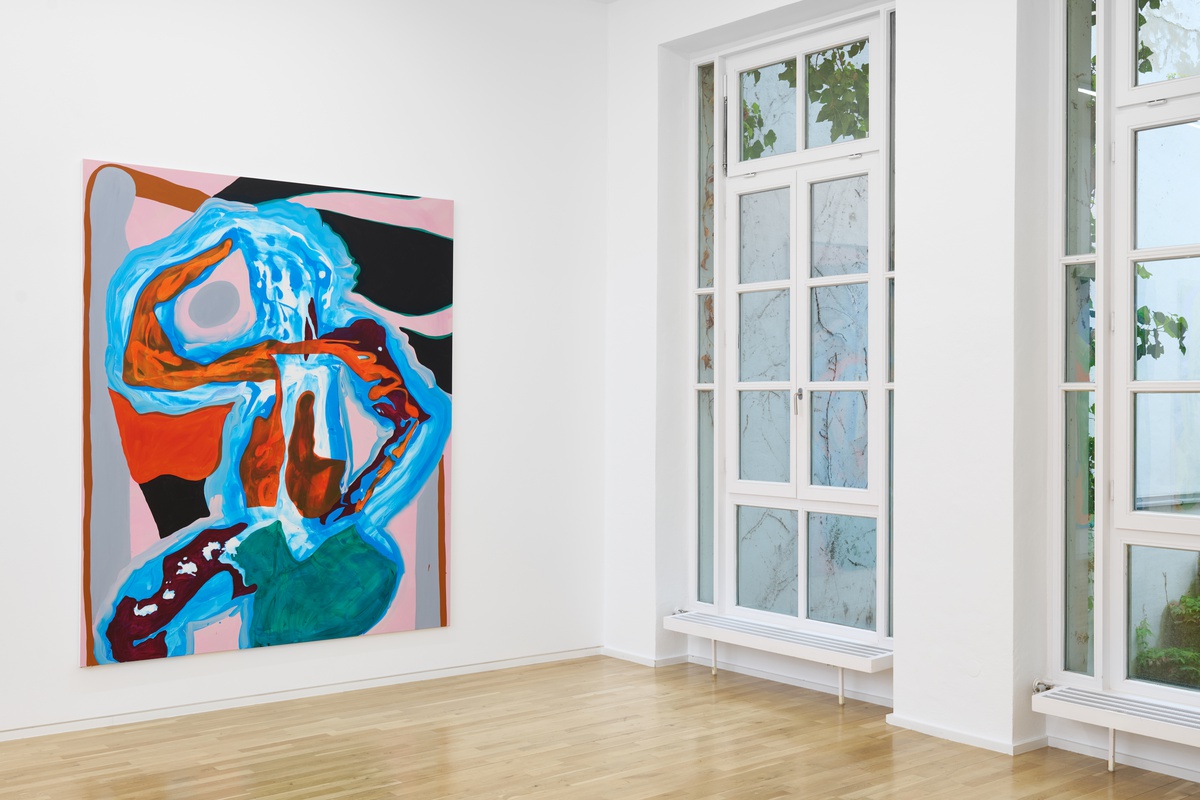
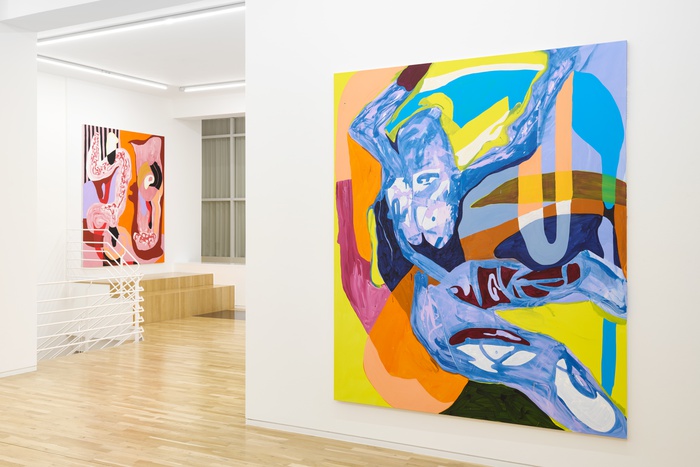
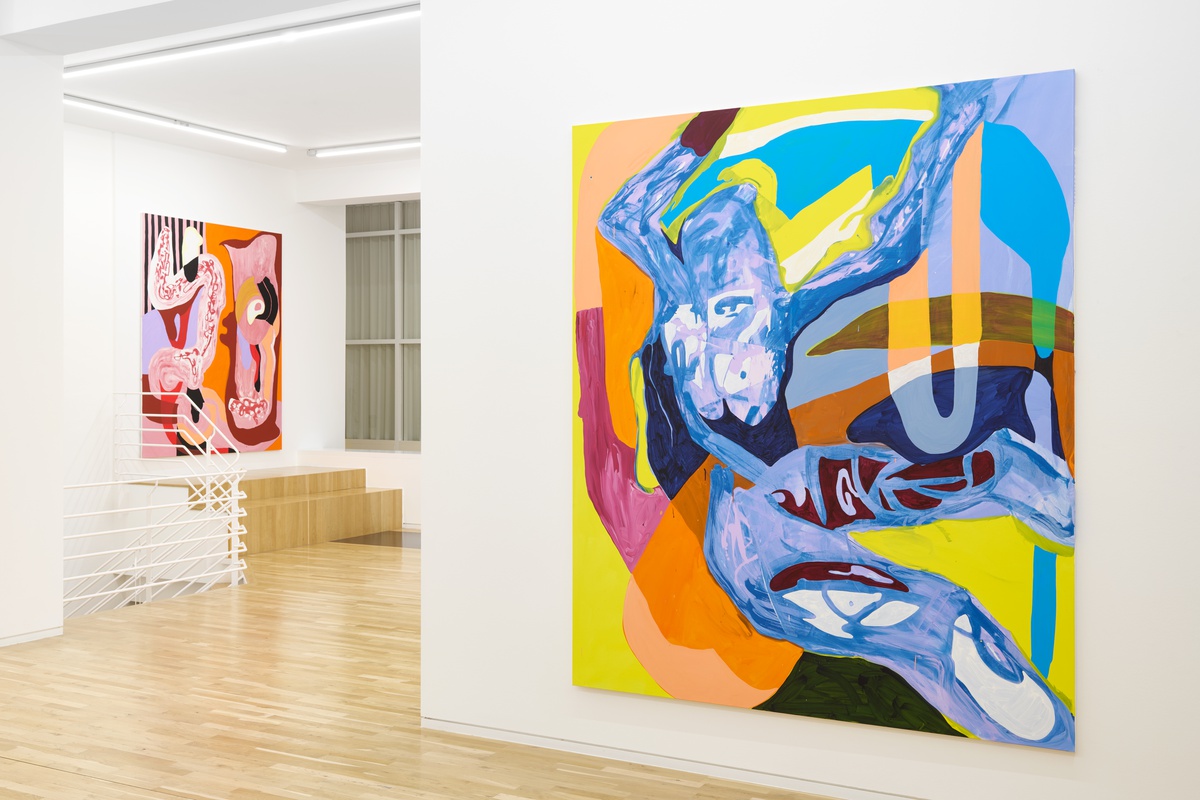
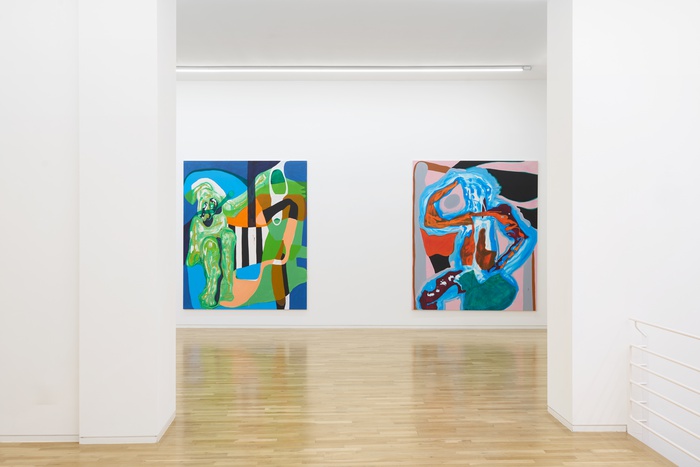
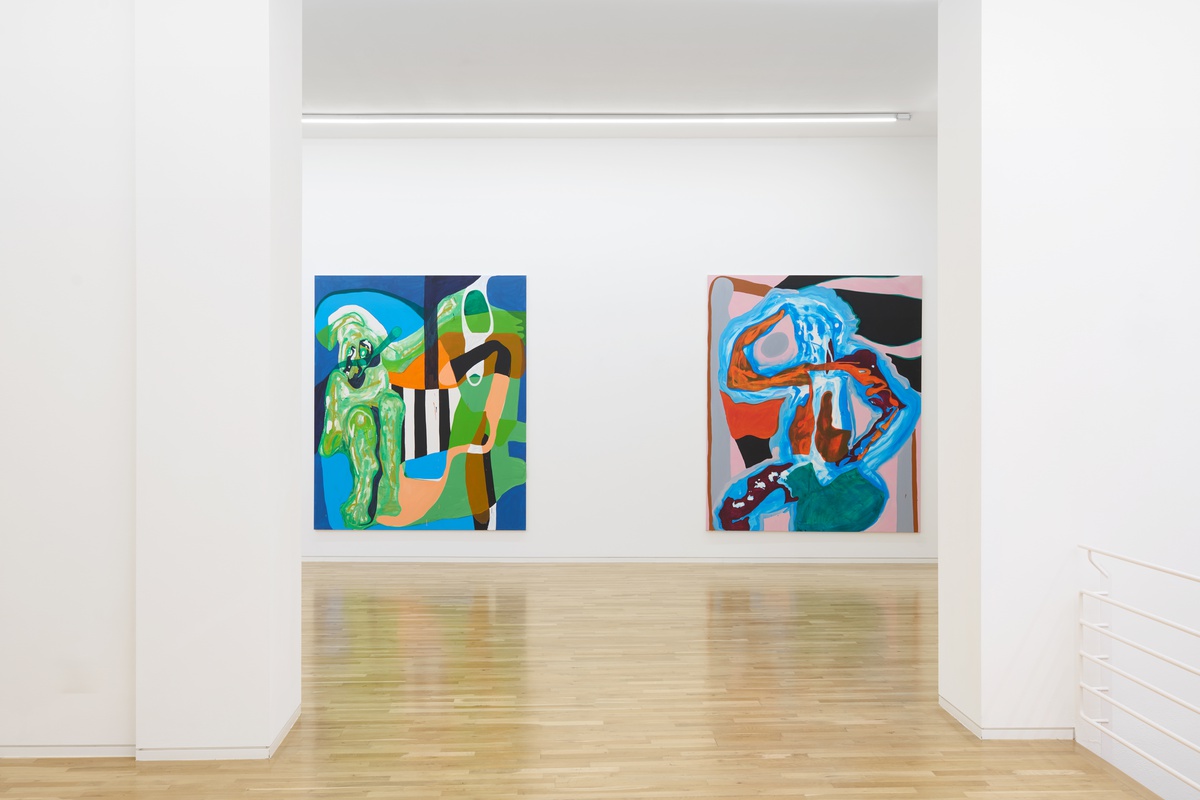
In the facture of these paintings, much of the material restoration of the image is realised at the level of colour. Each painting is conceived around a coherent chromatic identity: the hot orange-and-pink of the ‘BEBO’ works, the acid yellow-green of L2, the blue-violet of L3, the shrieking yellow of L5. For an artist who has stressed that she does ‘not see colours emotionally’ but, rather, ‘scientifically’, the chromatic intensity of these works belongs to the domain of frequency. Schröder’s use of colour is signified as a kind of wavelength or as a measurable phenomenon. Perhaps most of all it might be framed as the specific bandwidth of light that the scanner assigns to a given tissue density. Yet Schröder is equally insistent that colour remains, at every stage, a response to the world, not a retreat from it: ‘In all of my works, it is always a reaction to what is present’, material worked through a dialectical spirit of struggle, animating tough against fluid, fast against slow, spontaneous against deliberate. Whether a note of English red is needed, for instance, ‘can only be determined once the rest is in place.’ Indeed, drained globules of English red, like expunged blood, animate BEBO L1 (2025), building a formal resemblance to Fernand Léger in terms of the syntax of the tube: the way that both painters build a pictorial world from forms that are simultaneously mechanical and corporeal, conduits that could belong equally to a factory or a body. In Léger’s great machine-age paintings of the early 1920s, the body is industrialised: his figures’ bodies are muscular might more closely resembling a piston, or a limb as a chassis, with hard outlines and surfaces smoothed to an impersonal gleam. In BEBO L1, the forms are legible as both intestine and motorway interchange, both duct and pipeline—but where Léger’s arterial forms are sealed and self-certain, Schröder’s are permeable, the interior visible through the surface, all the while its colours refuse Léger’s cool chromatic rationalism entirely. If Léger was the painter of the industrialised body, then Schröder may be the painter of the body as it is constituted now: perpetually scanned and observed by the state and by big data, algorithmically mediated from the inside out.
Much has been made of the fact that Schröder studied, alongside Peppi Bottrop and Andreas Breunig, at the Kunstakademie Düsseldorf under Albert Oehlen. Oehlen’s instruction to his students, that they must ‘change the material’, was a deliberately open-ended rule, designed to introduce unpredictability and resistance into the working process. This atmosphere of productive freedom drew on a broader Düsseldorf inheritance—shaped, of course, by the legacy of Joseph Beuys and, more proximately, of Sigmar Polke, under whom Oehlen himself had studied in Hamburg—one that placed a high premium on the autonomy of the individual student. It was a frame within which Oehlen’s rule-based yet anti-hierarchical approach to painting found natural purchase. Above all, though, it might be Oehlen’s emphasis on imposing structural limitations—restricting his palette, for instance, or deliberately slowing his pace, productively manipulating the temporal limitations of his practice—which has remained with Schröder. As such, the works here appear to stage what she has described as ‘the never-ending struggle between the need for information and the desire for deceleration; if you are bombarded with data, the present is only a fleeting quickie.’ August philosophers of the contemporary world would struggle to find a better summation for the lives that we lead today. For Schröder, the task for an artist working now—not as was the case for Beuys, during the age of television and mass-media spectacle, to which he responded with a practice of durational performance and mythic self-presentation designed to reclaim presence and ritual from the flattening effects of broadcast culture, but in an era of algorithmic acceleration and chronic informational surplus—is to slow the act of looking: to be resistant, to adjudicate consequence. The invitation, for those who need it stated plainly: resist the reflex to scroll, submit to the painting’s duration, beat down the cop in your head, and discover what becomes visible only to the eye that is willing to wait for the fountains to be turned on again.
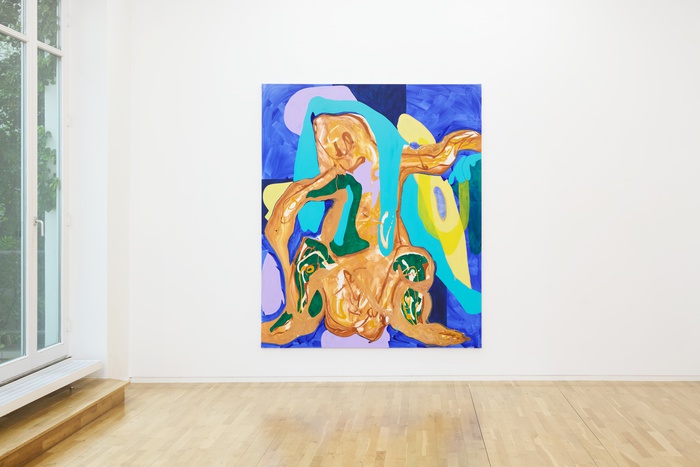
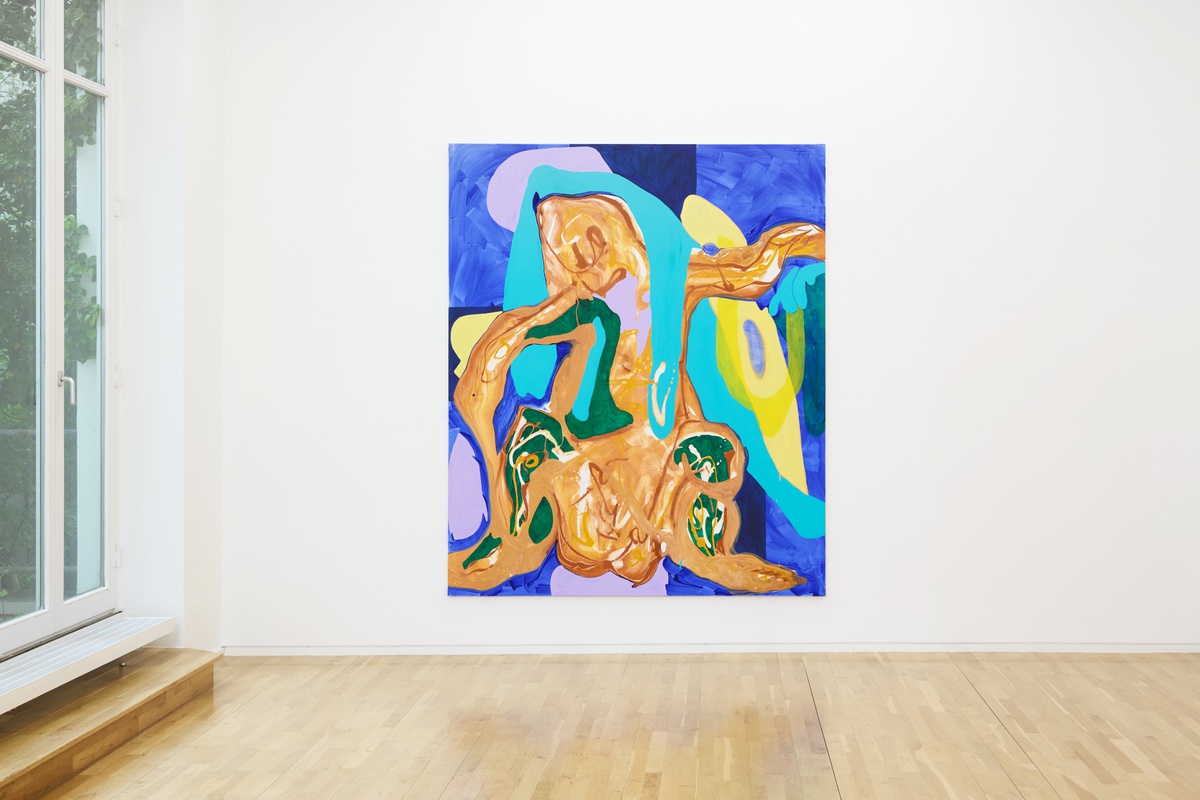
Let’s look at another example. In BO L3 (2024), we see the unmistakable outline of a woman’s body, but one defamiliarized and made strange, like an alien body, or a body excavated by neon light. The painting’s palette—saturated teals, blazing yet acidic oranges, and lavender blues—carries a chromatic memory of the Space-Age imagination, recalling the other-worldly textures of films like Fantastic Voyage (1966) and Barbarella (1968), where colour functioned as a marker of the future’s strangeness. Light blue drips cut vertically through this mass, introducing a note of watery dissolution against the carnal density of the flesh tones. In her most recent work, Schröder has also been looking back to earlier forms of media and popular cultural production to make sense of her own moment: specifically, the science fiction films of the 1960s and 1970s which, according to curator Leo Wedepohl, saw ‘organic forms, new materials such as plastic and synthetic substances, and luminous colours enter … design alongside futuristic visions.’ The figure here is at once more and less present. A face—or rather two faces, or a face doubled and displaced—surfaces from the blue mass with an almost hallucinatory insistence: eyes and mouth rendered in white and candy pink, the features skidding across the form as if the body cannot quite contain them. The torso twists and folds back on itself, arms raised or braced, the pose suggesting louche abandon and vulnerability in the same gesture. Yet where L3’s figure was enclosed, coiled, turned inward, the body we encounter in L5 appears to be in motion—falling, tumbling, or perhaps ascending—with a more discernible facial structure, as though a child has drawn a rudimentary face on a print-out scan of a body, or on the marked outline of a cadaver in a crime scene.
It is difficult to overstate the need for artists like Schröder today. If, as Isabelle Graw has argued, painting ‘seems to be one of the last places where the desire for a concrete foundation of value seemingly gets fulfilled’—where brushstrokes alone can be read as tracing labour and life, generating the impression that it is possible to grasp a fibre of the living labour mobilised for it—then Schröder’s paintings press on this claim with particular deftness and truth. For what VISCERAFFIC stages is precisely the contest between two kinds of value: the value that capital assigns to the body by rendering it as data or as signal, as a set of luminous or tenuous densities to be scanned and stored and traded, and the value that painting insists on recovering—the irreducible present of the body in all its gratuitous excess, its involuntary regulatory system, its wetness, its soaked ecstasy. The thick drag of pigment across these large surfaces exceeds a formal choice on the part of the artist yet stands as a small-scale but vehement dissent against the logic of minimum-intensity projection, against the idea that a body can be known by what it suppresses.
