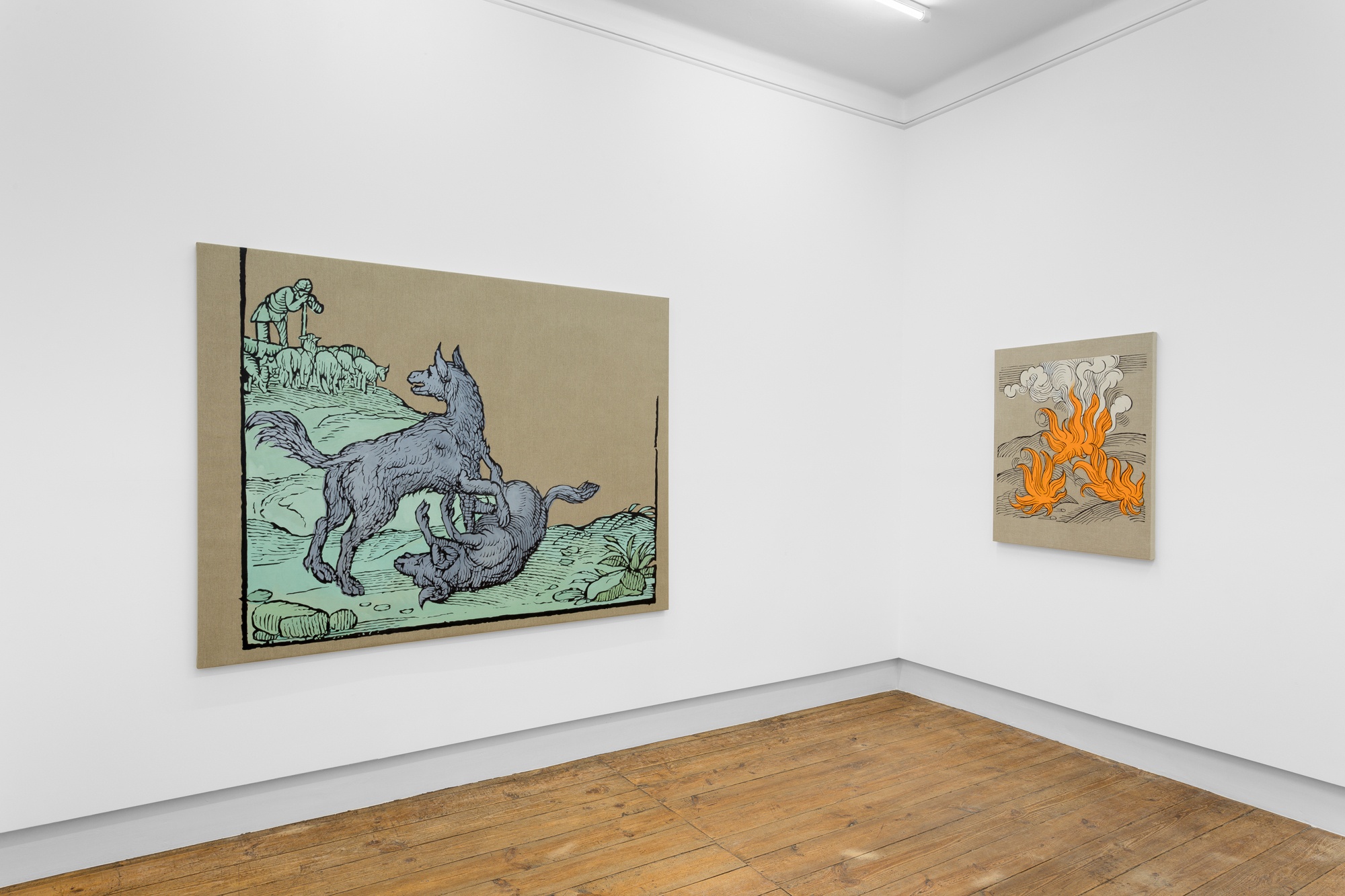
Through the juxtaposition of medieval engraving and contemporary painting, Horácio Frutuoso foregrounds complex processes of reinterpretation. The artist draws on the fascinating visions and intemporal narratives found in images from the Middle Ages. There is also a rich set of references in his work that stem from the 16th and 17th centuries, ranging from Narrenschiff (Sebastian Brandt, 1499), Della novissima iconologia (Cesare Ripa, 1624) Emblemata cvm clavdii minois (Andreae alciati, 1534) and Prodigiorvm ac ostentorvm chronicon (Henricvm petri – Basileae, 1557). The iconographic and allegorical reference points are varied and heterogenous. Narrenschiff, translated as The Ship of Fools, is a moral satire from the late Middle Ages, whilst other works reference medieval chronicles of prodigy and ostentation.
There is an anachronistic quality to the work, the paintings layer medieval iconography with a strong contemporary visual language. This is a dialogue that is underpinned by Frutuoso’s deep knowledge of his materials and techniques. Frutuoso evokes a time when imagery operated as a way of building and disseminating knowledge and as such, the artist brings the didactic quality of medieval fables and allegories into question. Utilising his contemporary visual perspective, Frutuoso subverts the notion of the image as an oracle and in doing so, the work speaks to us about our existence – a human or non- human lived experience – full of tensions and disclosures. These tensions are conjured through different visual components: wolves, fire, blindness; longstanding symbols that have accompanied myriad cultures with both subjective and collective meaning. Read More
Fragmentary images, extracted and re-visioned from single pages of wider manuscripts are foregrounded in this selection of paintings. This process of selection breaks the coherent, sequential narrative of the books and instead underscores overlooked and often evocative details: marginalised figures such as the ‘blind man’ become centralised as the main protagonist and flames erupt into puffs of smoke. The manuscripts from which these paintings are drawn were central to the dissemination of knowledge in the Middle Ages and enabled the journeying of stories. Frutuoso extends the identity of these texts by carrying these objects into the present and repurposing their symbols.
The paintings in this exhibition mediate, and reflect on, this sincere language of symbolism, whilst simultaneously subverting and reframing it to produce new meanings in a contemporary context. In doing so, the exhibition creates a “zone” of renewal, as these images are repurposed and contextualised in the contemporary world.