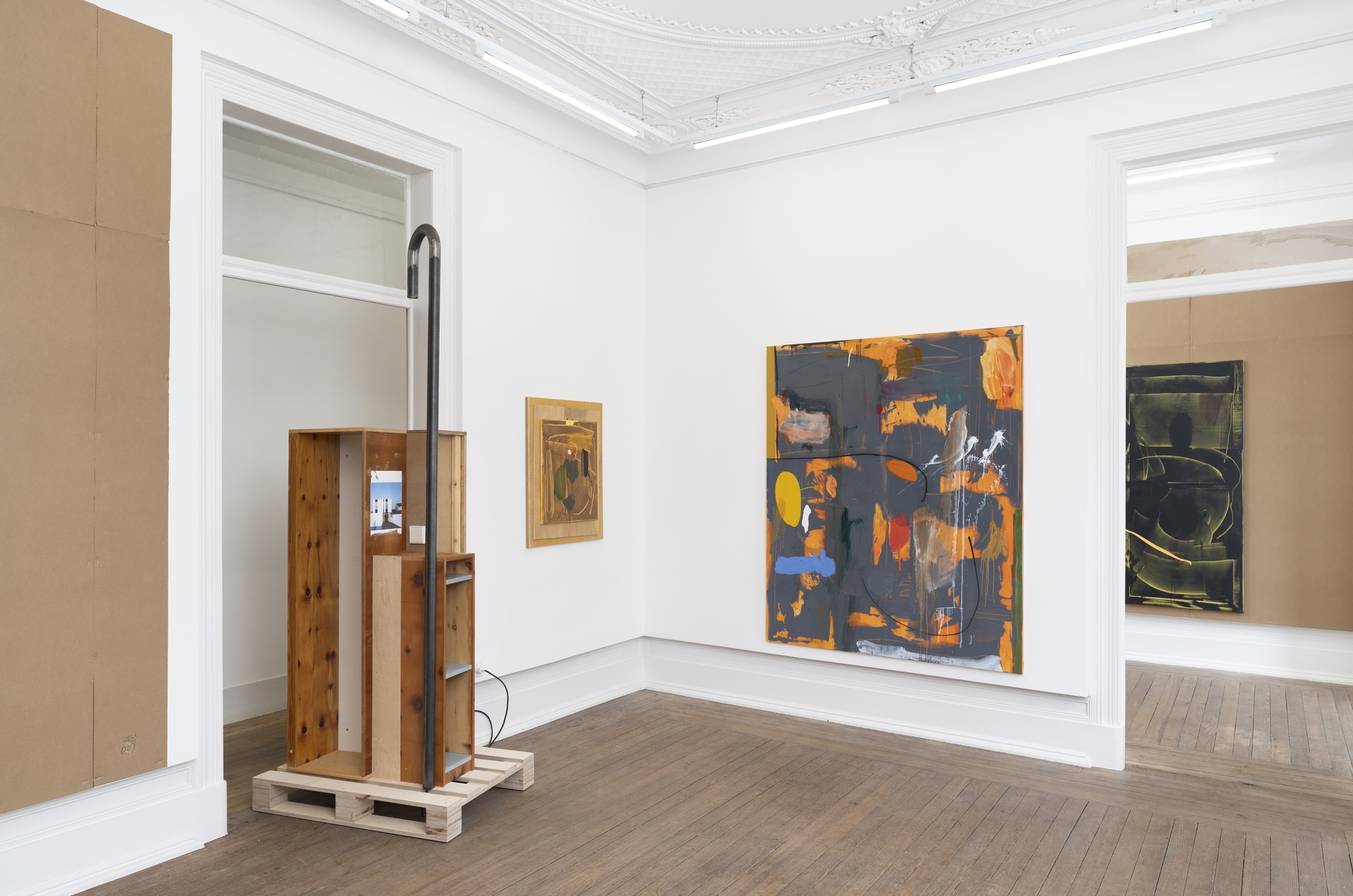
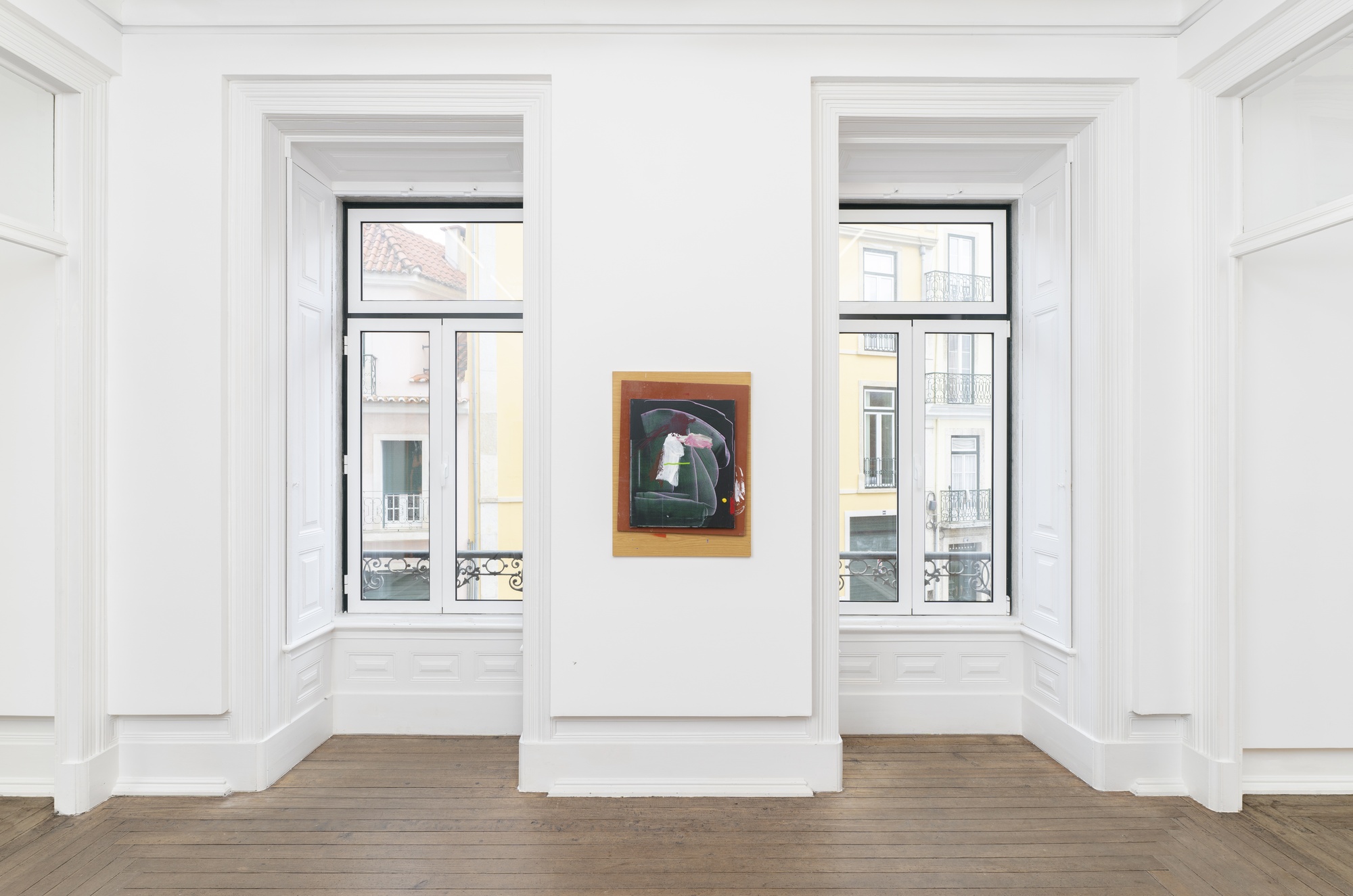
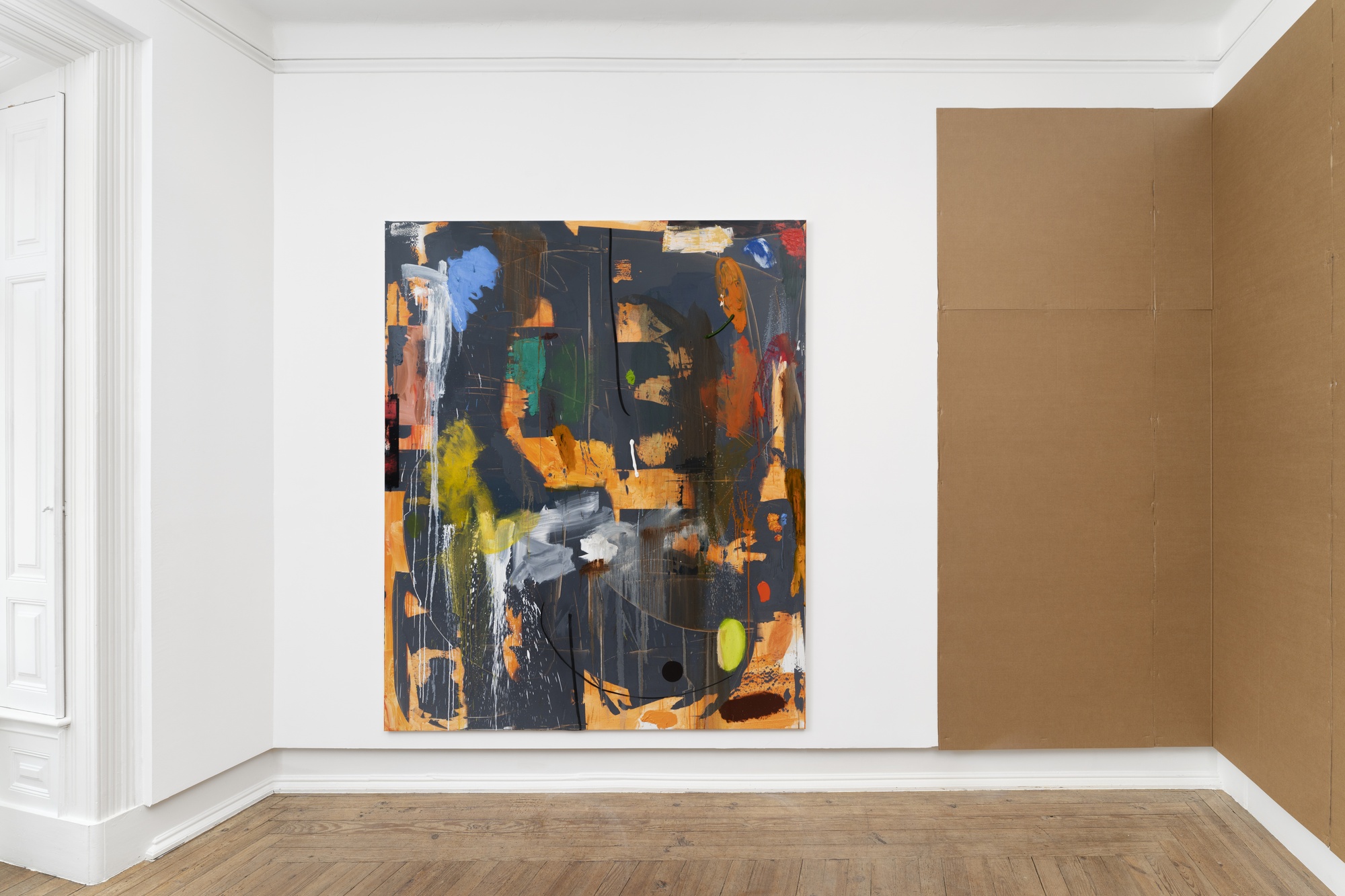
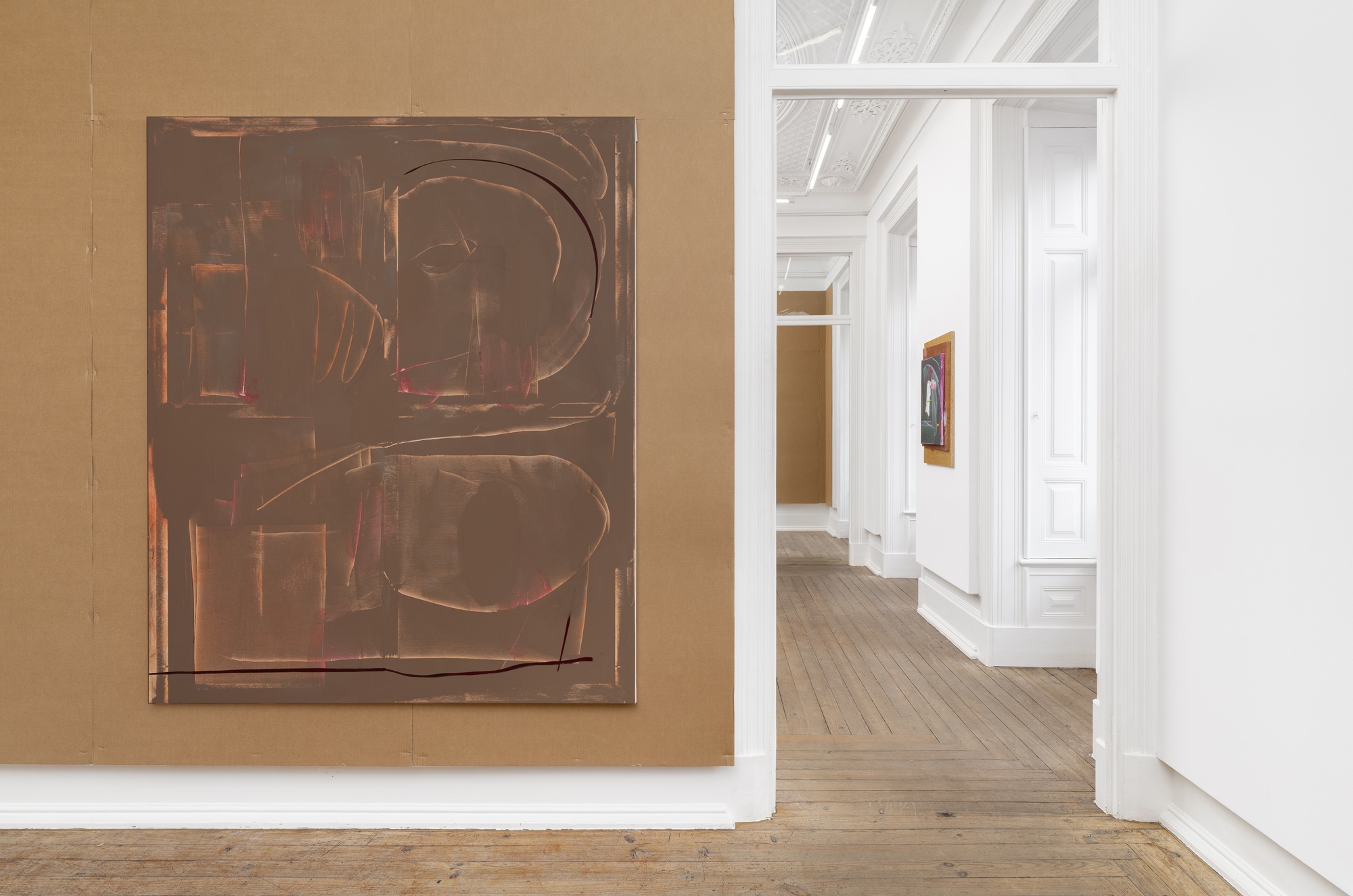
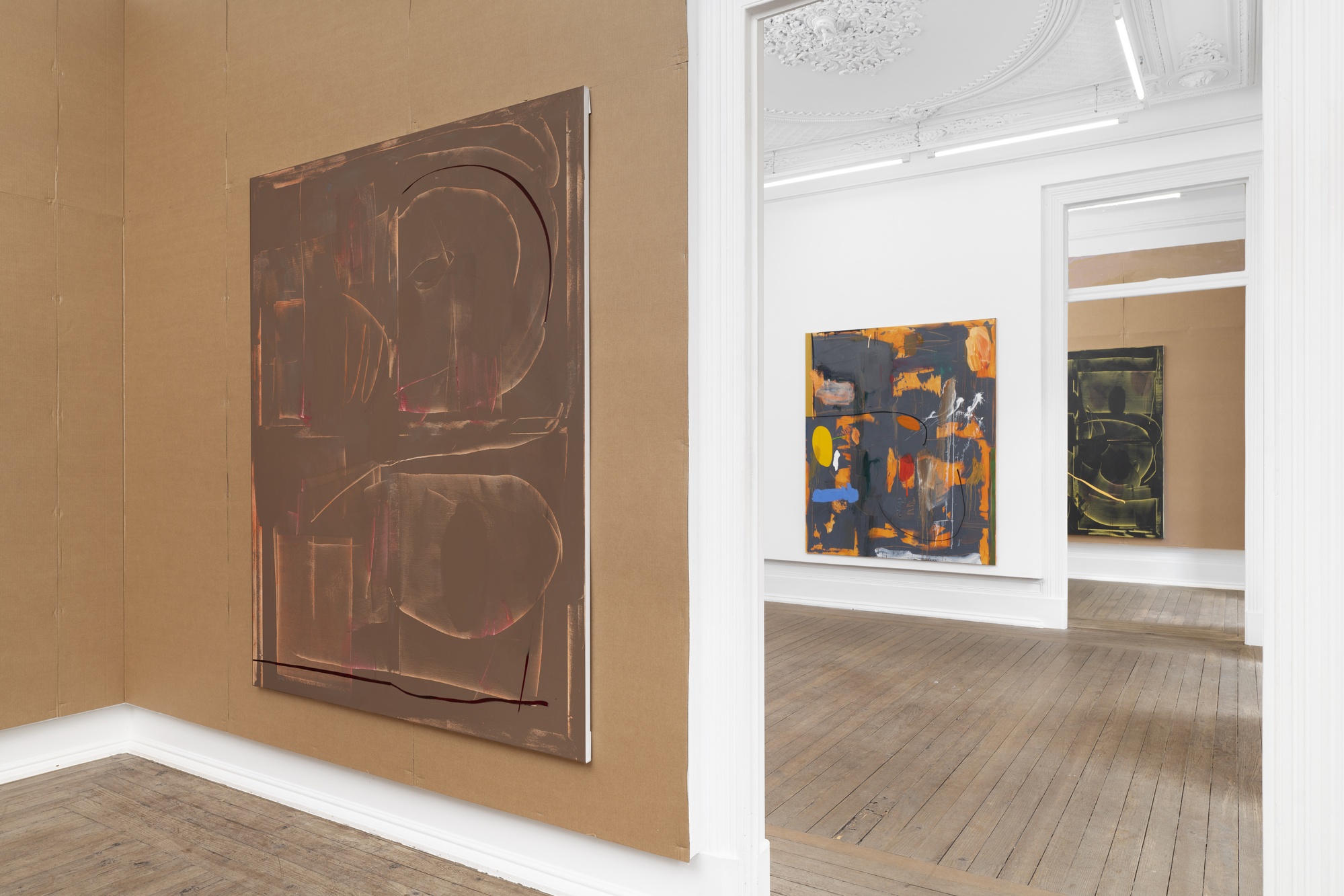
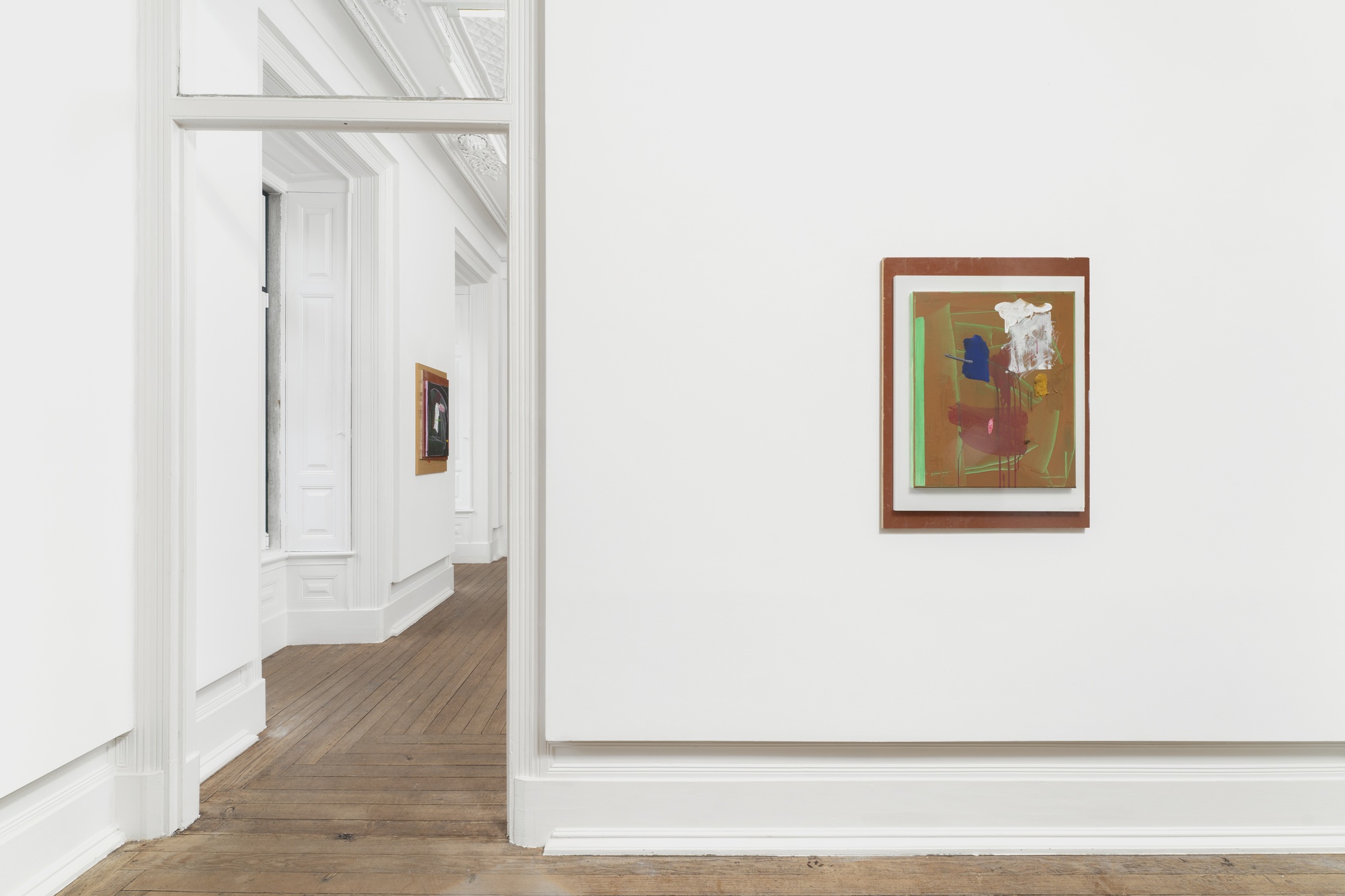
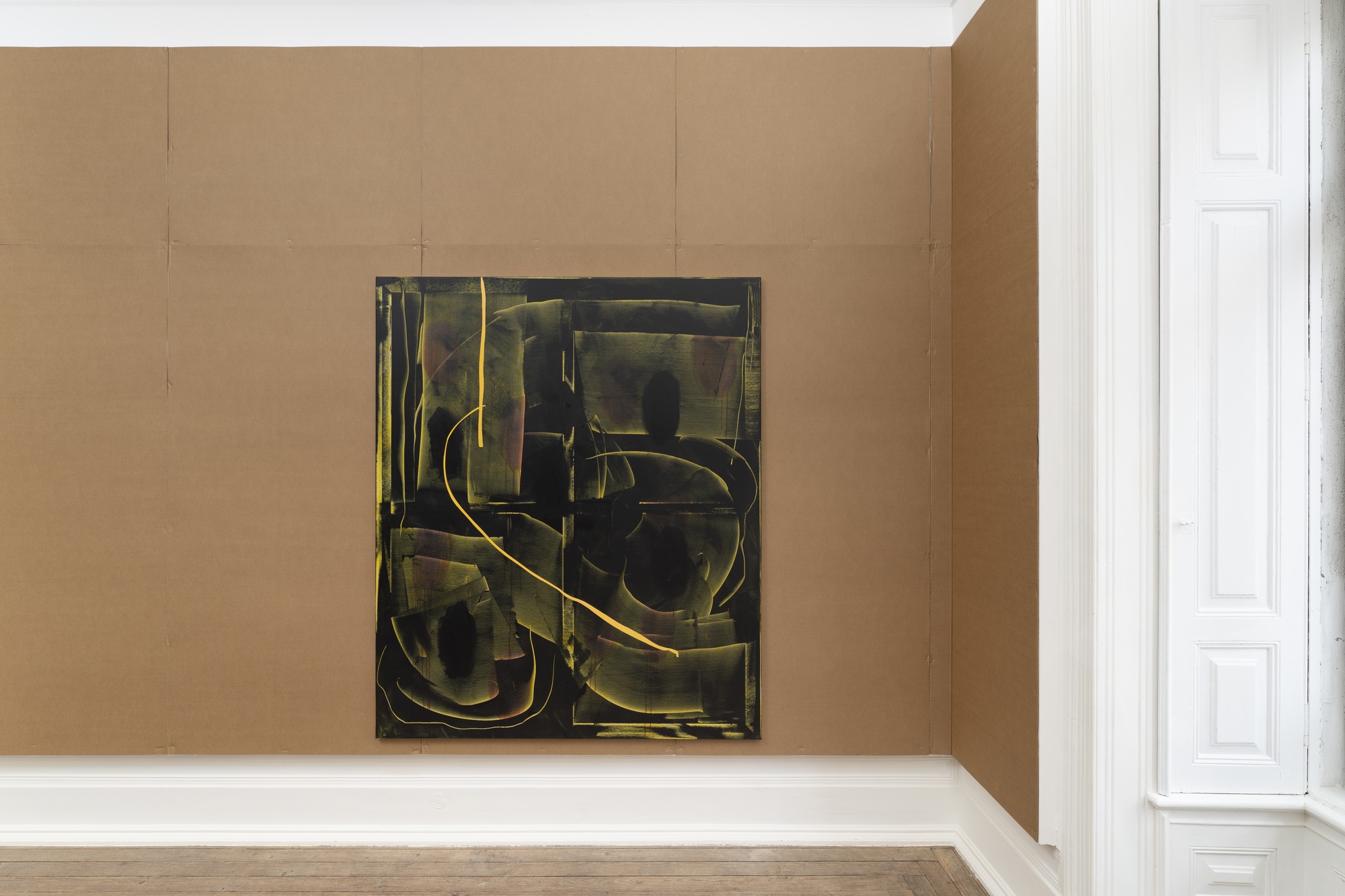
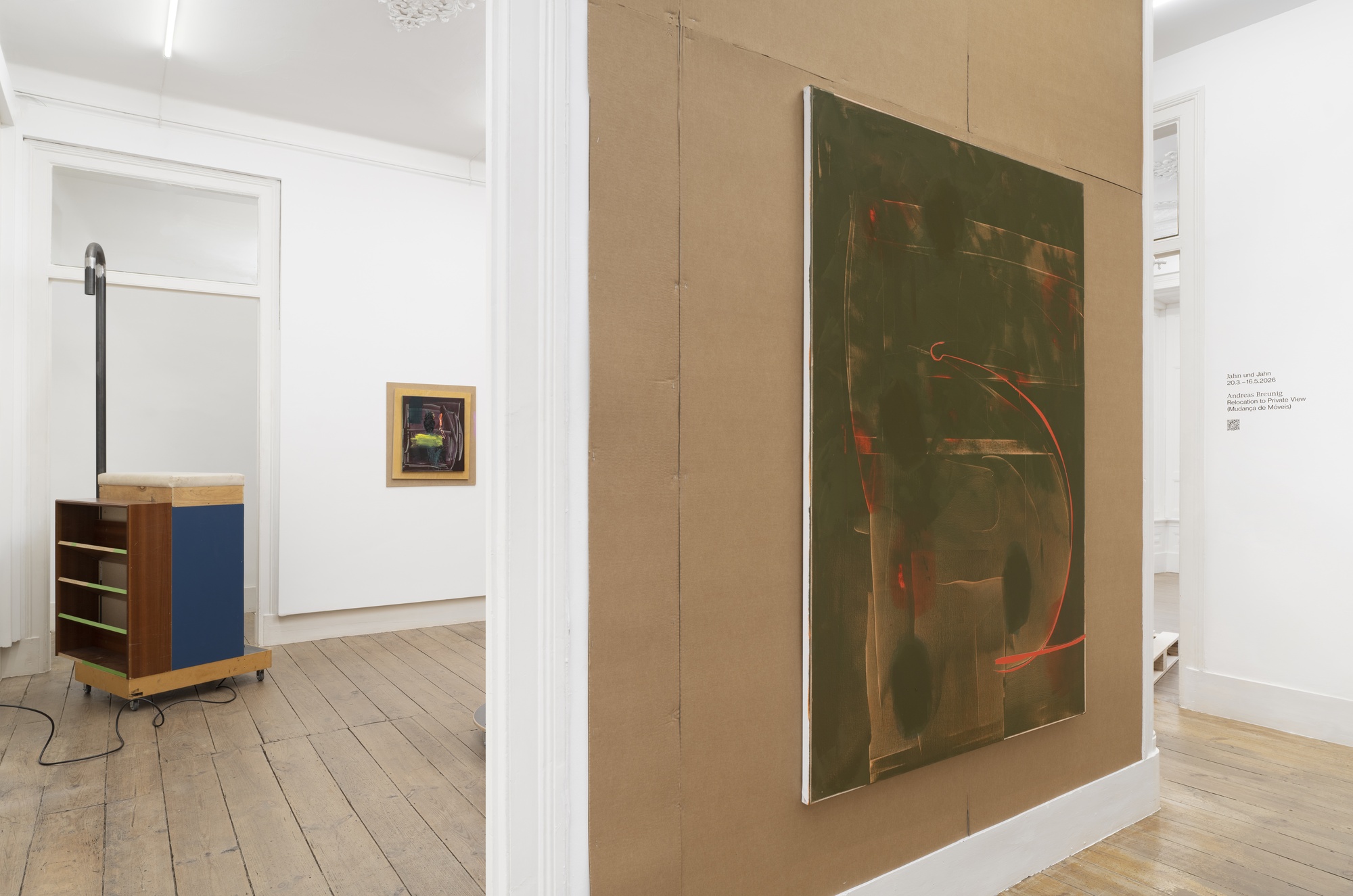
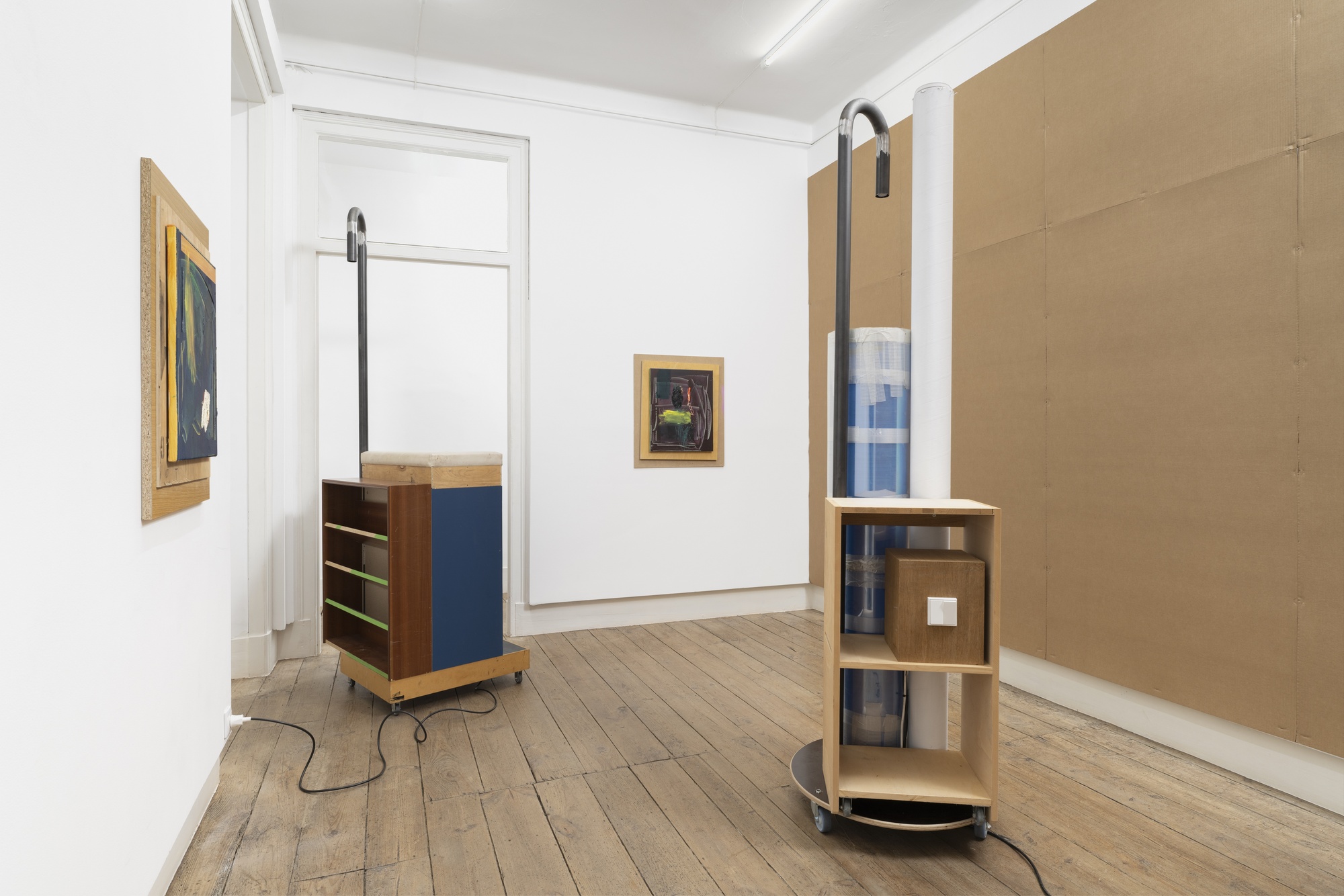
Close to Jardim da Estrela, the gallery spaces are located in a traditional townhouse of simple elegance. This is where the recent works by Andreas Breunig have settled in. Particular wall compartments have been covered with cardboard. A peculiar atmosphere of removal and relocation sets in, as if the actual protection of the floorboards had been moved 90 degrees to the walls. At the same time, the cardboard brown creates the foundation for several new paintings of the Consequential Damage series, which morph into the walls like camouflage. It is about blurring and outlines, which enable the large formats to expand into architecture as well as hold themselves in place. By means of opaque orange streaks, applied lines, oval-shaped spots and the translucent structure of the canvases, brownish beige layerings evoke a gesturally purified in-between that cannot be resolved in any chronological painterly continuum. Everything has its place but nothing can be integrated into a dominant harmony. Employed with evident pleasure, these disruptive moments undermine any possibility of comprehending the artistic operations as a decorative ingredient of the representational appearance of the interior. This also applies to those Consequential Damage paintings that, with greater contrast, simply protrude from the white walls: here, a multifaceted gray operates, which spreads over and about the canvas’ orthogonal directions and arranges or displays pictorial elements in orange, blue, green and red. Read More
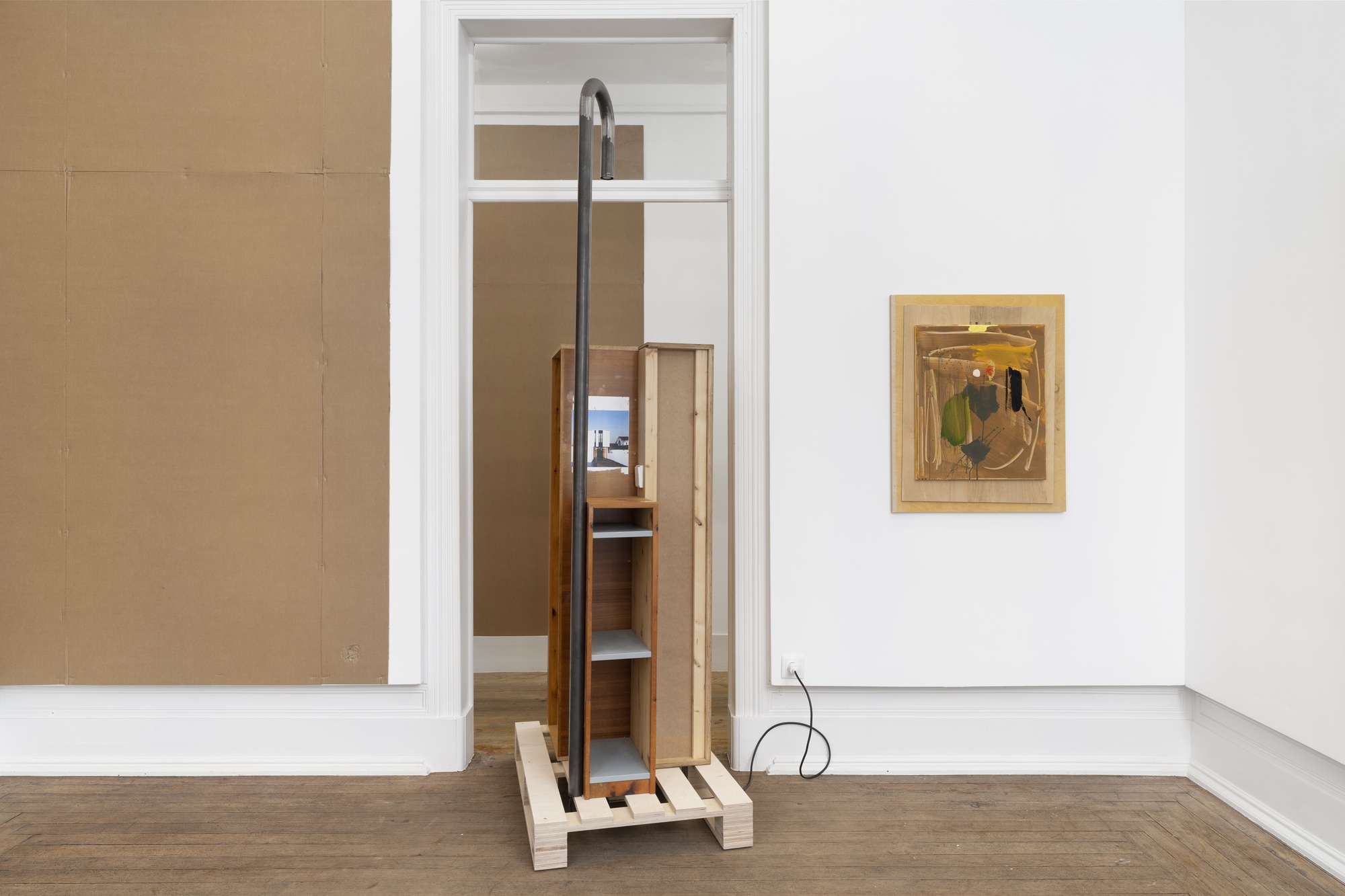
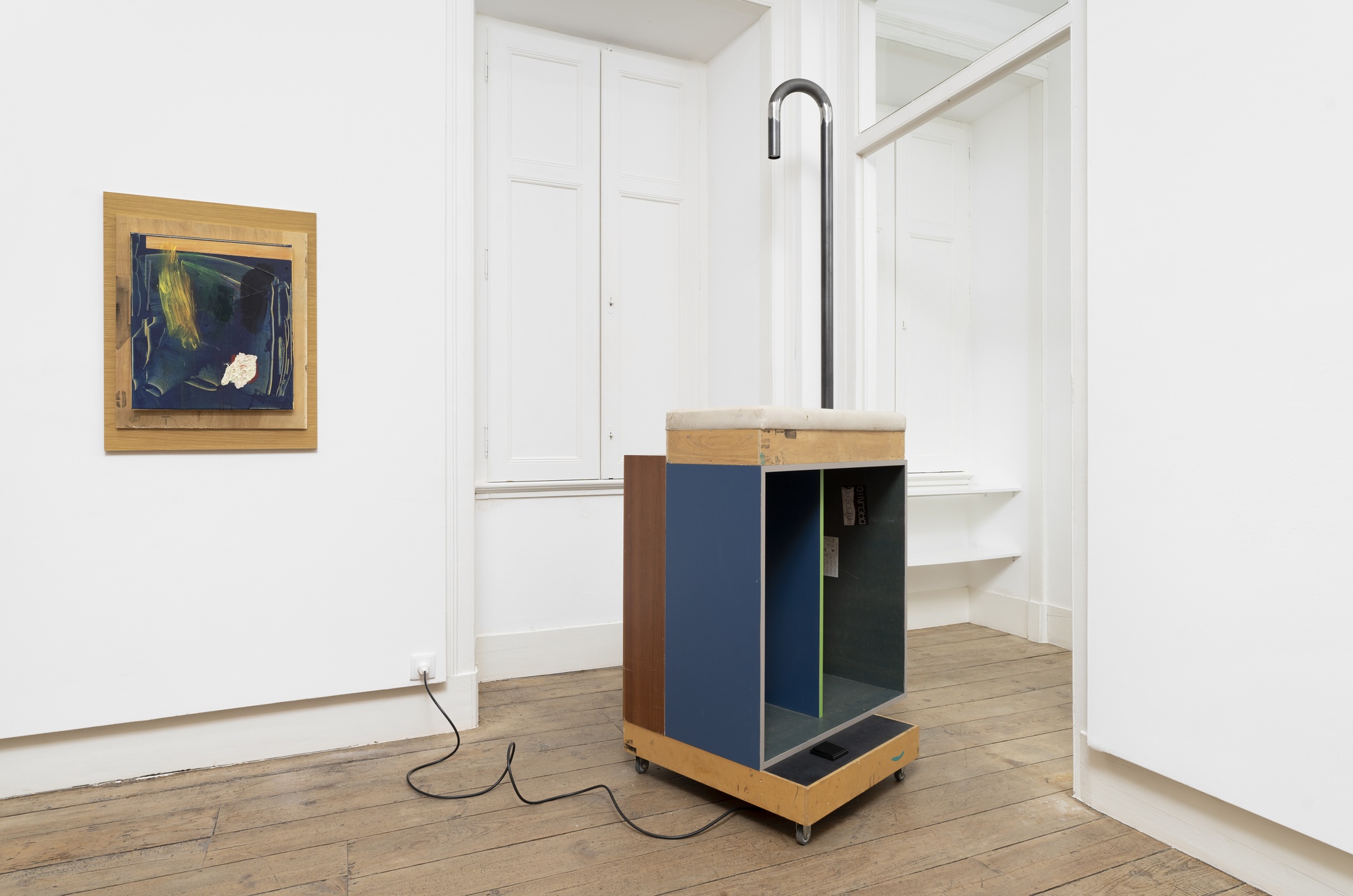
Beyond that, there are some peculiar artifacts towering two-and-a-half-meter high, which Andreas Breunig has placed throughout the exhibition in such a way that you come across them at least three times and each time from a different perspective. They get in your way. Andreas Breunig built the so-called Relocation Lamps from studio furniture, pallets and movable dollies or gliders. They consist of interchangeable, non-specific utility items such as small shelves, boxes or racks, each with a tubular lamp curved like a shower head and including a pronounced light switch. Through this installative intervention, Andreas Breunig visualizes the context of his studio as a spatial condition of the artistic process of creation within the exhibition. Not only do these mobile Relocation Lamps configure their own artistic semblance but, fundamentally, raise the question of what implications the relocation of one’s own artistic work to a foreign land and making it accessible there entail. How does the individual artistic context relate to the context of the exhibition locale? The white cube as an egalitarian place, where globally universal, neutral conditions for the contemplation of artistic works prevail, does not exist—most certainly not in the historic rooms of a classicist townhouse in the middle of Lisbon.
Each Relocation Lamp features a photograph depicting Bauhaus style Modern Private Residences. The buildings, however, are considerably more recent. They were all built between 2008 and 2012, in the immediate aftermath of the global financial crisis. It was during this period that Lisbon and its urban population experienced drastic social upheaval. Successive administrations responded to the enormous national debt resulting from the financial crisis with rigid austerity measures imposed by the EU, which in turn caused unemployment to rise to record levels. Concurrently, the Portuguese government sought to attract foreign capital by granting European residence permits and favorable tax rates to third-country nationals purchasing real estate. Wealthy real estate investors are the beneficiaries of this development. Marketing the city as an economic asset led to a swift economic upswing sooner than expected—at the expense of the local population, that is, who were forced to relocate to the outskirts due to rapidly rising rents.
This unresolved ambivalence of Lisbon’s recent past resonates explicitly throughout the exhibition, not only in the precarious and quite humorous demeanor of the mobile studio artifacts accommodating the photographs of modernist townhouses but also in the temporary occupation or reclamation of the locale that Andreas Breunig undertakes with his exhibition.
Katrin Dillkofer