De Kooning’s Wounds, de Kooning’s Rubies
as the day zooms into space and only darkness lights our lives,
with few flags flaming, imperishable courage and the gentle will
which is the individual dawn of genius rising from its bed
“maybe they’re wounds, but maybe they are rubies”
each painful as a sun
FRANK O’HARA, ‘Ode to Willem de Kooning’1
I
Willem de Kooning drew continuously. His Broadway studio, as Thomas Hess described it in 1959, was ‘filled with and haunted by’ drawings—scattered across tables, benches and the floor, ‘like leaves fallen from some huge tree.2 The same was true of his studio-residence in the seaside community of Springs, Long Island, where he upped sticks in the late winter of 1963. But to call them drawings in the conventional sense is already to misrepresent them. While Hess reluctantly designated de Kooning’s drawings as ‘studies’, uneasy at how that noun might signify a kind of rehearsal in which ‘an actor learns to master his role’, they were never principally envisaged as preparations for something more consequential that would happen elsewhere, on canvas, at scale.3 Hess was unambiguous on this point: where Picasso’s preparatory drawings, for instance, move methodically toward a composition—the Guernica studies are the paradigm—de Kooning’s works on paper are ‘aspects of a unified process that the artist carries on at many levels at the same time.’4 In the works on paper collected for this exhibition, these words feel particularly true. Even in Figure Studies (1975), where ‘studies’ features in the title and the seemingly unrelated and taut incongruity of figures might suggest the stage for a provisional ‘working-out’, we get the sense that this is a surface where each mark is the record of a decision already fully made.
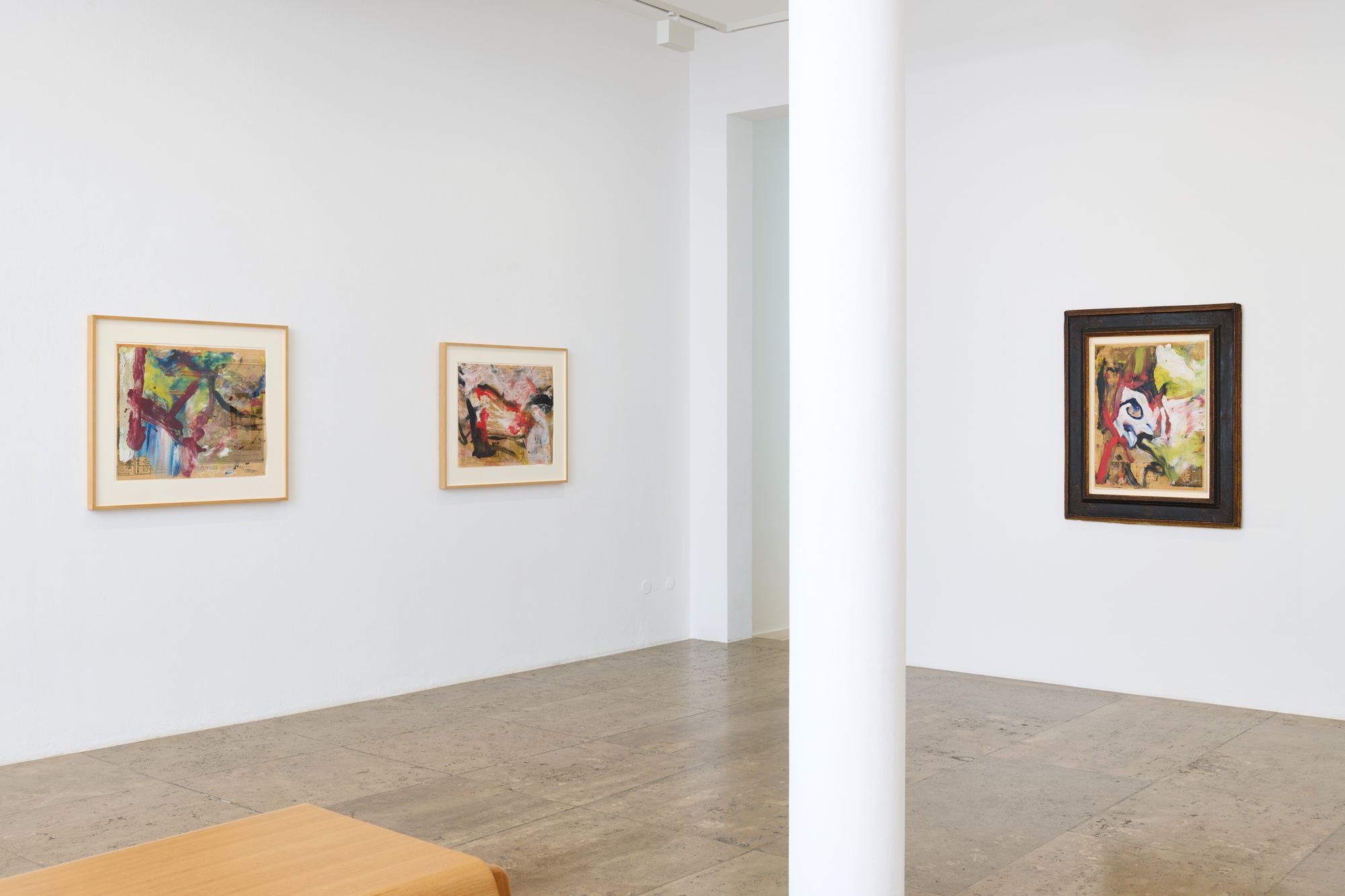
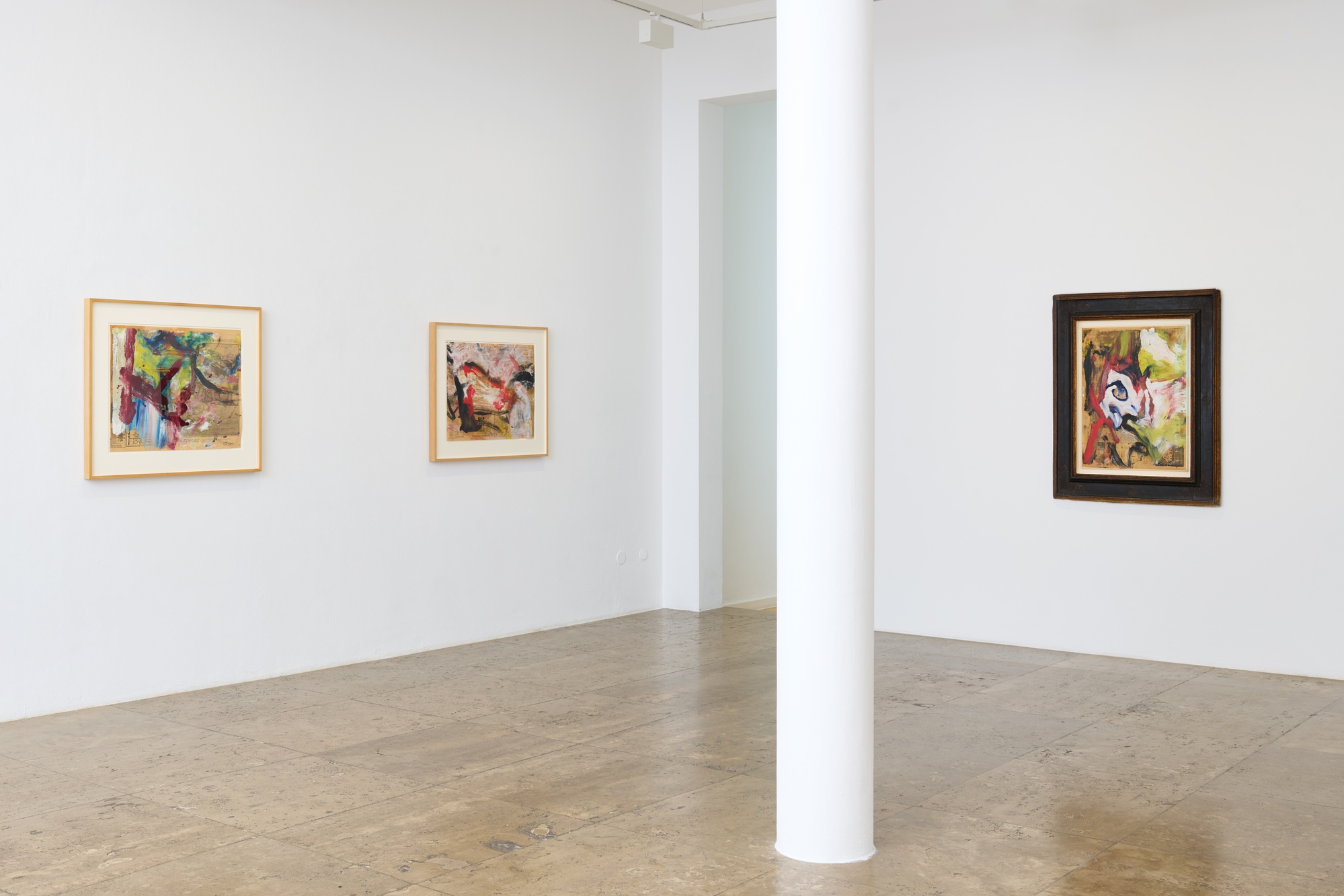
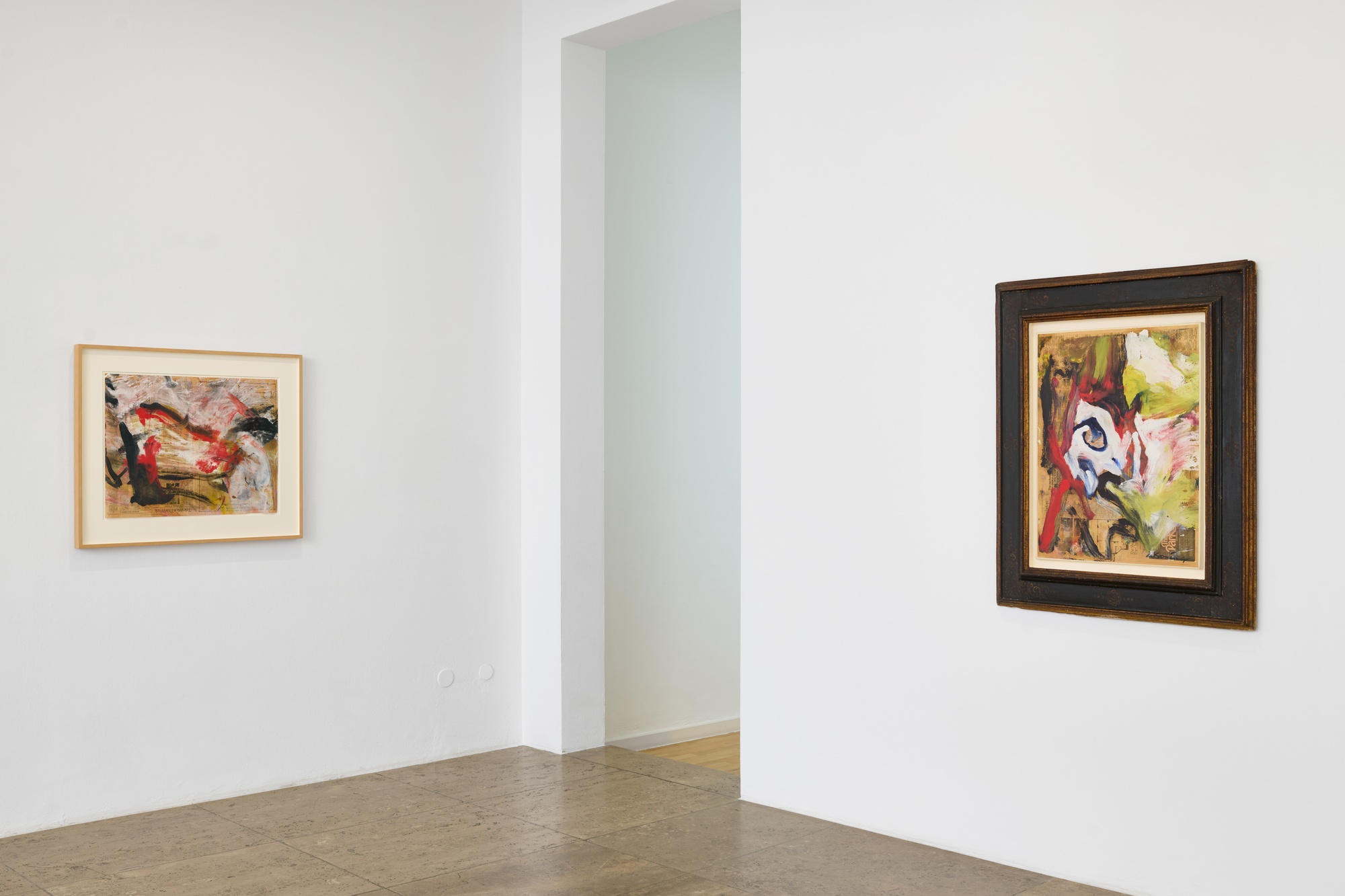
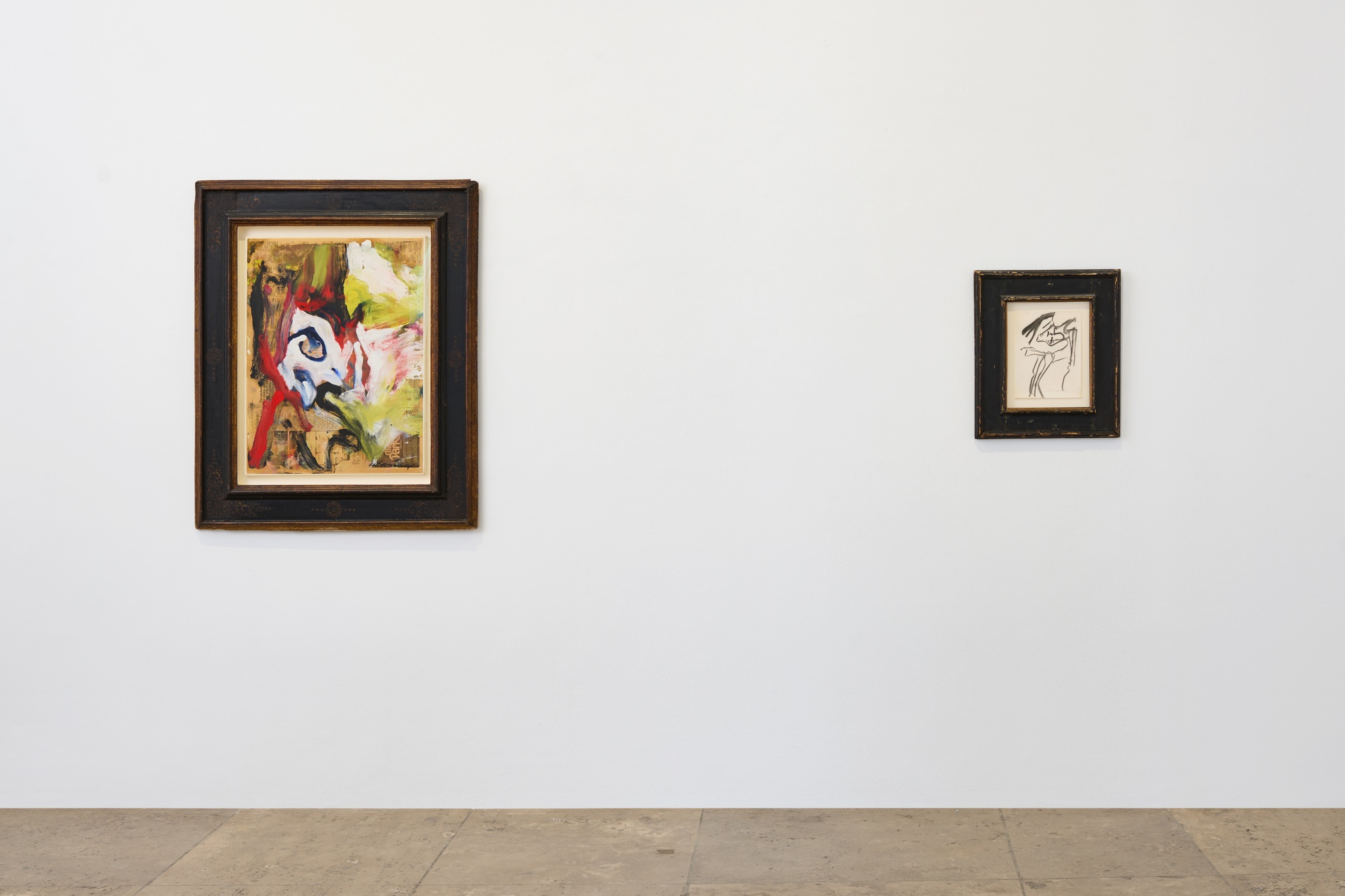
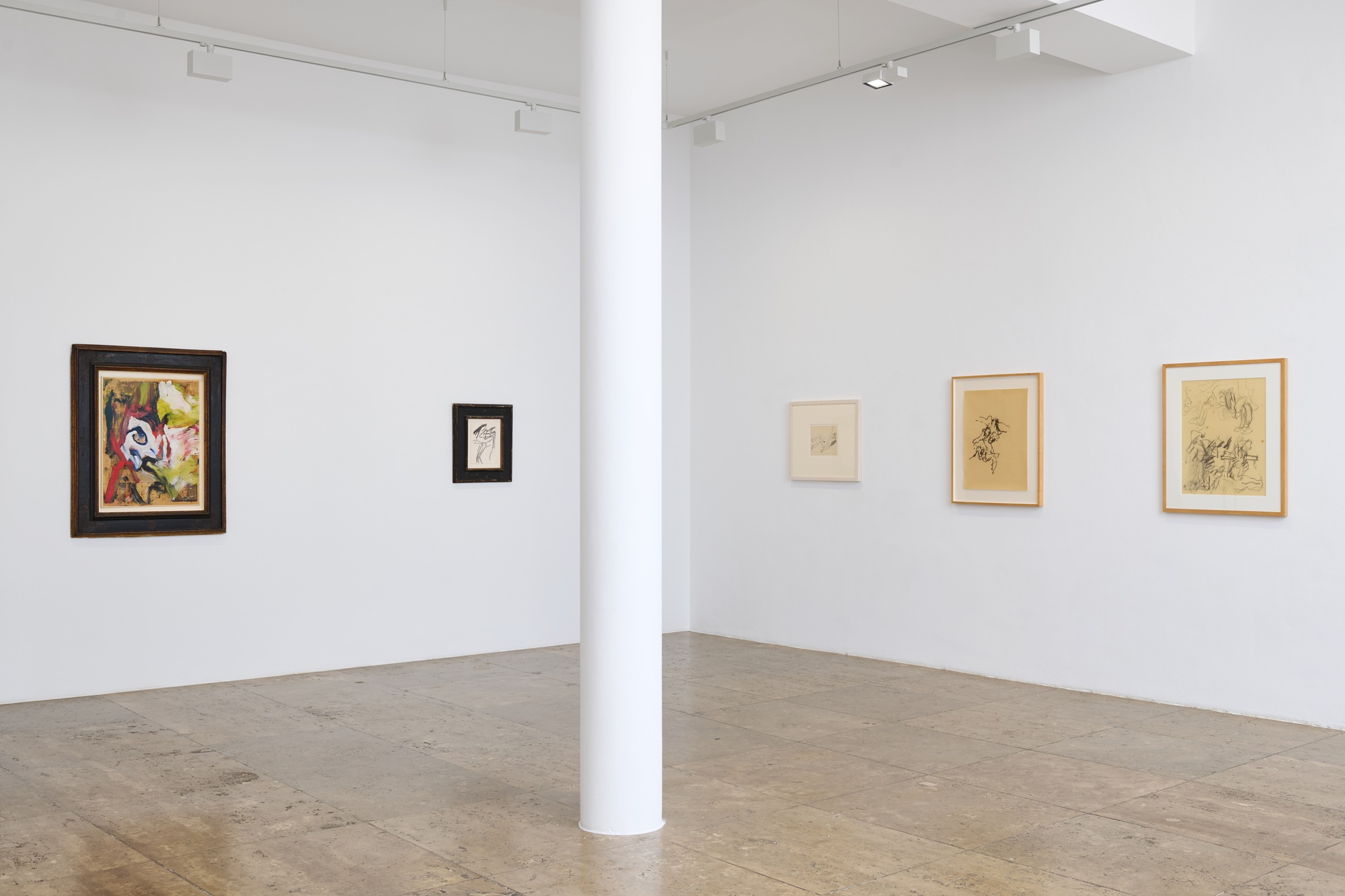
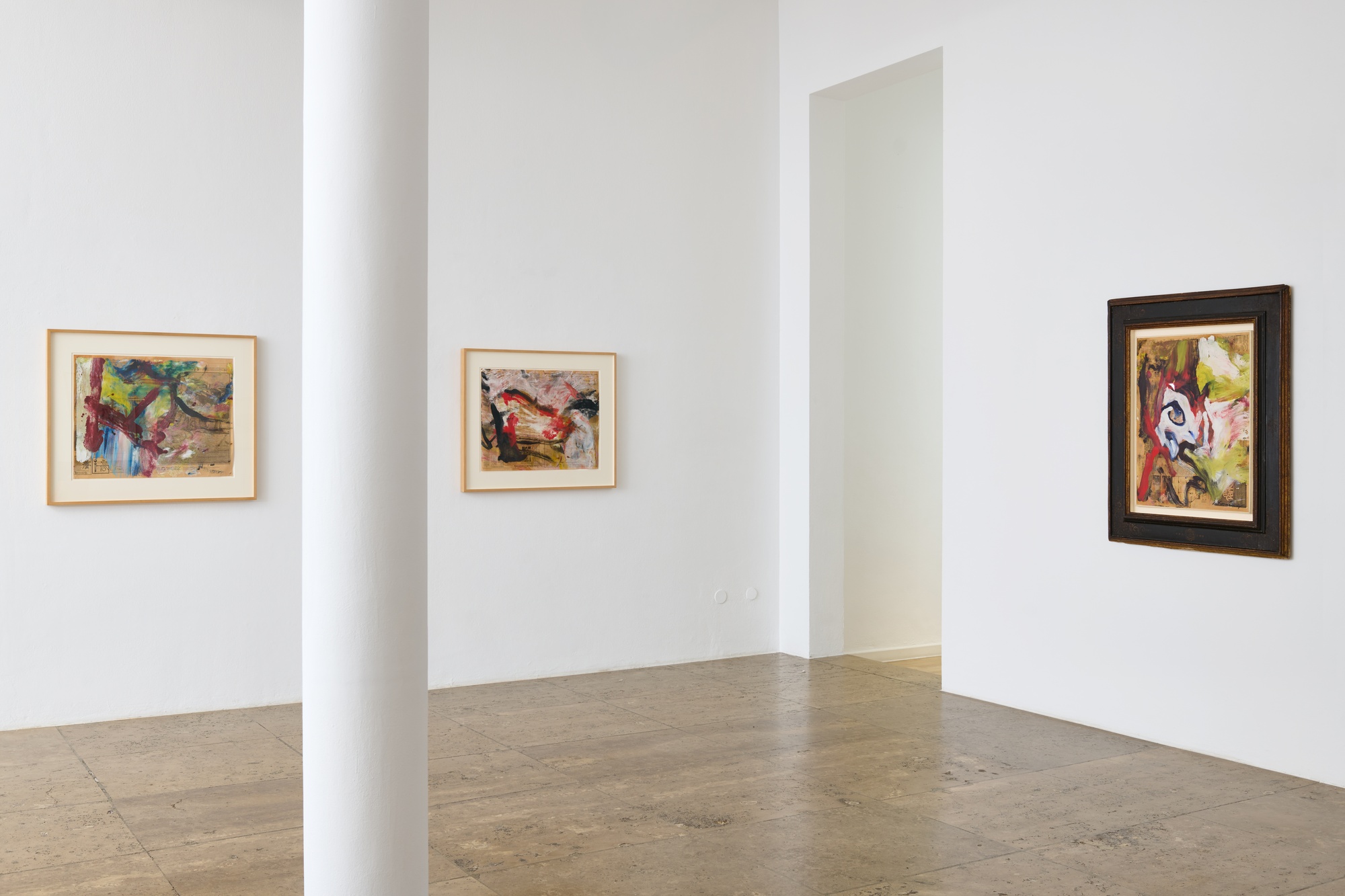
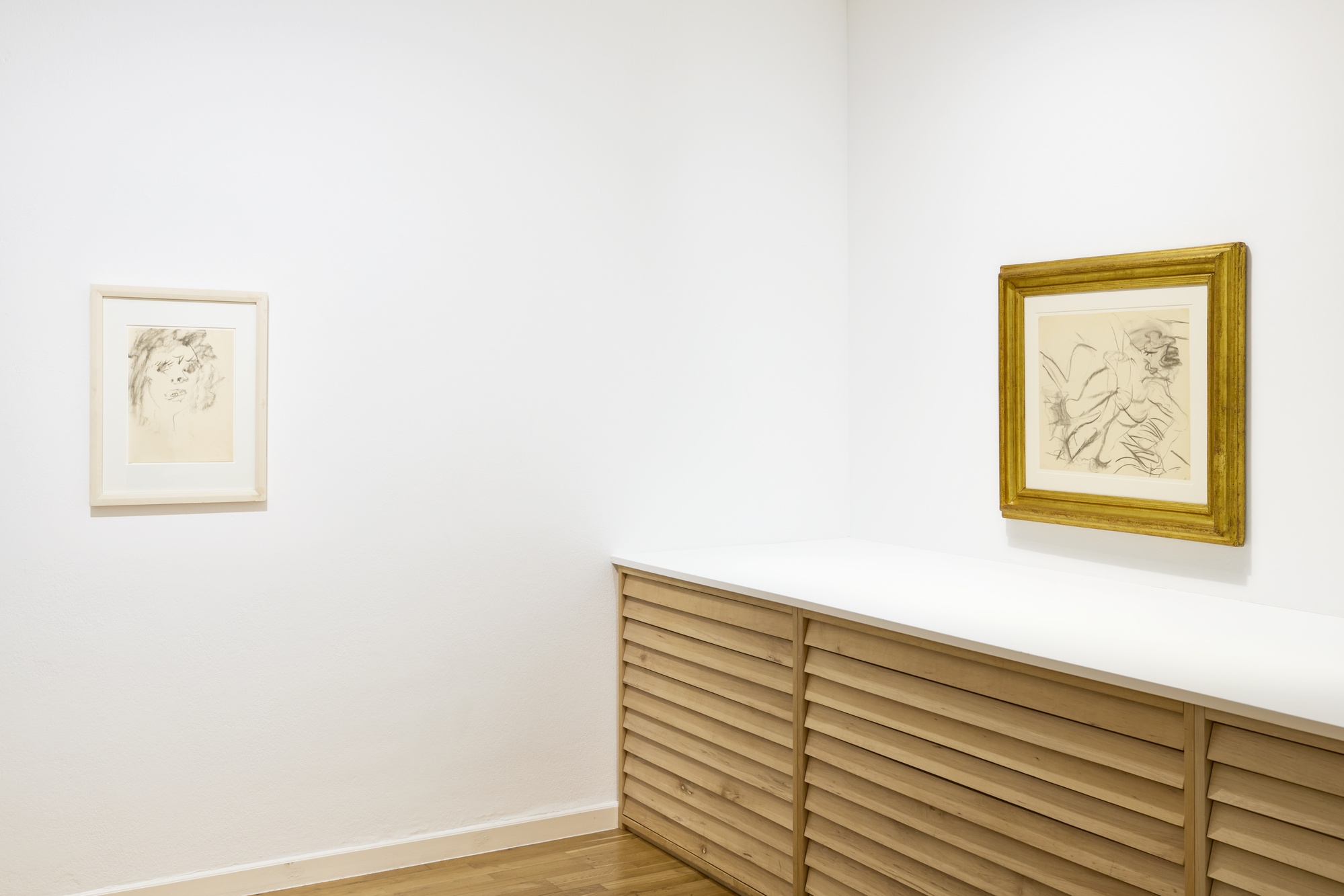
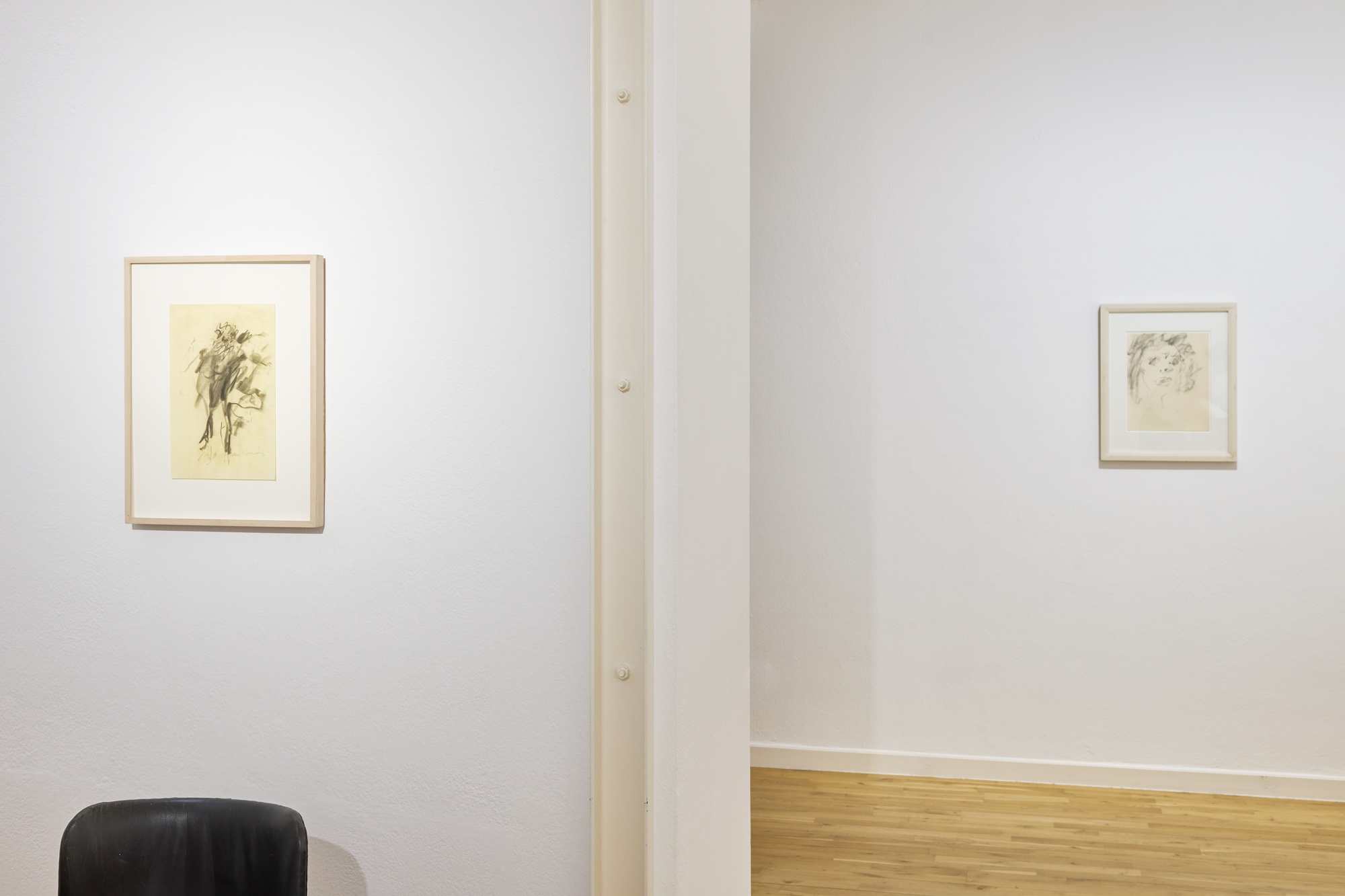
For de Kooning, drawing was not a subordinate activity; it was the permanent condition of his art. Even as a child in the working-class port city of Rotterdam, de Kooning recognised that he ‘had a gift’ in drawing before he enrolled, despite his family’s limited means, in night classes at the Academie van Beeldende Kunsten en Technische Wetenschappen in 1917.5 It was at the Academie that de Kooning benefited from the tuition in craftsmanship and modelling, as well developed the foundational work ethic that would be a mainstay throughout his long career as an artist. Much later, on his sofa in Springs, de Kooning drew with his eyes closed—finding recourse in muscle memory the way a cyclist, even the artist himself on his bicycle threading along the coast, lifts both hands from the handlebars and lets the body take over—and it could be done, even, with the television on in the background. The 15 works gathered here span about a decade and a half, from 1965 to 1980, all taken from de Kooning’s long final act in Springs, ranging across charcoal on paper, brush and black ink, and oil on newspaper. A shared disposition connects these works: each is the outcome of de Kooning’s refusal to let any mark settle into finality, and an insistence that the image remain open to revision, accident, and the pressure of the next gesture.
Four of the works on paper displayed were created sometime between 1965 and 1970, in the wake of Susan Sontag’s seminal ‘Against Interpretation’, first published in Evergreen Review in December 1964. Sontag opened the essay with an epigraph: de Kooning’s remark, appearing in Location magazine (Spring 1963) and adapted from a 1960 interview with David Sylvester, that ‘content is a glimpse of something, an encounter like a flash. It’s very tiny — very tiny, content.’6 As I wrote this essay, T. J. Clark published an article in the London Review of Books in which he derided the reception of these words, if not the words themselves, as having been ‘endlessly quoted in writing on modern art because [they sound] somehow deep’ despite, Clark believes, little evidence that ‘de Kooning meant [them] to be.’7 Rather, de Kooning is making a claim on the distance, but not the absolute distinction, between reality as it is seen and the marks on his page. To say nothing of the homograph of ‘content’, explicitly used in the quotation as a reference to subject matter but unavoidably also conjuring the idea of fulfilment or cheerfulness (as if to say, echoing de Kooning’s beloved Keats: to be so content in thine tininess) the artist’s remark anticipates Sontag’s central argument with uncanny precision. If Clark hears evasion, Sontag hears the artist releasing the viewer from the obligation to excavate and to decode, and to turn the work into a vehicle for something else. Her essay insists that the function of criticism should be to show how a work is what it is, even that it is what it is, rather than to show what it means. De Kooning’s ‘glimpse’, his ‘flash’, his studied diminutive, comes closer than any other statement by the artist to explaining the rationale for that refusal. Read More
II
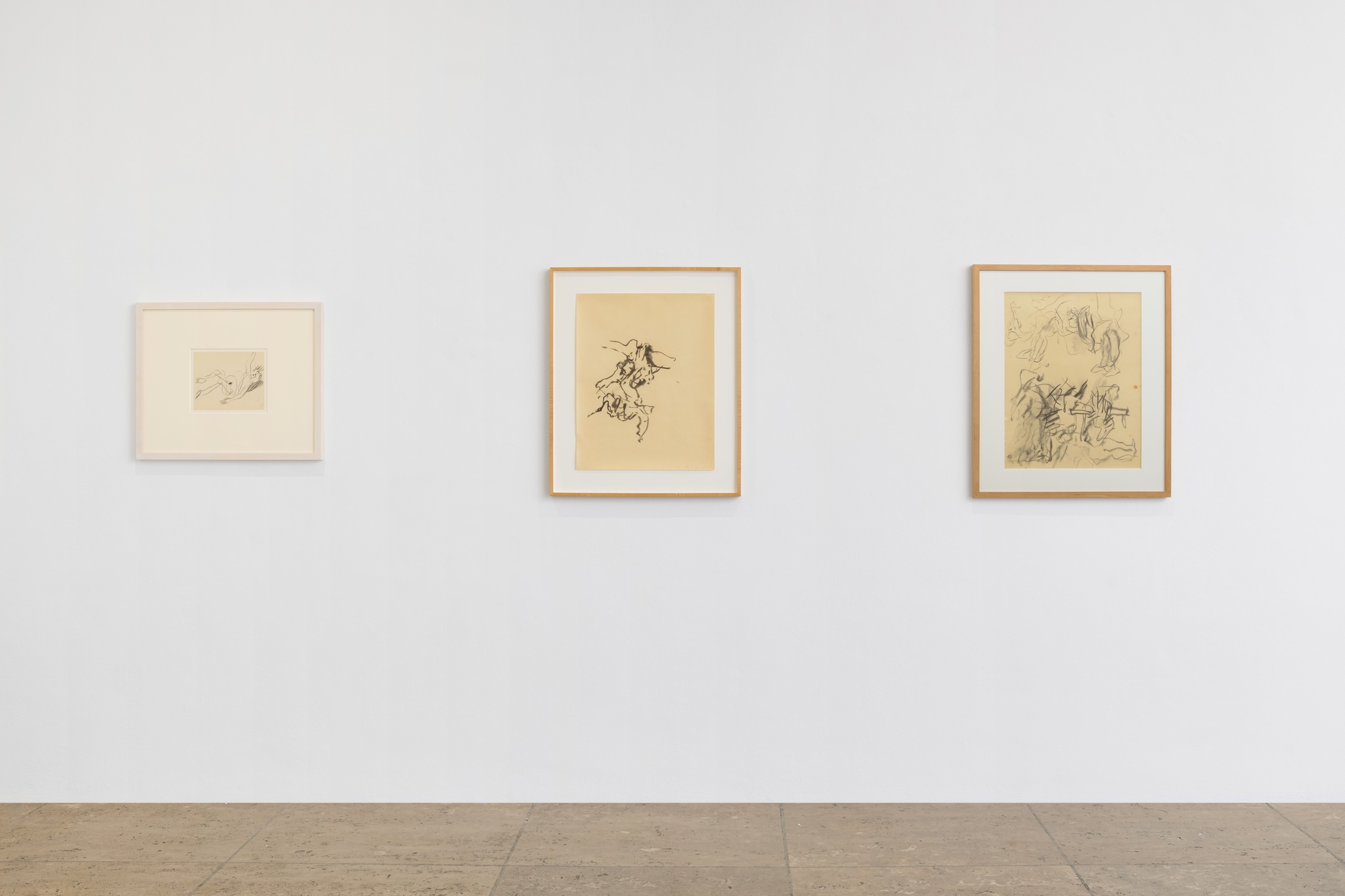
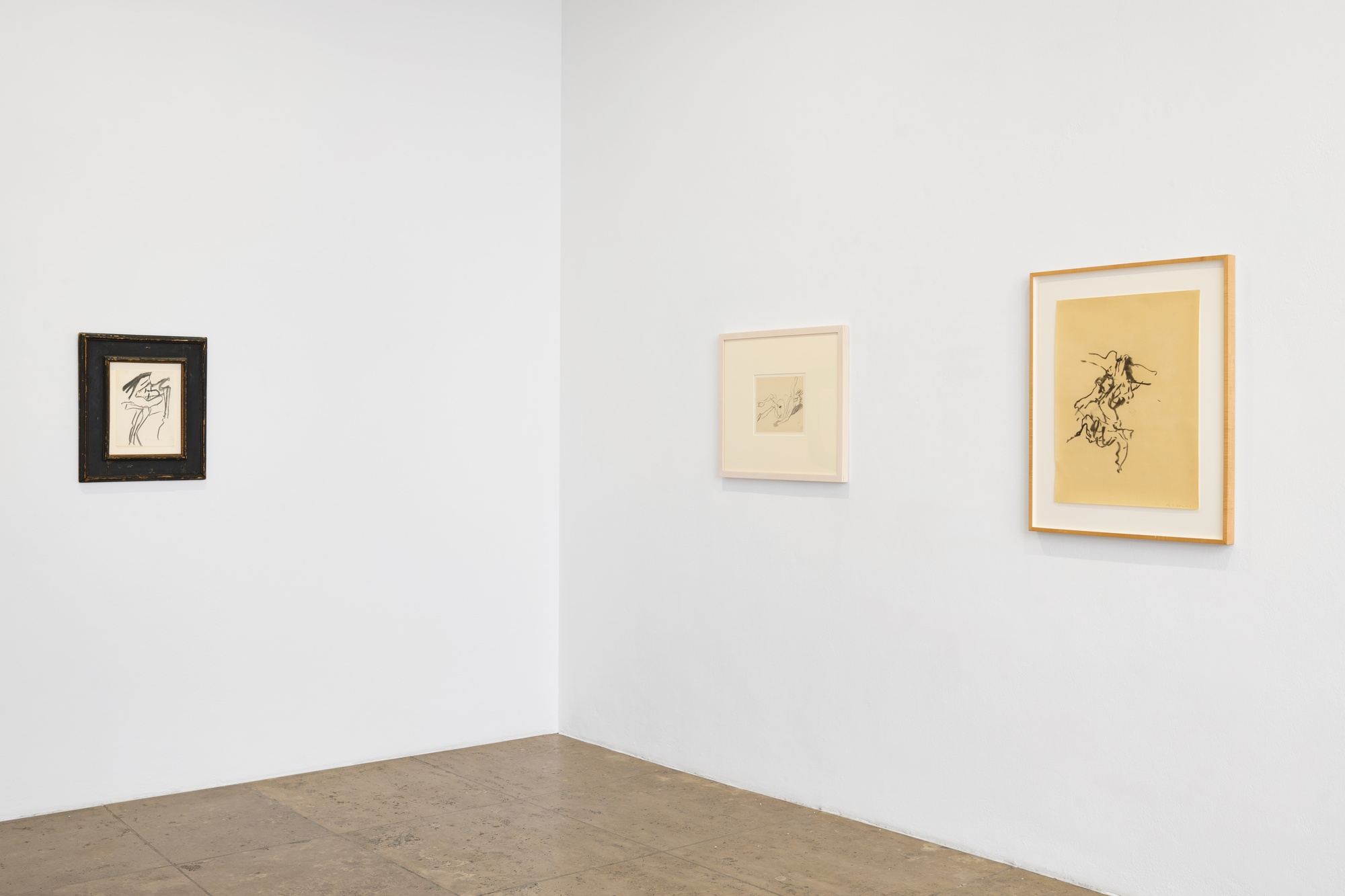
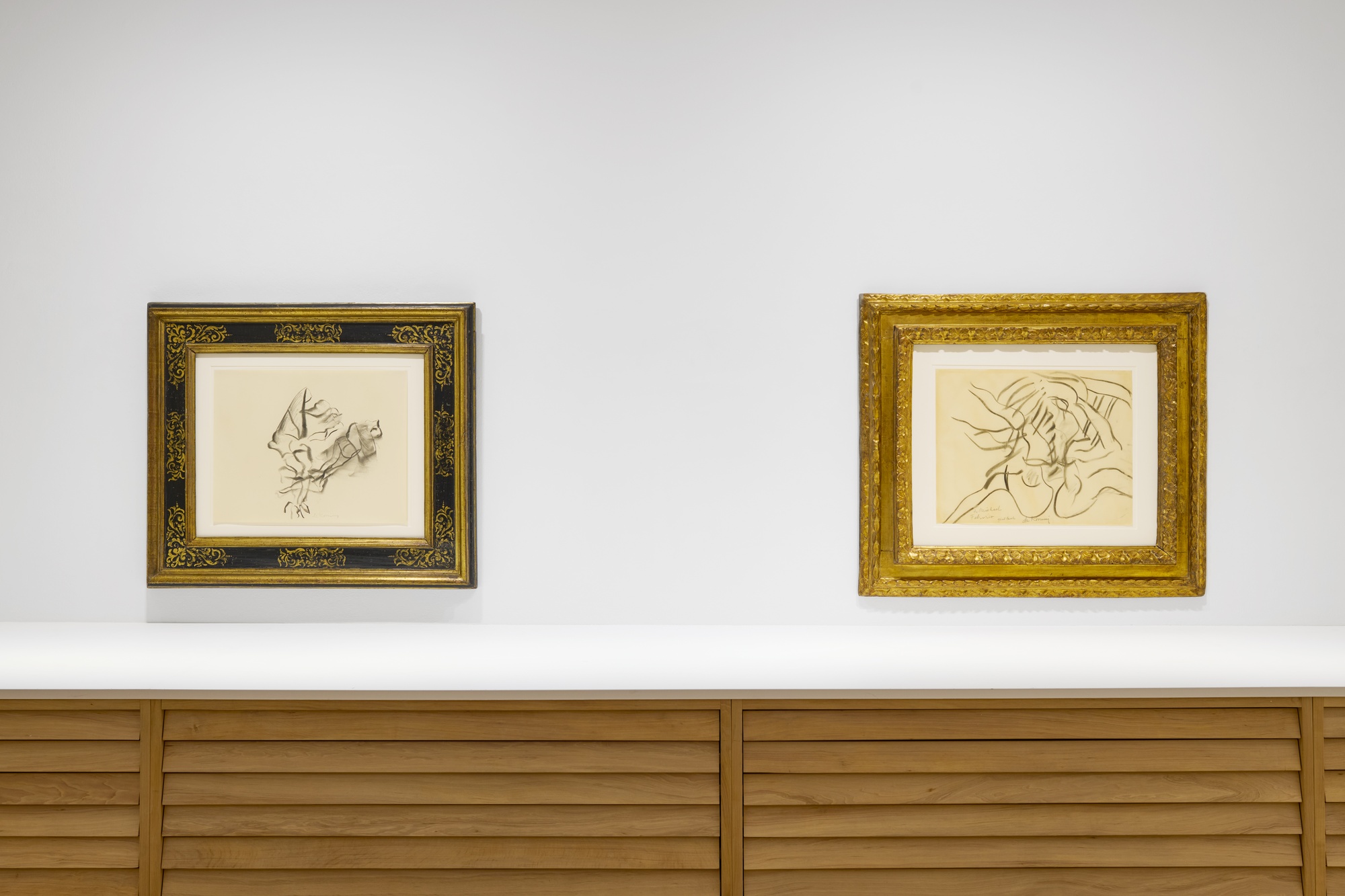
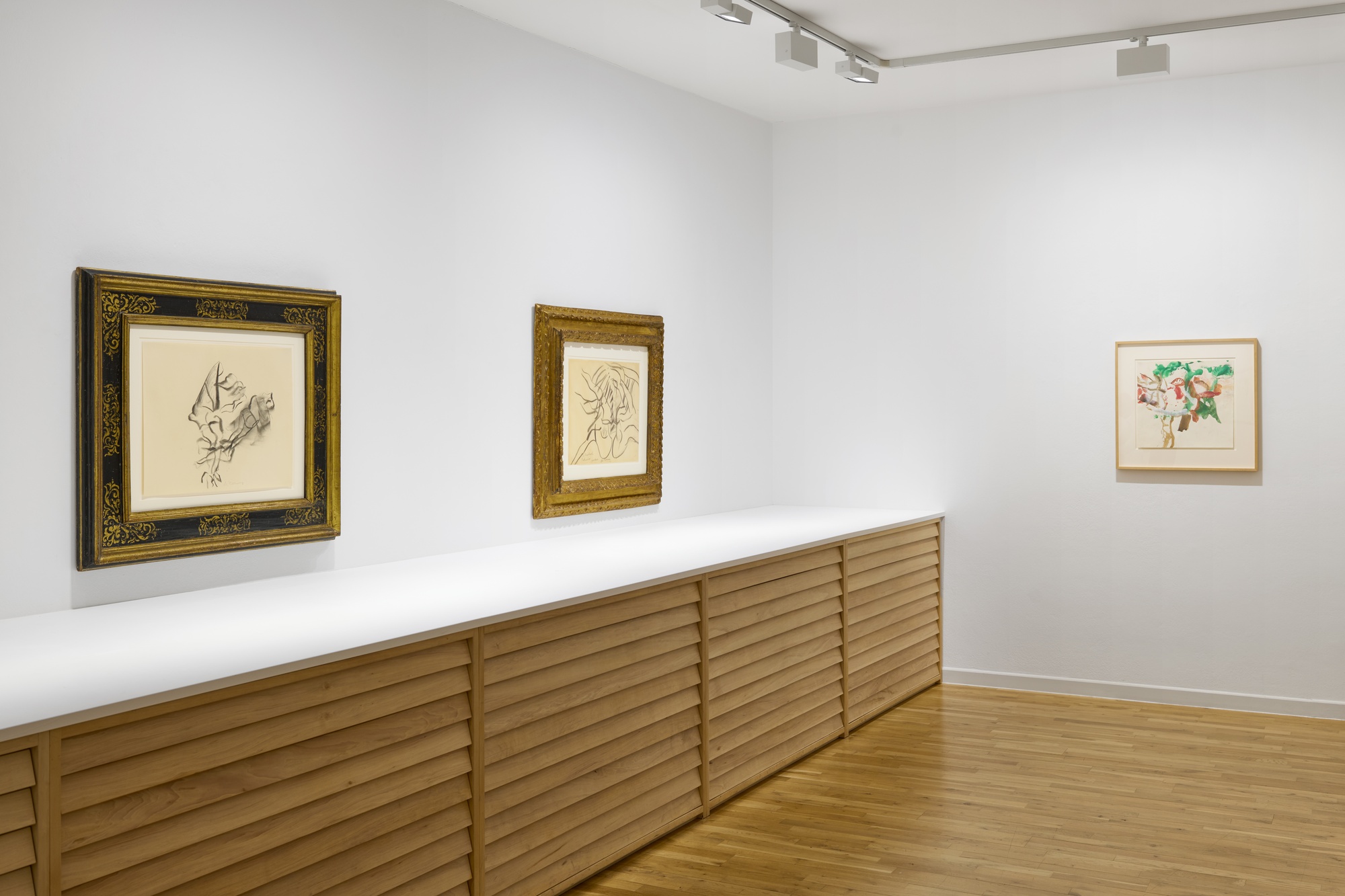
Reclining Woman (ca. 1965–70)—charcoal on paper, roughly the scale of a paperback novel held open—moves in and out of resolution into a figure (there is a body here, to be sure; a weight, at least at the suggestion of buttocks as though seen through an X-ray, the sprawl of limbs in repose, the steadying left arm and the idly reaching right) but the drawing declines to make anything of that fact. The figures are lightly schematic and notational, their lines generated by the intuitive sensations of touch. As such, they are often not in any proper way related to what he sees in the world, glancing up from the pad. The drawing establishes no accord with a single spatial orientation, and de Kooning signed it as a horizontal—a decision made in ink rather than charcoal, after the drawing’s making—designating the figure as reclining. If we were to hold the work in our hands and rotate it ninety degrees to the left, as Richard Shiff encourages us to do in Between Sense and de Kooning, then ‘the body strides or even dances.’8 The drawing holds both possibilities without arbitrating between them. With the work on the wall, I invite you to place your cheek on your right shoulder and notice the new power of those emblazoned, even gorgon eyes. In seeing the composition from a different subject position, akin to encountering one of Georg Baselitz’s Umkehrbilder paintings for the first time, the eyes become animated by a crazed fixation; these are eyes, it seems, that will never (indeed, perhaps, can never) be closed. The marks accumulate and thin, press and lift, with an attention to surface sensation—so much so that to ask what the work is about, and to dwell too long on the titles (many of which were designated after the fact, and many of which are absent altogether), is to ask the wrong question of the wrong object. Better to ask, as Sontag would have us ask, what it is like to stand before it: the slight roughness of the paper asserting itself through the charcoal, the scale intimate enough to feel almost private, the figure held just long enough to flicker into presence before the marks take over again.
To spend time with the second drawing bearing the Reclining Woman title is to see how entirely de Kooning has remade the subject from scratch. Where the other Reclining Woman arrives at its figure through a kind of dispersal from the nucleus, and so ‘pivots around a dark spot at the centre of the sheet [a vagina, presumably], as if its extremities—feet to the left, head to the right—were being generated by a centrifugal force’, as Shiff describes it, then my second exemplar pulls everything inward.9 The marks here are denser, more insistent, layered over one another in a way that refuses the earlier drawing’s open, comparatively airy spatial logic. Here, I think again of Baselitz, who died a fortnight before this exhibition opened—a painter whose own systematic inversions of the figure suggest a different but not unrelated quarrel with the stability of the body in pictorial space. To see de Kooning’s reclined women alongside Baselitz’s portraits of Elke is to recognise a shared preoccupation: that even the body of the person most intimate to you can be defamiliarized, made strange or maddened, by one’s orientation to it. Baselitz, who was enraptured by de Kooning’s work when he saw it in The New American Painting display at the Hochschule für Bildende Künste as a twenty-year-old art student, put the matter with characteristic bluntness when he turned his attention to the Dutch-American’s sculptures: ‘They have no muscles, no skeletons, no skin. They only have a surface without content.’10 Baselitz meant it as an observation, and perhaps as a provocation, but it reads equally well as a description of what makes the sculptures so unsettling—and so alive. Strip away anatomy, and what remains is pure surface event: touch made permanent, the pressure of a hand recorded without the alibi of representation.
The same argument holds for de Kooning’s drawings. The charcoal on transparent paper, [no title] (c. 1970), for instance, is a litmus test for such an approach. Dedicated with ‘good luck’ to Michael Fabrizio, who ran the North Main Street Homemade Ice Cream luncheonette in Springs where de Kooning ate lunch almost every day, the drawing suggests the skeletal architecture and straddling legs of a seated body, as the short, staccato diagonal lines, successively expanding in length and arcing up towards the top-left, imply an osteo-structure as though seen through creases of thin skin as bone pushes against it. But as soon as one seeks out the anatomical reality of the picture, we are returned to the surface and the surface alone: the transparent paper is aged to a warm amber, and against it the charcoal’s long, looping arcs refuse to settle as the transparency of the support, unlike the opacity of cartridge paper which absorbs and fixes, instead keeps the marks slightly suspended, as though the figure has been caught red-handed in the process of appearing out of nowhere. ‘The result’, as Anne Wagner put it, writing on Sylvester’s reading of de Kooning’s depictions of women, ‘is that what is laborious and intentional about de Kooning’s process, what pictorially is worked over and through, has ceded to a focus on personal pathology, his “obsessive dismantlings” of figures giving evidence of passionate love or hate, whether unconscious, avowed, or both.’11
While living in Springs, de Kooning developed a habit of drawing in the evenings while watching television, sometimes using charcoal, as here, and sometimes supply-shop pencils on legal pads or typewriter paper. He might have one eye on performances by crooners Tony Bennett or Frank Sinatra, or to the retro-kitsch gore of Rod Serling’s science fiction horror The Twilight Zone. Sometimes he’d close his eyes entirely. As Judith Zilczer has observed, such a practice ‘not only fostered uninhibited spontaneity, but also allowed the painter to emphasize the haptic rather than the visual experience of form.’12 The artist’s daughter, Lisa, remembers their drawing-and-television ‘routine’ from her childhood: ‘[t]hen when he opened his eyes he’d turn his head to the left mostly or to the right and think about [the drawing]. Then he’d put it away. He’d do this like a lady does knitting.’13 Content, here, might be even less than a glimpse—barely anything at all: surface even without content.
III
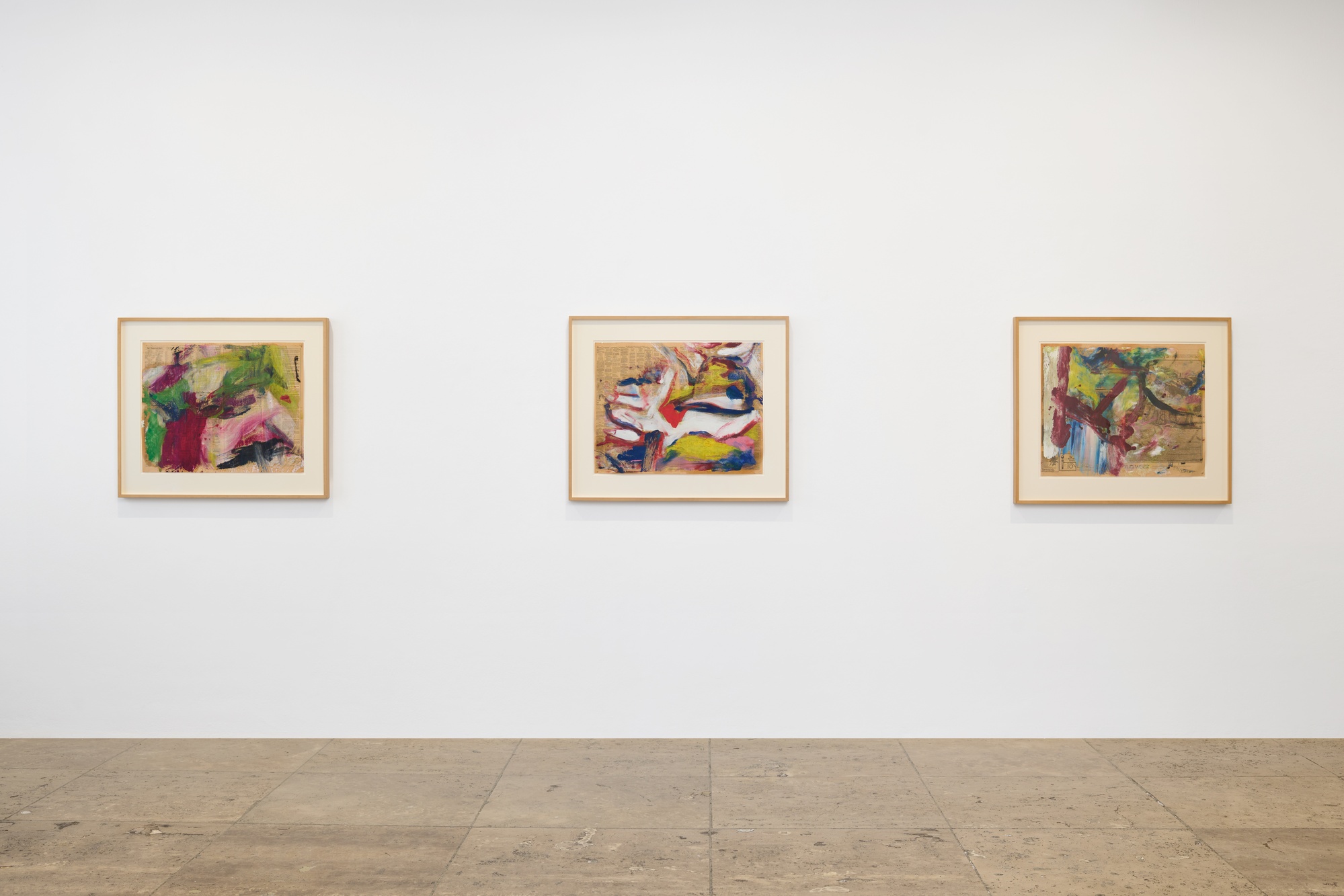
From the late 1940s onward, de Kooning regularly placed newspaper sheets onto wet canvases—sometimes to absorb excess oil, sometimes to retard drying and keep the surface workable. The process was rarely passive: he could work the sheet against the paint with his hand, using it to generate new configurations rather than simply blot the existing ones. When the sheet was pulled, type and imagery from the newsprint sometimes transfer to the canvas, and occasionally these ghostly impressions were absorbed into the painting’s surface.14 In Robert Snyder’s 19 (1968) film Willem de Kooning Artist, de Kooning claims that ‘[w]hatever trouble you may have, whatever you worry about the world for, or whatever happens in the newspapers—that’s the beginning.’15 The remark reframes what might otherwise seem a purely technical choice as something closer to an existential one. At mid-century, the newspaper was the daily weight of the world, the form in which anxiety arrives each morning. To work with newspaper is to stay with that anxiety rather than rise above it. This is what separates these works from Robert Rauschenberg’s—and what de Kooning’s own disclaimer, that the material ‘had no social significance that way, like Rauschenberg used it’, both acknowledges and obscures.16 If Rauschenberg’s use of newspaper is ideological, or at least encouraged an interpretation of the work as a democratic exercise in collapsing the hierarchy between high culture and the street, or between the gallery and the newsstand, de Kooning’s is matter of fact. It is more surface than subject.
While you may be as tempted as I have been to decipher the television listings for Monday 14th November 1977 (‘might these hold a clue for what the artist watched that evening?’), or the sales figures for fuel oil or hospitals in September of the same year (‘how far did de Kooning feel from Gotham’s crises as he made these works?’) and seduced into landing on a causal link between the immediately superseded traffic of the news and the global economy with the marks left by de Kooning’s brush, to do so leads only to dead ends. De Kooning’s marks are prior to ideology: the newspaper is where the trouble starts. As ever, Hess identified the deeper cultural logic. ‘Nothing is more typical of the modern city than the daily newspaper’, he wrote, invoking Baudelaire as the first to have grasped it, and for Hess its appearance in de Kooning’s work reinforced his fundamental metaphor of the urban ‘no-environment’: the modern metropolis where ‘anonymous parts pile up into an overwhelmingly distinct identity’, where ‘the feel of a place can never be wholly grasped because each of its individual places could be any place.’17 The classified advertisements of these oils on New York Times newspaper—their columns of employment and commerce, their interchangeable offers and demands—are that no-environment made literal.
IV
In Frank O’Hara’s mock-Horatian ode to de Kooning, his best-loved Abstract Expressionist, the poet and curator moves through the various stopping-places of artistic admiration, from the shock of first encounter to the slow accumulation of a friendship animated by dawn cigarettes and studio afternoons, before arriving at a question—whether the artist’s marks are wounds or rubies, ‘each painful as a sun’—that reads like speech overheard in front of a painting, as though an onlooker turning the work over in their mind and failing, productively, to settle it. The origin of O’Hara’s words is likely to have stemmed from an argument between Grace Hartigan and the editor Jim Fitzsimmons when de Kooning’s first Woman paintings were shown. Fitzsimmons said, Hartigan remembered, ‘that they were destructive, that it was hatred, Kali the blood goddess’ and pointed to one painting that had big palette knife strokes slithering across the chest and said, “Look, de Kooning is wounding her with blood.”’ Hartigan went to de Kooning and said, ‘“Jim Fitzsimmons said that you stabbed that woman and that is blood”’, before de Kooning responded, ‘“Blood? I thought it was rubies.”’18 De Kooning's ‘I thought’ is the conditional of a man who has looked at his own painting and found it still open, the artist himself positioned as one interpreter among others rather than the arbiter of what the surface means. That failure to resolve one way or the other holds especially true for de Kooning’s works on paper. In his ode, O’Hara maintains the same ambiguity that de Kooning carries on every sheet: he refuses to decide, and that refusal is not itself a resolution, just as the final image—the sun neither risen nor set, the anguish on the surface—suspends rather than definitively concludes. To look at these works is to be returned, repeatedly, to the moment before interpretation coagulates into verdict. In other words, to the instant in which wounds and rubies are still the same thing, each as painful, each as luminous, as the other.
Text by Matthew Holman