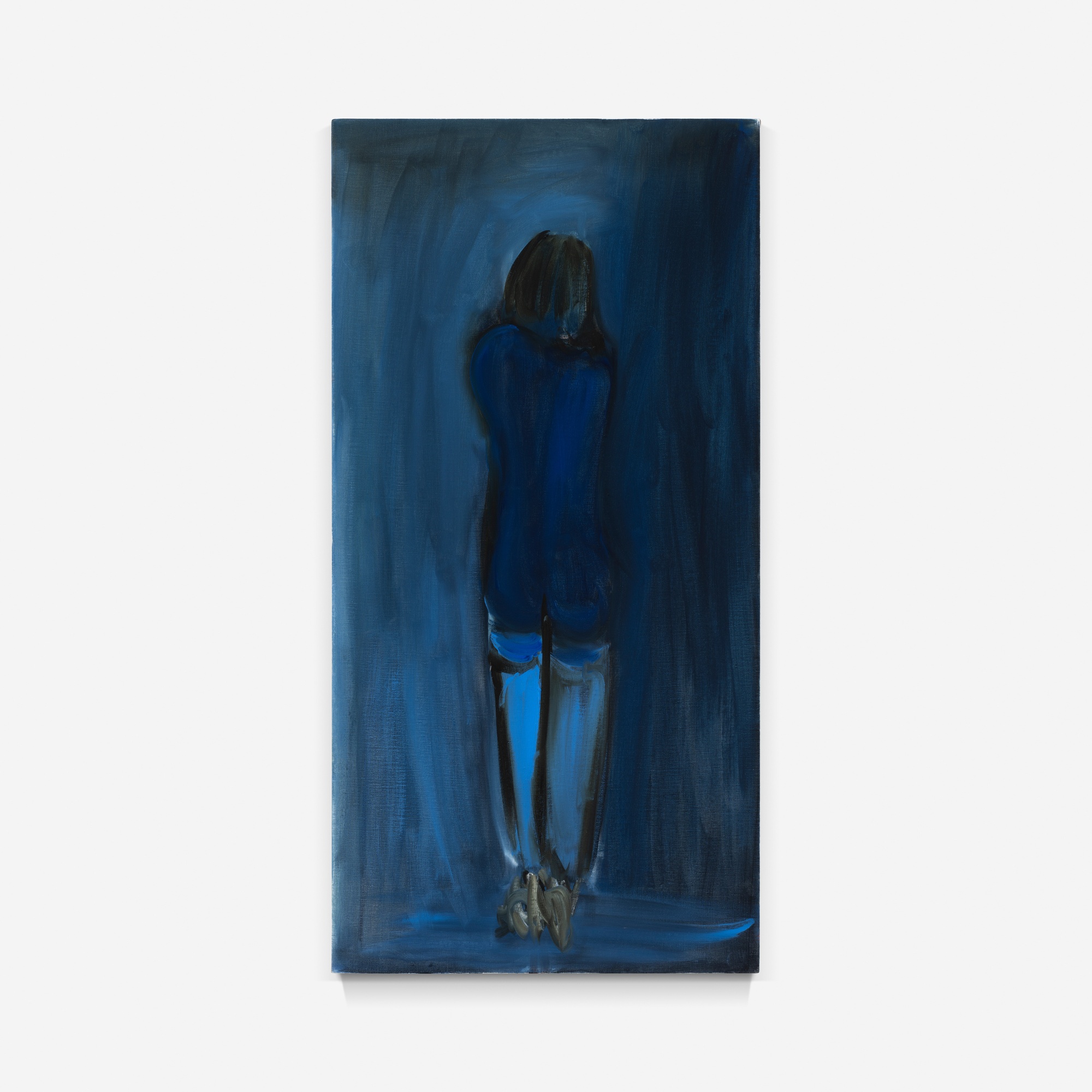
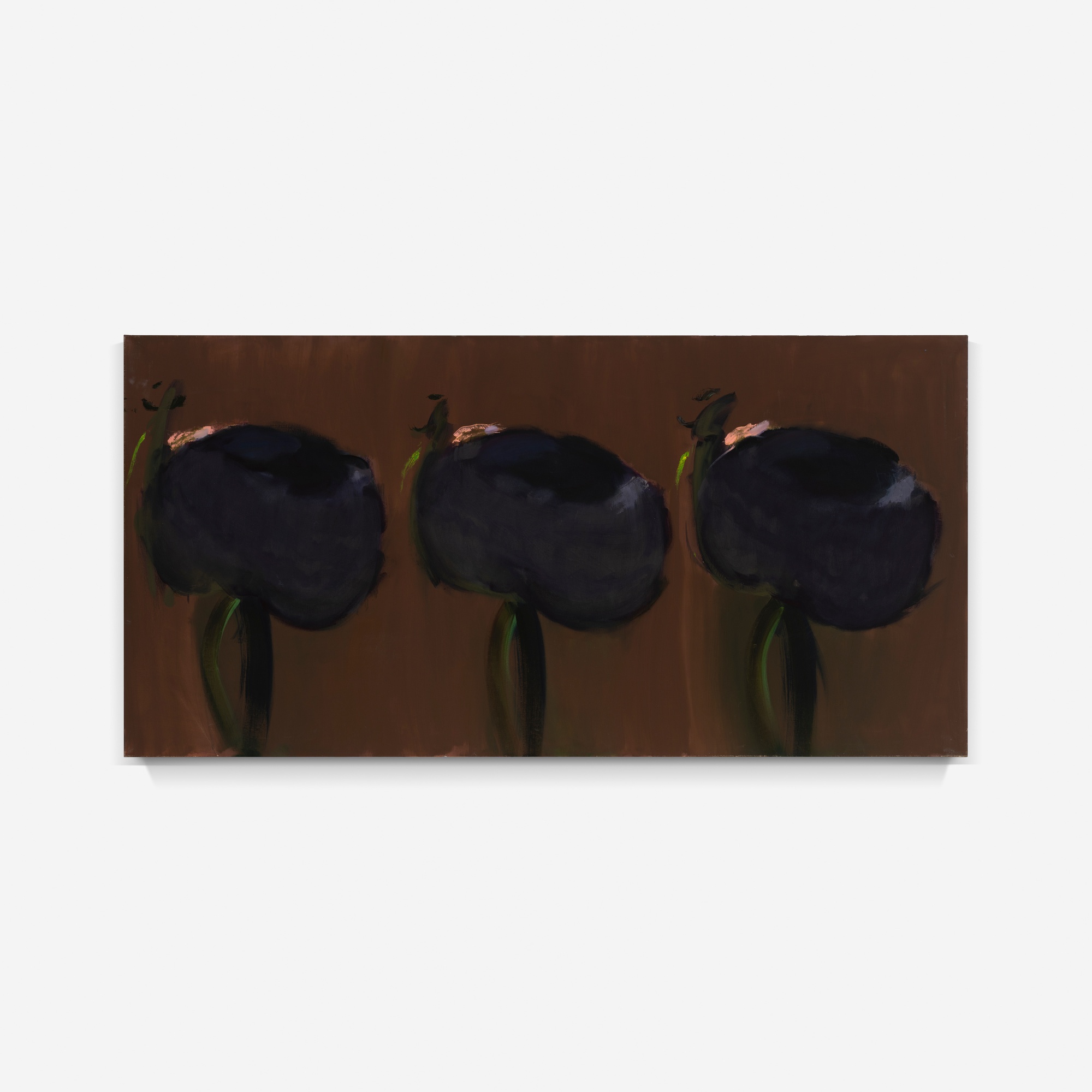
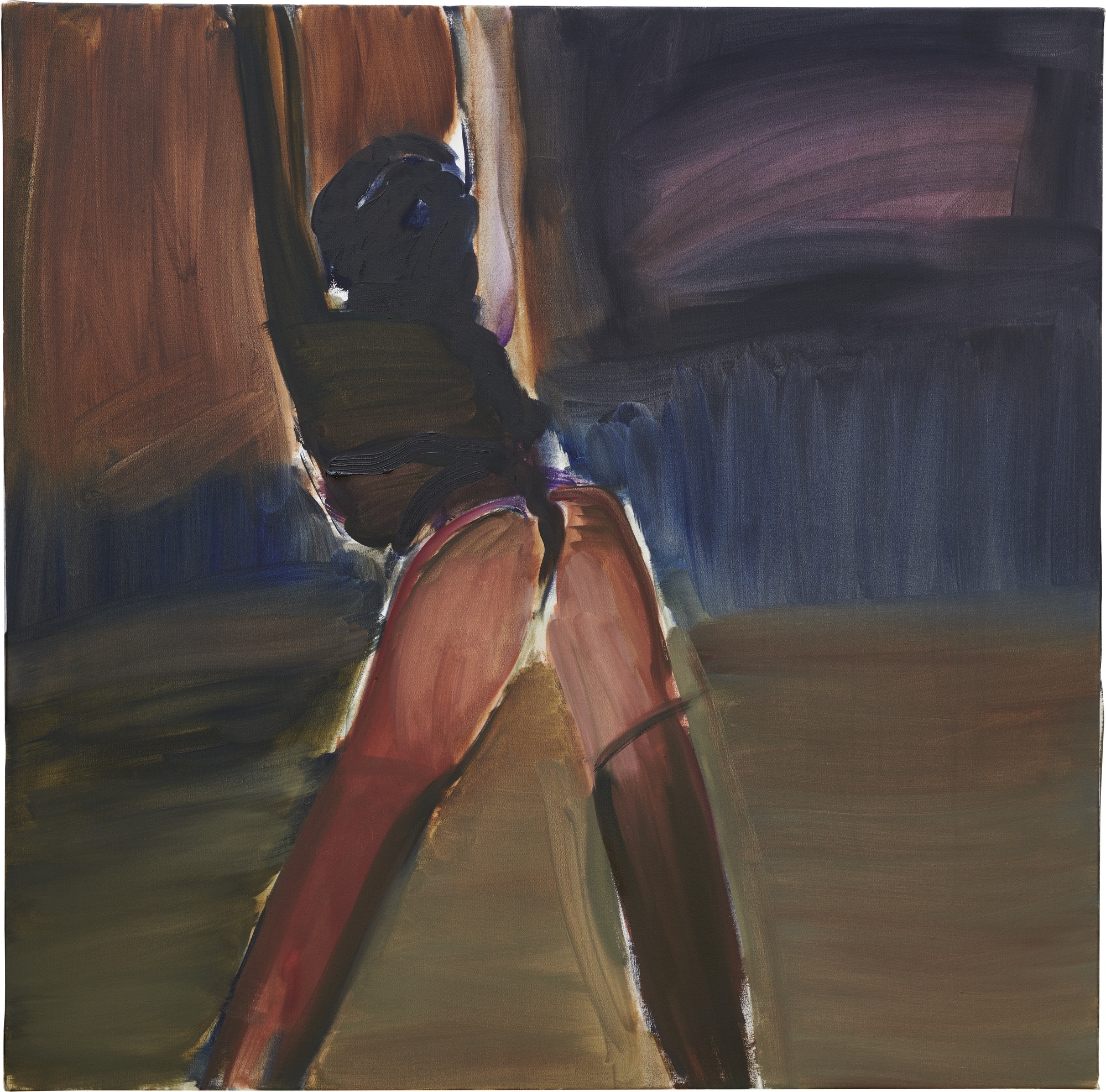
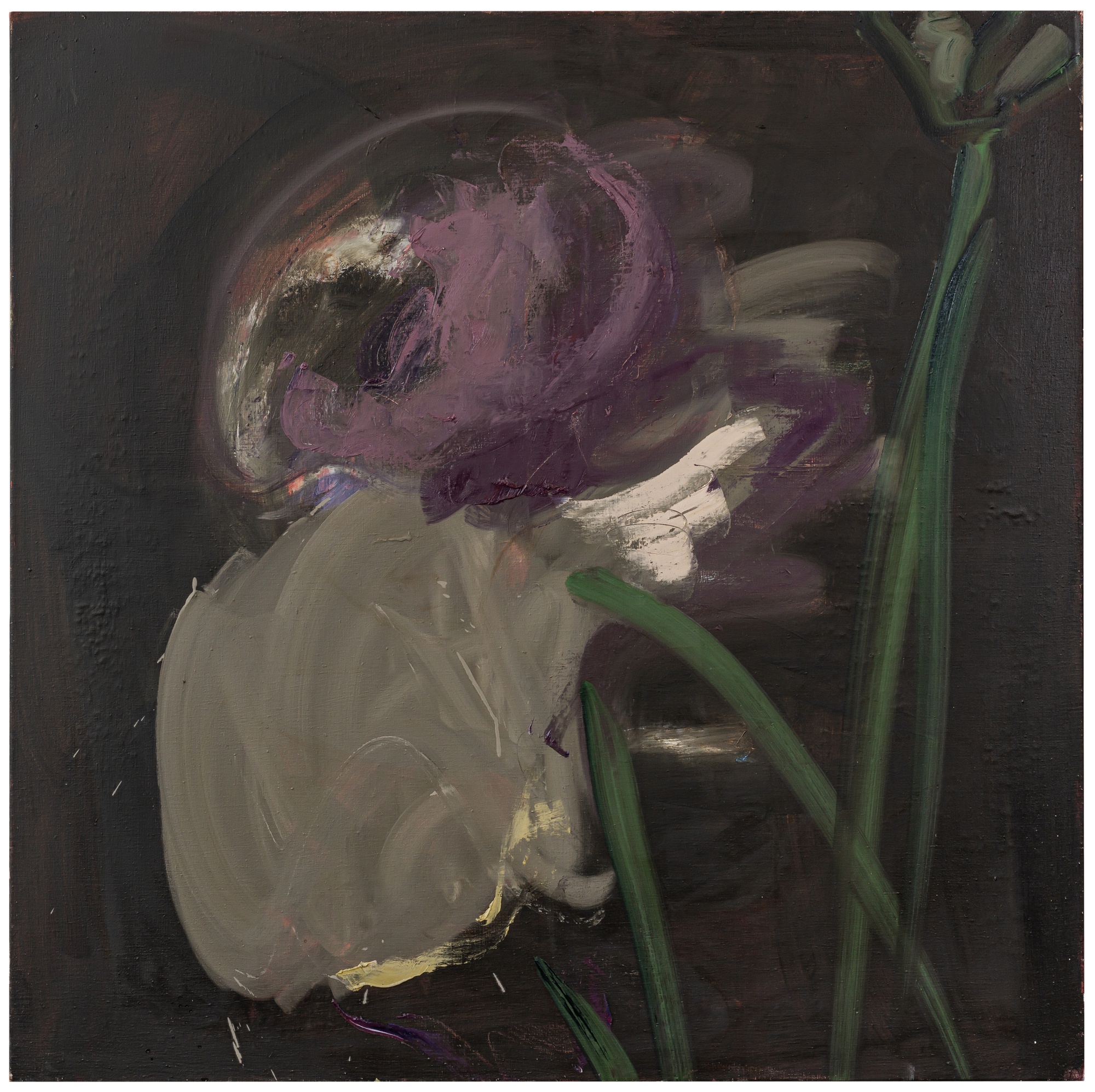
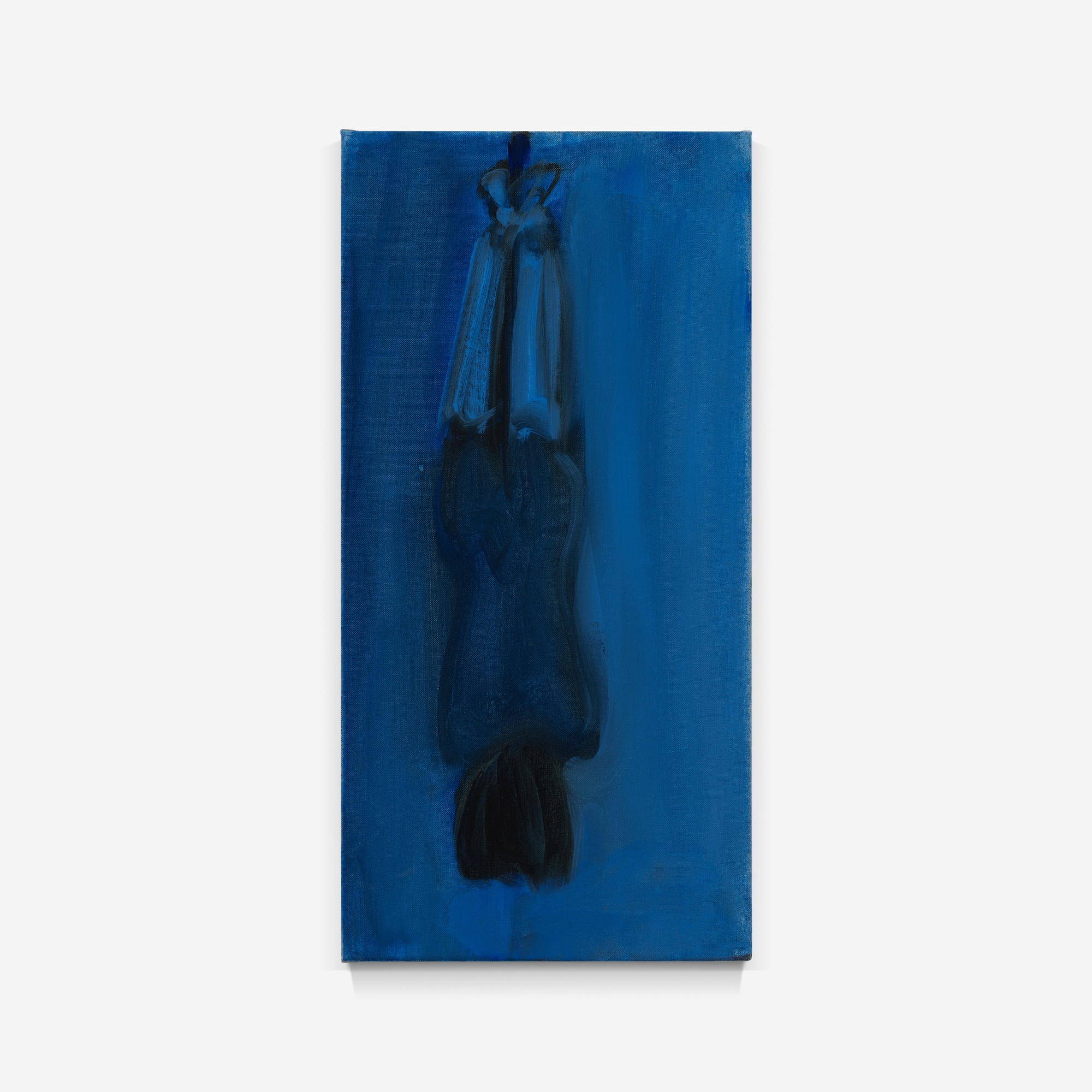
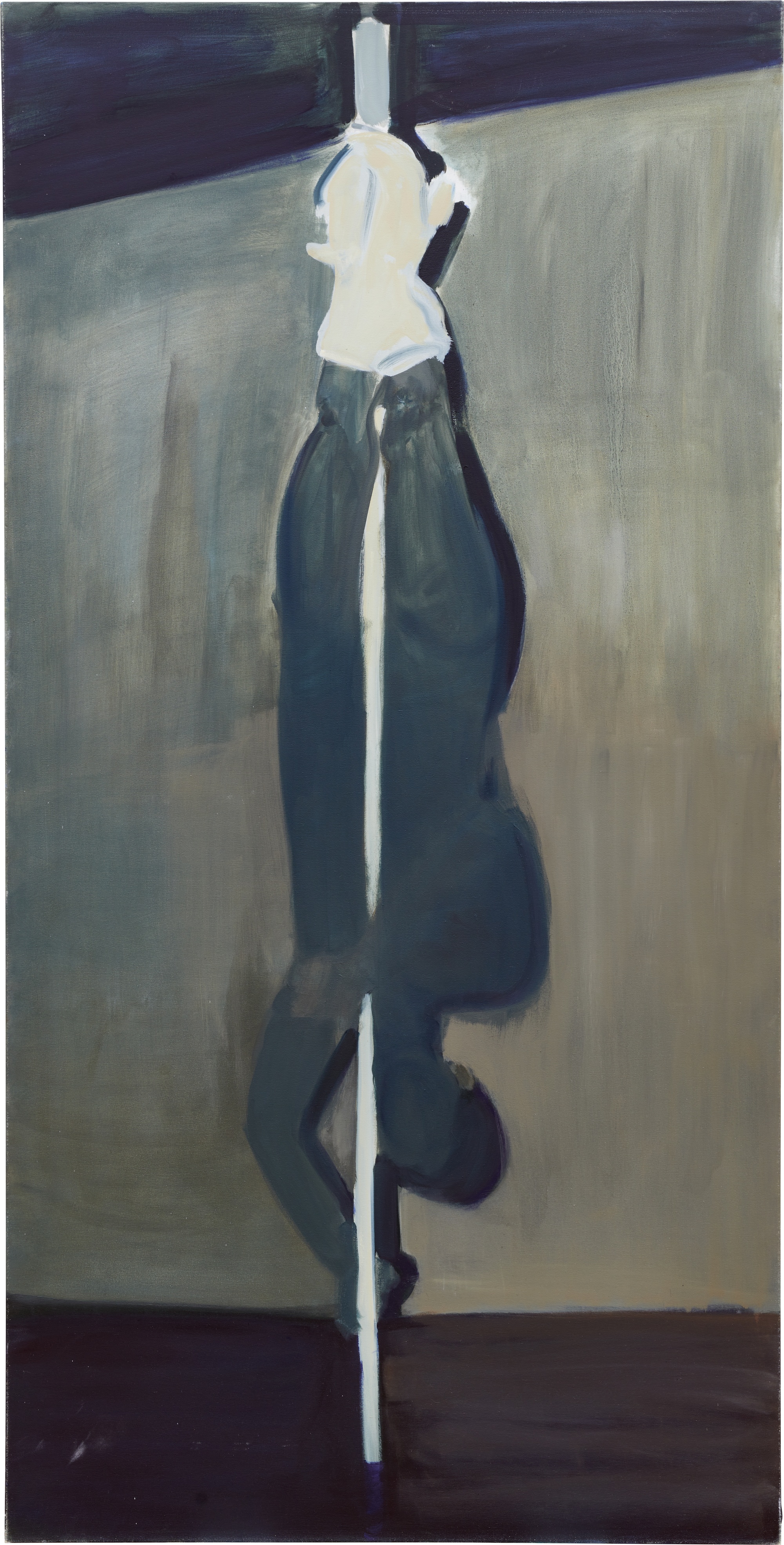
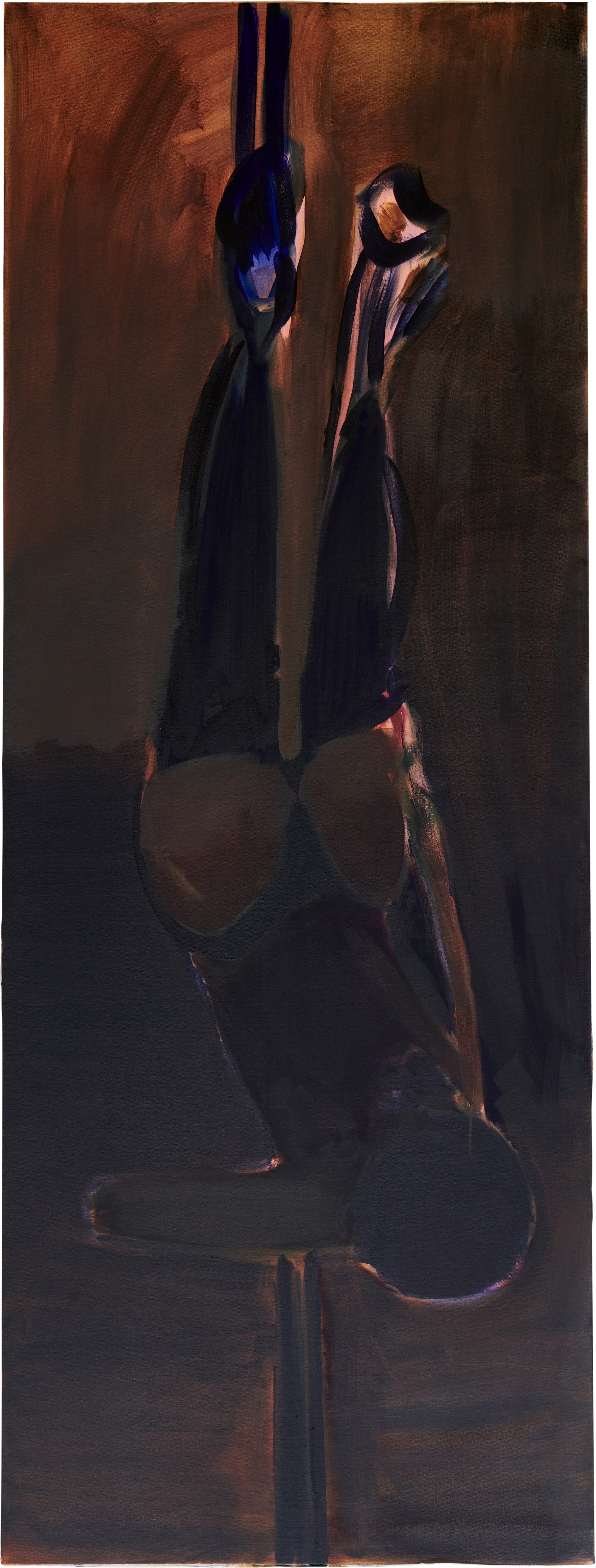
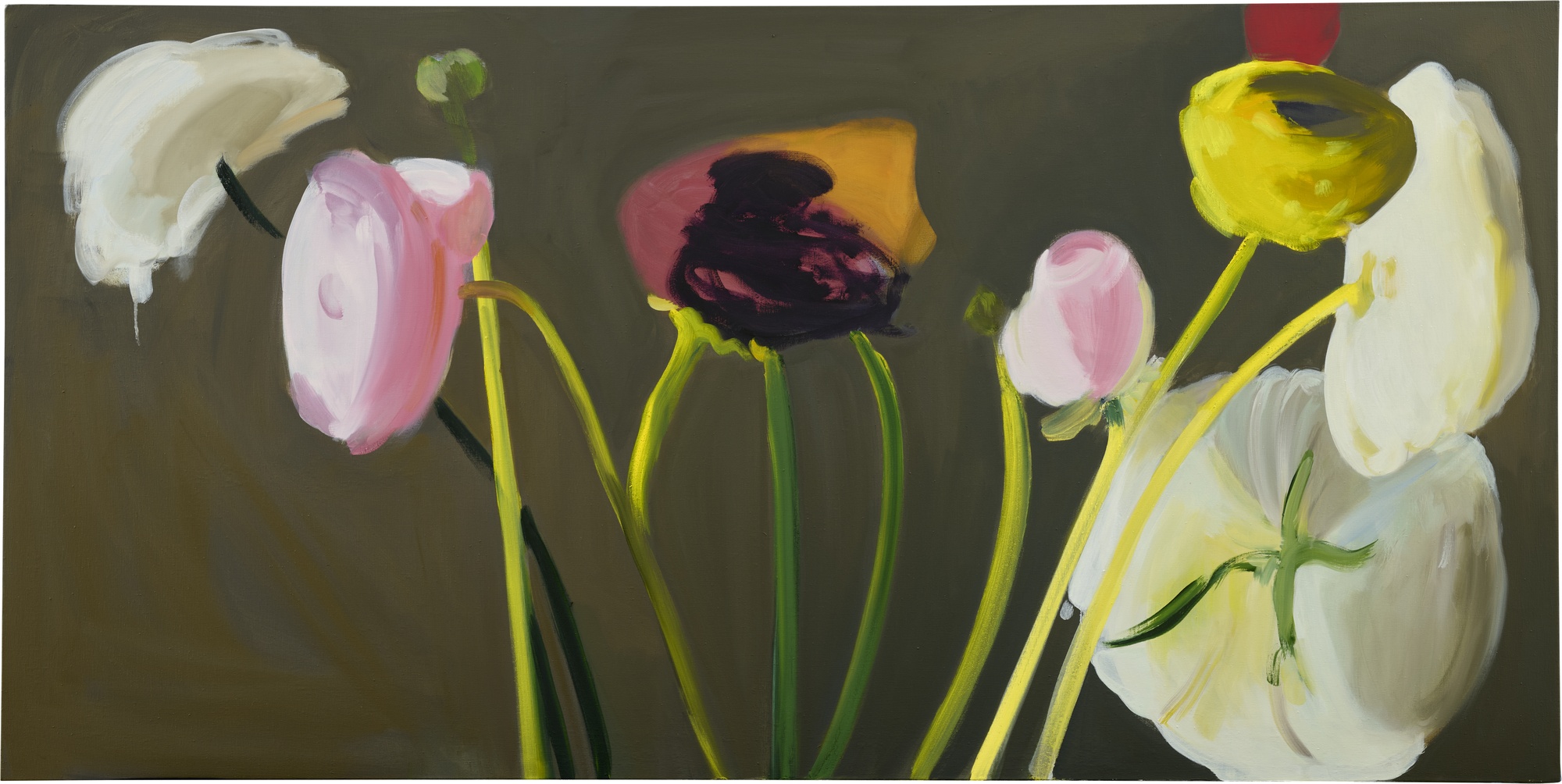
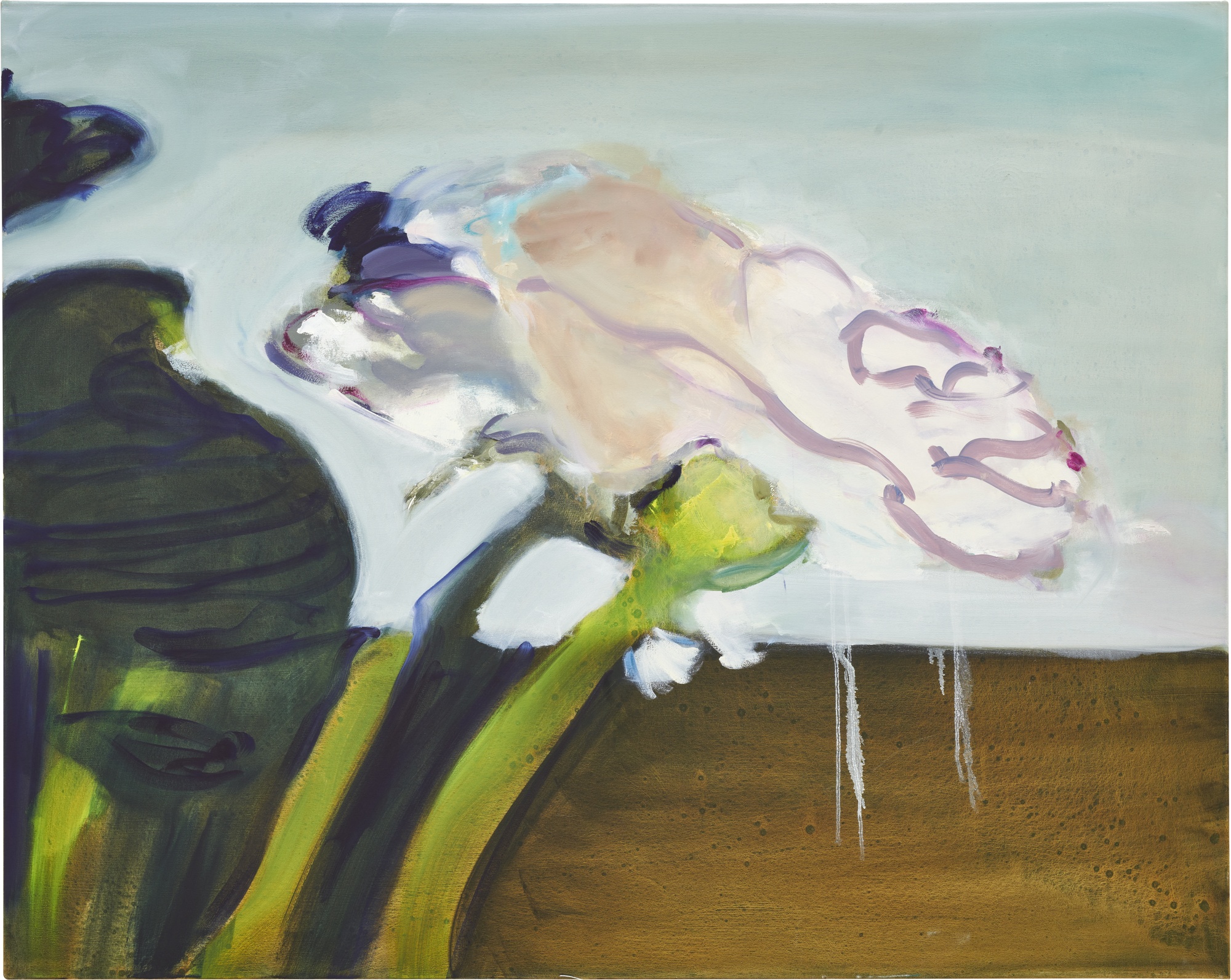
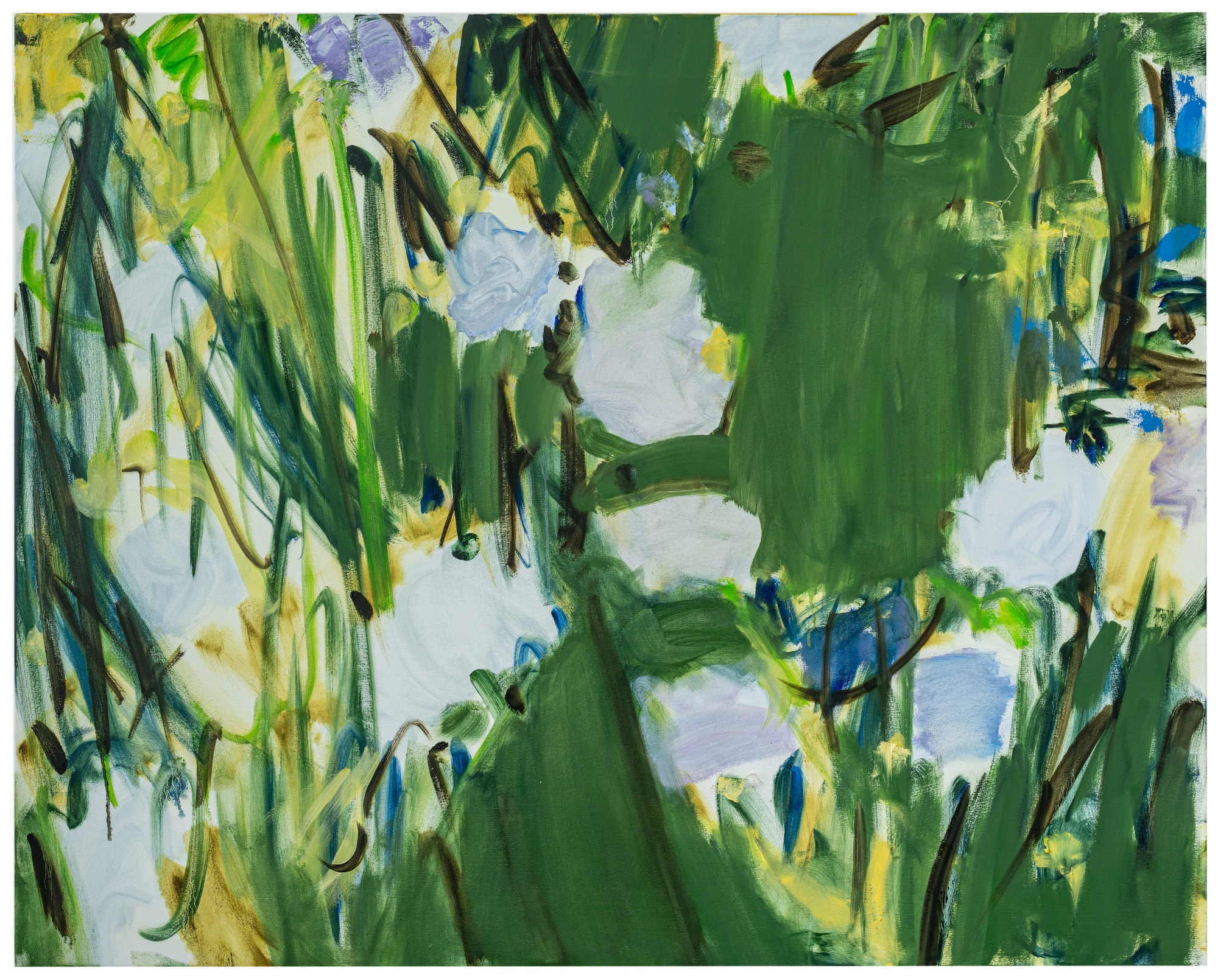
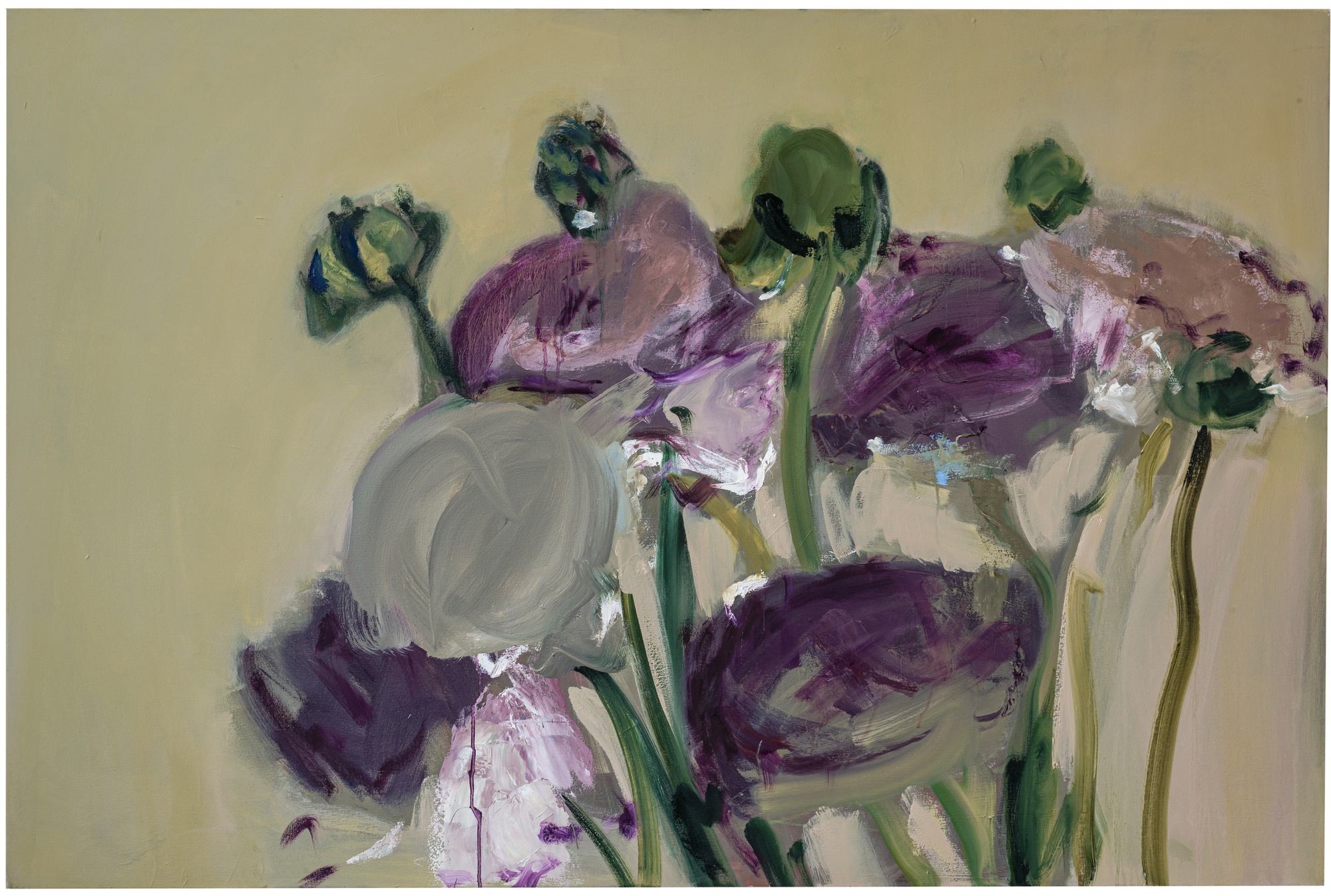
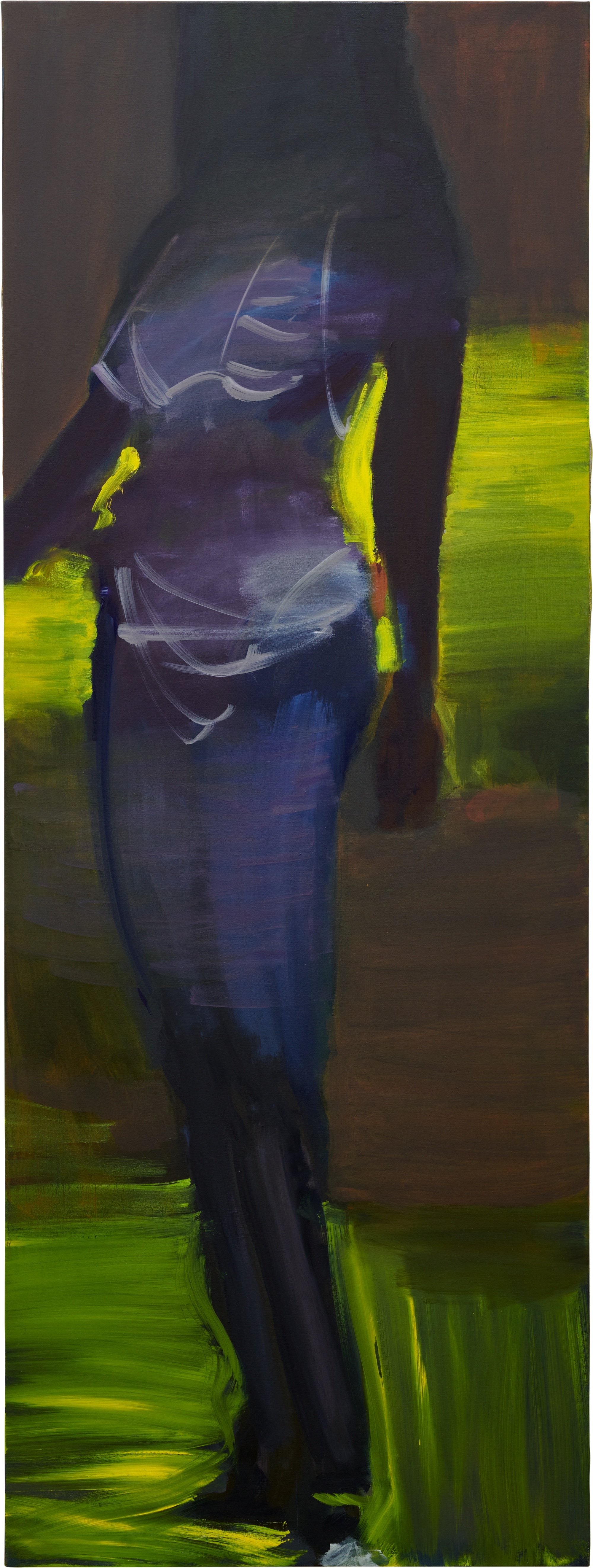
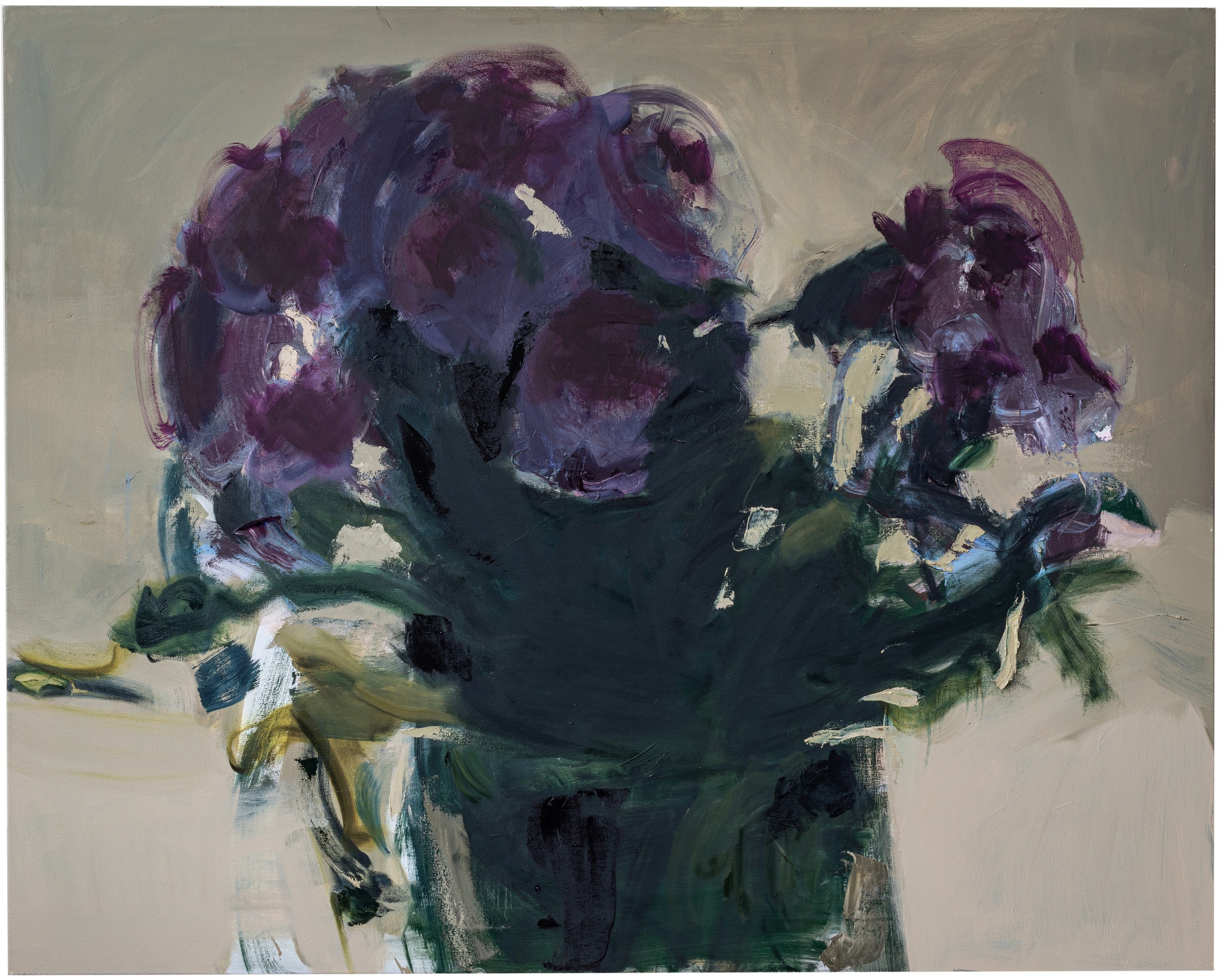
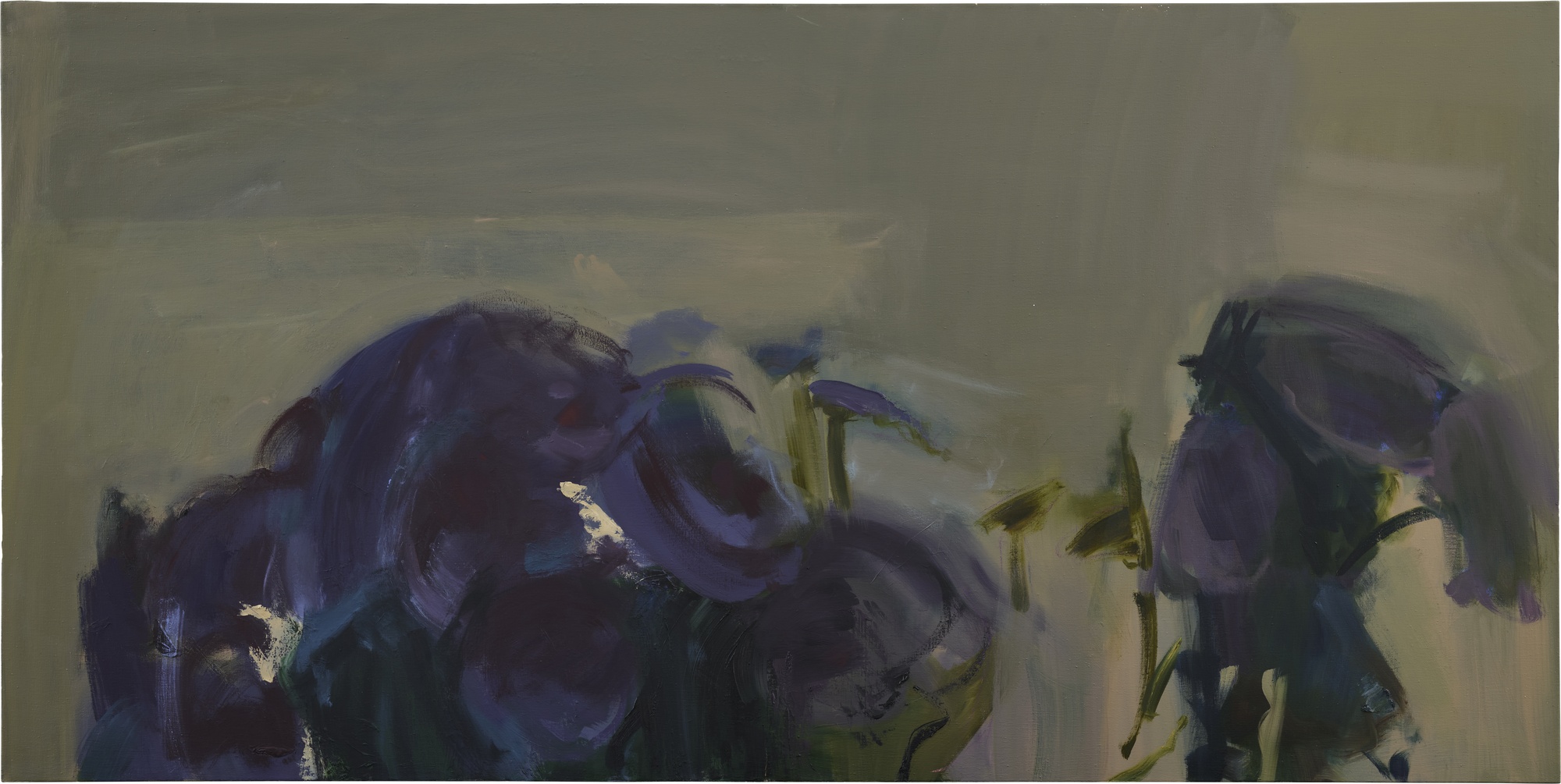
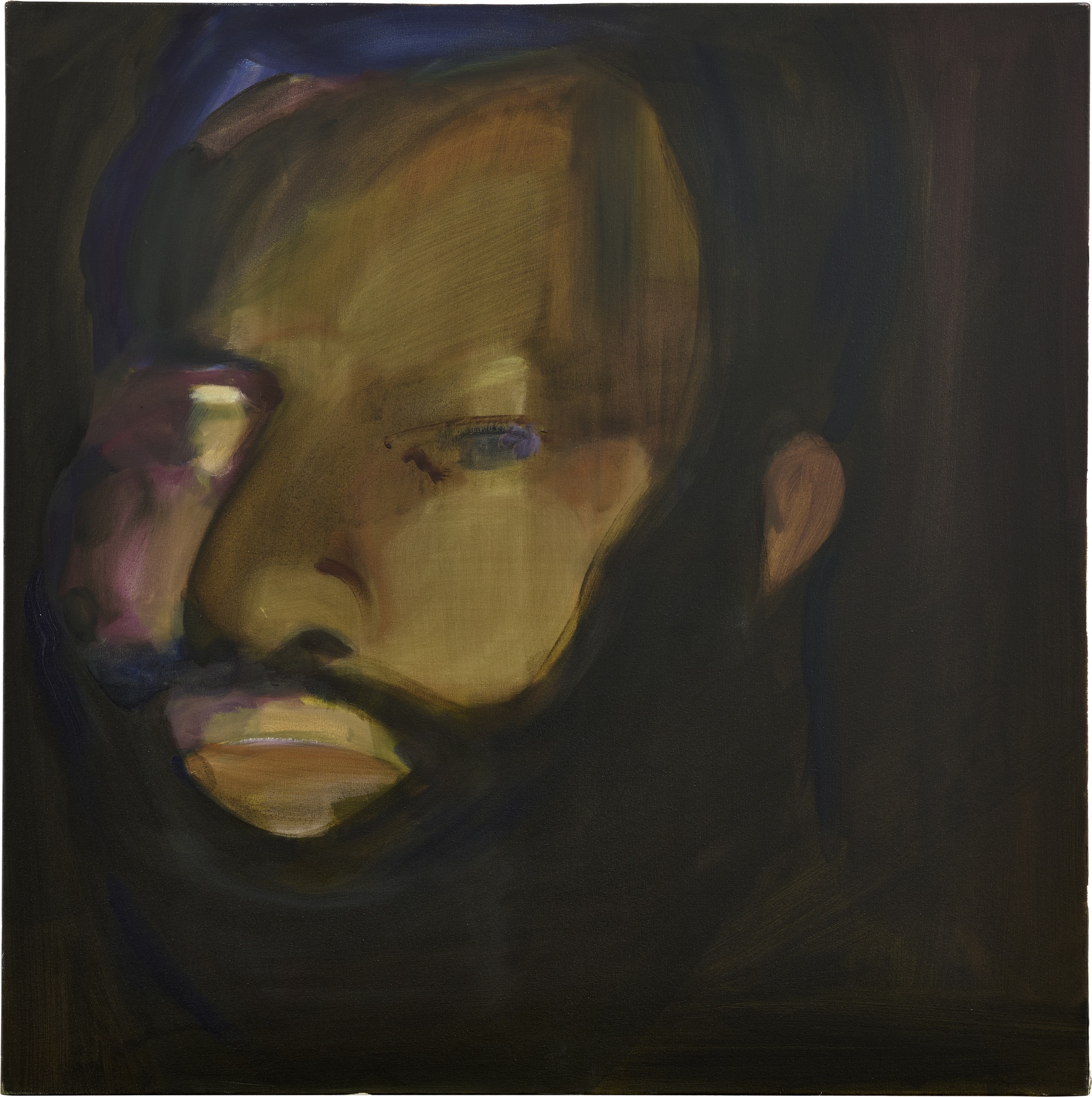
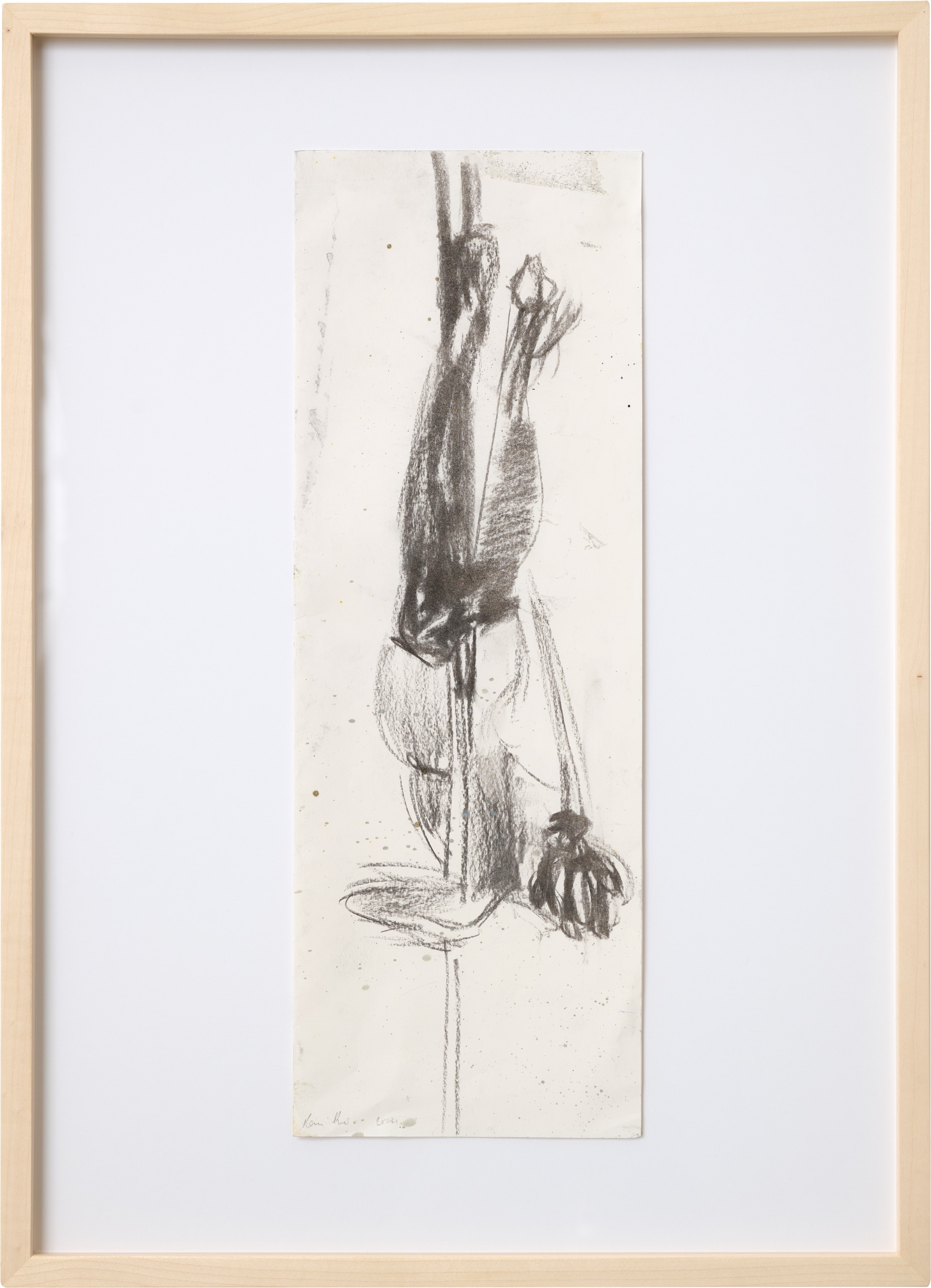
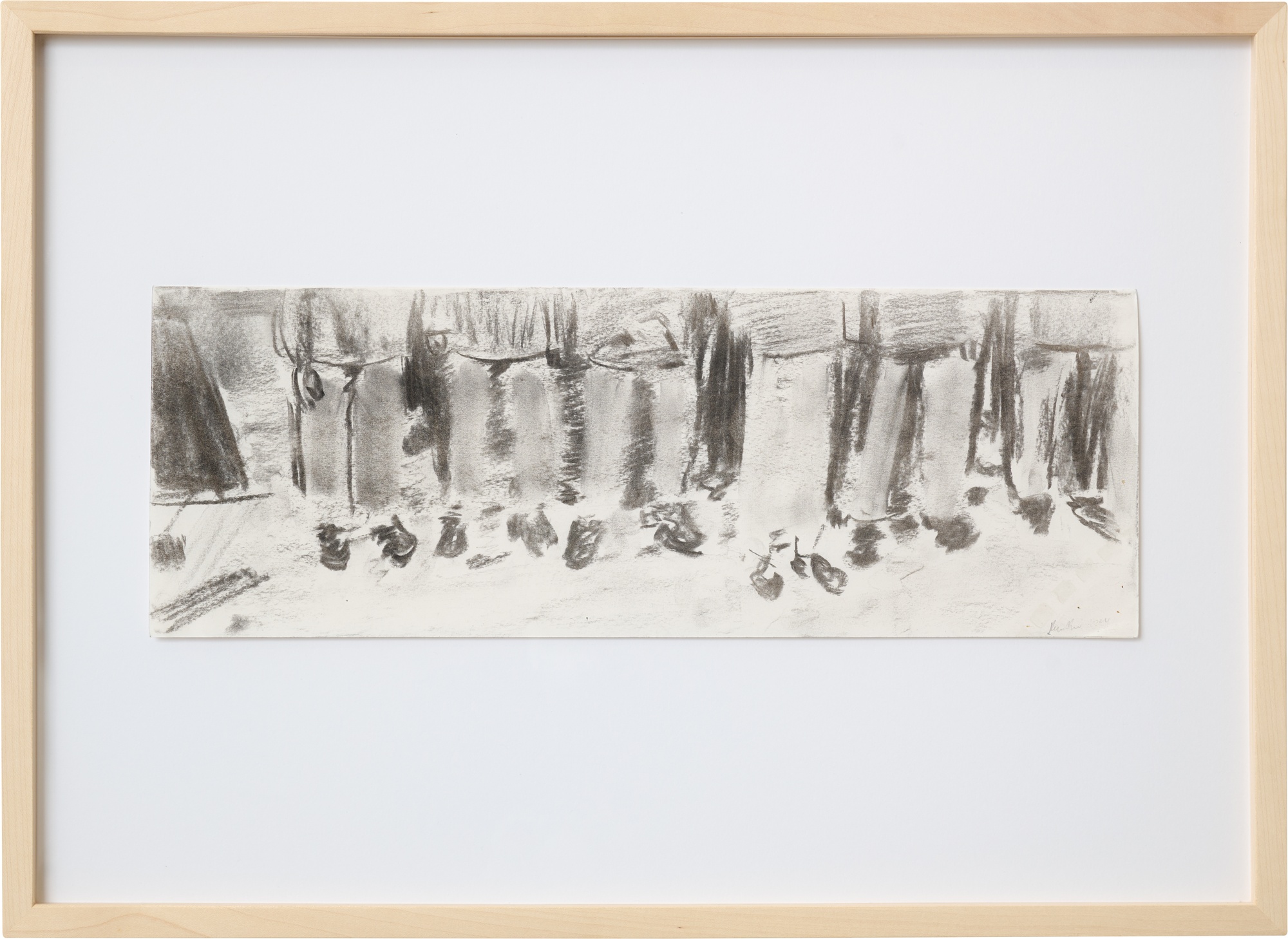
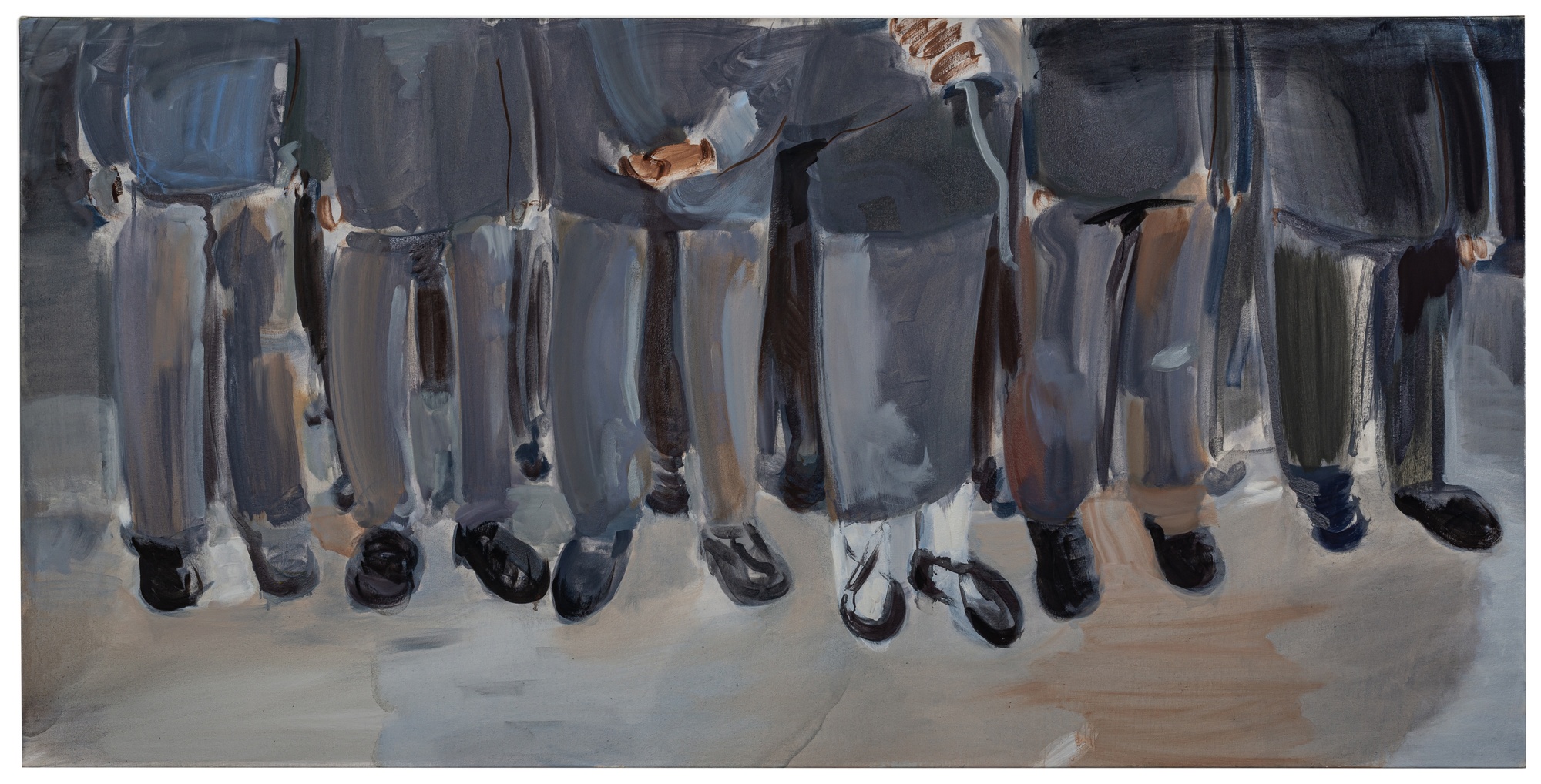
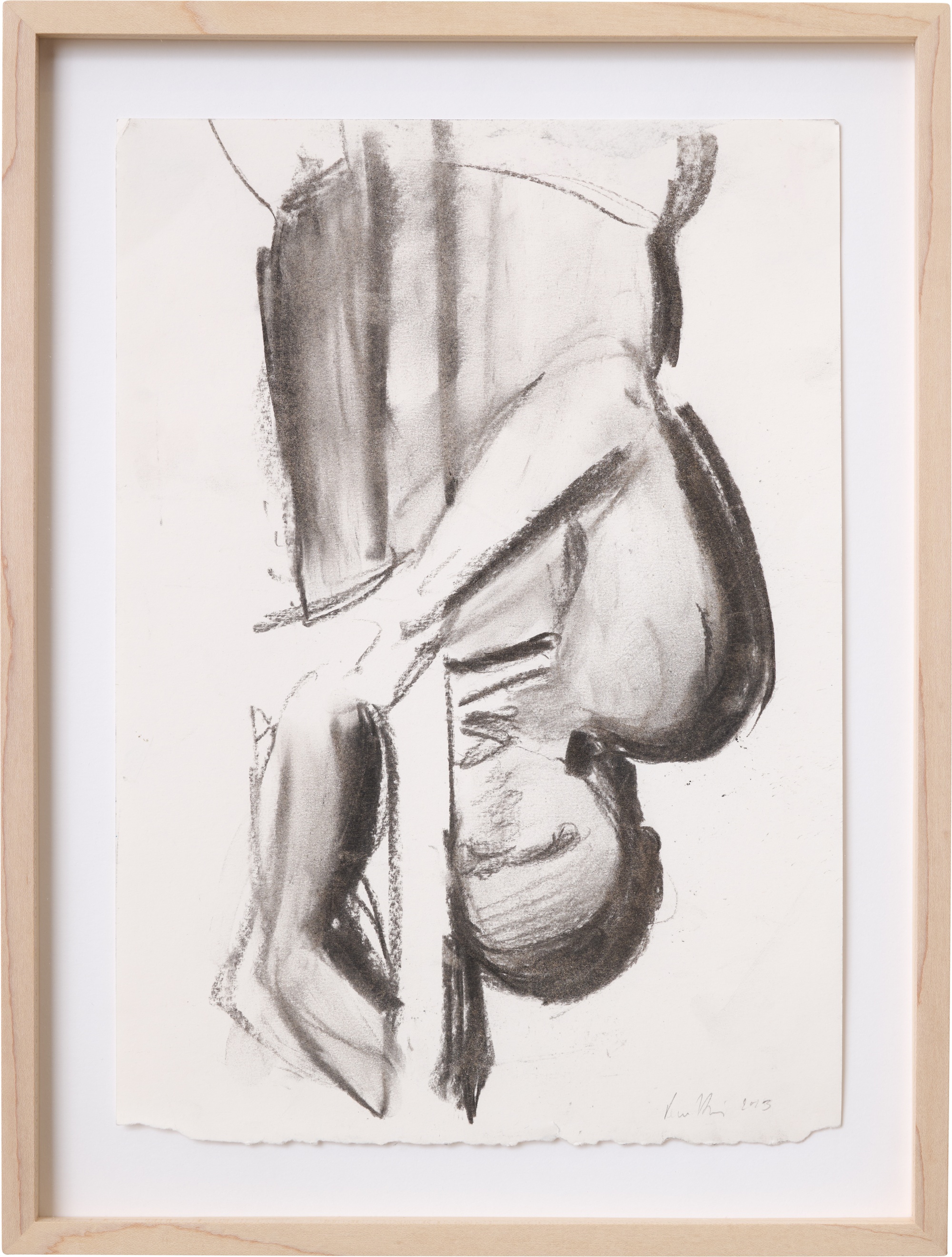
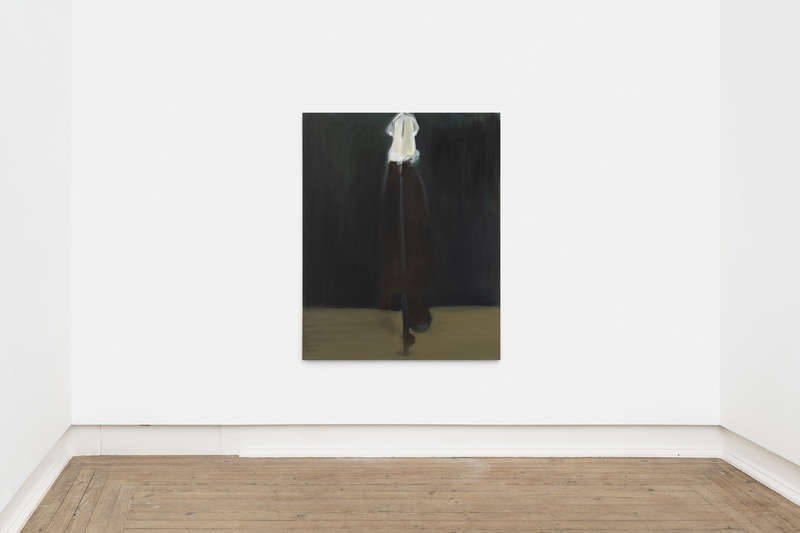
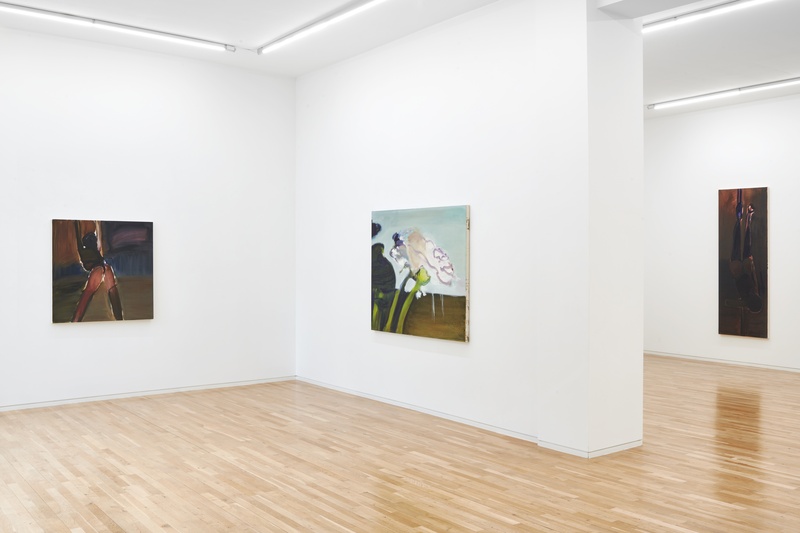
Remi Ajani’s method of working, meticulously accumulating marks on the surface only to annihilate them with palette knife, sponge, and brush, is comparable to an actor who rehearses her lines and actions on the empty stage for weeks, and then before an audience improvises as she performs. These are pictures of life lived; pictures of what has been lost. […] Whether wildflowers lost in the excesses of summertime abandon, or athletic bodies pushed to the very extremity of contorted grace, we find ourselves glimpsing a moment of these breathing, sweating things, summoned from some empty space.
As in many of the formative paintings responding to archival photographs for which Ajani has become known, her subjects here are anonymised, with their bodies eliding into contours of lush indigoes and nondescript greys. While they carry the human gestures of stance, gait, and the barely legible outline of clothing, the figures are registered as human, but not quite human enough. In this way, it is as though Ajani has abstracted these bodies from our ugly desire to always seek to categorise or classify the other. Instead, she asks us to recognise semblances of posture and gesticulation across the long-arc of time. […] Ajani’s works are in conversation with centuries of gesture-making because she is a forensic observer of the human form, even when her relationship to her subject is held at an ambiguous remove. She resists any kind of moralising or didactic comment on the pole dancers as they are: they are neither symbols of female exploitation nor valorised as agents of sexual freedom. Instead, they are bodies held in precarious situations, torquing with the gliding “sprezzatura” of doing something extremely difficult as though it is the easiest thing in the world. Read More
The still life became a dominant form of art, alongside the portrait (to infer the importance of the individual) and the landscape (to infer the importance of place), precisely because it rubbed up against that lingering doubt of signification: flowers bloom and die as the apples rot, and so the form is suited to tracing the poetry of time passing, not to monumentalise it. […] The still life is the art form which manages to record both importance and waste; its subject is consciously and explicitly those objects which are passed over but nevertheless hold our attention.
The power of still life painting relies upon its capacity for surprising interactions between objects and forms. We need only think about Giorgio Morandi’s staging of startling surfaces on his accumulated vases, or the Surrealist idea of a sewing machine and an umbrella encountered by pure chance on an operating table. In Ajani’s world of forms, where families of pigment and staining encourage us to recognise resemblances if not causal relationships, she draws us into those spaces that have been overlooked but still bear the traces of the past, the “preterite”. […] But they also carry the foil of life and seem entirely plausible as a bouquet placed at the bedside in a room in mourning. With these double meanings in mind – life and loss, love and grief – we see how Ajani’s flowers ascend while her human figures descend. Everywhere, in this body of work, we see the motions of life stilled.1